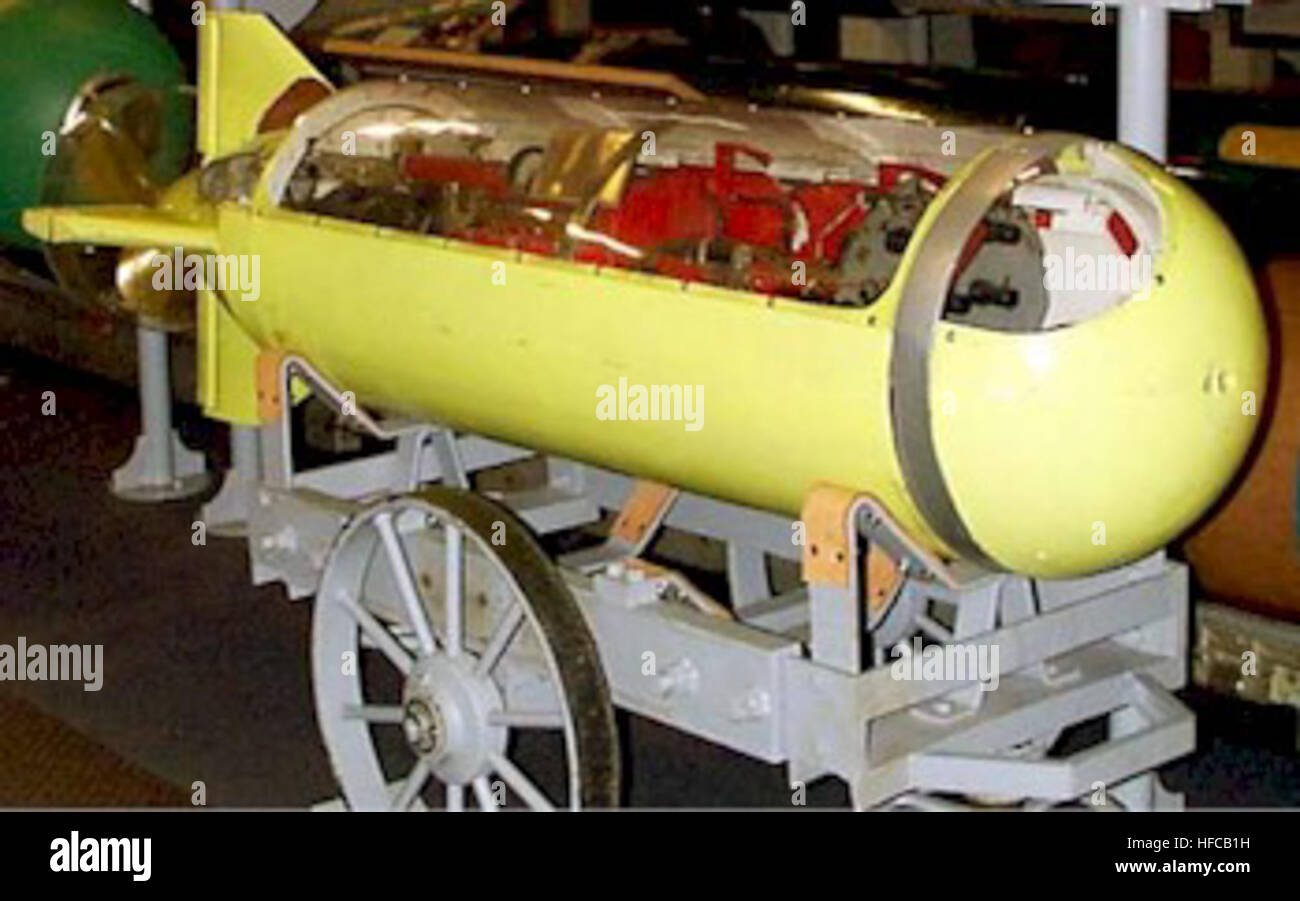
Anti-submarine missiles (ASMs) are standoff weapons designed to deliver an anti-submarine torpedo or depth charge to a specific location via a rocket or missile carrier. By extending the range of engagement beyond traditional torpedo limits, ASMs allow surface ships and submarines to neutralize underwater threats from a position of relative safety.
The evolution of naval warfare in 2026 has been defined by the increasing stealth of diesel-electric and nuclear-powered submarines. As underwater threats become quieter and more difficult to detect, the window for a successful counter-strike narrows. Anti-submarine missiles address this challenge by combining the high speed of a missile with the lethal precision of a homing torpedo. This dual-phase approach allows naval commanders to strike a target miles away in a fraction of the time it would take for a standard heavyweight torpedo to travel the same distance.
The Operational Necessity of Anti-Submarine Missiles
The primary driver for the development and deployment of ASMs is the "standoff" requirement. In naval terms, a standoff weapon allows an attacker to launch an engagement from a distance that exceeds the range of the target's own weapons. Modern submarines are often equipped with advanced torpedoes and anti-ship cruise missiles (ASCMs) that can strike surface vessels from 30 to 50 kilometers away. Without an ASM, a surface ship would have to close that distance to launch its own torpedoes, placing itself in the submarine’s "kill zone."
Furthermore, torpedoes are inherently limited by the medium in which they travel. Water is much denser than air, creating significant drag. Even the fastest modern torpedoes, such as the Mk 48 or the Spearfishing variants, rarely exceed speeds of 50 to 60 knots. In contrast, an anti-submarine missile traveling through the air can reach supersonic speeds (Mach 1 or higher). By using a missile to "leapfrog" the majority of the distance, the total time from detection to impact is reduced from tens of minutes to mere seconds or a few minutes, giving the submarine less time to deploy decoys or perform evasive maneuvers.
Technical Architecture and Flight Profile
A modern anti-submarine missile is a complex assembly of three primary components: the booster/carrier vehicle, the separation system, and the payload. Understanding how these components interact is essential for grasping the technical depth of these systems.
The Carrier Vehicle and Propulsion
The carrier vehicle is essentially a rocket or missile body that provides the initial lift and propulsion. Most ASMs in 2026 utilize solid-fuel rocket motors because they are stable for long-term storage in vertical launch system (VLS) cells and provide immediate thrust upon ignition. The airframe is designed for high-speed atmospheric flight, often featuring folding fins to fit within the constrained dimensions of a ship's launch canister.
The Separation Mechanism
The most critical phase of the ASM flight is the separation sequence. Once the missile reaches the calculated "drop point" above the estimated position of the submarine, the carrier vehicle must safely release the payload. This is typically achieved through explosive bolts or pneumatic release mechanisms. In many systems, a parachute or a retarder is deployed to slow the torpedo's descent. This ensures that the sensitive acoustic sensors in the torpedo are not damaged upon hitting the water and that the torpedo enters the sea at an optimal angle to begin its search pattern.
The Payload: Homing Torpedoes
The "business end" of the ASM is usually a lightweight torpedo (LWT), such as the American Mk 54, the British Sting Ray, or the Italian A244/S. Unlike the heavyweight torpedoes fired from submarine tubes, these are smaller and optimized for air-drop or ASM delivery. Once the torpedo enters the water, its internal batteries activate, and it initiates a pre-programmed search pattern—usually a circular or "snake" path—using active and passive sonar to lock onto the submarine's acoustic signature.
Comparison of Leading Global ASM Systems
By 2026, several nations have refined their ASM capabilities to counter the proliferation of quiet "black hole" class submarines. The following table highlights the specifications of the most prominent systems currently in operational use.
| System Name | Country of Origin | Delivery Vehicle | Typical Payload | Effective Range | Launch Platform |
|---|---|---|---|---|---|
| RUM-139 VL-ASROC | USA | Rocket / Missile | Mk 54 LWT | ~22 km | Vertical Launch System (VLS) |
| SMART | India | Supersonic Missile | Lightweight Torpedo | 600+ km | Land-based / Ship-based |
| 91R1 (Kalibr) | Russia | Supersonic Missile | APR-3ME / MPT-1UM | 40 - 50 km | VLS / Submarine Tube |
| K-ASROC (Blue Shark) | South Korea | Rocket | K745 Blue Shark | ~20 km | VLS (K-VLS) |
| CY-5 | China | Rocket | Yu-7 / Yu-11 LWT | ~30 km | VLS |
| Milas | France / Italy | Turbojet Missile | MU90 Impact | 35+ km | Box Launcher / VLS |
Advanced Launch and Targeting Procedures
The deployment of an anti-submarine missile is rarely a solo endeavor by a single ship. It is the culmination of a multi-domain kill chain involving various sensors and data links.
Detection and Localization
The process begins with the detection of a submarine, often by a towed-array sonar from a surface ship, a dipping sonar from an MH-60R helicopter, or a field of sonobuoys dropped by a P-8A Poseidon maritime patrol aircraft. Because submarines are mobile, the initial detection point (the "datum") is not enough for an accurate strike. The fire control system must calculate the submarine's course and speed to predict its future position at the moment the torpedo will enter the water.
Mid-Course Updates
Some advanced ASMs in 2026 feature mid-course guidance updates. If a tracking helicopter sees the submarine change direction while the missile is in flight, it can transmit corrected coordinates to the missile via a data link. This significantly increases the Probability of Kill (Pk) by ensuring the torpedo enters the water as close to the target as possible, minimizing the "search time" the torpedo requires.
The "Water Entry" Physics
The transition from Mach 1.5 in the air to 40 knots in the water is a violent physical event. Engineers must account for the "slap" of the water, which can exert massive G-forces on the torpedo's nose cone. Modern systems use a combination of ventilated nose caps and specific entry angles to mitigate this shock. Once submerged, the torpedo discards its flight surfaces (and parachute) and transitions to its own internal propulsion and guidance logic.
Strategic Implications and Limitations
While anti-submarine missiles provide a significant advantage, they are not a "silver bullet" for naval defense. There are inherent limitations and strategic trade-offs that commanders must consider.
- Acoustic Countermeasures: Modern submarines are equipped with sophisticated decoys that can be launched upon hearing the splash of a torpedo. These decoys mimic the acoustic frequency of the submarine's engines, potentially leading the ASM’s torpedo away from the actual hull.
- Target Identification: In a cluttered littoral (coastal) environment, sonar can struggle to differentiate between a submarine, a whale, or a ship wreck. Launching an ASM is a "noisy" event that reveals the position of the launching ship, so crews must be reasonably certain of the target before firing.
- VLS Cell Economics: A ship only has a finite number of Vertical Launch System cells. Every ASM carried is one fewer Anti-Air Missile (like the SM-6) or Tomahawk Cruise Missile. Balancing the magazine for air defense versus anti-submarine warfare is a constant challenge for naval planners.
- Weather Dependencies: Extremely high sea states can interfere with the torpedo's water entry or the accuracy of the acoustic sensors. High winds can also affect the flight path of the carrier missile over long distances.
The Future: India’s SMART and Long-Range Trends
As of 2026, the trend in ASM development is toward significantly longer ranges. India’s Supersonic Missile Assisted Release of Torpedo (SMART) system represents a paradigm shift. While traditional systems like the VL-ASROC are limited to approximately 20-30 kilometers, the SMART system is designed to engage targets at ranges exceeding 600 kilometers.
This is achieved by using a high-speed missile that functions more like an anti-ship cruise missile than a traditional short-range rocket. By coupling this with long-range sensor data from satellites and high-altitude long-endurance (HALE) drones, a navy can effectively "deny" a massive area of the ocean to enemy submarines without ever seeing them on shipboard sonar.
Environmental and Ethical Considerations
The use of active sonar by ASM torpedoes and the underwater explosions caused by successful strikes have raised concerns regarding marine life. In 2026, naval exercises often include strict environmental mitigation protocols to avoid firing ASMs in protected breeding grounds for cetaceans. Furthermore, the "launch-and-forget" nature of these weapons requires rigorous Friend-or-Foe (IFF) identification to prevent friendly fire incidents in multi-national task forces.
Frequently Asked Questions
Can anti-submarine missiles be intercepted by enemy defenses? Yes, but it is extremely difficult. Because ASMs travel at high speeds and often have a ballistic or high-altitude trajectory before dropping the torpedo, traditional Point Defense Missile Systems (PDMS) or Close-In Weapon Systems (CIWS) like the Phalanx can technically target the carrier vehicle. However, since the goal of the ASM is simply to get the torpedo into the water, even a partial intercept near the drop point may still result in a successful torpedo deployment.
Do anti-submarine missiles work against Unmanned Underwater Vehicles (UUVs)? Yes, modern lightweight torpedoes carried by ASMs are increasingly being updated with software algorithms to track the smaller acoustic and magnetic signatures of large UUVs. While traditional torpedoes were designed for large nuclear submarines, the 2026 variants of the Mk 54 and MU90 have "low-clutter" modes specifically for engaging underwater drones.
Can a submarine launch an anti-submarine missile against another submarine? Yes. Certain systems, like the Russian Kalibr family (91R series), can be launched from standard 533mm submarine torpedo tubes. The missile floats to the surface in a protective capsule, ignites its rocket motor, flies through the air to the target area, and then drops a torpedo back into the water. This allows a submarine to strike an enemy sub that is far outside the range of its own standard torpedoes.
What is the difference between an ASROC and a standard torpedo? The main difference is the delivery method and range. A standard torpedo is self-propelled through the water for its entire journey, which is slow and limited in range (usually under 50km). An ASROC (Anti-Submarine Rocket) or ASM uses a rocket to fly through the air for the majority of the distance, reaching the target area much faster and often at greater distances than a water-borne torpedo could manage.
How much does a single anti-submarine missile cost? While prices vary by country and contract, a single RUM-139 VL-ASROC unit, including the missile carrier and the Mk 54 torpedo payload, generally costs between $2 million and $5 million USD in 2026. This cost reflects the high-tech sensors, specialized propulsion, and the rigorous testing required for maritime environments.
Practical Recommendation for Defense Analysts
For naval procurement and defense analysis in 2026, the focus should shift from "platform-to-platform" engagements to "network-integrated" ASW. When evaluating anti-submarine missiles, the range of the missile itself is secondary to the quality of the data-link integration. A 600km missile is useless if the ship's sensor network can only "see" 50km. Investment should be prioritized in systems that allow for mid-course updates and are compatible with third-party targeting data from unmanned aerial and underwater assets.