Anti-counterfeiting technology refers to a diverse array of physical and digital security measures designed to prevent unauthorized duplication and facilitate the authentication of genuine products. By 2026, these solutions have evolved into multi-layered systems combining physical markers, such as forensic chemical signatures, with digital traceability tools like blockchain and AI-powered visual recognition.
The global economic impact of counterfeiting is staggering, affecting industries ranging from pharmaceuticals and electronics to luxury goods and automotive parts. For brand owners, the challenge is no longer just about protecting revenue; it is about ensuring consumer safety and maintaining brand integrity in an increasingly complex global supply chain. This guide explores the sophisticated technological landscape of anti-counterfeiting measures, their implementation strategies, and the legal frameworks governing their use in 2026.
The Taxonomy of Anti-Counterfeiting Solutions
To build an effective brand protection strategy, it is essential to understand the different categories of security features. Security experts generally classify these technologies into four distinct tiers based on who performs the verification and the equipment required.
Overt (Visible) Features
Overt features are designed for the end consumer or retail staff to verify without specialized tools. These are the first line of defense and rely on visual cues that are difficult for counterfeiters to replicate exactly.
- Holograms and Optically Variable Devices (OVDs): Modern holograms in 2026 utilize electron-beam lithography to create high-resolution images that shift color or appear 3D when tilted.
- Color-Shifting Inks: Also known as optically variable inks (OVI), these change color significantly based on the angle of observation, making them a staple for high-end packaging and currency.
- Secure QR Codes: Unlike standard QR codes, secure versions incorporate encrypted patterns or "digital watermarks" that cannot be photocopied without losing the embedded data.
Covert (Hidden) Features
Covert features are invisible to the naked eye and require specific tools for verification, such as UV lights, infrared scanners, or magnifying lenses. They provide a deeper layer of security for field inspectors and law enforcement.
- Invisible Inks and Fluorescent Markers: These only appear under specific wavelengths of light.
- Micro-text and Micro-graphics: Extremely small printing that appears as a solid line to the naked eye but reveals specific text or patterns under 10x magnification.
- Hidden Taggants: Microscopic particles or chemical "fingerprints" embedded in the product material or the ink itself.
Forensic Features
Forensic features represent the highest level of security, typically requiring laboratory analysis to confirm authenticity. These are often used as definitive evidence in legal proceedings.
- Biological and DNA Taggants: Synthetic DNA sequences are embedded into inks or materials. These are virtually impossible to reverse-engineer and provide a "molecular signature" unique to a specific brand or product batch.
- Isotope Ratios: Analyzing the specific chemical composition of materials to verify their geographical origin.
Digital and Track-and-Trace Technologies
By 2026, digital solutions have become the backbone of supply chain security. These do not just verify a physical object; they track its journey from the factory to the consumer.
- Blockchain Integration: Provides an immutable ledger where every change of custody is recorded, ensuring a transparent "chain of custody."
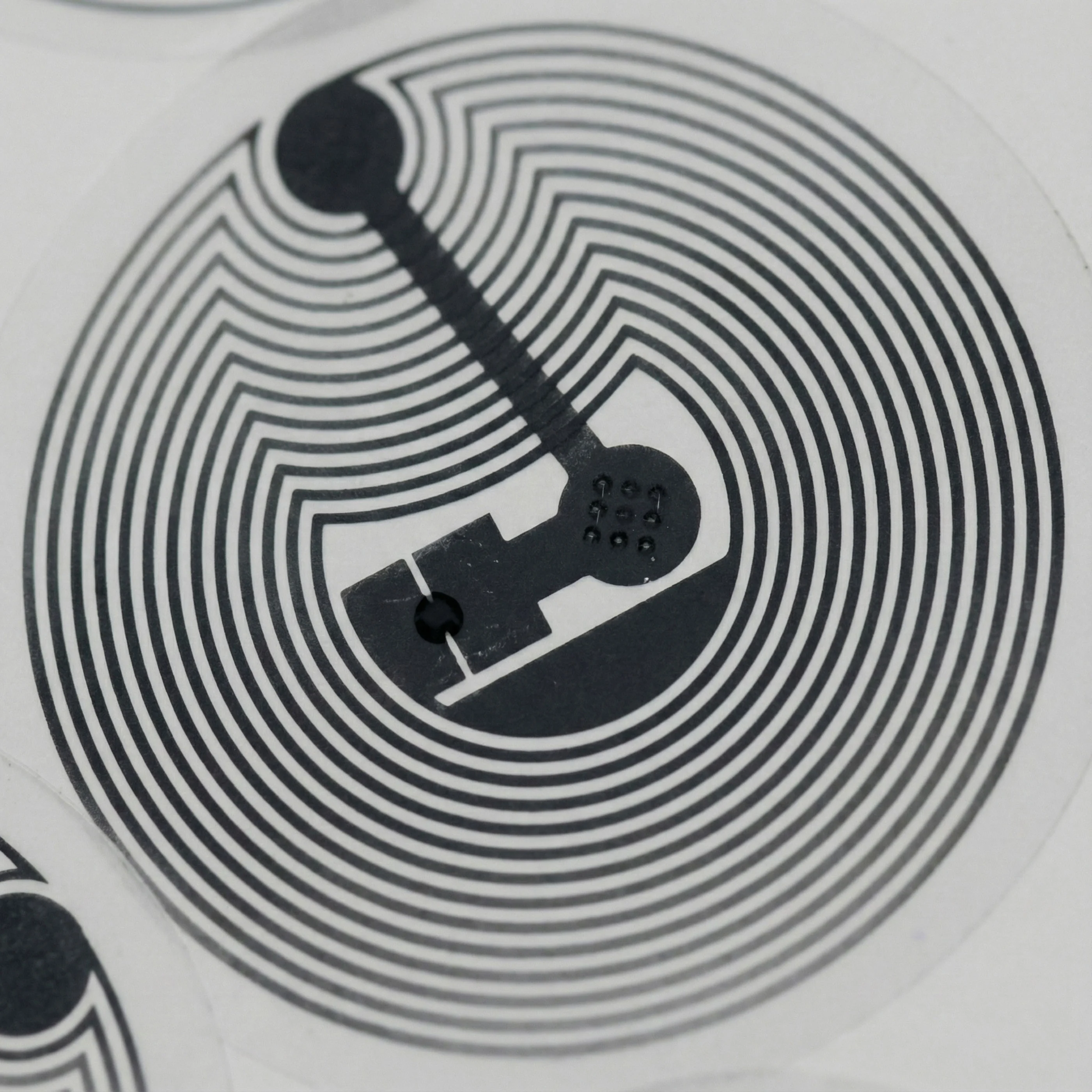
- NFC (Near Field Communication): Embedded chips that allow consumers to verify products using their smartphones, often triggering an encrypted handshake with a secure cloud server.
- AI-Based Image Recognition: Utilizing deep learning to identify microscopic irregularities in packaging or product surfaces that act as a "natural fingerprint."
Digital Transformation: Blockchain and IoT Integration
The integration of the Internet of Things (IoT) and blockchain has revolutionized anti-counterfeiting by creating "digital twins" for physical goods. In 2026, a product's identity is no longer just on its label but exists as a digital asset in a decentralized ledger.
When a product is manufactured, a unique identifier (UID) is generated and recorded on a blockchain. This UID is then attached to the product via an NFC tag or a secure QR code. As the item moves through the supply chain—from the manufacturer to the distributor, then to the retailer, and finally to the consumer—each entity scans the tag, updating its status. This transparency makes it nearly impossible for "gray market" goods or counterfeits to enter the legitimate supply chain unnoticed.
Furthermore, blockchain solves the "double-spend" problem for physical goods. Once a product is marked as "sold" or "consumed" in the digital ledger, the same UID cannot be used again. If a counterfeiter attempts to copy a legitimate QR code, the system will flag the code as already activated or located in a different geographical region, alerting the brand owner to the fraud in real-time.
Industry-Specific Applications and Regulations
Different sectors face unique threats and are subject to varying regulatory requirements. The choice of anti-counterfeiting technology is often dictated by these specific environmental factors.
Pharmaceuticals and Healthcare
In the pharmaceutical sector, counterfeiting is a matter of life and death. The World Health Organization (WHO) has long advocated for rigorous track-and-trace systems. In 2026, the Drug Supply Chain Security Act (DSCSA) in the United States and the Falsified Medicines Directive (FMD) in Europe require full unit-level serialization.
- Technologies Used: 2D DataMatrix codes, tamper-evident seals, and blockchain-based verification.
- Objective: To ensure that every bottle of medication can be traced back to its specific production run and manufacturer.
Luxury Goods and Apparel
For luxury brands, the primary concern is brand dilution and revenue loss. Counterfeiters have become adept at creating "super-fakes" that are visually indistinguishable from the original.
- Technologies Used: Encrypted NFC tags sewn into linings, AI-powered microscopic surface analysis, and forensic thread markers.
- Objective: To provide consumers with an easy way to verify authenticity while maintaining the aesthetic integrity of the product.
Electronics and Industrial Components
Counterfeit semiconductors and aircraft parts pose significant safety risks and can lead to catastrophic system failures.
- Technologies Used: Laser marking at the wafer level, physical unclonable functions (PUFs), and microscopic taggants in plastic moldings.
- Objective: To prevent the infiltration of refurbished or sub-standard components into critical infrastructure.
Comparison of Key Anti-Counterfeiting Technologies
The following table compares the most prevalent technologies available in 2026 based on their security level, cost, and ease of use for the end consumer.
| Technology Type | Security Level | Implementation Cost | Verification Method | Best Suited For |
|---|---|---|---|---|
| Standard Holograms | Low to Moderate | Low | Visual (Naked Eye) | FMCG, Retail Goods |
| Encrypted QR Codes | Moderate | Medium | Smartphone App | Food & Beverage, Pharma |
| NFC Tags (Secure) | High | High | Smartphone (Tap) | Luxury, Spirits, High-End Tech |
| DNA/Chemical Taggants | Very High | Medium to High | Laboratory/Field Kit | Bulk Chemicals, Textiles, Legal Evidence |
| Blockchain Serialization | Very High | High (System-wide) | Digital Scan | Global Supply Chains, Pharma |
| RFID (Passive) | Moderate | Medium | Industrial Scanner | Logistics, Warehouse Management |
Implementation Strategies for Brand Owners
Deploying anti-counterfeiting technology is a strategic investment that requires more than just picking a security feature. It involves a holistic approach to supply chain management and consumer engagement.
The Layered Defense Approach
Security professionals recommend a "defense-in-depth" strategy. Using a single feature—like a simple hologram—is rarely enough, as sophisticated counterfeiters can eventually mimic it. A robust 2026 strategy typically includes:
- An Overt Feature for consumer confidence.
- A Covert Feature for internal auditing and customs enforcement.
- A Digital Layer for real-time tracking and data collection.
Cost-Benefit Analysis and ROI
The cost of implementation must be weighed against the potential losses from counterfeiting. These losses include not only direct sales revenue but also the costs associated with product liability, legal fees, and damage to brand reputation.
- Direct Costs: Material costs (inks, tags, chips) and infrastructure costs (scanners, software integration).
- Indirect Benefits: Improved inventory management, better consumer insights through digital interaction, and streamlined customs clearance.
Integration with Existing Systems
For a technology to be effective, it must integrate seamlessly with existing Enterprise Resource Planning (ERP) and Warehouse Management Systems (WMS). In 2026, API-first security platforms allow brands to plug anti-counterfeiting data directly into their logistics stack, enabling automated alerts when a "cloned" or "out-of-sequence" product is scanned.
Common Pitfalls and Challenges
Despite the advancements in 2026, no system is entirely foolproof. Brand owners must be aware of common vulnerabilities:
- The "Re-use" Problem: Counterfeiters may obtain genuine packaging and refill it with fake products. This is common in the spirits and perfume industries. To combat this, technologies like "breaking" NFC antennas (which disable the chip once the bottle is opened) are used.
- Social Engineering: Some counterfeiters create fake verification websites. Consumers scan a code, which leads them to a sophisticated but fraudulent site that confirms the item is "genuine." Using well-known, third-party verification platforms can mitigate this risk.
- Data Privacy: As brands collect more data through digital verification, they must comply with evolving privacy regulations like the GDPR or CCPA. Ensuring that verification is "anonymous by design" is a key priority for 2026 implementations.
Frequently Asked Questions
What is the difference between a standard QR code and a secure QR code?
A standard QR code can be easily copied or photocopied by anyone with a printer. A secure QR code includes an embedded digital watermark or microscopic patterns that are lost during the copying process. When scanned by a proprietary app, the system can detect the loss of detail and flag the code as a duplicate.
How does blockchain prevent physical counterfeiting?
Blockchain itself does not prevent the creation of a physical fake, but it prevents that fake from being verified as genuine. By creating a "digital twin" on an immutable ledger, blockchain ensures that only one legitimate instance of a product's ID exists. If two products with the same ID appear in the system, the anomaly is immediately flagged.
Are DNA taggants safe for use in food or pharmaceutical products?
Yes, forensic DNA taggants used in 2026 are typically derived from non-coding synthetic DNA sequences that are GRAS (Generally Recognized as Safe). They are used in such infinitesimal quantities (parts per billion) that they do not affect the product's chemistry, taste, or safety, yet they remain detectable by laboratory equipment.
Can consumers use their own smartphones to verify products?
Yes, the majority of modern anti-counterfeiting technologies, particularly secure QR codes and NFC tags, are designed to be compatible with standard smartphones. This empowers the consumer to act as an unofficial inspector, significantly increasing the difficulty for counterfeiters to operate at the retail level.
What is a "Physical Unclonable Function" (PUF)?
A PUF is a technology used primarily in semiconductors. It utilizes the random, microscopic variations inherent in the manufacturing process of a chip to create a unique "fingerprint." Because these variations are random and unintentional, they are impossible for even the original manufacturer to duplicate exactly.
Practical Recommendations for 2026
For businesses looking to protect their products in 2026, the first step is a comprehensive risk assessment. Identify which products are most vulnerable and where in the supply chain leaks are occurring.
- Prioritize High-Risk SKUs: Start by protecting the most targeted products rather than the entire catalog.
- Educate the Consumer: A security feature is only effective if people know to look for it. Use social media and product websites to demonstrate how to verify authenticity.
- Collaborate with Customs: Provide the necessary training and tools (such as handheld scanners or mobile apps) to customs and border protection agencies to help them identify your genuine products.
- Monitor the Secondary Market: Use AI-driven web scraping tools to monitor e-commerce platforms for unusually low-priced goods or unauthorized sellers, which are often indicators of counterfeit activity.
As counterfeiting techniques become more sophisticated, the technology used to combat them must stay one step ahead. By 2026, the most successful brands are those that treat security not as a cost center, but as a fundamental component of their product's value proposition and consumer trust.