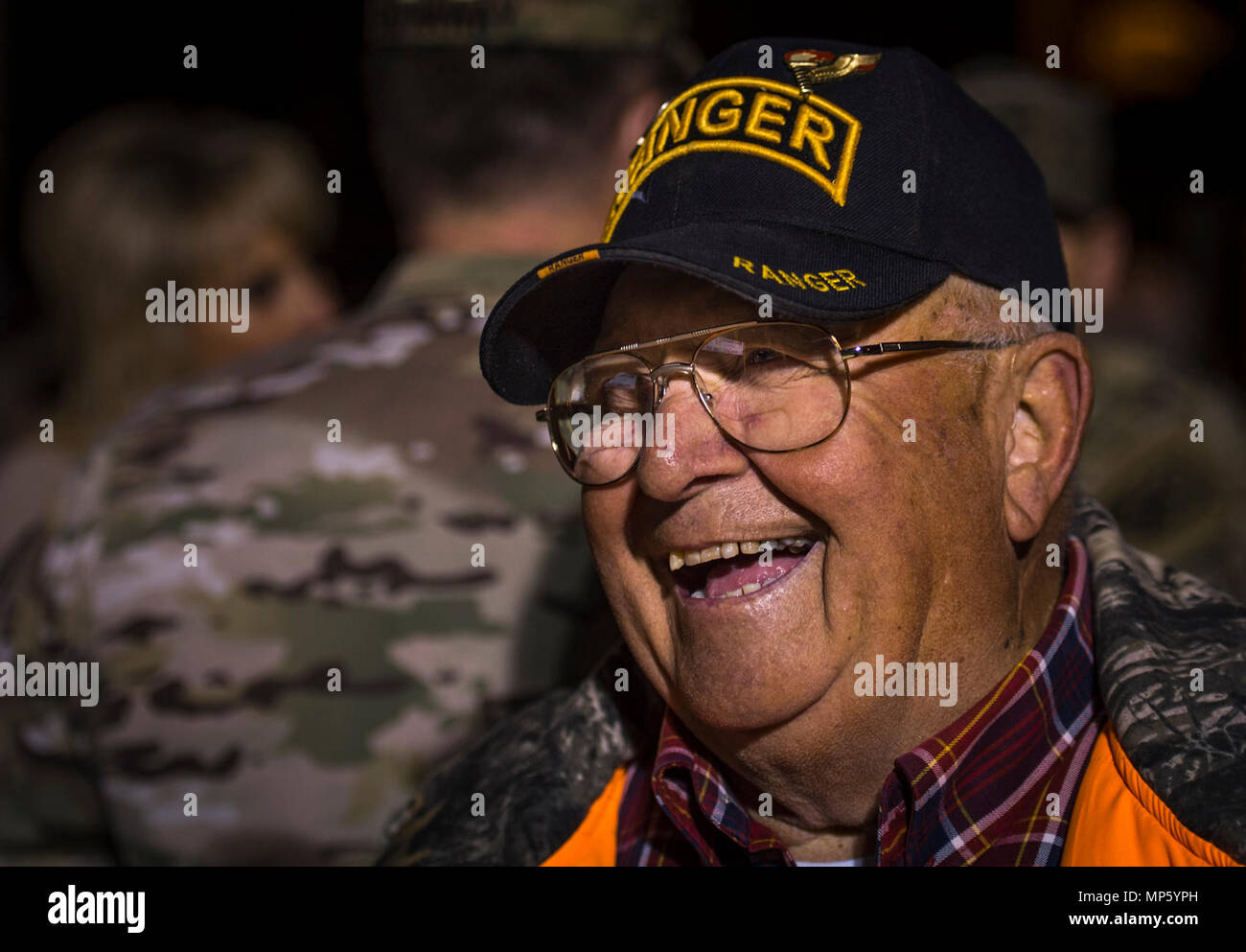
The Army Ranger Hall of Fame recognizes Rangers who have demonstrated extraordinary courage in combat or made monumental contributions to the Ranger community. As of 2026, it remains the ultimate recognition for the 75th Ranger Regiment and its predecessors, balancing the preservation of legendary military valor with modern debates regarding historical legacy and evolving selection criteria.
The Army Ranger Hall of Fame (RHOF) is not merely a collection of plaques and citations; it is the institutional memory of the United States Army’s most elite light infantry force. Established in 1992, the Hall was created to preserve the heritage of the Rangers, spanning from the Colonial era to the modern Global War on Terror. However, as the military landscape shifts in 2026, the Hall finds itself at the center of a broader cultural conversation. The transition from Fort Benning to Fort Moore, the re-evaluation of historical figures, and the rigorous standards for "valor" vs. "merit" have sparked ongoing discussions among veterans and historians alike.
The Evolution of the Army Ranger Hall of Fame
The Hall of Fame was originally conceived by the Ranger Training Brigade (RTB) to ensure that the exploits of those who "led the way" were never forgotten. For decades, the induction ceremony has been the centerpiece of "Ranger Rendezvous," a biennial gathering of current and former Rangers.
In 2026, the physical location of the Hall within the National Infantry Museum at Fort Moore serves as a pilgrimage site. The evolution of the Hall reflects the evolution of the Rangers themselves. Initially, the inductees were largely veterans of World War II, Korea, and Vietnam. These men represented the "Old Guard"—the Marauders, the LRRPs (Long Range Reconnaissance Patrols), and the Rangers of the 1st, 2nd, and 5th Battalions who scaled the cliffs of Pointe du Hoc.
However, the last two decades of continuous combat in Iraq, Afghanistan, and various undisclosed theaters have introduced a new generation of heroes. This shift has changed the "flavor" of the Hall. While the core tenets of the Ranger Creed remain the same, the technology, tactics, and transparency of modern warfare have led to a more scrutinized induction process.
Honoring Valor: The Criteria for Induction
To understand the prestige of the Army Ranger Hall of Fame, one must understand the stringent requirements for entry. Induction is not a "lifetime achievement award" for mere length of service; it requires a documented record of extraordinary contribution.
Eligibility Requirements
- Ranger Qualification: An individual must be a graduate of the U.S. Army Ranger School or have served in a recognized Ranger unit (such as the 75th Ranger Regiment, the Merrill’s Marauders, or the Alamo Scouts).
- Service Record: The nominee must have been out of active military service for at least three years, or be deceased. This "cooling off" period ensures that the board can evaluate a career with historical perspective rather than immediate emotion.
- The "Ranger Creed" Standard: Nominees must embody the principles of the Ranger Creed. This includes technical and tactical proficiency, physical toughness, and moral character.
The Selection Process
The selection is handled by a Board of Directors, typically comprised of current and former high-ranking Rangers. The process is famously opaque to outsiders, which adds to the Hall’s mystique. Each year, the board reviews dozens of packets, but only a handful are selected. In 2026, the board has placed a higher emphasis on "valor in the face of the enemy," prioritizing those with high-level decorations such as the Medal of Honor, Distinguished Service Cross, or Silver Star.
The "Ongoing Debate": Complexity in Commemoration
The phrase "honoring valor amid ongoing debate" highlights the friction between military tradition and contemporary social standards. Several key factors contribute to this discourse in 2026.
The Impact of the Naming Commission
Following the recommendations of the Naming Commission, the home of the Rangers was renamed from Fort Benning to Fort Moore. This change was part of a larger effort to remove Confederate names from U.S. military installations. While the Hall of Fame itself was not the target of these changes, the reorganization of the base led to a re-examination of some historical figures within the Ranger lineage who had ties to the Confederacy or other controversial periods of American history.
Some veterans argue that "history is history" and that valor in one era should not be erased by the standards of another. Others maintain that the Hall should only honor those whose entire legacy aligns with modern Army values. This debate has led to a more thorough vetting process for new inductees, ensuring that their conduct both in and out of uniform stands up to public scrutiny.
Valor vs. Meritorious Service
There is an ongoing debate within the Ranger community regarding the balance between "combat valor" and "institutional contribution."
- Combat Valor: These are the Rangers who cleared rooms in Mosul or held off waves of attackers in the mountains of Afghanistan.
- Institutional Contribution: These are the Rangers who developed the modern Ranger Assessment and Selection Program (RASP) or revolutionized night-vision tactics.
While both are essential to the Regiment's success, some purists believe the Hall of Fame should be reserved exclusively for those who faced the ultimate test in the "kill zone." In 2026, the Board has attempted to balance this by creating distinct categories for induction, but the hierarchy of "who is a more 'real' Ranger" persists in barracks and VFW halls.
Notable Hall of Famers and Their Impact
To appreciate the Hall, one must look at the names etched into its history. These individuals represent the pinnacle of the Ranger standard.
| Name | Era | Significance |
|---|---|---|
| Col. William O. Darby | WWII | The "father" of the modern Rangers; led the 1st Ranger Battalion (Darby's Rangers). |
| Col. James Earl Rudder | WWII | Led the 2nd Ranger Battalion during the D-Day assault on Pointe du Hoc. |
| MSG Gary Gordon | Somalia | Medal of Honor recipient; defended a crash site during the Battle of Mogadishu. |
| SFC Leroy Petry | GWOT | Medal of Honor recipient; threw a live grenade away from his fellow Rangers, losing his hand. |
| Gen. Stanley McChrystal | Modern | Transformed the 75th Ranger Regiment into a premier counter-terrorism force. |
These men represent different facets of the Ranger identity. Darby and Rudder represent the foundational courage of the 1940s, while Gordon and Petry represent the selfless sacrifice of modern urban and mountain warfare.
The Induction Ceremony: A Rite of Passage
In 2026, the induction ceremony remains one of the most solemn events in the Army. Held at Fort Moore, the ceremony is attended by the "who’s who" of the special operations community. The event often coincides with the Best Ranger Competition, a grueling multi-day event that tests the physical and mental limits of two-man Ranger teams.
The ceremony involves the reading of the inductee's "long form" citation. These are not the brief summaries found on Wikipedia; they are detailed accounts of missions, firefights, and leadership under pressure. For the families of posthumous inductees, the event is a final, definitive recognition of their loved one's sacrifice.
How to Access and Support the Hall of Fame
For those interested in the history of the Rangers, the Hall of Fame is accessible to the public. However, because it is located on a military installation (or within the National Infantry Museum, which has its own security protocols), visitors should be prepared.
- Location: The primary display is within the National Infantry Museum near Fort Moore, Georgia.
- Visiting: Entry to the museum is generally free, though donations are encouraged. Visitors can walk through the "Ranger Gallery," which houses the Hall of Fame plaques.
- Nominations: Nominations are typically submitted through the 75th Ranger Regiment Association or the Ranger Training Brigade. Only those with direct knowledge of a candidate's service and access to official records should attempt a nomination.
- Verification: To verify if an individual is in the Hall of Fame, the National Infantry Museum maintains a digital database of all past inductees.
Common Misconceptions About the Ranger Hall of Fame
There are several myths surrounding the Hall that often confuse the public and even young soldiers.
Is the Ranger Hall of Fame the same as "Ranger Qualified"?
No. There are thousands of "Ranger-qualified" soldiers (those who have earned the Ranger Tab). Only a tiny fraction of these individuals will ever be inducted into the Hall of Fame. The Tab is a qualification; the Hall of Fame is a career-defining honor.
Can a Ranger be "Kicked Out" of the Hall?
While rare, the military does have provisions for the removal of honors if an individual is later found to have committed acts "disparaging to the service." As of 2026, the debate over "retroactive removal" is a hot topic, specifically regarding historical figures whose actions outside of combat are now seen as problematic.
Is it only for "Shooters"?
While combat roles dominate the Hall, individuals who have made significant technological or medical contributions to the Ranger mission are also eligible. For example, a medic who develops a new life-saving trauma protocol specifically for Ranger operations could be considered for induction under the "contribution" criteria.
Frequently Asked Questions
What is the primary difference between the Ranger Hall of Fame and the Distinguished Member of the Regiment (DMOR)?
The Ranger Hall of Fame is a career-spanning honor managed by the Ranger community at large (often through the RTB), whereas the Distinguished Member of the Regiment (DMOR) is an internal honor specific to the 75th Ranger Regiment. While many people hold both honors, the RHOF is generally considered the more prestigious of the two due to its broader historical scope.
Can civilians visit the Hall of Fame in 2026?
Yes, the Hall of Fame is located at the National Infantry Museum, which is a public-facing facility located just outside the main gates of Fort Moore. No military ID is required to enter the museum, though a valid government-issued ID is necessary for parking and security check-ins.
How are posthumous inductions handled?
Posthumous inductions follow the same rigorous vetting process as living nominations. The Board often works with military historians and the families of the fallen to gather necessary documentation. During the ceremony, the Ranger’s next of kin accepts the award on their behalf.
Is there a limit to how many Rangers can be inducted each year?
There is no hard "quota," but the Board of Directors typically limits inductions to a small group (usually 10-15 individuals) to maintain the exclusivity and prestige of the honor. Some years may have fewer if the pool of nominees does not meet the "extraordinary" threshold.
How has the 2026 induction cycle changed from previous years?
In 2026, the induction cycle has placed a greater emphasis on the "Modern Era" (post-2001). As more Rangers from the early days of the Global War on Terror retire or reach the three-year "wait period," there is a concerted effort to document their actions while eyewitnesses are still available to provide testimony.
Moving Forward: The Future of Ranger Valor
The Army Ranger Hall of Fame will continue to be a lightning rod for debate as long as it remains a living institution. In a world that is rapidly changing, the Hall stands as a testament to the unchanging nature of courage. Whether the debate focuses on the name of the base where it resides or the specific criteria for what constitutes a "hero," the underlying purpose remains: to ensure that when the next generation of Rangers is asked to "Lead the Way," they have a wall of giants to look upon for inspiration.
For those seeking to honor a veteran or learn more about the specific exploits of Ranger legends, the Hall of Fame offers a profound, often humbling experience. It serves as a reminder that valor is not just a historical concept, but a standard that is continually met and redefined by those who wear the tan beret.