To become a U.S. Army sniper in 2026, a soldier must hold the MOS 11B, 19D, or 18 series, maintain an "Expert" marksmanship rating, and possess a GT score of 100 or higher. Candidates must pass a rigorous physical and psychological screening before graduating from the seven-week United States Army Sniper Course (USASC) at Fort Moore.
The role of the United States Army Sniper has evolved significantly over the last decade. As we move through 2026, the sniper is no longer viewed merely as a long-range marksman but as a critical battlefield commander’s asset for reconnaissance, surveillance, and precision fires. The path to earning the B4 Additional Skill Identifier (ASI) is one of the most demanding pipelines in the military, requiring a unique blend of physical endurance, mathematical proficiency, and extreme psychological discipline. This guide outlines the current standards, the rigorous selection process, and the specific training phases required to join this elite community.
Understanding the Role: What Defines a U.S. Army Sniper?
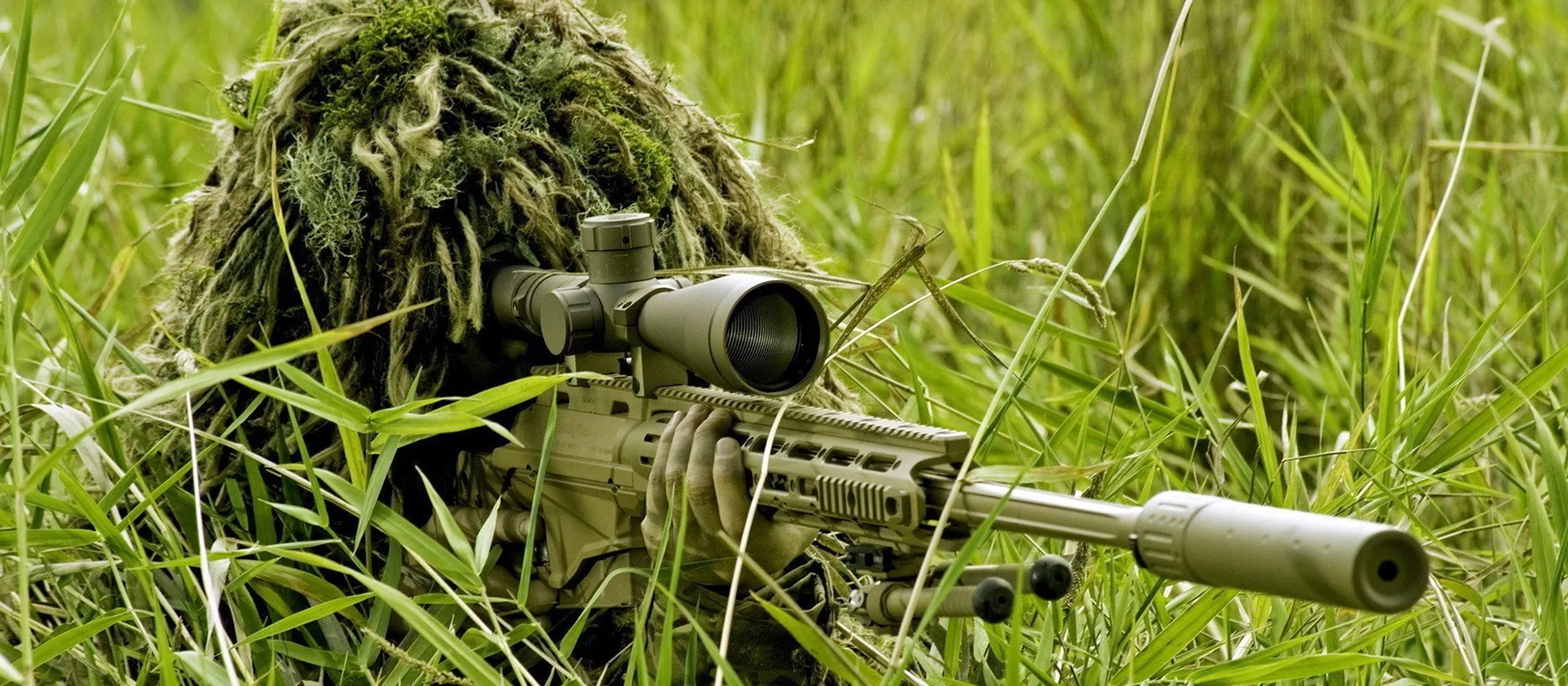
A sniper is a highly trained soldier who specializes in delivering precision long-range fire and conducting clandestine reconnaissance. Unlike the Designated Marksman (DM), who operates as part of an infantry squad to extend its reach, the sniper usually operates in a two-person team—consisting of a shooter and a spotter—often independent of a larger maneuver element.
In 2026, the strategic importance of the sniper has been amplified by the proliferation of advanced drone technology and electronic warfare. While technology provides many answers, the human element of a sniper team remains the most reliable method for "eyes-on" intelligence in contested environments. Their primary missions include:
- Precision Fires: Neutralizing high-value targets, crew-served weapons, and command-and-control nodes.
- Intelligence Collection: Observing enemy movements and reporting in real-time without being detected.
- Counter-Sniper Operations: Protecting friendly forces from enemy precision shooters.
- Psychological Impact: Creating a sense of uncertainty and fear within enemy ranks, restricting their freedom of movement.
Foundational Prerequisites: Who Can Apply?
The Army does not allow just any soldier to attend the Sniper Course. Because the investment in each candidate is so high, the Army uses a strict set of prerequisites to filter out those unlikely to succeed. These standards are checked both at the unit level and upon arrival at the United States Army Sniper School (USASC) at Fort Moore.
Military Occupational Specialty (MOS) Requirements
Only soldiers in specific combat arms roles are eligible for the B4 ASI. As of 2026, these include:
- 11B (Infantryman): The primary MOS for the sniper community.
- 19D (Cavalry Scout): Scouts often utilize sniper skills for their reconnaissance-heavy mission sets.
- 18 Series (Special Forces): Green Berets frequently attend USASC to bolster their team’s precision fire capabilities.
Additionally, candidates must be in the rank of E-3 (PFC) through E-6 (SSG). Officers are generally not eligible for the B4 identifier, as their role is focused on command rather than technical execution, though they may occasionally attend for familiarization depending on unit requirements.
Physical and Mental Health Standards
The physical demands of stalking and remaining stationary for 48 to 72 hours require a specific physical profile.
- ACFT Performance: Candidates should ideally score 490 or higher on the Army Combat Fitness Test (ACFT), with no less than 70 points in any single event.
- Physical Profile (PULHES): A candidate must have a physical profile of 111221 or better.
- Vision: Must have 20/20 vision or vision that is correctable to 20/20. Color blindness is a disqualifier, as the ability to distinguish subtle changes in vegetation and terrain is vital for concealment.
- Psychological Evaluation: Candidates must have no record of behavioral health issues. A psychological screening is often required to ensure the soldier can handle the isolation and the moral weight of precision engagement.
Academic and Marksmanship Minimums
- GT Score: A General Technical (GT) score of 100 or higher is mandatory. This is because snipers must master complex ballistics, including the effects of density altitude, humidity, and the Coriolis effect on a bullet's trajectory.
- Marksmanship: The soldier must have qualified "Expert" on their assigned service rifle (M4A1) within six months of the course start date.
The Path to Fort Moore: How to Get a School Slot
Simply meeting the requirements does not guarantee a seat at the school. The "pathway" is often internal to a soldier's battalion.
The Importance of the Sniper Section
Most infantry battalions have a dedicated sniper section within the Headquarters and Headquarters Company (HHC). To get to the school, a soldier must first be assigned to this section. This usually involves a "Sniper Indoctrination" or "Screener," a grueling multi-day event held by the unit's current snipers to test the candidate’s physical grit and aptitude.
Unit-Level Pre-Sniper Courses
Many divisions, such as the 82nd Airborne or the 10th Mountain Division, run their own pre-sniper courses. These are designed to teach the basics of range estimation and stalking before the soldier arrives at Fort Moore. Statistics from 2025 and 2026 show that soldiers who attend a formal pre-sniper program have a 40% higher graduation rate at the official Army course.
The United States Army Sniper Course (USASC) Curriculum
The USASC is a seven-week course held at Fort Moore, Georgia. It is designed to take a competent infantryman and turn them into a master of fieldcraft and long-range shooting.
Phase 1: Fieldcraft and Stalking
This is often where the highest number of failures occur. Fieldcraft is the art of using the environment to remain undetected.
- Stalking: Students must move through a designated lane (typically 800-1,000 meters) toward an observation post (OP) manned by instructors with high-powered optics. They must get within 200 meters, take two shots (using blanks) without being spotted, and remain undetected even when instructors move to within feet of their position.
- Target Detection (TD): This tests a student’s ability to find hidden objects (uniform pieces, optics, military gear) in dense terrain using only their spotting scope and binoculars.
- Range Estimation: Students must be able to determine the distance to targets within a 3% margin of error using only their reticle, without the aid of laser rangefinders.
Phase 2: Advanced Marksmanship and Ballistics
Once fieldcraft is mastered, the focus shifts to the weapon systems.
- Ballistic Calculations: Students spend hours in the classroom learning the math behind bullet flight. In 2026, while digital ballistics computers are used, every student must demonstrate the ability to calculate a firing solution manually.
- Known Distance (KD) and Unknown Distance (UKD): Shooting at targets from 300 to 1,500 meters. This includes moving target engagements and high-angle shooting.
- Weapon Systems: Training primarily focuses on the M2010 Enhanced Sniper Rifle and the MK22 Precision Sniper Rifle (PSR), along with the M110 Semi-Automatic Sniper System (SASS).
Phase 3: Mission Employment
The final phase simulates real-world operations. Students are given a Mission Briefing and must conduct a full planning cycle, infiltration, execution of a precision shot, and exfiltration. This phase tests the ability to maintain discipline and accuracy under the stress of sleep deprivation and simulated enemy pursuit.
Comparison: Sniper vs. Designated Marksman (SDM)
It is a common misconception that the Sniper and the Squad Designated Marksman (SDM) are the same. Their roles and training are distinct.
| Feature | US Army Sniper (B4) | Squad Designated Marksman (SDM) |
|---|---|---|
| Primary Mission | Reconnaissance & Precision Fire | Extending Squad Engagement Range |
| Training Duration | 7 Weeks (USASC) | 1-2 Weeks (Unit/Division Level) |
| Typical Range | 300m to 1,500m+ | 0m to 600m |
| Operation | 2-man Independent Team | Integrated with 9-man Infantry Squad |
| Primary Weapon | MK22 PSR / M2010 ESR | M110A1 SDMR / Modified M4 |
| Fieldcraft | Expert (Stalking/Camouflage) | Basic Infantry Skills |
Equipment and Weapons Systems of the 2026 Sniper
The technological landscape of 2026 has provided the Army sniper with unprecedented capabilities. The current inventory focuses on multi-caliber flexibility and advanced optics.
- MK22 Precision Sniper Rifle (PSR): The current flagship system. It is a bolt-action rifle that can be converted between 7.62 NATO, .300 Norma Magnum, and .338 Norma Magnum. This allows the sniper to tailor their caliber to the specific mission—whether they need the portability of the 7.62 or the extreme range of the .338.
- M110A1 SDMR/SASS: Used for rapid-fire engagements and shorter-range missions where a semi-automatic capability is necessary.
- Optics: Most systems are now paired with the Nightforce ATACR or similar high-magnification glass, often integrated with a clip-on thermal or night vision device (like the AN/PVS-30).
- Ballistic Solvers: The use of the Kestrel 5700 Elite with Applied Ballistics is standard, allowing snipers to input weather data and receive an immediate hold-over for their scope.
Challenges and Reasons for Attrition
The failure rate at USASC consistently hovers around 50% to 60%. Understanding why soldiers fail is critical for anyone preparing for the course.
- The "Ghillie Wash": Early in the course, students are often subjected to intense physical exertion while wearing their heavy, heat-trapping ghillie suits. Many quit during this phase due to heat exhaustion or mental fatigue.
- Mental Rigidity: Many expert shooters fail because they cannot adapt to the math of ballistics. They rely on "feel" rather than data, which fails them at distances beyond 800 meters.
- Attention to Detail: In target detection, missing a 2-inch piece of a lens reflecting in the sun can result in a failing grade. The course demands a level of detail that most soldiers have never encountered.
Career Progression After Graduation
Earning the B4 ASI is just the beginning. A sniper’s career progression typically follows a specific trajectory:
- Sniper Team Member: Usually the shooter, focused on mastering the fundamentals.
- Sniper Team Leader: Usually the spotter and more senior member, responsible for navigation, communication, and the final ballistic call.
- Sniper Section Leader: An E-6 (SSG) who manages all the teams in a battalion, overseeing training and employment during deployments.
- Instructor Duty: High-performing snipers may return to Fort Moore to serve as cadre at USASC.
Frequently Asked Questions
Can a civilian go straight to Sniper School in their enlistment contract? No. There is no "Sniper Contract" similar to an Option 40 (Ranger) or 18X (Special Forces) contract. You must first enlist as an 11B or 19D, complete Initial Entry Training, arrive at your unit, and then be selected by your battalion to attend the school.
Is the Army Sniper Course open to women? Yes. Since the opening of all combat MOSs to women in 2016, the Sniper Course is open to any female soldier who holds the required MOS and meets the physical and marksmanship prerequisites. Several women have successfully graduated and earned the B4 identifier.
How long is the B4 qualification valid? The B4 Additional Skill Identifier is a permanent part of a soldier's record once they graduate from USASC. However, staying in a sniper section requires constant re-qualification and maintaining high physical standards. If a soldier is promoted to E-7 (SFC), they typically move into a platoon sergeant role and out of the active sniper section.
What is the "Death Clinic"? "Death Clinic" is a colloquial term sometimes used by students for the rigorous academic portion of the course where ballistics and range estimation are taught. It refers to the "death" of a student’s GPA if they cannot master the complex formulas required to pass the written and practical exams.
Practical Recommendation for Aspiring Snipers
If you are aiming to become a U.S. Army sniper in 2026, your preparation should begin long before you see a ghillie suit. Focus on three pillars: Physicality, Marksmanship, and Mathematics.
First, master the ACFT. You need a "gas tank" that allows you to rucksack for miles and then remain perfectly still. Second, don't just "shoot" your M4; understand the mechanics of zeroing and the impact of wind. Finally, brush up on basic algebra and geometry. The ability to quickly manipulate formulas for range estimation and windage is what separates a student from a graduate. Once at your unit, seek out the Sniper Section Leader immediately and express your interest; the pathway to Fort Moore is paved by those who show initiative and a high level of technical competence.