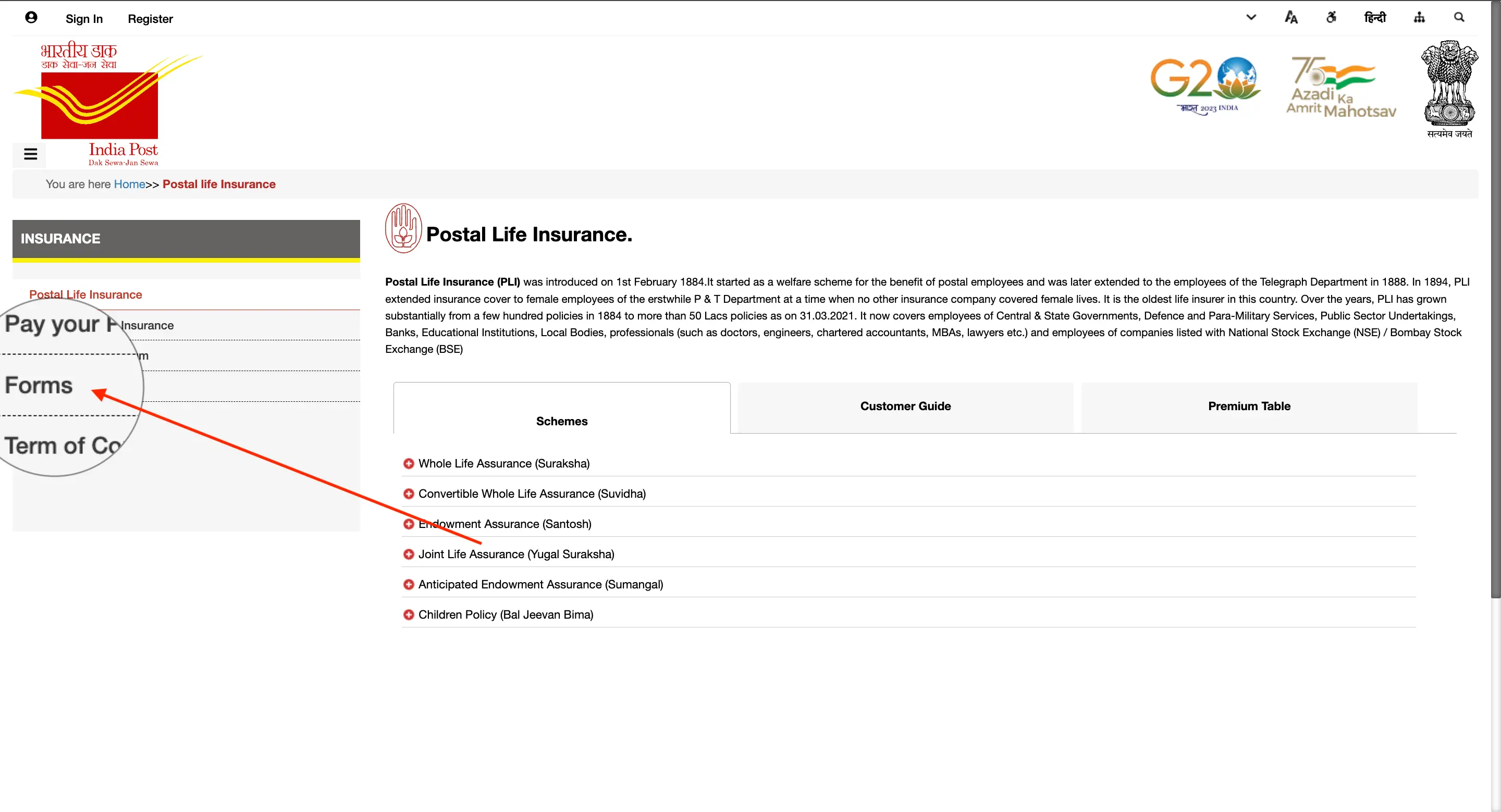
Army Postal Life Insurance (APLI) is a specialized extension of India’s Postal Life Insurance (PLI) scheme, specifically designed to provide high-cover, low-premium life insurance to defense and paramilitary personnel. Managed by the Department of Posts, it offers government-backed security, significant bonus rates, and tax benefits for those serving in the armed forces.
The Army Postal Life Insurance (APLI) system represents one of the oldest and most resilient financial institutions in India. While many modern insurance products are characterized by complex market-linked risks, APLI remains a traditional "With Profits" scheme. This means the policyholder shares in the surplus generated by the fund, which is historically much higher than private sector alternatives. As of 2026, defense personnel continue to prioritize APLI not just for the death benefit, but as a disciplined savings vehicle that caters to the unique lifecycle and retirement patterns of military service.
The Evolution of Postal Life Insurance for Defense Personnel
Postal Life Insurance (PLI) was originally introduced on February 1, 1884, as a welfare scheme for the employees of the Post Office. Over the decades, its scope expanded significantly. By the late 20th century, the scheme was extended to include employees of Central and State Governments, Public Sector Undertakings (PSUs), Universities, and Government-aided Educational Institutions.
The specific inclusion of the Defense Services—the Army, Navy, and Air Force—created what is colloquially and operationally known as Army Postal Life Insurance. This branch is managed through the Army Postal Service (APS) directorate. The primary logic behind this expansion was to provide military personnel with an insurance product that did not exclude "war risks" or "high-risk deployments," which are often sticking points in commercial insurance contracts. In 2026, APLI stands as a cornerstone of financial planning for the Indian soldier, offering a sovereign guarantee that no private insurer can match.
Eligibility and Scope of APLI
Understanding who can apply for APLI is the first step in utilizing this benefit. The eligibility criteria are strictly defined to ensure the benefits reach the intended public service sectors.
The following categories of personnel are eligible for APLI:
- Defense Services: All personnel of the Indian Army, Indian Navy, and Indian Air Force.
- Para-Military Forces: Including the BSF, CRPF, ITBP, CISF, SSB, and Assam Rifles.
- Reserve Police Forces: State-level armed police units.
- GREF and BRO: Personnel of the General Reserve Engineer Force and Border Roads Organization.
- Ex-Servicemen: Those who have retired from active service but wish to maintain or initiate policies (subject to specific age and health conditions).
The inclusion of the spouse of any eligible employee is also a significant feature. Under the Yugal Suraksha scheme, the spouse of a defense person can be covered even if the spouse is not a government employee themselves, provided the primary policyholder meets the eligibility criteria.
Core Insurance Schemes Under APLI
APLI is not a single product but a suite of six distinct insurance plans tailored to different financial goals, such as long-term wealth creation, child education, or periodic liquidity.
1. Whole Life Assurance (Suraksha)
Suraksha is the foundational policy of APLI. It provides coverage for the entire life of the insured, with the sum assured and accumulated bonuses paid out when the policyholder reaches the age of 80, or to the legal heir/nominee upon the death of the insured.
- Entry Age: Minimum 19 years; Maximum 55 years.
- Sum Assured: Minimum ₹20,000; Maximum ₹50 Lakhs.
- Conversion: A unique feature of Suraksha is that it can be converted into an Endowment Assurance policy after one year and before reaching 59 years of age.
2. Endowment Assurance (Santosh)
This is the most popular plan under APLI. It is a time-bound savings and protection plan where the sum assured and bonuses are paid at a predetermined maturity age.
- Maturity Ages: Policyholders can choose to mature the policy at ages 35, 40, 45, 50, 55, 58, or 60.
- Death Benefit: If the insured passes away before maturity, the full sum assured plus accumulated bonuses are paid to the nominee.
- Suitability: It is ideal for personnel planning for their retirement or for a specific milestone, such as a child’s marriage.
3. Convertible Whole Life Assurance (Suvidha)
Suvidha offers the best of both worlds. It starts as a Whole Life Assurance policy (with lower premiums) but gives the policyholder the option to convert it into an Endowment Assurance policy after five years of inception.
- Conversion Window: The option to convert must be exercised at the end of five years from the date of commencement.
- Default Behavior: If the option is not exercised, the policy continues as a Whole Life Assurance plan.
4. Anticipated Endowment Assurance (Sumangal)
Sumangal is a "Money Back" policy designed for personnel who need periodic infusions of cash. It is particularly useful for those who have recurring expenses like school fees or home loan repayments.
- Policy Terms: 15 years or 20 years.
- Survival Benefits (20-year term): 20% of sum assured paid after 8, 12, and 16 years. The remaining 40% plus full accumulated bonus is paid at maturity (20 years).
- Full Cover: Unlike many private money-back plans, if the insured passes away during the term, the full sum assured and bonus are paid, without deducting the survival benefits already paid.
5. Joint Life Assurance (Yugal Suraksha)
This plan covers both the eligible employee and their spouse under a single premium.
- Eligibility: One of the spouses must be eligible for PLI.
- Benefit: The sum assured and bonus are paid at the end of the term or on the death of either of the two insured individuals.
- Maximum Sum Assured: Limited to ₹50 Lakhs combined.
6. Children Policy (Bal Jeevan Bima)
This scheme provides life insurance cover to the children of PLI/APLI policyholders.
- Limit: Maximum two children in a family.
- Age Limit: Children must be between 5 and 20 years old.
- Exemption: No medical examination is required for the child, and if the parent (the main policyholder) dies, the child’s policy becomes "paid up," meaning no further premiums are required, but the child remains covered.
Comparative Overview of APLI Schemes
| Scheme Name | Minimum/Maximum Entry Age | Maximum Sum Assured | Loan Facility | Surrender Period |
|---|---|---|---|---|
| Suraksha (Whole Life) | 19 - 55 Years | ₹50 Lakhs | After 4 Years | After 3 Years |
| Santosh (Endowment) | 19 - 55 Years | ₹50 Lakhs | After 3 Years | After 3 Years |
| Suvidha (Convertible) | 19 - 50 Years | ₹50 Lakhs | After 4 Years | After 3 Years |
| Sumangal (Money Back) | 19 - 40/45 Years | ₹50 Lakhs | No Loan | After 3 Years |
| Yugal Suraksha (Joint) | 21 - 45 Years | ₹50 Lakhs | After 3 Years | After 3 Years |
| Bal Jeevan Bima | 5 - 20 (Child) | ₹3 Lakhs | No Loan | No Surrender |
Financial Advantages: Why Choose APLI in 2026?
In the current financial landscape of 2026, the volatility of equity markets and the lowering of interest rates on traditional Fixed Deposits make APLI an attractive alternative.
High Bonus Rates
The Department of Posts operates with significantly lower overhead costs compared to private insurance firms that spend heavily on marketing and commissions. These savings are passed on to policyholders in the form of higher bonuses. Historically, PLI bonus rates have hovered between ₹50 to ₹76 per ₹1,000 of the sum assured per year, depending on the plan. For a ₹10 Lakh policy, a bonus of ₹60/1000 translates to an annual addition of ₹60,000 to the policy value.
Low Premium Costs
Because APLI is a welfare scheme, the premiums are kept at the lowest possible level. This ensures that even lower-ranked personnel can afford significant life cover without straining their monthly budget.
Tax Benefits under Section 80C
Premiums paid toward APLI are eligible for tax deductions under Section 80C of the Income Tax Act. Furthermore, the maturity proceeds and death benefits are generally tax-exempt under Section 10(10D), subject to the prevailing tax laws of 2026 regarding premium-to-sum-assured ratios.
Loan and Surrender Facilities
Life often throws unexpected financial challenges. APLI allows policyholders to take loans against their policies after a cooling-off period (usually 3 to 4 years). The interest rates on these loans are typically lower than personal loans from commercial banks. While surrendering a policy is generally discouraged as it results in the loss of certain bonus benefits, the facility exists for those in dire need of liquidity.
The Application and Management Process
The digitalization efforts by the India Post and the Army Postal Service have streamlined the application process. In 2026, most interactions can be handled through the ePLI Portal.
Step-by-Step Application
- Selection: Choose the plan that fits your age and financial goals.
- Documentation: Prepare the necessary documents, which include:
- Proof of Age (Matriculation certificate, Service book entry).
- Proof of Identity and Address.
- Medical Examiner’s Report (from a government doctor or designated medical officer).
- Declaration of Health.
- Submission: Forms can be submitted at any Head Post Office or through the APS (Army Postal Service) units.
- Verification: The Directorate of PLI verifies the service credentials of the applicant.
- Policy Bond: Once approved, a policy bond is issued, which is the legal document of the contract.
Premium Payment Methods
Modern APLI management allows for multiple payment avenues:
- Salary Deduction: The most convenient method for active-duty personnel. The premium is automatically deducted from the monthly pay.
- Online Payment: Through the IPPB (India Post Payments Bank) app or the PLI portal.
- Over-the-Counter: At any computerized post office across India.
Critical Considerations and Limitations
While APLI is highly beneficial, it is not without its limitations. One of the primary constraints is the aggregate limit of ₹50 Lakhs across all PLI/APLI policies for a single individual. In 2026, with rising inflation, some high-net-worth officers might find this limit insufficient for their total insurance needs and may need to supplement APLI with a term insurance policy from a private provider.
Additionally, the surrender rules are strict. If a policy is surrendered before five years, no bonus is paid. Even after five years, the "surrender value" of the bonus is lower than the full accumulated amount. Therefore, APLI should be viewed as a long-term commitment.
Frequently Asked Questions (FAQs)
Can I continue my APLI policy after I retire from the Army?
Yes, you can continue your policy after retirement. You will need to transition from salary deduction to manual or online payments. Once a policy is issued while you are in service, it remains valid regardless of your change in employment status, provided premiums are paid.
What happens if I miss a premium payment?
If premiums are not paid, the policy may lapse. A policy lapses after six unpaid premiums if it has been in force for less than three years, or after twelve unpaid premiums if it has been in force for more than three years. You can "revive" a lapsed policy by paying the arrears plus interest and providing a medical certificate of good health.
Is a medical exam mandatory for all APLI policies?
Generally, yes. A medical examination by a designated medical officer is required to assess the risk. However, for certain low-sum-assured policies or specific "Non-Medical" schemes (if applicable under current 2026 guidelines), the requirements might be relaxed.
How are claims settled in case of the unfortunate death of the insured?
The nominee must submit the original policy bond, a death certificate, and a claim form to the nearest Post Office or APS unit. For defense personnel, the unit commander often assists in the documentation process. APLI is known for a relatively high claim-settlement ratio and quick processing for "On-Duty" fatalities.
Can I change my nominee after the policy has started?
Yes, you can change or update your nomination at any time during the term of the policy. You need to submit a nomination form to the Post Office where your policy is maintained.
Final Recommendation for 2026
For any member of the defense or paramilitary forces, Army Postal Life Insurance remains the "gold standard" for life cover. Its combination of sovereign safety, low premiums, and industry-leading bonus rates makes it an essential part of a soldier's financial portfolio.
If you are looking for pure protection, start with a high-value Santosh (Endowment) policy. If you require liquidity for your family's growing needs, consider the Sumangal (Money Back) plan. Regardless of the choice, the security provided by the Department of Posts ensures that your family's future remains protected against the uncertainties of military life.