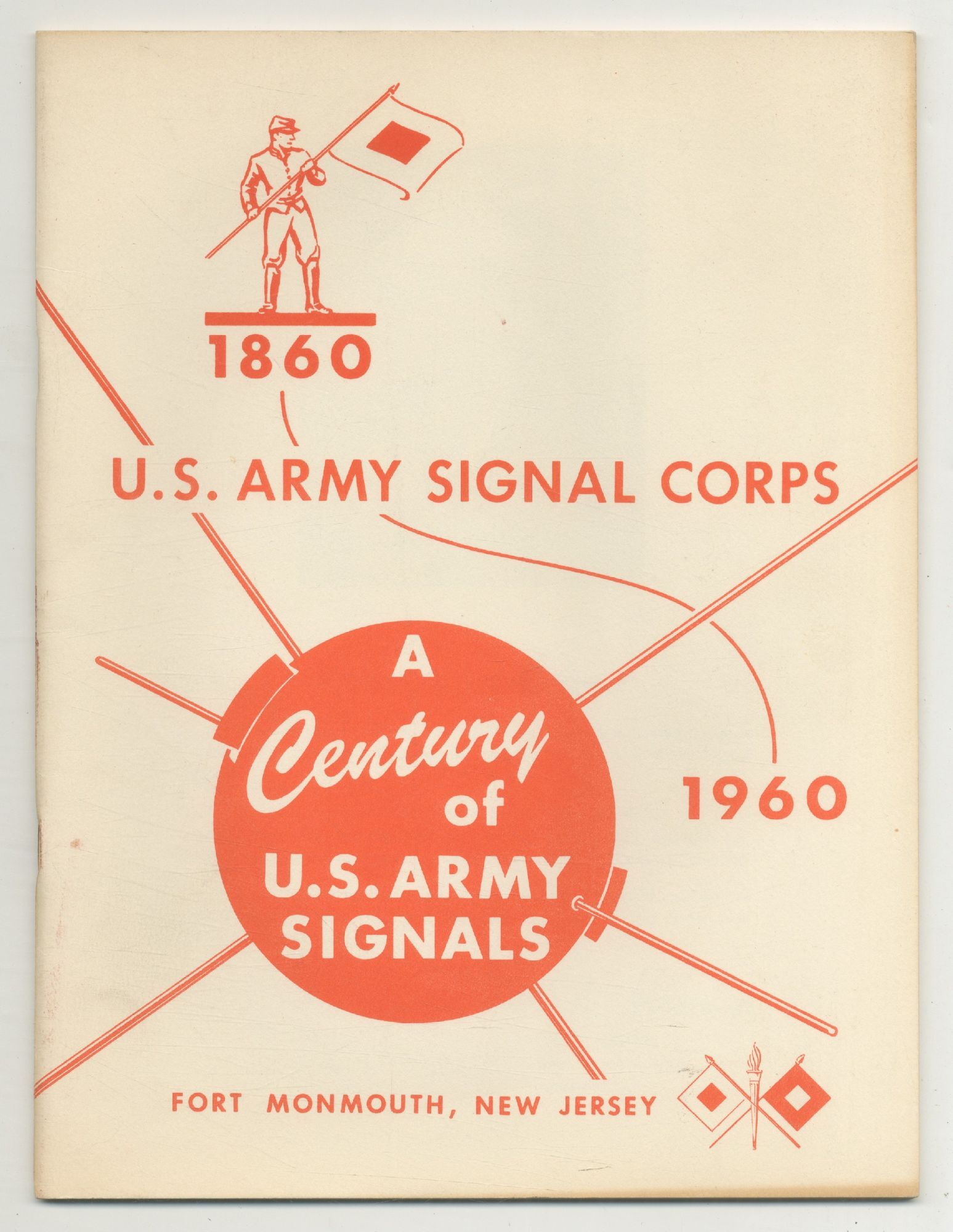
The United States Army Signal Corps serves as the essential "nervous system" of the American military, responsible for managing information systems and communication networks. Established in 1860, it has evolved from using hand-held flags to managing sophisticated satellite constellations, cybersecurity, and artificial intelligence to ensure command and control across all domains of modern warfare.
The Origins of the Signal Corps: Major Albert J. Myer and the Wigwag System
The history of the US Army Signal Corps is inextricably linked to the vision of one man: Major Albert J. Myer. An Army physician by training, Myer developed a system of visual signaling known as "wigwag" signaling. This system utilized a single flag (or a torch at night) moved in specific patterns to represent binary codes. By the onset of the American Civil War, the importance of rapid, long-distance communication became undeniable, leading to the formal appointment of Myer as the first Signal Officer and the official birth of the Corps on June 21, 1860.
During the Civil War, the Signal Corps provided a decisive edge. Signal parties occupied high ground, such as the famous "Signal Mountain" sites, to observe enemy movements and relay instructions to commanders. While the Signal Corps initially struggled for autonomy against the federally controlled Military Telegraph Corps, the conflict proved that specialized communication units were a logistical necessity.
Following the war, the Signal Corps expanded its reach into civilian life. In 1870, Congress assigned the Corps the responsibility of operating the national weather service, a role it maintained for two decades before the duty was transferred to the Department of Agriculture. This period established the Corps' reputation for technical excellence and scientific contribution, laying the groundwork for its transition into the high-tech era.
Technological Milestones Through the World Wars
The 20th century transformed the Signal Corps from a small group of flag-wavers into a massive organization at the forefront of the technological revolution. During World War I, the Corps embraced the telephone and the nascent field of radio. It was also during this time that the "Hello Girls"—bilingual female switchboard operators—became legendary for their efficiency and bravery near the front lines, although they would not receive official military recognition for their service until decades later.
World War II marked a paradigm shift. The Signal Corps grew exponentially, reaching a peak strength of over 350,000 personnel. This era saw the development and deployment of critical technologies that changed the course of history:
- Radar (Radio Detection and Ranging): Signal Corps scientists at the Signal Corps Engineering Laboratories (SCEL) were instrumental in developing early warning radar systems, including the SCR-270, which famously detected Japanese aircraft approaching Pearl Harbor.
- The Walkie-Talkie: The SCR-300 and the hand-held SCR-536 revolutionized small-unit tactics, allowing squad leaders to communicate in real-time while on the move.
- Cryptography and SIGINT: The Corps played a pivotal role in breaking enemy codes and securing American transmissions, a precursor to modern signals intelligence (SIGINT) and cybersecurity.
In the post-war era and throughout the Cold War, the Corps spearheaded the transition to satellite communications. In 1958, the Signal Corps launched Project SCORE, the world's first communications satellite, which broadcasted a Christmas message from President Dwight D. Eisenhower. This set the stage for the global satellite networks that the military—and the world—rely on today.
The Modern Role of the Signal Corps in 2026
As of 2026, the Signal Corps has transitioned into a "data-centric" force. The modern battlefield is no longer just about voice communication; it is about the seamless flow of massive data packets between sensors, shooters, and commanders. The Corps is the primary architect of the Unified Network, a comprehensive infrastructure that merges the Army’s "enterprise" (home station) networks with "tactical" (battlefield) networks.
The current mission of the Signal Corps is defined by three primary pillars:
1. Joint All-Domain Command and Control (JADC2)
The Signal Corps is the Army’s primary contributor to JADC2, a Department of Defense initiative to connect sensors from all branches of the military—Army, Navy, Air Force, Marines, and Space Force—into a single network. By 2026, this has matured into a system where AI-driven nodes automatically route data through the most efficient path, whether it be a terrestrial fiber link, a high-altitude balloon, or a Low Earth Orbit (LEO) satellite.
2. Cybersecurity and Defensive Cyberspace Operations
While the US Army Cyber Command (ARCYBER) focuses on offensive and high-level defensive operations, the Signal Corps is responsible for the "hardening" of the network itself. Signal soldiers ensure that every radio, router, and server is secure against electronic warfare and hacking. In 2026, this includes managing Zero Trust Architecture, where no device is trusted by default, regardless of its location on the network.
3. Multi-Domain Operations (MDO)
In an MDO environment, the Signal Corps must ensure connectivity even when the enemy uses sophisticated jamming and electronic interference. This involves "Primary, Alternate, Contingency, and Emergency" (PACE) planning. Modern Signal units utilize Low Probability of Intercept/Low Probability of Detection (LPI/LPD) waveforms to keep transmissions hidden from enemy electronic warfare units.
Tactical Communications and Technical Specifications
To meet the demands of 2026, the Signal Corps employs a diverse array of hardware and software. The focus has shifted toward "commercial off-the-shelf" (COTS) technology adapted for military use, allowing for faster update cycles.
| System Category | Primary Equipment/Technology | Function & Role | Frequency/Bandwidth |
|---|---|---|---|
| Satellite Comms (SATCOM) | Tactical Terminal (T2C2) / Starshield | High-bandwidth data for remote units via LEO/MEO/GEO constellations. | Ka, Ku, and X-Band |
| Terrestrial Radio | Manpack (AN/PRC-158) | Multi-channel handheld or vehicle radios for voice and data. | 30MHz to 2.5GHz |
| Networking | Unified Network Operations (UNO) | A single software suite to manage all network assets in a theater. | Software Defined |
| Transport | TRILOS (Terrestrial Transmission) | High-capacity line-of-sight radio for backbone data movement. | Band 4+ (Point-to-Point) |
| Expeditionary | Scalable Network Node (SNN) | Rapidly deployable internet and voice for small command posts. | Fiber/Wireless Hybrid |
Career Paths and Technical Specializations
Joining the Signal Corps in 2026 requires a high degree of technical aptitude. The Army categorizes Signal roles under the 25-series Military Occupational Specialties (MOS). As technology has converged, the Army has consolidated many of these roles to create more versatile "Signal Systems Support Specialists."
- 25B - Information Technology Specialist: These soldiers are the administrators of the Army’s computer networks, handling everything from hardware repair to server management and cybersecurity patches.
- 25U - Signal Systems Support Specialist: The "jack-of-all-trades" of the Signal Corps, responsible for integrating radio, wire, and satellite platforms into a cohesive unit network.
- 25H - Network Communication Operations Specialist: A consolidated MOS that handles the installation and maintenance of large-scale nodal equipment and terrestrial transmission systems.
- 25S - Satellite Communication Systems Operator-Maintainer: Specialists who manage the complex ground terminals that link the battlefield to global satellite networks.
For officers, the Signal Corps offers a path into specialized functional areas, such as FA26 (Network Systems Engineering) or FA26B (Information Systems Management). These roles involve designing the high-level architecture that allows different military systems to talk to one another.
Training and Education at Fort Eisenhower
The heart of the Signal Corps is Fort Eisenhower (formerly Fort Gordon), Georgia. This installation serves as the Cyber Center of Excellence (CCoE). Here, soldiers undergo rigorous Advanced Individual Training (AIT) that combines classroom theory with hands-on field exercises.
By 2026, the training curriculum has been updated to include heavy emphasis on cloud computing, mobile ad-hoc networking (MANET), and the mitigation of "Electronic Warfare" (EW). Soldiers are trained not just to set up an antenna, but to understand the "electronic signature" they are emitting and how to minimize it to prevent enemy targeting.
The Signal Corps also prioritizes civilian certifications. Many soldiers graduate from AIT with industry-standard credentials such as CompTIA Security+, Cisco Certified Network Associate (CCNA), and various Microsoft or Amazon Web Services (AWS) certifications. This makes Signal soldiers highly sought after in the civilian job market upon their transition out of the military.
Future Outlook: AI and 5G at the Tactical Edge
Looking beyond 2026, the Signal Corps is heavily invested in the integration of Artificial Intelligence (AI) for network management. In a high-intensity conflict, the complexity of managing thousands of network nodes is too great for humans alone. AI "agents" are being developed to automatically detect network failures or cyber-attacks and re-route data in milliseconds.
Furthermore, the deployment of Military-Grade 5G is transforming how bases and tactical units operate. 5G allows for massive machine-type communications (mMTC), enabling the "Internet of Battlefield Things" (IoBT). This includes everything from autonomous supply vehicles to wearable sensors on individual soldiers that report health data and ammunition counts back to command centers in real-time.
The challenge for the future Signal Corps remains "complexity management." As the technology becomes more advanced, the burden on the individual soldier to maintain and troubleshoot these systems increases. The goal of the Corps is to make the technology "transparent"—meaning it works so reliably and simply that the combat commander can focus entirely on the mission, confident that the "nervous system" of the Army will never fail.
Frequently Asked Questions
What is the primary mission of the Army Signal Corps?
The primary mission is to plan, install, operate, and maintain the Army’s voice and data networks. This ensures that commanders at all levels can exercise command and control, regardless of their geographic location or the presence of enemy electronic interference.
Where is the Signal Corps headquartered?
The Signal Corps is headquartered at Fort Eisenhower, Georgia. This location serves as the US Army Cyber Center of Excellence and is the primary training ground for Signal, Cyber, and Electronic Warfare soldiers.
What is the difference between the Signal Corps and the Cyber Corps?
While they are closely related, the Signal Corps is primarily responsible for the infrastructure and "connectivity" of the network (the "pipes"). The Cyber Corps focuses on operations within the network, including offensive cyber-attacks against enemies and high-level defensive operations to protect Army data from sophisticated state-sponsored hackers.
Can Signal Corps soldiers see combat?
Yes. Signal soldiers are often embedded with infantry, armor, and special operations units. Because a unit cannot function without communication, Signal personnel are present at the "tactical edge" and are trained in combat skills to defend themselves and their equipment.
What civilian jobs are available for former Signal soldiers?
Signal veterans are highly qualified for roles such as Network Administrator, Cybersecurity Analyst, Telecommunications Engineer, IT Project Manager, and Systems Architect. The certifications and security clearances obtained during service provide a significant advantage in the private sector.
Practical Recommendation for Interested Candidates
For those considering a career in the US Army Signal Corps, the most effective next step is to focus on foundational technical skills before enlistment or commissioning. Prospective soldiers should aim for high scores in the General Technical (GT) and Electrical (EL) segments of the ASVAB test. Familiarity with Python, network protocols (TCP/IP), and basic radio theory will provide a significant advantage during the rigorous training at Fort Eisenhower. Additionally, maintaining a clean background is essential, as almost all Signal roles require at least a Secret, and often a Top Secret, security clearance.