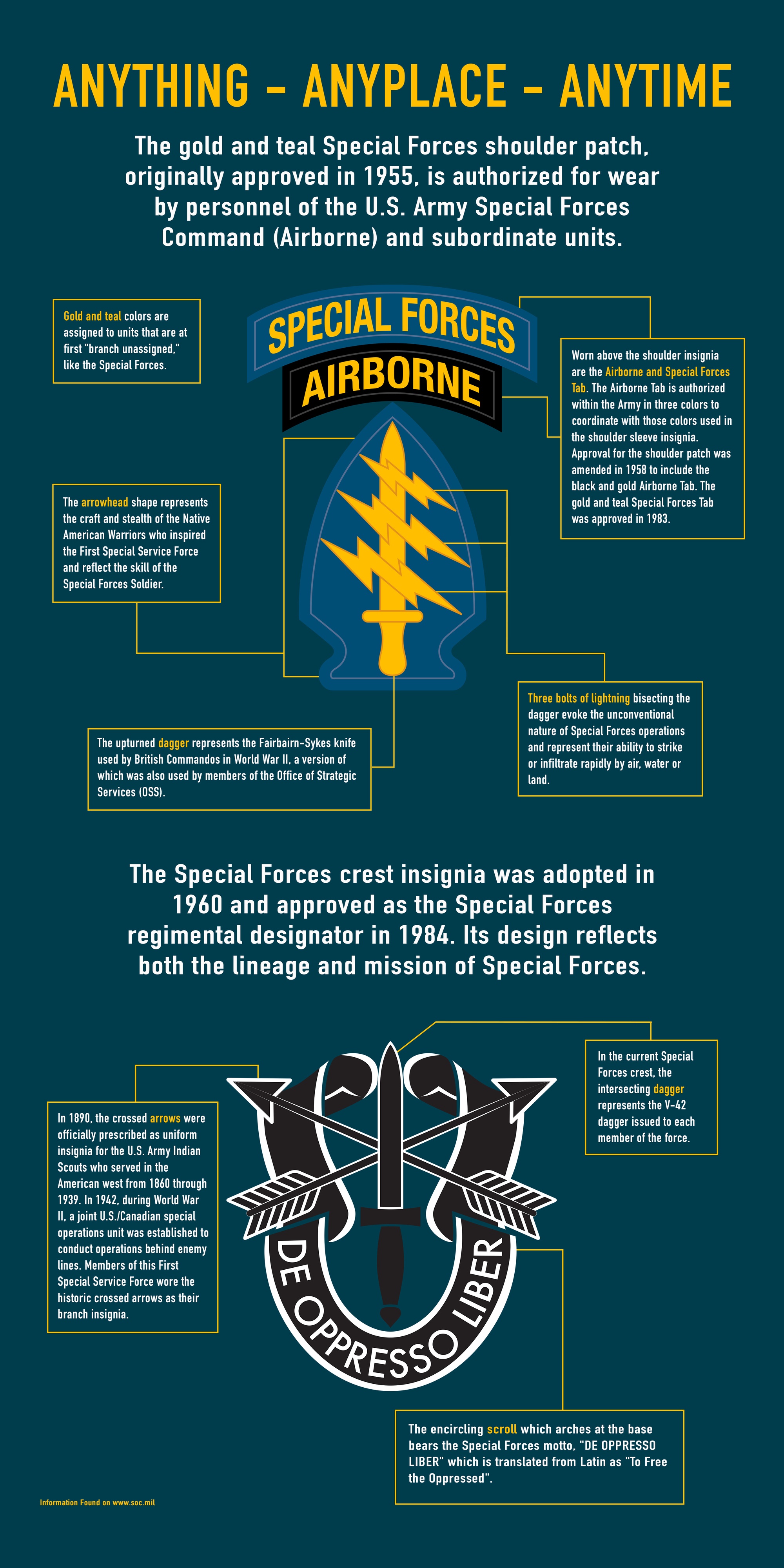
Army Special Forces, known colloquially as the Green Berets, utilize a specialized rank structure where every member is at least a Non-Commissioned Officer (NCO) or a Commissioned Officer. This hierarchy ensures that every man on a 12-man Operational Detachment Alpha (ODA) possesses the maturity, technical skill, and leadership capacity required for unconventional warfare and foreign internal defense.
The Unique Composition of Special Forces Ranks
To understand Army Special Forces ranks, one must first understand that there are no "junior enlisted" soldiers—Privates or Specialists—serving in operational roles within an SF team. While the broader U.S. Army relies heavily on E-1 through E-4 ranks for general labor and basic tactical execution, the Special Forces mission set demands a higher baseline of autonomy.
In 2026, the entry-level rank for a qualified Special Forces soldier remains Sergeant (E-5). Even those who enter the Army through the 18X (Special Forces Candidate) enlistment contract must complete Infantry One Station Unit Training (OSUT), Airborne School, and the Special Forces Preparation Course before entering the Special Forces Qualification Course (SFQC). They are promoted to Sergeant only upon the successful completion of the "Q-Course" and the awarding of their "Long Tab."
This structure creates a "flat" hierarchy compared to conventional units. In a standard infantry platoon, a Lieutenant might command 30 to 40 soldiers, many of whom have less than two years of experience. In an SF ODA, a Captain commands 11 other men, all of whom are seasoned experts in their respective fields, often with a decade or more of military service.
Enlisted Special Forces Ranks (18-Series MOS)
The backbone of the Special Forces is the Enlisted NCO. These soldiers hold "18-series" Military Occupational Specialties (MOS). Each rank within the ODA corresponds to specific responsibilities that blend tactical proficiency with instructional capability.
Sergeant (E-5) and Staff Sergeant (E-6)
At the E-5 and E-6 levels, Special Forces soldiers are considered "junior" only in the context of the ODA. These men are typically the primary operators in one of the five functional specialties:
- 18B (Weapons Sergeant): Experts in every imaginable weapon system, from small arms to heavy anti-tank missiles and mortars.
- 18C (Engineer Sergeant): Specialists in construction, explosives, and demolition, capable of building bridges or destroying strategic infrastructure.
- 18D (Medical Sergeant): Widely considered the most highly trained trauma medics in the military, capable of performing field surgery and long-term care in austere environments.
- 18E (Communications Sergeant): The link between the team and the rest of the world, mastering everything from high-frequency radio to encrypted satellite bursts.
Sergeant First Class (E-7)
The rank of Sergeant First Class is the "working" rank of the ODA. Most 12-man teams feature several SFCs. At this level, the soldier often serves as the "Senior" in their MOS (e.g., Senior Weapons Sergeant). They are responsible for mentoring the junior NCOs on the team and often take the lead in training indigenous forces—a core pillar of the Green Beret mission.
Master Sergeant (E-8) and the Team Sergeant
The Master Sergeant (MSG) holds one of the most critical positions in the entire Special Forces community: the Team Sergeant. While a Captain technically commands the ODA, the Team Sergeant is the "graybeard" with the most operational experience. He is responsible for the daily operations, discipline, and logistical execution of the team’s mission. In 2026, becoming an SF Team Sergeant typically requires 15 to 20 years of service and multiple combat or overseas deployments.
Sergeant Major (E-9)
At the E-9 level, Special Forces NCOs move into leadership roles at the Company, Battalion, or Group level. A Sergeant Major (SGM) might serve as the Operations SGM for a Special Forces Company (the ODB) or as the Command Sergeant Major (CSM) for an entire Special Forces Group. Their role shifts from tactical execution to strategic planning and personnel management.
The Warrant Officer: The Technical Expert
The Army Special Forces Warrant Officer is a unique entity in the U.S. military. Unlike pilots or technical technicians in the conventional Army, an SF Warrant Officer (MOS 180A) is a former senior Enlisted Green Beret who has transitioned into a specialized leadership role.
Warrant Officer 1 (WO1) to Chief Warrant Officer 5 (CW5)
The SF Warrant Officer serves as the Assistant Detachment Commander. They provide a bridge between the NCOs and the Commissioned Officer (the Captain).
- Technical Authority: They are the team's primary advisors on the technical and tactical integration of SF operations.
- Continuity: While Commissioned Officers rotate out of teams to fulfill staff requirements, Warrant Officers often stay in operational tracks much longer, providing the institutional memory of the ODA.
- Requirements: To become an 180A, an applicant must usually be at least a Staff Sergeant (E-6) with several years of experience on an ODA. This ensures that every Warrant Officer is a proven commodity before they ever attend the Warrant Officer Candidate School.
Commissioned Officer Ranks in Special Forces
Commissioned Officers enter the Special Forces branch (18A) typically at the rank of Captain. Most begin their careers in a conventional branch (like Infantry, Armor, or Artillery) and apply for Special Forces Assessment and Selection (SFAS) during their third or fourth year of service.
Captain (O-3): The Detachment Commander
The Captain is the legal and tactical commander of the 12-man ODA. They are responsible for everything the team does or fails to do. Unlike conventional Captains who might command a 120-man company, an SF Captain commands a small, elite group of specialists. This requires a leadership style based on competence and mutual respect rather than raw authority.
Major (O-4) to Colonel (O-6)
As SF officers promote, they move into higher-echelon command roles:
- Major: Typically commands a Special Forces Company (ODB), which consists of six ODAs and a support element.
- Lieutenant Colonel: Commands a Special Forces Battalion (ODC).
- Colonel: Commands a Special Forces Group (SFG). There are currently five active-duty and two National Guard SF Groups.
General Officers (O-7 to O-10)
Special Forces officers can rise to the highest levels of the military. Leaders such as the Commander of U.S. Army Special Operations Command (USASOC) or the U.S. Special Operations Command (USSOCOM) often come from the Green Beret ranks. These officers shape the future of unconventional warfare at the Pentagon and on the global stage.
Summary Table: Special Forces ODA Rank Structure
The following table illustrates the standard composition of a 12-man Operational Detachment Alpha (ODA) as of 2026.
| Position | Typical Rank | MOS Code | Primary Responsibility |
|---|---|---|---|
| Detachment Commander | Captain (O-3) | 18A | Overall command, planning, and legal responsibility. |
| Assistant Commander | Warrant Officer (WO1-CW2) | 180A | Technical expert, tactical advisor, and continuity. |
| Operations (Team) Sergeant | Master Sergeant (E-8) | 18Z | Senior NCO, daily operations, and logistics. |
| Assistant Ops/Intelligence | Sergeant First Class (E-7) | 18F | Intelligence gathering, analysis, and team security. |
| Senior Weapons Sergeant | Sergeant First Class (E-7) | 18B | Tactical employment of all team weapon systems. |
| Junior Weapons Sergeant | Staff Sergeant (E-6) | 18B | Maintenance and operation of organic and foreign arms. |
| Senior Engineer Sergeant | Sergeant First Class (E-7) | 18C | Demolitions, construction, and sabotage planning. |
| Junior Engineer Sergeant | Staff Sergeant (E-6) | 18C | Tactical breaching and construction execution. |
| Senior Medical Sergeant | Sergeant First Class (E-7) | 18D | Advanced trauma care and indigenous health programs. |
| Junior Medical Sergeant | Staff Sergeant (E-6) | 18D | Field medicine and medical supply management. |
| Senior Communications | Sergeant First Class (E-7) | 18E | Satellite, radio, and digital comms infrastructure. |
| Junior Communications | Staff Sergeant (E-6) | 18E | Encryption, antenna theory, and tech maintenance. |
Path to Promotion Within Special Forces
Promotion in the Special Forces is highly competitive but follows the standard Army timeline with some nuances. Because SF soldiers are older and more experienced than their conventional counterparts, they often reach higher pay grades faster than those in support roles.
From Candidate to Operator
For those entering via the 18X program, the journey from civilian to Sergeant (E-5) takes approximately 18 to 24 months. This includes:
- Infantry OSUT: 22 weeks of basic and advanced infantry training.
- Airborne School: 3 weeks of parachute training.
- SFPC: 6 weeks of physical and land navigation preparation.
- SFAS (Selection): 3 weeks of grueling physical and mental evaluation.
- SFQC (Q-Course): 12 to 24 months depending on MOS (Medical and Language phases take the longest).
Advancement for NCOs
Once a Green Beret is on a team, promotion to Staff Sergeant (E-6) and Sergeant First Class (E-7) depends on time in grade, time in service, and operational performance. In 2026, the Army emphasizes "merit-based" promotions. An 18D (Medic) who saves lives in a combat zone or an 18E (Comms) who develops a new encryption protocol will likely see accelerated promotion boards.
The 18Z Conversion
When a Special Forces NCO reaches the rank of Master Sergeant (E-8), their MOS often converts from their specific specialty (B, C, D, or E) to 18Z (Operations Sergeant). This signifies that they are no longer just a specialist in one area but a generalist capable of managing all aspects of an SF team's operations.
Frequently Asked Questions
Can a Specialist (E-4) be a Green Beret?
No. While a Specialist can attend Special Forces Assessment and Selection (SFAS), they are not officially awarded the Special Forces Tab or the Green Beret until they have completed the Q-Course, at which point they are promoted to Sergeant (E-5). There are no junior enlisted operators on a Special Forces team.
What is the difference between a Team Sergeant and a Team Leader?
The Team Leader is a Commissioned Officer (Captain), responsible for the strategic vision and legal command of the team. The Team Sergeant is a Master Sergeant (E-8), responsible for the tactical execution and the welfare of the men. It is often described as the Captain being the "CEO" and the Team Sergeant being the "COO."
Do Special Forces ranks differ from the regular Army?
The names of the ranks (Sergeant, Captain, etc.) are identical to the regular Army. However, the responsibilities are vastly different. An SF Staff Sergeant has significantly more autonomy and technical training than a conventional Staff Sergeant, often performing duties that would be reserved for a much higher rank in other units.
How do Warrant Officers fit into the SF hierarchy?
Warrant Officers are the "subject matter experts" of the team. They rank above all enlisted NCOs but below Commissioned Officers. In an ODA, the Warrant Officer is second-in-command. They provide deep technical knowledge that even the Captain might not possess.
Why are there two of each MOS on an ODA?
The 12-man ODA is designed to be "split-capable." This means the team can divide into two 6-man elements (each with a leader, a weapons expert, a medic, etc.) to conduct separate missions or to train two different groups of indigenous forces simultaneously.
How long does it take to become a Special Forces Captain?
A Commissioned Officer typically cannot join Special Forces until they have reached the rank of Captain or are a First Lieutenant on the "promotable" list. This usually happens around the four-year mark of their military career. After selection and the Q-Course, most SF Captains have five to six years of total service before they command their first ODA.
Pursuing a Career in Special Forces
If you are aiming to join the ranks of the Green Berets in 2026, your focus should be on the 18X enlistment contract or a lateral transfer if you are already serving. The rank structure of the Special Forces is designed to reward those who can think critically under pressure and operate with minimal supervision.
Whether you are an aspiring Sergeant First Class leading a weapons team or a Captain commanding a detachment in a remote corner of the globe, the rank you wear signifies that you have survived one of the most difficult training pipelines in the world. For those interested in this path, the next step is typically contacting a Special Operations Recruiter or preparing for the next available SFAS class.