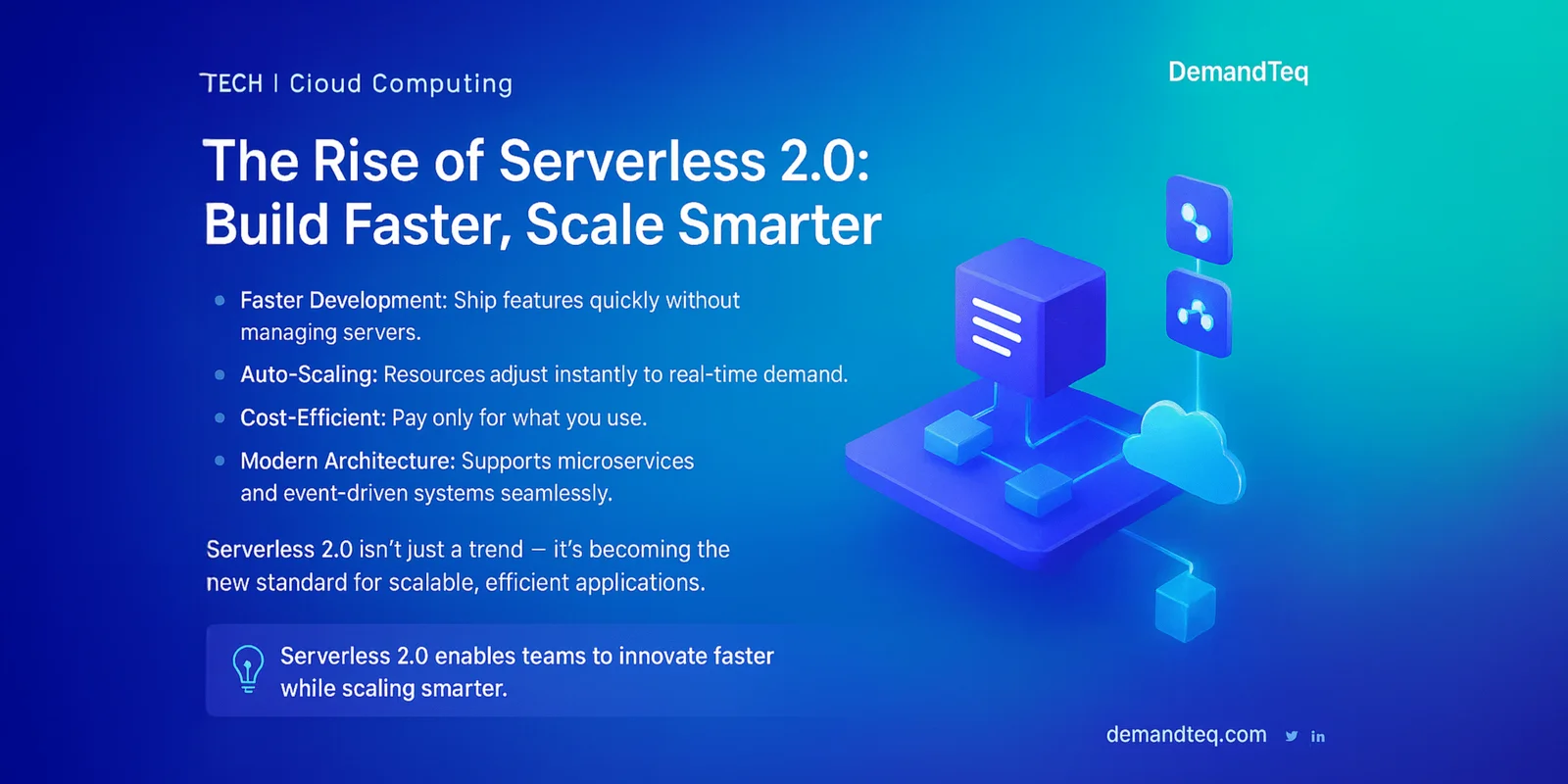
The intersection of Amanda Ware’s influence in modern systems architecture and the industry-wide shift toward serverless workflows represents a significant paradigm shift in how enterprise applications are conceptualized, deployed, and scaled in 2026. This transition prioritizes event-driven, ephemeral compute models that allow developers to decouple application logic from underlying server management, focusing on granular execution and cost-optimized infrastructure.
Understanding the Shift to Serverless Architectures
To grasp the "rise of serverless workflows," one must first distinguish between cloud-native development and traditional virtualization. Historically, engineers spent a disproportionate amount of time provisioning virtual machines (VMs), managing operating system patches, and configuring load balancers. Serverless computing—often synonymous with Function-as-a-Service (FaaS) or managed orchestration services—abstracts these layers entirely.
Amanda Ware’s contributions to this space emphasize the importance of "operational invisibility." In her perspective, the developer should interact with the system only at the level of the application code and the event triggers. When an event—such as an HTTP request, a database update, or a file upload—occurs, the cloud provider spins up the necessary compute resource, executes the specific function, and terminates the environment once the task is complete. This shift is not merely about hardware abstraction; it is about changing the economic model of software development from a fixed-cost paradigm (paying for idle servers) to a consumption-based model (paying only for milliseconds of execution).
Key Components of Modern Serverless Workflows
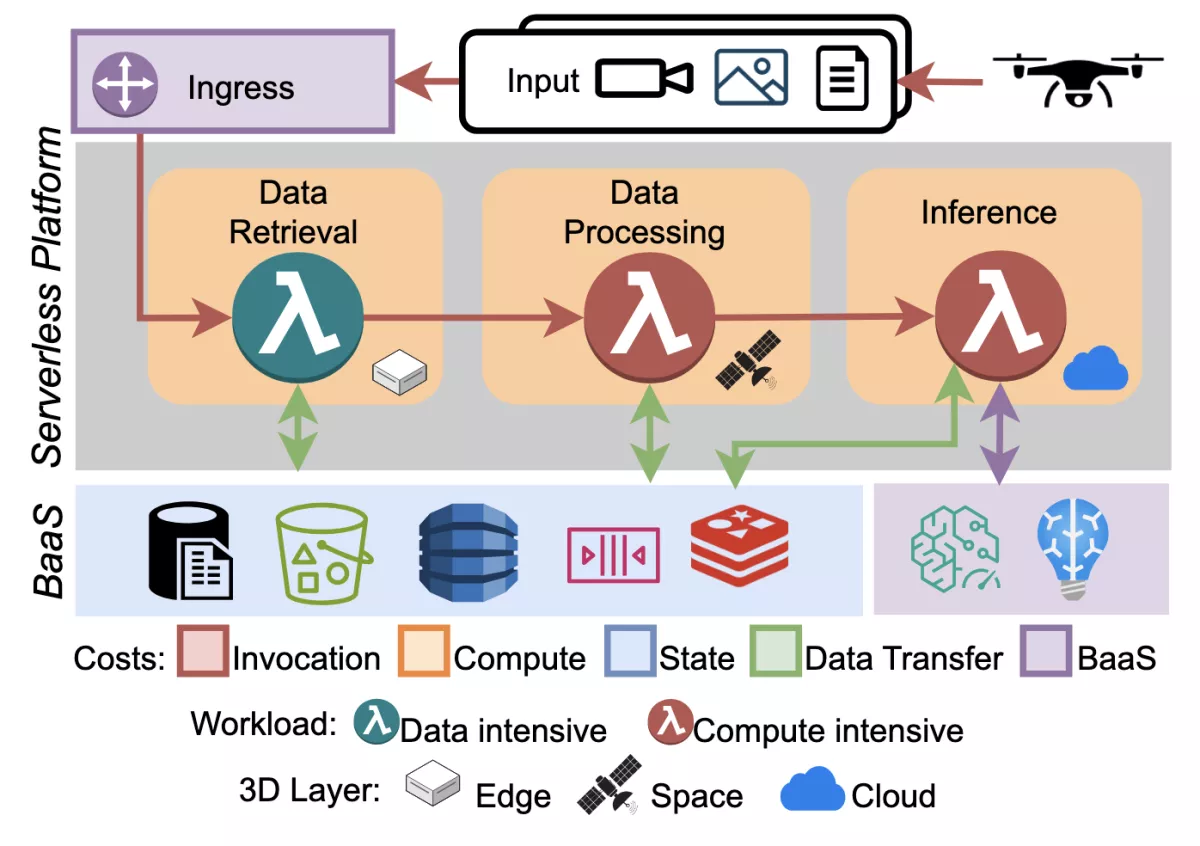
A robust serverless workflow in 2026 consists of three primary layers: the event source, the orchestration layer, and the state management system.
1. The Event Source
Every workflow begins with an trigger. These can be asynchronous (e.g., a message placed in a queue) or synchronous (e.g., an API Gateway call). The intelligence of the modern serverless stack lies in its ability to handle massive bursts of events without manual intervention from DevOps teams.
2. The Orchestration Layer
This is where the architecture matures from simple functions to complex workflows. Tools like AWS Step Functions or Azure Logic Apps allow developers to define state machines. Amanda Ware has frequently argued that the "rise" of serverless is not found in single functions, but in the capability to chain these functions together into reliable, retriable, and observable distributed systems.
3. State Management
One of the most common critiques of serverless is the "stateless" nature of functions. Modern workflows solve this by offloading state to high-performance, distributed key-value stores or managed databases. By separating compute from state, architects can achieve extreme horizontal scalability that was once limited to the largest hyperscalers.
Comparing Traditional vs. Serverless Workflow Models
| Feature | Traditional Infrastructure | Serverless Workflows |
|---|---|---|
| Provisioning | Manual/Infrastructure-as-Code | Automatic/Event-driven |
| Scaling | Vertical/Horizontal (Slow) | Instantaneous/Granular |
| Cost Model | Pay-for-Capacity | Pay-for-Execution |
| Maintenance | OS Patching/Hardware management | Code-level management only |
| Fault Tolerance | Requires manual configuration | Managed by provider |
Architectural Best Practices
While serverless offers significant advantages, it introduces new challenges, specifically regarding latency and observability.
Cold Start Mitigation
"Cold starts" occur when a serverless function is invoked after a period of inactivity, forcing the provider to initialize the runtime environment. In latency-sensitive applications, this can be detrimental. Experienced architects mitigate this by using provisioned concurrency for critical paths or by optimizing code dependencies to reduce package size.
Observability in Distributed Systems
In a microservices architecture built on serverless functions, traditional logging is insufficient. Monitoring must be distributed. Implementing centralized tracing—where a single request ID follows a transaction across multiple functions and services—is vital. Without this, troubleshooting a failure in a complex, multi-stage workflow becomes exponentially difficult.
Cost Optimization and Governance
The granular nature of serverless billing can lead to "bill shock" if not managed correctly. An infinite loop in a recursive function can trigger thousands of executions, incurring costs that outweigh the benefits. Establishing "circuit breakers" and strict execution limits at the orchestration layer is a standard security and financial control in 2026.
The Role of Developer Experience (DX)
Amanda Ware’s work highlights that the success of serverless is deeply tied to the tooling available to the developer. The transition to serverless requires a shift in mindset: debugging is no longer about SSHing into a server to inspect logs. It is about local emulation, rigorous integration testing, and utilizing cloud-native telemetry tools.
When organizations move to serverless workflows, they are essentially outsourcing the "undifferentiated heavy lifting" of system administration. This allows smaller teams to compete with large enterprise engineering departments because they can iterate faster and deploy features without the overhead of maintaining a complex compute fleet.
Common Challenges and How to Solve Them
Vendor Lock-in: By relying heavily on proprietary orchestration features (e.g., AWS Lambda specific event sources), businesses risk high switching costs.
- Solution: Utilize abstraction layers like the Serverless Framework or OpenFaaS to maintain a degree of vendor neutrality where possible.
Testing Complexity: Testing code that relies on cloud services (databases, queues, secrets managers) is difficult to reproduce locally.
- Solution: Use containerized mock services that replicate cloud-provider APIs to ensure code behaves consistently during the development cycle.
Security Vulnerabilities: In a serverless environment, the attack surface shifts from the OS to the IAM (Identity and Access Management) policy level.
- Solution: Adopt the principle of least privilege. Every function should have an execution role that defines access only to the specific resources it needs, nothing more.
Frequently Asked Questions (FAQ)
What is the most significant benefit of transitioning to serverless?
The most significant benefit is the shift from capacity-based costs to usage-based costs. This eliminates the financial waste associated with over-provisioned servers that sit idle during off-peak hours.
How does Amanda Ware suggest handling long-running processes in serverless?
Amanda Ware emphasizes the use of "Asynchronous Orchestration." Rather than forcing a function to stay open—which is limited by timeout constraints—architects should break the process into smaller, discrete stages where each stage triggers the next upon successful completion.
Is serverless appropriate for all types of applications?
No. Serverless is less efficient for applications requiring extremely low-latency, sustained, and predictable high-compute loads (such as high-frequency trading platforms or massive real-time rendering farms), where dedicated hardware offers better performance-per-dollar.
What is the primary security risk in a serverless workflow?
The primary risk is improper IAM role configuration. Because serverless functions often rely on granular permissions, a misconfigured role can expose an entire database or bucket to unauthorized access if that function is compromised.
How do I troubleshoot failures in a distributed serverless workflow?
Troubleshooting requires a strong investment in distributed tracing. You should implement correlation IDs that are passed between services so that a single log stream can provide a chronological view of a request's path through the entire architecture.
Conclusion: Preparing for Future Architectures
The rise of serverless workflows, championed by leaders like Amanda Ware, represents an inevitable maturation of cloud computing. By focusing on event-driven design, decoupling logic from infrastructure, and adopting rigorous observability practices, organizations can build systems that are inherently more resilient and cost-effective. As we move further into 2026, the focus will continue to shift toward simplifying the developer experience and standardizing the interfaces between these distributed services. To stay competitive, engineering teams should evaluate their current architectures for opportunities to refactor monolithic services into event-driven serverless modules, starting with non-critical internal workloads to gain operational experience.