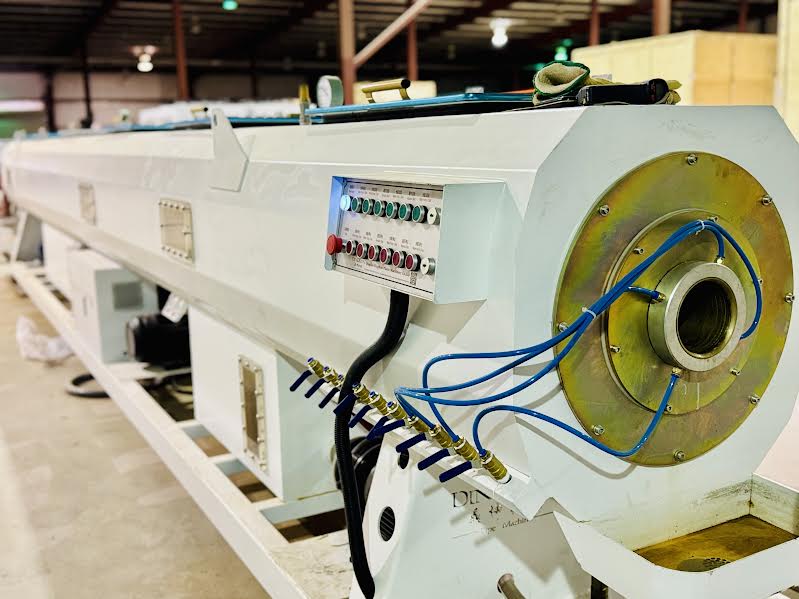
Selecting American extruded plastics involves identifying domestic manufacturing partners capable of meeting specific material requirements, precision tolerances, and production volume needs. Success in this sector requires understanding the nuances of thermoplastic materials, the mechanical capabilities of extrusion machinery, and the regulatory standards governing quality control within the United States industrial landscape as of 2026.
Understanding Plastic Extrusion in the American Context
Plastic extrusion is a high-volume manufacturing process where raw plastic material—usually in the form of pellets or granules—is melted and forced through a die to create a continuous profile. In the American market, this process is fundamental to the production of pipes, tubing, weather stripping, window frames, and custom architectural profiles. Unlike injection molding, which produces discrete parts, extrusion is optimized for long, uniform shapes with consistent cross-sections.
The "American" aspect of the industry carries specific implications for project managers and procurement officers. Domestic extrusion offers distinct advantages in supply chain resilience, communication transparency, and compliance with federal standards such as ASTM International or ANSI (American National Standards Institute). As of 2026, domestic manufacturers are increasingly focused on automation, sustainability initiatives, and the integration of recycled resins to meet modern regulatory and corporate ESG (Environmental, Social, and Governance) targets.
Core Material Considerations
Choosing the right resin is the most critical technical decision in the extrusion process. Each material exhibits distinct mechanical properties, thermal resistances, and chemical compatibilities.
Common Thermoplastics
- Polyvinyl Chloride (PVC): Widely used for its rigidity, chemical resistance, and cost-effectiveness. It is a staple in the construction industry for conduits and piping.
- Polyethylene (PE): Available in various densities (HDPE, LDPE). It is prized for its high ductility and moisture resistance, making it ideal for packaging and irrigation.
- Polypropylene (PP): Known for its fatigue resistance and ability to withstand higher temperatures than polyethylene, often utilized in automotive components.
- Acrylonitrile Butadiene Styrene (ABS): Preferred for its high impact resistance and toughness, frequently seen in protective housings and edge banding.
- Polycarbonate (PC): An engineered plastic chosen for transparency and exceptional structural strength, often used in lighting and high-security architectural applications.
Technical Specifications and Precision Engineering
When evaluating American extruded plastics manufacturers, precision is defined by the manufacturer’s ability to adhere to tight tolerances. Extrusion is a thermal process, meaning materials shrink as they cool. A manufacturer’s ability to control cooling rates and haul-off speeds directly determines the dimensional accuracy of the finished product.
Key Performance Indicators (KPIs) for Extrusion
- Tolerance Control: The allowable variation in dimensions, usually measured in thousandths of an inch. Tight tolerances are essential for parts that must mate with other components.
- Surface Finish: The texture and appearance of the profile, which is critical for consumer-facing or medical-grade products.
- Cross-Sectional Complexity: The ability of the manufacturer to extrude multi-hollow or co-extruded profiles (using two different materials simultaneously).
- Consistency: The degree of variation over long production runs. A superior manufacturer maintains the same profile shape across thousands of feet of product.
Comparison of Common Plastic Profiles
To help determine which material or process might suit a project, the following table outlines standard performance attributes of common extruded plastics.
| Material | Primary Advantage | Typical Industry Use | Thermal Rating |
|---|---|---|---|
| Rigid PVC | Flame Resistance | Construction, Piping | Moderate |
| HDPE | Chemical Inertness | Fluid Transport, Liners | Low |
| Polycarbonate | Impact Strength | Glazing, Lighting | High |
| TPE/TPV | Flexibility/Sealing | Weatherstripping, Gaskets | Variable |
| ABS | Rigidity/Durability | Appliances, Housings | Moderate |
Sourcing Strategies for Domestic Manufacturing
Procuring extruded plastics in the United States requires a structured approach to vetting suppliers. Start by requesting ISO 9001 certification, which confirms that a facility has a documented quality management system in place. Beyond certifications, consider the following logistical factors:
Supplier Audit Criteria
- Tooling Capabilities: Does the supplier manage die design and maintenance in-house? In-house tool rooms typically offer faster turnaround times for custom profiles and better responsiveness to design changes.
- Production Volume Scalability: Ensure the manufacturer’s capacity aligns with your needs. A shop built for high-volume automotive runs may not be cost-effective for a short-run, specialized architectural prototype.
- Secondary Services: Many American extruders offer "value-added" services, such as precision cutting, punching, drilling, or adhesive tape application. Utilizing these services at the source often reduces total landed cost by eliminating shipping to secondary fabrication shops.
- Location and Logistics: Proximity to shipping hubs can significantly impact freight costs. Given the weight and bulk of many extruded products, geographic location within the U.S. remains a relevant factor in the total cost of ownership.
Common Challenges and Troubleshooting
Despite the maturity of the industry, complications can arise during the production cycle. Understanding these helps in drafting effective service-level agreements (SLAs).
- Dimensional Drift: This occurs when the profile dimensions change over the course of a long run due to thermal expansion or mechanical vibration. This is often mitigated by using real-time laser measurement systems.
- Material Degradation: Incorrect heat settings in the extruder can cause the polymer to break down, resulting in brittle or discolored products. Verification of proper melt flow index (MFI) testing during the manufacturing process is a standard requirement for high-reliability components.
- Warping and Bowing: These issues often stem from uneven cooling. An experienced manufacturer will employ sophisticated vacuum calibration tanks to ensure the profile maintains its shape during the solidification phase.
Regulatory and Environmental Standards
In 2026, compliance with environmental regulations is non-negotiable. American manufacturers are increasingly subject to state-level reporting on chemical content and recyclability. When specifying plastics, ensure that materials comply with RoHS (Restriction of Hazardous Substances) and REACH (Registration, Evaluation, Authorisation and Restriction of Chemicals) if the final product has international export potential. Furthermore, inquire about the manufacturer's ability to incorporate post-industrial recycled (PIR) content, which can enhance your company's sustainability profile without sacrificing physical performance.
Frequently Asked Questions
What is the typical lead time for custom extruded profiles?
Custom lead times depend on die manufacturing, which typically takes 4 to 8 weeks. Once the die is approved, standard production runs can often be scheduled within 2 to 3 weeks, though this varies significantly based on current factory throughput and raw material availability.
How do I determine if my design is suitable for extrusion?
The design must have a constant cross-section throughout its entire length. If your part features varying thicknesses or complex geometries that change along the length, it may be better suited for injection molding or additive manufacturing rather than extrusion.
What are the standard tolerances for plastic extrusion?
While tolerances depend on the material and profile size, the industry standard for a basic profile is generally ±0.005 to ±0.010 inches. More complex or thin-walled profiles may require wider tolerances.
Can American manufacturers work with recycled plastics?
Yes. Most modern extrusion facilities in the U.S. are equipped to process regrind or high-quality PCR (Post-Consumer Recycled) resins, provided they are clean and compatible with the extrusion machinery.
Why should I choose domestic extrusion over overseas options?
Domestic sourcing provides shorter lead times, lower shipping logistics risks, easier communication, and greater assurance of adherence to U.S.-regulated safety and quality standards, which is particularly beneficial for highly regulated industries like medical or aerospace.
Next Steps for Project Procurement
To begin your procurement process, document the specific mechanical requirements of your part, including temperature, UV exposure, and structural load constraints. Reach out to three domestic suppliers with a formal Request for Quote (RFQ) that includes your technical drawings and volume estimates. Verify their specific experience with your target resin before committing to tooling costs. By focusing on manufacturers who emphasize in-house tool design and rigorous quality management, you can ensure a reliable, efficient supply chain for your plastic components.