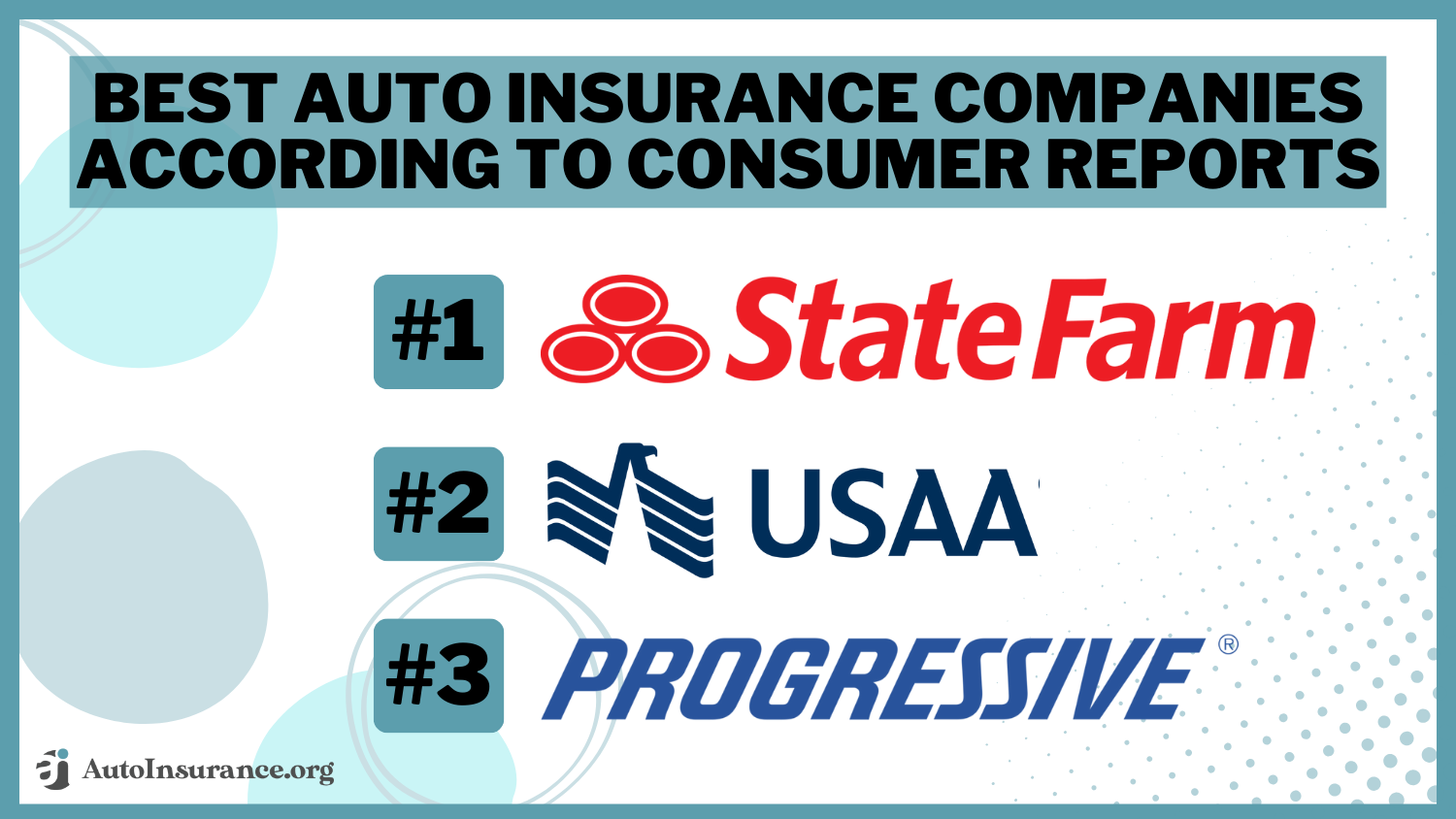
The auto insurance companies with the highest customer reviews—consistently leading independent satisfaction benchmarks like J.D. Power, AM Best, and the National Association of Insurance Commissioners (NAIC)—are USAA, Amica Mutual, Erie Insurance, Auto-Owners Insurance, and State Farm. These insurers excel across claims handling, customer service, policy transparency, rate stability, and financial reliability.
How Customer Satisfaction Is Measured in Auto Insurance
Evaluating an auto insurance carrier requires looking beyond marketing promises. Independent testing agencies and state regulators monitor customer experiences using standardized metrics to determine which companies actually deliver superior service when policyholders file a claim or adjust their coverage.
When analyzing customer reviews, market analysts evaluate four primary benchmarks:
- J.D. Power Customer Satisfaction Studies: J.D. Power conducts annual evaluation programs, including the U.S. Auto Insurance Study and the U.S. Auto Claims Satisfaction Study. These studies survey tens of thousands of auto insurance policyholders across critical operational areas: price, policy offerings, customer service interactions, billing process, and claims settlement speed.
- NAIC Complaint Index: The National Association of Insurance Commissioners (NAIC) tracks consumer complaints filed with state insurance departments. A company’s NAIC Complaint Index reflects its share of overall market complaints relative to its market share. A baseline score is 1.00; a score below 1.00 indicates fewer customer complaints than expected for a company of its size.
- AM Best Financial Strength Ratings: A carrier's capacity to pay claims during catastrophic loss events dictates long-term stability. AM Best assigns letter grades (such as A++ or A+) to measure balance sheet strength, operating performance, and business profile.
- Consumer Reports & Third-Party Review Aggregators: Independent consumer review organizations survey policyholders regarding repair quality, payout fairness, premium increases after claims, and customer service responsiveness.
Understanding these benchmarks helps drivers interpret customer reviews accurately, balancing overall satisfaction ratings against regional availability and eligibility rules.
5 Auto Insurance Companies with the Highest Customer Reviews
- Top-Rated Auto Insurers
- USAA: Military & Family Focus
- Amica Mutual: High Customer Loyalty
- Erie Insurance: Rate Guarantee Features
- Auto-Owners: Dedicated Agent Network
- State Farm: Nationwide Network & Financial Size
1. USAA (United Services Automobile Association)
Best Overall Satisfaction for Military Members and Families
USAA regularly secures the highest customer satisfaction scores in the insurance industry. In annual J.D. Power auto insurance and claims satisfaction studies, USAA consistently outscores national competitors across virtually every metric, including policy management, billing clarity, and claim settlement efficiency.
Key Customer Review Drivers
USAA’s high customer approval stems from its focused business model. Founded to serve military personnel, USAA prioritizes fast claim processing and high customer retention over mass-market volume expansion.
- Exceptional Claims Resolution: Policyholders frequently highlight smooth claims processing via USAA’s mobile application and responsive claims adjusters.
- Competitive Pricing: Because USAA operates as a member-owned organization, its premiums are frequently among the lowest in the nation for active-duty service members, veterans, and their qualified family members.
- Flexible Coverage Options: USAA provides tailored features such as deployment discounts, low-mileage storage savings, and vehicle protection packages designed for military relocations.
Operational Limitations & Eligibility
USAA’s primary limitation is membership restriction. Auto policies are limited to active-duty, guard, reserve, and veteran members of the U.S. Armed Forces, as well as their spouses and children. Drivers without military affiliation cannot purchase USAA auto insurance.
2. Amica Mutual Insurance
Best for Customer Loyalty and Direct Claims Experience
Amica Mutual is renowned for earning top customer service honors among carriers open to the general public. Founded in 1907, Amica operates primarily as a direct writer, allowing policyholders to manage coverage and file claims directly with company representatives rather than through independent intermediary agencies.
Key Customer Review Drivers
Amica routinely earns top scores in J.D. Power auto claims satisfaction studies, driven by fair claim payouts, quick adjuster turnaround, and excellent customer service representatives.
- Dividend-Paying Policies: Amica offers dividend-paying auto insurance policies in select states. Qualified policyholders can receive a portion of their paid premium back as a dividend (typically 5% to 20%), depending on company performance and state regulations.
- High Customer Retention Rates: Policyholders stay with Amica longer than the industry average due to minimal dispute rates during total loss or collision claim settlements.
- Comprehensive Coverage Add-Ons: Amica provides complete liability, comprehensive, and collision protection, along with optional repair package upgrades that cover original equipment manufacturer (OEM) replacement parts and fee-free glass repairs.
Operational Limitations & Considerations
Amica’s premiums can be slightly higher upfront compared to discount-focused online insurance aggregators. However, policyholders often find the overall value higher due to potential policy dividends and superior claim support.
3. Erie Insurance
Best for Regional Service, Agent Support, and Price Lock Protections
Erie Insurance is a regional carrier operating across 12 Mid-Atlantic and Midwestern states plus the District of Columbia (including Pennsylvania, Ohio, Virginia, Maryland, and North Carolina). Despite its regional footprint, Erie consistently outperforms massive national brands in J.D. Power regional satisfaction studies.
Key Customer Review Drivers
Erie’s exceptional customer feedback centers on transparent pricing structures and a strong network of local independent insurance agents who provide personalized consultation.
- Erie RateLock® Feature: One of Erie's most popular policy offerings is its RateLock feature. With Erie RateLock, your auto insurance premium remains unchanged year after year—even after filing a claim—unless you make specific policy changes, such as adding or removing a driver, changing your primary vehicle, or changing your garaging address.
- Low NAIC Complaint Index: Erie maintains an NAIC complaint ratio significantly lower than the national benchmark, reflecting minimal regulatory disputes regarding unpaid claims or unexpected policy cancellations.
- Broad Standard Benefits: Standard Erie policies often include features that other companies charge extra for, such as pet injury coverage, lock-out service, and personal item protection stored inside an insured vehicle.
Operational Limitations & Availability
Erie Insurance is not available nationwide. Drivers outside its 12-state operating territory cannot purchase policies, making it unavailable to residents in states like California, Texas, or Florida.
4. Auto-Owners Insurance
Best for Independent Agent Consultation and Custom Policy Options
Founded in 1916, Auto-Owners Insurance operates through a network of over 48,000 licensed independent agents across 26 states. The carrier consistently achieves top ratings in J.D. Power auto claims satisfaction rankings and holds AM Best’s highest financial strength rating of A++ (Superior).
Key Customer Review Drivers
Auto-Owners receives high marks from customer reviewers who prefer dealing with dedicated local agents rather than call centers or online chatbots.
- Dedicated Local Agent Support: Customers value having a local agent manage their policy setup, discount audits, and claim filings, which minimizes administrative errors and streamlines communication.
- Personalized Policy Bundling: Auto-Owners offers multi-policy discounts when pairing auto insurance with homeowners, life, or umbrella coverage, alongside specialized endorsements like Purchase Price Guarantee (which pays the original purchase price of a new vehicle if it is totaled within the first executive model years).
- Claims Handling Reliability: Reviewers praise Auto-Owners for quick claim check disbursements and straightforward claim negotiations without administrative delays.
Operational Limitations & Purchasing Process
Because Auto-Owners operates exclusively through independent agencies, drivers cannot purchase a policy directly online through an automated quick-quote tool. Quotes and policy updates require working with a local agent.
5. State Farm
Best National Carrier for Nationwide Availability and Comprehensive Local Coverage
State Farm is the largest auto insurer in the United States by market share, writing tens of millions of policies across all 50 states and Washington, D.C. Maintaining consistently strong customer review scores across such a massive client base makes State Farm a standout among high-volume national insurance providers.
Key Customer Review Drivers
State Farm bridges the gap between digital convenience and local human support, offering intuitive mobile apps alongside a network of dedicated exclusive agents.
- Extensive Local Agent Network: State Farm agents live and work in local communities nationwide, offering hands-on assistance during complex vehicle accident claims or coverage adjustments.
- Strong Telematics and Discount Programs: The carrier’s Drive Safe & Save™ program allows safe drivers to earn substantial premium discounts based on real-time driving habits, such as smooth braking and low annual mileage.
- High Financial Stability: Rated A++ by AM Best, State Farm possesses immense capital reserves, ensuring prompt claim payouts even during widespread severe weather events.
Operational Limitations & Underwriting Variations
Because State Farm manages a massive, diverse policy base, premium rates can vary significantly depending on state-level regulations, urban density, local litigation environments, and individual driving history profiles.
Comparative Analysis of Top-Rated Auto Insurers
The following table summarizes key performance metrics, regional availability, and primary strengths for the five highest-rated auto insurance carriers.
| Insurance Company | J.D. Power Satisfaction Standing | NAIC Complaint Index Profile | AM Best Rating | Geographic Availability | Primary Advantage |
|---|---|---|---|---|---|
| USAA | Exceptionally High (Top Tier) | Significantly Below Average | A++ (Superior) | Nationwide (Military/Family Only) | Lowest average rates and best claim service for military families |
| Amica Mutual | Consistently Highest for General Public | Well Below Average | A+ (Superior) | 49 States & D.C. | High customer loyalty and potential policy dividend payouts |
| Erie Insurance | Top Regional Leader | Well Below Average | A+ (Superior) | 12 States & D.C. | Erie RateLock® rate stability feature and local agent support |
| Auto-Owners Insurance | High Industry Leader | Below Average | A++ (Superior) | 26 States | High satisfaction via independent agents & policy customizability |
| State Farm | Above Industry Average | Near or Below Average | A++ (Superior) | 50 States & D.C. | Largest nationwide agent network combined with strong digital tools |
Note: NAIC Complaint Index baseline is set at 1.00. Scores under 1.00 signify fewer consumer complaints than the national average based on market share.
Critical Factors That Shape Customer Satisfaction Ratings
When evaluating positive customer reviews, it is essential to understand why these top five companies score higher than competitors. Rating differences usually boil down to four critical operational factors:
- Key Factors Driving Customer Reviews
- Claims Expedition: Fair evaluations & fast disbursements
- Transparent Pricing: No hidden policy fees or unexpected hikes
- Communication Choice: Direct agents vs. intuitive mobile management apps
1. Claims Settlement Efficiency and Fairness
Customer satisfaction in auto insurance is ultimately tested during a claim. Insurance carriers with top reviews consistently execute three claims procedures well:
- Fast Initial Claims Processing: Utilizing modern photo-estimating tools without forcing vehicle owners to wait weeks for physical adjuster inspections.
- Fair Total Loss Valuation: Using transparent market valuation data (such as Kelley Blue Book or NADA guides) when determining actual cash value (ACV) for totaled vehicles, minimizing disputes with policyholders.
- Direct Repair Network (DRN) Relationships: Maintaining partnerships with certified auto body shops that back their repair work with lifetime workmanship warranties.
2. Premium Transparency and Billing Stability
Sudden, unexplained rate hikes on renewal notices are the single largest source of negative online insurance reviews. Top-rated insurers like Erie Insurance and USAA stand out by maintaining clear billing structures, offering multi-policy bundle transparency, and explaining price adjustments caused by general inflation or regional accident frequency changes.
3. Balance of Digital Tools and Human Support
Modern insurance buyers expect seamless self-service options via mobile apps alongside immediate telephone or in-person support. Carriers like State Farm and USAA lead the market by giving policyholders complete choice: users can upload accident photos, track claims progress, and download digital ID cards via mobile apps, while remaining able to call a dedicated local agent or customer care manager whenever assistance is needed.
Core Auto Insurance Coverage Types Explained
When purchasing coverage from any highly rated insurance carrier, policies are built from several standardized coverage components. Understanding these building blocks ensures you select adequate policy limits:
- Standard Coverage Architecture
- Mandatory in Most States
- Bodily Injury Liability: Pays for injuries to others
- Property Damage Liability: Fixes damage to other property
- Optional Property Protection
- Collision Coverage: Fixes your car after accidents
- Comprehensive Coverage: Covers theft, weather, or animals
- Mandatory in Most States
- Bodily Injury Liability (BI): Pays for medical expenses, loss of income, and legal defense costs if you cause an accident that injures another person. State laws mandate minimum liability limits, though legal financial experts typically recommend carrying at least $100,000 per person and $300,000 per accident ($100k/$300k).
- Property Damage Liability (PD): Pays to repair or replace another person's property (such as their vehicle, fence, or building structure) damaged in an accident you caused. Carrying at least $50,000 to $100,000 in property damage liability is widely recommended due to high modern vehicle repair costs.
- Collision Coverage: Pays to repair or replace your own vehicle after an accident involving another car or stationary object (like a tree or guardrail), regardless of fault. Subject to a deductible (typically $500 or $1,000).
- Comprehensive Coverage: Pays for damage to your vehicle caused by events outside your control, including theft, vandalism, hail, fire, fallen tree branches, or striking an animal. Also subject to a deductible.
- Uninsured/Underinsured Motorist Coverage (UM/UIM): Protects you and your passengers if you are struck by a driver who carries no auto insurance or lacks sufficient liability limits to pay for your injuries and medical bills.
- Personal Injury Protection (PIP) / Medical Payments (MedPay): Covers immediate medical bills, hospital stays, and sometimes lost wages for you and your passengers after an accident, regardless of who caused the collision. PIP is mandatory in no-fault insurance states.
How to Get the Best Rate from Top-Rated Insurers
While customer reviews reveal which companies offer high satisfaction, individual premium rates depend heavily on personal rating variables. Follow these strategic steps to secure lower auto insurance rates without sacrificing coverage quality:
Step 1: Compare Quotes Across Different Carrier Structures
To find the ideal mix of affordability and high customer satisfaction:
- Obtain quotes from a direct writer (e.g., Amica Mutual).
- Consult an independent insurance agent who represents regional providers (e.g., Erie Insurance or Auto-Owners Insurance).
- Request quotes from major national insurance carriers (e.g., State Farm or USAA if eligible).
Step 2: Maximize Applicable Policy Discounts
Inquire directly about all eligible discount programs during quote generation:
- Multi-Policy / Bundling Discounts: Save 10% to 25% by combining auto insurance with home, renters, or condo insurance under the same company.
- Telematics / Safe Driver Programs: Participating in mobile telematics monitoring programs (such as State Farm's Drive Safe & Save) rewards safe driving habits like gentle braking and low speed variance with ongoing premium reductions.
- Vehicle Safety & Anti-Theft Features: Outfitting your vehicle with factory anti-theft alarms, automated emergency braking, and lane departure warning systems can reduce overall collision and comprehensive charges.
- Paperless & Automatic Pay Options: Opting for electronic policy documents and automated recurring bank drafts often waives monthly administrative installments.
Step 3: Select Appropriate Deductible Thresholds
Increasing your comprehensive and collision deductibles from $250 to $500 or $1,000 can lower your annual physical damage premium significantly. However, ensure your chosen deductible amount is held safely in an emergency savings fund so you can pay it out of pocket immediately if you need to file a claim.
Step 4: Audit Your Policy Limits Annually
Review your insurance contract every 12 months. If an older vehicle's market value drops significantly, carrying comprehensive and collision coverage may no longer be cost-effective if annual premiums plus your deductible exceed the total market value of the car.
Common Pitfalls to Avoid When Buying Auto Insurance
Selecting a auto insurance provider based strictly on price or generic star ratings can lead to unexpected gaps in coverage. Avoid these four common mistakes:
- Choosing State Minimum Liability Limits: State-mandated minimum liability coverage (such as 25/50/25 limits) is rarely sufficient to cover medical costs and property damage resulting from a multi-vehicle accident. If damage expenses exceed your policy limits, injured parties can legally sue you to recover remaining balances directly from your personal assets or income.
- Ignoring Local Licensing Requirements and Department of Insurance Data: Customer review scores can vary by region. Always check your state's Department of Insurance annual complaint ratios to confirm how a specific carrier performs within your immediate state jurisdiction.
- Failing to Disclose All Household Drivers: Omitting family members or resident drivers who regularly operate your vehicle to get a lower initial quote can lead to claim denials or retroactive policy cancellations due to material misrepresentation.
- Lapsing Coverage Between Policies: Never cancel an existing auto policy before your new replacement coverage is fully bound and active. Even a single day's gap in auto insurance coverage can mark you as a high-risk driver, driving up future premiums for years.
Frequently Asked Questions
Which auto insurance company has the absolute highest customer rating?
In overall customer satisfaction rankings measured by J.D. Power, USAA consistently scores the highest across the industry. However, membership is restricted exclusively to U.S. military personnel, veterans, and their eligible family members. Among carriers open to the general public, Amica Mutual and Erie Insurance regularly earn top ratings for customer satisfaction, claims handling, and overall value.
Why do regional insurance companies like Erie often score higher than national brands?
Regional carriers like Erie Insurance focus their underwriting risk within specific geographic boundaries rather than managing national claim exposures. This regional focus often allows for lower administrative overhead, localized claims handling, and strong relationships with local independent agents, leading to better claims turnaround times and higher customer satisfaction scores.
How does a company's NAIC Complaint Index affect policyholders?
The NAIC Complaint Index tracks official consumer complaints filed against an insurer with state insurance regulators. A carrier with an NAIC score below 1.00 generates fewer consumer disputes relative to its market size. Choosing an insurer with a low complaint index reduces the risk of facing unexpected claim delays, unfair settlement offers, or communication issues.
Will my rate automatically go up after filing a claim with a top-rated carrier?
Not necessarily. Many top-rated carriers offer built-in accident forgiveness programs or rate lock features. For example, Erie Insurance offers Erie RateLock®, which stabilizes your premium until you make structural policy changes like adding a vehicle or driver. Other carriers, such as State Farm and Amica, offer accident forgiveness options that prevent premium spikes after your first eligible at-fault accident.
Is dynamic telematics tracking mandatory to get top customer service ratings?
No. Telematics programs (such as State Farm's Drive Safe & Save) are optional programs designed to offer premium discounts based on tracked driving behavior. While telematics can save safe drivers money, top-rated carriers still offer traditional policy underwriting, fixed rates, and direct customer support for policyholders who prefer not to share real-time driving data.
Next Steps to Choose Your Auto Insurance Provider
Selecting the right auto insurance carrier requires balancing strong customer reviews against your personal budget and coverage requirements:
- Confirm Eligibility: If you or an immediate family member have served in the military, begin by requesting an auto quote directly from USAA.
- Obtain Quotes from Top Direct and Regional Carriers: If you are not eligible for military coverage, request quotes from Amica Mutual (nationwide) and Erie Insurance or Auto-Owners Insurance (if operating in your state).
- Compare State Farm for Comprehensive Local Network Options: Get a quote from State Farm to evaluate how a broad national agent network compares against regional rates and direct options.
- Compare Equivalent Coverage Limits: When analyzing competing proposals, verify that liability limits, deductibles, roadside assistance add-ons, and rental car reimbursement options are identical across every quote.
Disclaimer: Insurance rules, coverage options, rates, and eligibility criteria vary by jurisdiction and individual driver background. Consider consulting a licensed independent insurance agent or financial planner to address specific risk management needs.