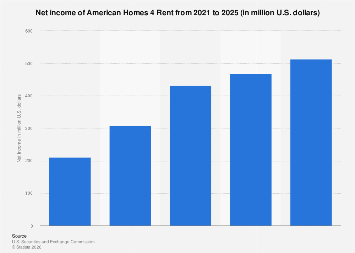
American Homes 4 Rent (AMH) is a publicly traded real estate investment trust (REIT) that functions as one of the largest single-family home rental operators in the United States. When discussing the "net worth" of this organization, investors and analysts are typically referring to its market capitalization and its total shareholders' equity. As of 2026, the company continues to manage a massive portfolio of residential properties, with its financial health determined by the aggregate value of these assets against its total liabilities and operational debt.
Defining Net Worth in the Context of a Public REIT
For a company like American Homes 4 Rent, the term "net worth" is rarely used in the same way it is applied to an individual. An individual’s net worth is the sum of their assets minus their liabilities. For a corporation, this is conceptually identical to "Shareholders' Equity." However, market participants generally prioritize the company's "Market Capitalization" to gauge its perceived value in the public markets.
Market capitalization represents the total dollar market value of a company's outstanding shares of stock. It is calculated by multiplying the company's total number of outstanding shares by the current market price of one share. As a REIT, American Homes 4 Rent is required by law to distribute at least 90% of its taxable income to shareholders annually in the form of dividends. This structural requirement impacts how the company retains earnings and, consequently, how its book value (net worth) grows compared to a standard corporation that might reinvest all profits into internal growth.
The Composition of Corporate Assets
The primary driver of AMH’s financial stature is its expansive portfolio of single-family rental properties. Unlike commercial office space or retail centers, residential real estate in the United States has historically shown resilience during economic fluctuations.
- Property Acquisition and Development: AMH does not merely buy existing stock; it maintains an internal construction division that develops new build-to-rent communities. These assets are recorded on the balance sheet at cost, minus accumulated depreciation.
- Portfolio Diversification: The company’s geographic spread—typically focusing on high-growth markets in the Southeast, Southwest, and Mountain West—is designed to hedge against localized economic downturns.
- Depreciation and Valuation: A critical nuance for any real estate firm is the difference between "book value" and "market value." While GAAP (Generally Accepted Accounting Principles) requires the company to report properties at their historical cost minus depreciation, the actual market value of these homes often exceeds their book value. Investors often look at the Net Asset Value (NAV) of the company to get a truer sense of what the underlying properties are worth if they were to be sold individually.
Liabilities and Debt Structure
To maintain its scale, American Homes 4 Rent utilizes a combination of equity financing and debt. Analyzing the company's "net worth" requires a deep look at its balance sheet to understand its leverage.
- Secured vs. Unsecured Debt: AMH relies on a mix of corporate credit facilities and secured mortgage debt tied to specific property pools. Understanding the maturity profile of this debt is essential for assessing risk. If interest rates remain elevated or shift unpredictably in 2026, the cost of refinancing this debt becomes a major factor in the company’s ongoing valuation.
- Operating Expenses: Beyond the acquisition of assets, the company incurs significant operational costs, including property maintenance, real estate taxes, property management, and insurance. These expenses directly impact the Net Operating Income (NOI), which is the primary metric used to value the company’s ability to generate cash flow.
Valuation Metrics for Investors
When evaluating the financial position of American Homes 4 Rent, investors and financial analysts look beyond simple "net worth" figures to more sophisticated metrics that define the health of a REIT.
| Metric | Significance |
|---|---|
| Market Capitalization | Reflects the collective investor sentiment regarding the company's future earnings. |
| FFO (Funds From Operations) | A more accurate measure of performance than Net Income, as it adds back non-cash expenses like depreciation. |
| NAV (Net Asset Value) | Estimates the total value of all properties minus total liabilities, often used for acquisition or liquidation analysis. |
| Debt-to-EBITDA | Measures the company's ability to cover its debt obligations using its operating earnings. |
The Impact of the 2026 Housing Market
By 2026, the housing landscape has been shaped by several years of constrained inventory and high demand for single-family rentals. American Homes 4 Rent occupies a unique niche because it serves a demographic that may be priced out of homeownership but prefers a single-family home over an apartment.
The company's net value is sensitive to interest rate policy. Because REITs are sensitive to the cost of capital, when interest rates are higher, the cost of borrowing to build or acquire homes increases. Conversely, if rental demand remains strong, the company can raise rents to offset increased financing costs. Analysts watching the "net worth" or enterprise value of AMH must account for the rental rate growth (rent roll) compared to the capitalization rates applied to their properties.
Risks and Operational Limitations
Assessing the financial strength of a REIT involves recognizing the inherent risks in the business model. Unlike an individual investor, AMH is subject to intense regulatory scrutiny and must adhere to strict REIT qualification rules.
- Regulatory Risk: Changes in tax law regarding REITs or rent control legislation at the municipal or state level can significantly impact the valuation of the assets.
- Capital Expenditure Needs: As homes age, they require capital expenditures (CapEx) for roof replacements, HVAC systems, and other repairs. Failure to maintain these assets effectively results in lower rental yields and potential decreases in property value.
- Geographic Concentration: While diversified across many states, the company is still exposed to regional disasters (such as hurricanes or wildfires) which can cause massive damage to the portfolio and increase insurance premiums.
How to Verify Current Financial Data
For the most accurate assessment of American Homes 4 Rent’s current financial status, one should not rely on static "net worth" figures found on secondary websites, which are often outdated or based on proprietary algorithms. Instead, the following steps are recommended:
- Access the Investor Relations Portal: Navigate directly to the official website of American Homes 4 Rent and locate the "Investor Relations" section.
- Review the Form 10-K: The Annual Report (Form 10-K) is the gold standard for verified data. It contains the audited balance sheet, income statement, and cash flow statement.
- Check Quarterly 10-Q Filings: These reports provide more recent, albeit unaudited, snapshots of the company’s financial health throughout the fiscal year.
- Analyze the Supplemental Information: Most REITs provide a supplemental report alongside their earnings release. This document often includes specific data on portfolio occupancy rates, average rent per home, and detailed debt maturity schedules that are not as clearly laid out in the standard financial statements.
Frequently Asked Questions
1. Is the market capitalization of AMH the same as its net worth? No. Market capitalization is the total value assigned by the stock market, which fluctuates daily based on investor perception. Net worth (or shareholders' equity) is a balance sheet accounting value based on historical costs, which may not reflect current market prices.
2. Why does the stock price differ from the book value of the homes? The stock price reflects future expectations of growth, dividend payments, and the quality of management, whereas the book value of the homes is a retrospective calculation based on original purchase price minus depreciation.
3. Does American Homes 4 Rent pay dividends? Yes. As a REIT, the company is required by law to pay out the majority of its taxable income to shareholders, which it typically does through quarterly dividends.
4. Where can I find the most recent financial statement for AMH? The most reliable source is the official Investor Relations website of American Homes 4 Rent or the EDGAR database maintained by the U.S. Securities and Exchange Commission (SEC).
5. How does debt affect the valuation of this company? Debt is used to finance the purchase and development of properties. While it increases potential returns, it also adds risk. Investors monitor the company’s leverage ratios to ensure it is not taking on too much debt to grow its portfolio.
Recommendation for Further Research
If you are evaluating American Homes 4 Rent for investment purposes, do not look for a singular "net worth" figure. Instead, focus on the FFO per share and the Net Asset Value per share. These metrics provide a professional-grade understanding of whether the company is creating value for its shareholders. Always consult the most recent SEC filings for the most accurate and legally binding financial information.