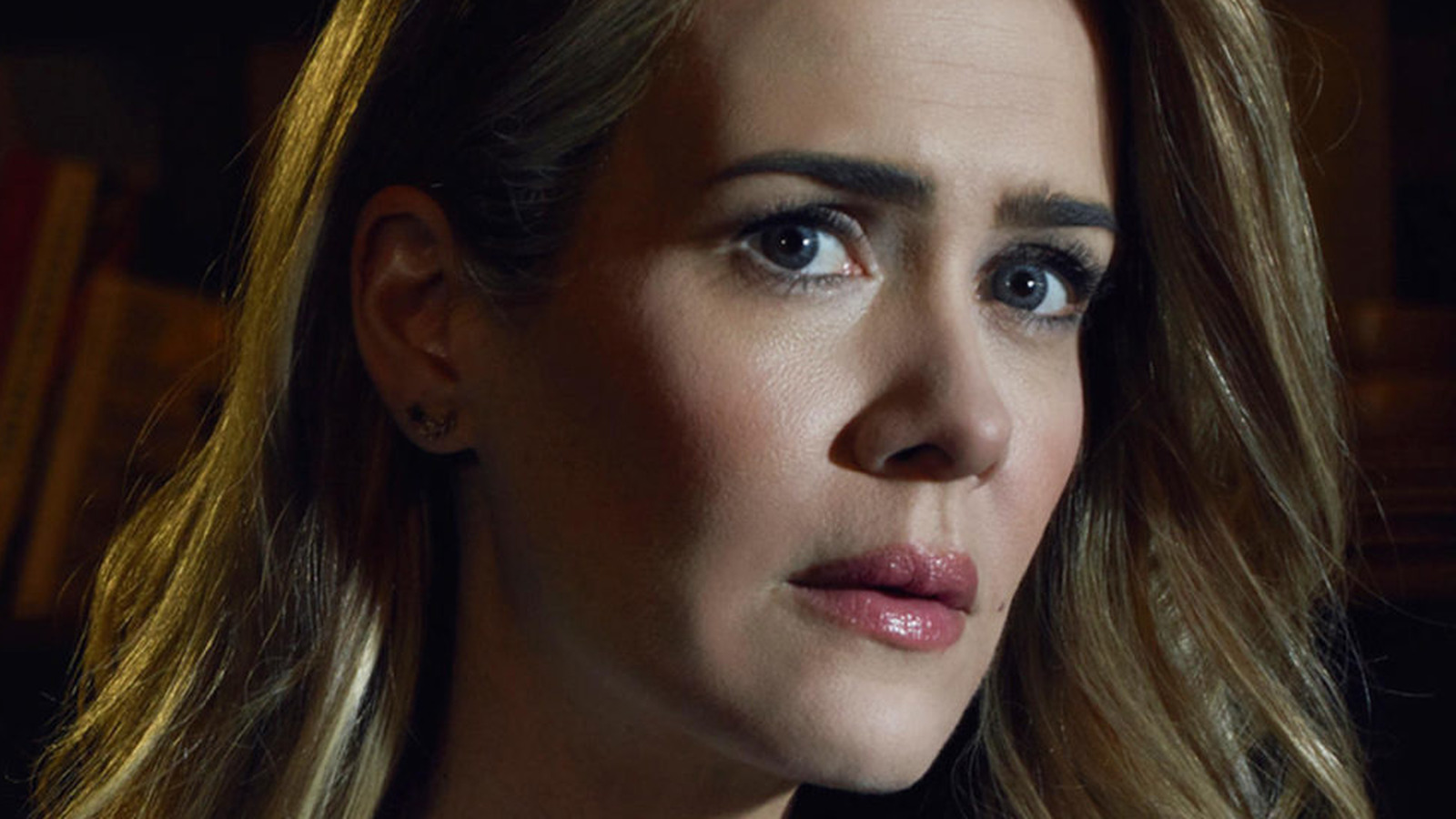
In American Horror Story: Hotel, Sarah Paulson delivers a dual-role performance, most notably portraying the tragic and haunting Sally McKenna (widely known as Hypodermic Sally) and reprising her Season 1 role as the psychic Billie Dean Howard. As Hypodermic Sally, Paulson explores themes of addiction, abandonment, and eternal longing within the walls of the Hotel Cortez, marking a significant tonal shift in her long-standing collaboration with series creator Ryan Murphy.
The Evolution of Sarah Paulson in the AHS Anthology
By the time American Horror Story: Hotel (Season 5) premiered, Sarah Paulson had already established herself as the "First Lady" of the anthology series. Following her roles as the medium Billie Dean Howard in Murder House, the intrepid journalist Lana Winters in Asylum, the Coven Supreme Cordelia Foxx, and the conjoined twins Bette and Dot Tattler in Freak Show, audiences were accustomed to seeing Paulson in roles that—while often victimized—possessed a core of moral strength or resilience.
Hotel subverted these expectations. In 2015, when the season originally aired, the character of Hypodermic Sally was a jarring departure. Paulson moved away from the "final girl" energy of Lana Winters and into the shoes of a gritty, morally ambiguous ghost whose primary motivation was a desperate, almost feral need for connection. Looking back from the perspective of 2026, this performance remains a pivotal moment in Paulson’s career, as it showcased her ability to disappear into a character defined not by her strength, but by her profound, messy vulnerabilities.
Who is Hypodermic Sally? The Character Profile
Sally McKenna is one of the permanent residents of the Hotel Cortez, a stylish but decaying Art Deco purgatory in downtown Los Angeles. Unlike many of the other ghosts who occupy the hotel for sport or out of a sense of duty to its creator, James Patrick March, Sally is trapped by her own emotional and chemical dependencies.
Origins and Death
Sally’s backstory is revealed through fractured memories. In 1994, she was a drug dealer and addict who frequented the Cortez. Her death was the result of a confrontation with Iris (played by Kathy Bates). After Sally caused the overdose of Iris's son, Donovan, Iris pushed Sally out of a fifth-story window. Because she died on the property, Sally’s spirit became tethered to the Cortez, doomed to spend eternity reliving the sensations of withdrawal and the pain of her final moments.
Personality and Motivations
Sally is characterized by her "grunge" aesthetic and a constant, tearful state of desperation. She is often seen carrying a needle—hence the nickname "Hypodermic Sally"—and she spends much of the season attempting to find a "soulmate" who will stay with her forever. This leads her into a complex, toxic relationship with Detective John Lowe (Wes Bentley).
Sally is not a traditional villain, though she commits horrific acts. Her cruelty is a byproduct of her fear of being alone. She is the architect of her own misery, but she is also a victim of the Hotel's dark influence. One of the most terrifying elements associated with her is the Addiction Demon, a faceless entity with a drill-bit strap-on that torments the residents of the hotel. Sally has a symbiotic relationship with this creature; she feeds it by bringing it victims, and in return, it spares her the worst of its attentions—at least temporarily.
The Visual Transformation: Crafting the Grunge Aesthetic
The physical appearance of Hypodermic Sally was a major talking point during the production of Hotel. Sarah Paulson’s transformation involved several key elements that helped define the character's internal state.
- The Hair: Sally’s hair is a chaotic mass of crimped, bleached-blonde frizz. It was designed to look as though it hadn't been washed or brushed since 1994.
- The Makeup: Paulson wore heavy, smeared eyeliner and "heroin chic" makeup that emphasized sunken eyes and pale skin. The constant presence of "crying tracks" on her cheeks became a visual shorthand for the character's perpetual emotional state.
- The Wardrobe: Her signature look consists of a tattered leopard-print faux fur coat, a slip dress, and fishnet stockings. This outfit serves as a permanent uniform, reflecting the era of her death and her refusal to evolve beyond her trauma.
This transformation was more than just aesthetic. Paulson has noted in various interviews that the process of becoming Sally helped her tap into the character’s "vibrating" energy—a sense of constant agitation and physical need that defined the character's screen presence.
The Dual Role: The Return of Billie Dean Howard
In a move that delighted long-time fans and solidified the concept of a "connected universe" within American Horror Story, Paulson also appeared in the Hotel finale, "Be Our Guest," as Billie Dean Howard.
Billie Dean, the psychic introduced in Murder House, has become a reality TV star by the time she visits the Hotel Cortez. Her presence in the hotel serves two narrative purposes:
- Lore Expansion: It confirmed that the various seasons of AHS exist within the same reality, a concept that would later be explored more deeply in AHS: Apocalypse.
- Narrative Conflict: Billie Dean's attempt to film a special at the hotel creates a conflict with the resident ghosts, who do not appreciate being exploited for television.
The contrast between the two characters is a testament to Paulson’s range. While Sally is unraveled and visceral, Billie Dean is polished, opportunistic, and somewhat arrogant. Seeing both characters on screen (though not simultaneously in the same frame) highlighted the technical and emotional versatility that has made Paulson a staple of the franchise.
Behind the Scenes: Balancing Two Iconic Roles
One of the most impressive aspects of Paulson’s work during the Hotel era was her workload. While filming American Horror Story: Hotel, Paulson was simultaneously portraying real-life prosecutor Marcia Clark in The People v. O.J. Simpson: American Crime Story.
This required her to fly back and forth between sets, often switching from the "grunge" and emotional instability of Sally to the rigid, professional, and high-stakes world of the 1990s courtroom. Critics have often cited this period as the peak of Paulson's "chameleon" phase, where she managed to deliver two of the decade’s most memorable television performances at the same time. The discipline required to maintain the distinct physicalities and psychological states of Sally McKenna and Marcia Clark cannot be overstated.
Comparing Paulson's Roles in AHS: Hotel
The following table compares the two characters Paulson played in the fifth season, illustrating the differences in their narrative functions and character traits.
| Feature | Hypodermic Sally (Sally McKenna) | Billie Dean Howard |
|---|---|---|
| First Appearance | Season 5, Episode 1 ("Checking In") | Season 1, Episode 6 ("Piggy Piggy") |
| Status | Deceased (Ghost) | Living (Human) |
| Primary Motivation | Love, connection, and escaping loneliness | Fame, career success, and psychic validation |
| Key Relationships | John Lowe, The Addiction Demon, Iris | The Harmon Family (S1), The Cortez Spirits (S5) |
| Signature Visual | Leopard print coat, crimped hair | Professional attire, polished blonde bob |
| Outcome | Becomes a social media influencer/poet | Forced to leave the hotel under threat of death |
Themes of Addiction and Social Media Redemption
A unique aspect of Hypodermic Sally’s arc in Hotel is how it concludes. For most of the season, she is a figure of tragedy, stuck in a cycle of self-destruction. However, in the season finale, her character receives a modern, somewhat satirical form of redemption.
Iris, feeling a modicum of guilt for her role in Sally's misery, gives Sally a smartphone. Sally discovers the world of the internet and social media (specifically Instagram and Twitter/X as they existed in the mid-2010s). She begins to post her poetry and photos of her "vibe," and she quickly becomes a viral sensation.
This technological bridge solves Sally’s primary problem: her need for an audience and a connection. By becoming an influencer from beyond the grave, she finds a way to be "seen" by millions without needing to trap a single person in the hotel with her. This plot point is a classic Ryan Murphy touch—blending horror with a biting commentary on how modern society seeks validation through digital platforms.
Critical Reception and Legacy
While American Horror Story: Hotel received mixed reviews from critics—some praising its opulence and others criticizing its disjointed plot—Sarah Paulson’s performance as Sally was almost universally lauded. Critics noted that she managed to find the "soul" in a character that could have easily been a one-dimensional junkie trope.
The character of Sally has maintained a significant following in the years since the show aired. In the "AHS fandom" of 2026, Sally is frequently cited as one of the most empathetic characters in the series, despite her dark deeds. Her "heroin chic" look continues to influence cosplay and dark-alternative fashion, and her dialogue about the "pain of being" remains some of the most quoted from the season.
Why Sally Matters in 2026
Even a decade after the season's conclusion, Sally remains a relevant study of the "forgotten" people of Los Angeles. Hotel used the Cortez to explore the city's dark history, and Sally represents the 1990s grunge era—a time of musical revolution but also profound drug-related casualties. Paulson's portrayal ensures that Sally isn't just a ghost story, but a human story.
Frequently Asked Questions
Does Sarah Paulson play more than one character in AHS: Hotel?
Yes, Sarah Paulson plays two distinct characters in American Horror Story: Hotel. Her main role is Sally McKenna (Hypodermic Sally), a ghost residing in the Hotel Cortez. In the season finale, she reprises her role as Billie Dean Howard, the medium from Season 1 (Murder House).
Is Hypodermic Sally based on a real person?
While the character of Sally is fictional, she is heavily inspired by the "grunge" culture of the early 1990s and the real-world history of the Cecil Hotel in Los Angeles (which served as the inspiration for the Hotel Cortez). Her aesthetic and story arc draw on the tragic "heroin chic" tropes of that era.
Why does Sally cry so much in the show?
Sally’s constant tears are a physical manifestation of her eternal emotional state. She is defined by "abandonment," both in life and in death. Her crying tracks are a permanent part of her makeup, symbolizing the grief of being pushed out of a window by Iris and the ongoing pain of her addiction.
What is the relationship between Sally and the Addiction Demon?
The Addiction Demon is a physical manifestation of the suffering within the Hotel Cortez. Sally has a "deal" with the demon: she provides it with victims (guests of the hotel) to keep it satisfied. In exchange, the demon leaves her alone. This highlights her role as a "predator" who is forced into that position by her own fears.
How does Sally's story end in Hotel?
Sally finds a form of peace through social media. After being given a smartphone, she channels her loneliness into poetry and photography, becoming a famous online influencer. This allows her to feel connected to the world without having to hurt people, effectively ending her reign of terror in the hallways of the Cortez.
Practical Recommendation for Viewers
If you are revisiting American Horror Story: Hotel or watching it for the first time in 2026, pay close attention to the transition between Episode 1 and the series finale. To fully appreciate Sarah Paulson’s range, it is recommended to watch the Season 1 episodes featuring Billie Dean Howard before the Hotel finale. This provides the necessary context for her second role and highlights the incredible physical and vocal contrast Paulson creates between the broken, raspy-voiced Sally and the confident, media-savvy Billie Dean. For those interested in the technical side of acting, comparing this performance with her work in The People v. O.J. Simpson provides a masterclass in versatility.