The 2006 Mercedes-Benz S430, representing the final year of the W220 body style, is a sophisticated luxury sedan known for its smooth V8 performance and advanced cabin electronics. Owners most frequently encounter issues related to the Airmatic air suspension system, secondary air injection pump failures, and complex electrical glitches stemming from the vehicle's aging control modules and door-lock vacuum systems.
Overview of the W220 Platform
The 2006 S430 belongs to the W220 generation, which was produced from 1999 to 2006. By 2006, Mercedes-Benz had ironed out many of the teething problems associated with the early W220 models (1999–2002); however, as these vehicles age into their second and third decades of service, specific reliability hurdles have become well-documented. The vehicle remains a marvel of engineering, but it requires a high degree of preventative maintenance and a specialized understanding of its complex systems to remain roadworthy.
Understanding the problems of this specific model year requires looking at the interplay between mechanical wear-and-tear and the degradation of electronic components. While the M113 V8 engine is widely considered one of Mercedes-Benz’s most reliable powerplants, the peripherals surrounding it—such as the air suspension, the complex wiring harnesses, and the COMAND infotainment system—are the typical culprits behind repair bills.
The Airmatic Suspension System
The most discussed issue with the 2006 S430 is the Airmatic air suspension. Unlike traditional coil-spring suspensions, this system uses pressurized air bladders inside rubber struts to maintain ride height and comfort. Over time, the rubber components dry-rot, crack, or lose their seal, leading to air leaks.
When a leak develops, the onboard air compressor works overtime to compensate for the lost pressure. If the leak is not addressed immediately, the compressor will inevitably burn out due to overheating or excessive runtime. Owners often notice this problem when the vehicle "sags" in one corner or at the front end after being parked overnight.
Troubleshooting Steps for Suspension:
- Visual Inspection: Park the car on a level surface. Measure the distance from the wheel arch to the ground at all four corners. If one side is significantly lower, you have a leak.
- Listen for the Compressor: Start the engine and listen for a humming sound near the front passenger-side bumper. If the compressor does not engage or sounds strained, it is likely failing.
- Scan for Codes: Use a Mercedes-specific OBD-II scanner to read the Airmatic control module. It will often store "C" codes related to pressure sensor signals or relay faults.
Engine and Drivetrain Reliability
The M113 4.3-liter V8 engine is robust, but it is not immune to the effects of time. The most frequent issues are not catastrophic mechanical failures but rather sensor-related malfunctions.
- Secondary Air Injection Pump: This component pumps air into the exhaust stream during cold starts to help the catalytic converters reach operating temperature faster. If the relay sticks in the "on" position, the pump can overheat, melt, or blow a fuse.
- Valve Cover Gaskets: As the engine ages, the rubber gaskets sealing the valve covers begin to harden. This often results in oil weeping onto the exhaust manifolds, which produces a distinct burning smell inside the cabin.
- Motor Mounts: The S430 is a heavy vehicle. The rubber motor mounts absorb significant torque and vibration. When these collapse, drivers will feel a harsh vibration through the steering wheel and floorboards, especially when the car is in "Drive" but held stationary by the brake.
Electrical and Electronics Hurdles
The W220 was one of the most technologically advanced cars of its time, featuring the fiber-optic MOST (Media Oriented Systems Transport) bus system. While revolutionary, these systems are sensitive to moisture and power fluctuations.
- Door Lock Actuators: The S430 uses a vacuum-based locking system. The actuators inside the doors are prone to failure, causing locks to "machine gun" (bounce up and down rapidly) or fail to lock/unlock entirely. Replacing these requires removing the interior door panel, which is a labor-intensive process.
- Battery Drain (Parasitic Draw): If the vehicle sits for several days, some units may exhibit a parasitic draw that kills the battery. This is often traced back to the convenience control modules (CCM) failing to enter "sleep mode" or malfunctioning seat control modules.
- COMAND Infotainment Glitches: The navigation and audio system may reset randomly or fail to read discs. In most cases, these issues are linked to the fiber-optic loop or the CD changer located in the trunk.
Summary of Common Repair Considerations
| Component | Common Problem | Likely Symptom |
|---|---|---|
| Airmatic Struts | Air leak/Rubber rot | Vehicle sags while parked |
| Air Compressor | Overworked/Burnout | Suspension inactive error |
| Valve Cover Gaskets | Material hardening | Burning oil smell/seepage |
| Motor Mounts | Rubber collapse | Excessive cabin vibration |
| Door Actuators | Vacuum failure | Locks fail to actuate |
Maintenance and Professional Guidance
To keep a 2006 S430 reliable in 2026, owners should follow a proactive maintenance schedule rather than a reactive one. Because these vehicles are now considered modern classics, parts availability remains good through both original equipment manufacturer (OEM) sources and high-quality aftermarket suppliers.
When addressing these problems, it is crucial to use diagnostic tools capable of reading the Mercedes-Benz "STAR" diagnostic protocol. Generic scanners will often miss the specific chassis-level codes that are essential for troubleshooting electronic and suspension faults.
Expert Tips for Current Owners:
- Avoid Ignoring the "Visit Workshop" Message: The W220’s onboard diagnostics are sensitive. A minor warning light often precedes a total system failure.
- Inspect the Trunk Well: The electronics modules (including the navigation drive and audio gateway) are stored in the trunk. Water ingress through leaking tail-light seals is a common cause of mysterious electrical "gremlins."
- Check the Battery: A weak battery is the primary cause of intermittent electronic glitches in this model. Before replacing control units, ensure the battery is holding a full charge and the alternator is outputting the correct voltage.
Frequently Asked Questions
1. Is the 2006 S430 expensive to maintain compared to newer models? Yes, it can be. While the purchase price of a 2006 S430 may be low, the cost of parts and specialized labor for a flagship luxury sedan remains at the level of a high-end vehicle. Expect to set aside a significant annual budget for preventative repairs.
2. Should I convert my Airmatic suspension to coil springs? Many owners choose to install aftermarket coil-spring conversion kits. While this eliminates the risk of future air-leak repairs, it does alter the ride quality. If you value the specific "magic carpet" ride characteristic of the S-Class, it is better to repair the air system with high-quality components.
3. What is the "machine gun" door lock issue? This is caused by a failing door lock actuator, where the internal gear or spring mechanism has broken. The lock fails to reach its full position, causing the control module to repeatedly attempt to trigger the lock, resulting in a rapid clicking sound.
4. How can I prevent the secondary air injection pump from failing? The most important step is to replace the secondary air pump relay periodically. When relays stick, they provide constant power to the pump, causing it to burn out. A fresh relay is an inexpensive insurance policy.
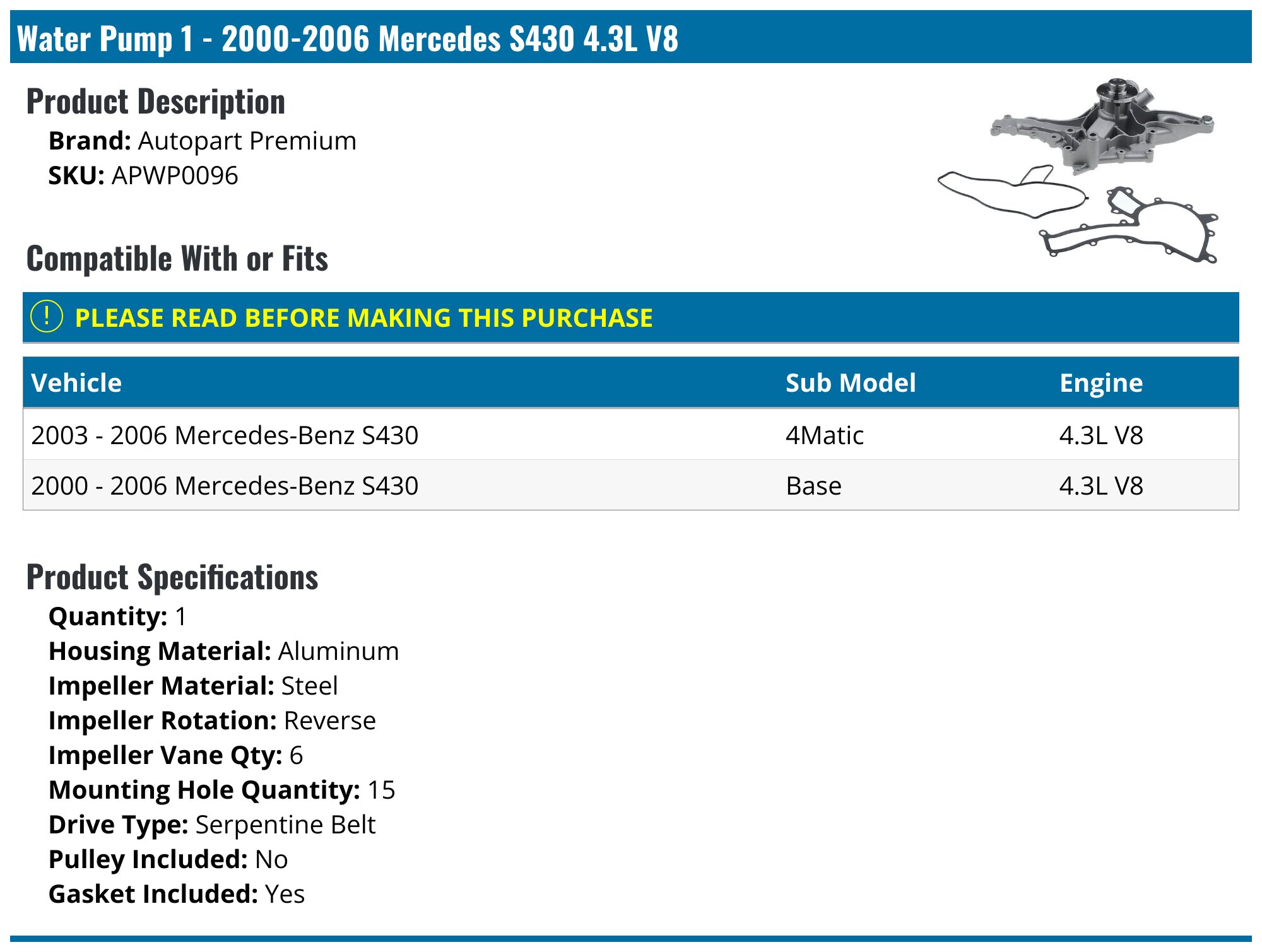
5. Are there any catastrophic engine failures to watch for? The M113 V8 is generally bulletproof. As long as the oil is changed at recommended intervals and the cooling system (thermostat and water pump) is maintained to prevent overheating, the engine can easily exceed 200,000 miles.
Next Steps for Owners
If you own an S430, the most immediate action is to establish a relationship with a mechanic who specializes in older German luxury vehicles. If you prefer DIY maintenance, invest in a dedicated Mercedes-Benz diagnostic tool. Begin by addressing the most pressing safety and operational items—specifically the suspension and cooling systems—before moving on to cosmetic or comfort-related electrical issues. With consistent attention, the 2006 S430 can provide a level of comfort and performance that few modern vehicles can replicate.