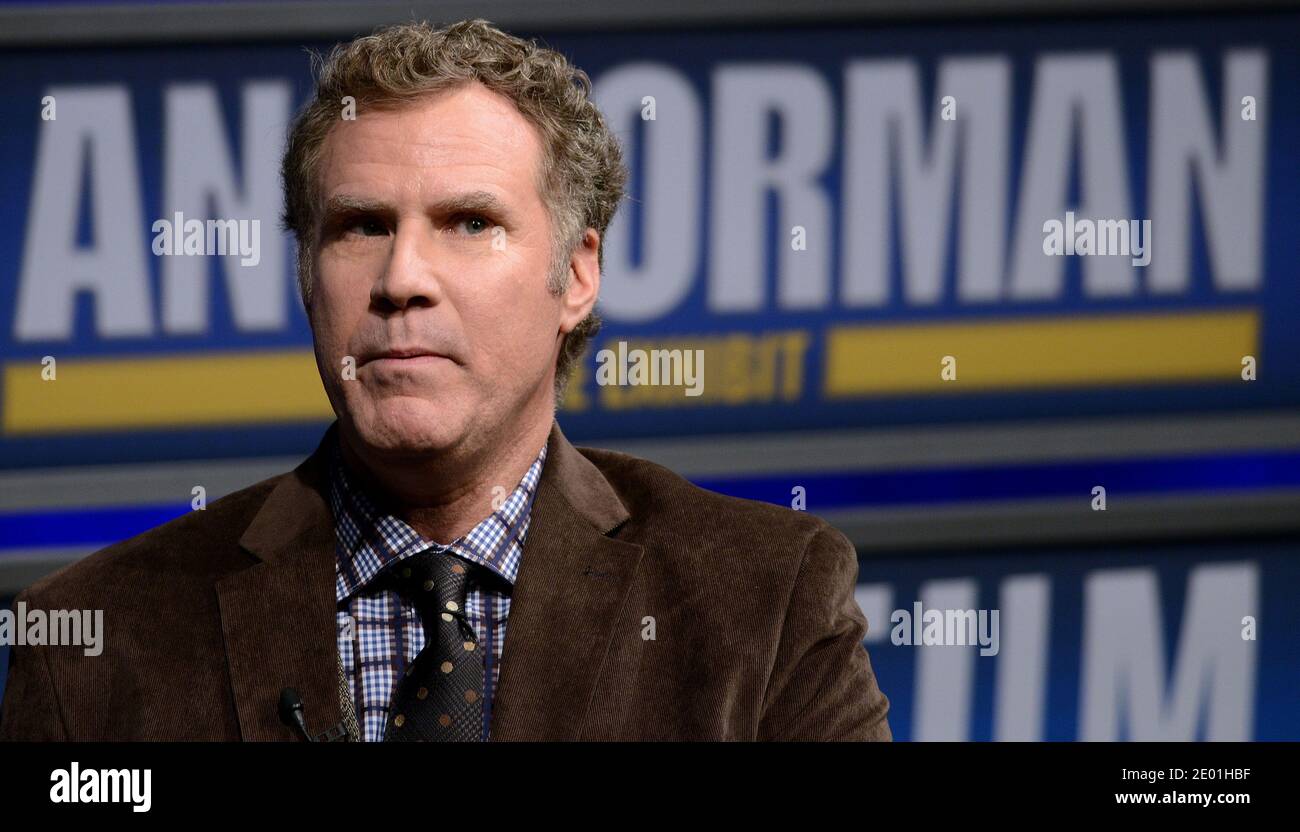
Before becoming one of Hollywood’s highest-grossing comedy stars, Will Ferrell forged his signature style on Saturday Night Live through uninhibited physical comedy and absurd character work. His transition to cinematic leading man culminated in 2004’s Anchorman: The Legend of Ron Burgundy, a satire that redefined modern American film comedy and established a new framework for ensemble improvisation.
From Saturday Night Live to Big-Screen Leading Man
Will Ferrell’s path to becoming a comedic icon began in the early 1990s with Los Angeles’s famed subterranean improv group, The Groundlings. It was here that Ferrell refined his distinct comedic thesis: committed, unflappable delivery of completely unhinged characters. In 1995, Saturday Night Live producer Lorne Michaels recruited Ferrell to join a revamped cast following a turbulent period for the show.
During his seven-season tenure on SNL (1995–2002), Ferrell emerged as the central engine of the late-night sketch program. His portfolio of impressions and original characters demonstrated unprecedented versatility, ranging from:
- Political Satire: A affable, naive caricature of President George W. Bush.
- Pop-Culture Parody: The exasperated game show host Alex Trebek on Celebrity Jeopardy!
- Pure Absurdism: Gene Frenkle, the passionate cowbell player in the legendary "Don't Fear the Reaper" sketch.
Ferrell’s ability to anchor absurd concepts with absolute seriousness made him the cornerstone of the series. However, transitioning from a seven-minute television sketch format to full-length feature films historically posed a significant challenge for SNL alumni. Early cinematic appearances in projects like Austin Powers: International Man of Mystery (1997) and A Night at the Roxbury (1998) positioned him primarily as a scene-stealing supporting player.
The true turning point occurred in 2003 with back-to-back commercial and critical victories: Todd Phillips’s Old School and Jon Favreau’s Elf. In Old School, Ferrell’s portrayal of Frank "The Tank" Ricard demonstrated his talent for playing middle-aged men regressing into chaotic antics. In Elf, he proved he could anchor a massive family-friendly blockbuster while retaining his trademark innocence and manic energy. By late 2003, Ferrell had established himself as a certified box-office attraction, setting the stage for his most personal creative endeavor.
The Genesis of Anchorman: The Legend of Ron Burgundy
Following his departure from SNL, Ferrell partnered with writer-director Adam McKay, a former SNL head writer who shared his affinity for surreal, deadpan satire. The concept for Anchorman emerged after Ferrell watched a documentary about 1970s local news anchor Mort Crim, whose voice and male-dominated newsroom culture epitomized a bygone era of broadcast journalism.
- Ferrell & McKay Scripting
- Judd Apatow Joins as Producer
- DreamWorks Pictures Greenlight
- Heavy On-Set Improv & Alternate Line Runs
- Post-Production Assembly / "Wake Up, Ron Burgundy" Cut
Ferrell and McKay crafted a script centered on Ron Burgundy, a top-rated 1970s San Diego news anchor whose unchecked sexism and ego are shattered by the arrival of an ambitious female journalist, Veronica Corningstone (played by Christina Applegate). producer Judd Apatow championed the project, helping secure financing from DreamWorks Pictures after initial studio hesitation over the film's unorthodox, surreal tone.
What set Anchorman apart during production was McKay and Ferrell’s commitment to loose, alternative take runs. Rather than sticking strictly to the shooting script, McKay would shout alternative jokes from behind the monitor, urging Ferrell and the cast to improvise dozens of variations for every scene. This methodology yielded so much extra material that an entirely separate direct-to-video film, Wake Up, Ron Burgundy: The Lost Movie, was compiled from discarded subplots and alternative takes.
Analyzing Ron Burgundy: Archetype of Fragile Masculinity
Ron Burgundy remains one of the most thoroughly developed comedy characters of the 21st century. Visually defined by a bold mustache, synthetic suits, and immaculate hair, Burgundy embodies the hubris of mid-century broadcast authority figures. Ferrell plays Burgundy not as an irredeemable villain, but as a deeply insecure child trapped in the body of a local celebrity.
- Ron Burgundy (Lead Anchor: Hubris & Ego)
- Veronica Corningstone (Challenge to Ego)
- Brick Tamland (Weatherman: Pure Absurdity)
- Brian Fantana (Field Reporter: Unearned Charm)
- Champ Kind (Sports Anchor: Aggressive Bro)
The dynamic between Burgundy and his news team highlights how the film parodies fragile male camaraderie:
- Veronica Corningstone (Christina Applegate): Serves as the narrative foil and intellectual superior to the newsroom. Her presence forces Burgundy to confront his structural advantages, sparking a battle of the sexes that exposes his fragility.
- Brick Tamland (Steve Carell): A guileless meteorologist with an IQ of 48. Carell’s performance provided a masterclass in non-sequitur comedy, balancing Burgundy’s bluster with vacant innocence.
- Brian Fantana (Paul Rudd): The news team’s lead field reporter, whose unearned confidence and cologne collection ("Sex Panther") spoof 1970s bachelor culture.
- Champ Kind (David Koechner): The aggressive, repressed sports anchor whose boundary-crossing loyalty to Burgundy adds a layer of chaotic energy to the ensemble.
Ferrell’s genius lies in his total commitment to Burgundy's delusion. Whether playing jazz flute at a cocktail lounge or weeping uncontrollably in a phone booth over a discarded burrito, Ferrell treats Burgundy's emotional highs and lows with tragic melodrama, making the absurd humor hit harder.
Evolution of Will Ferrell's Filmography
To understand the trajectory of Ferrell’s career and the structural placement of Anchorman, the table below compares key milestones during his peak creative and commercial era.
| Film Title | Release Year | Primary Role / Character | Box Office (Worldwide) | Primary Artistic & Industry Impact |
|---|---|---|---|---|
| Old School | 2003 | Frank "The Tank" Ricard | $87 million | Established Ferrell as a modern lead comedy actor; launched the "Frat Pack" era. |
| Elf | 2003 | Buddy the Elf | $228 million | Proved mainstream four-quadrant viability while retaining offbeat comedic timing. |
| Anchorman: The Legend of Ron Burgundy | 2004 | Ron Burgundy | $90 million | Popularized loose, alternative take improvisation and defined 2000s comedy aesthetics. |
| Talladega Nights: The Ballad of Ricky Bobby | 2006 | Ricky Bobby | $163 million | Solidified the Ferrell-McKay hitmaking model; satirized American sports culture. |
| Step Brothers | 2008 | Brennan Huff | $128 million | Pushed absurdist sibling rivalry to cult status; frequent target of internet meme culture. |
| The Other Guys | 2010 | Detective Allen Gamble | $170 million | Deconstructed buddy-cop tropes while integrating subtext about the 2008 financial crisis. |
| Anchorman 2: The Legend Continues | 2013 | Ron Burgundy | $173 million | Expanded the franchise to critique 24-hour cable news networks and viral media trends. |
The Cultural and Cinematic Impact of Anchorman
Released in July 2004, Anchorman earned a solid $90 million worldwide against a $26 million budget. However, its theatrical earnings only scratch the surface of its cultural footprint. Through DVD sales, cable broadcasts, and early digital media sharing, Anchorman became a generational classic whose influence altered the landscape of film comedy.
1. Shift Toward Improv-Centric Filmmaking
Before Anchorman, studio comedies typically adhered strictly to structured scripts and traditional narrative setups. McKay and Ferrell’s success proved that giving talented actors freedom to improvise across multiple takes could yield funnier, more spontaneous results. This model became the standard operating procedure for mid-2000s comedy directors, including Judd Apatow (The 40-Year-Old Virgin, Knocked Up) and Nicholas Stoller (Forgetting Sarah Marshall).
2. The Rise of Quote Culture and Early Memes
Anchorman arrived right at the dawn of modern digital meme culture. Phrases like "That escalated quickly," "I'm in a glasscase of emotion!" and "60% of the time, it works every time" entered the everyday vocabulary of millennial audiences. The film's modular, joke-dense construction made individual scenes easily clipable and shareable, laying early templates for social media humor.
- Traditional Comedy Structure (Pre-2004)
- Setup
- Punchline
- Narrative Advancement
- The Anchorman Model (Post-2004)
- Loose Setup
- Improvised Escalation
- Absurdist Tangent
- Narrative Reset
3. Launching Gary Sanchez Productions
The critical and commercial success of Anchorman allowed Ferrell and McKay to found Gary Sanchez Productions in 2006. The production company became an industry powerhouse, producing hit comedies like Step Brothers, The Other Guys, and Booksmart, alongside critically acclaimed television series such as HBO's Succession and Eastbound & Down.
Long-Term Legacy in American Entertainment
Looking back at Anchorman through a modern lens, its legacy extends beyond comedy into broader media commentary. While the film was conceived as a lighthearted parody of 1970s local broadcast culture, its core themes—the trivialization of news coverage, the prioritization of ratings over substance, and sensationalism—prefigured modern media trends.
The 2013 sequel, Anchorman 2: The Legend Continues, made this commentary explicit by placing Ron Burgundy at the birth of 24-hour cable news networks in the early 1980s. The sequel satirized how news organizations turned toward sensationalized, feel-good stories and partisan commentary to maintain viewer engagement—a shift Burgundy championed by accident.
Ferrell’s work as Ron Burgundy solidified his spot in comedy history alongside figures like Peter Sellers, Steve Martin, and John Belushi. By playing an absurd, arrogant, yet oddly sympathetic character, Ferrell created a comedic blueprint that continues to inspire actors, writers, and digital content creators today.
Frequently Asked Questions
Who directed Anchorman: The Legend of Ron Burgundy?
Adam McKay directed Anchorman. He also co-wrote the screenplay with Will Ferrell. McKay had previously served as head writer at Saturday Night Live and later went on to direct critically acclaimed films such as The Big Short and Vice.
Was the script for Anchorman completely improvised?
No, the film had a structured script written by Ferrell and McKay. However, the production relied heavily on on-set improvisation. McKay ran extended takes where actors were encouraged to invent new lines, leading to hundreds of alternative jokes and a second movie created from unused footage (Wake Up, Ron Burgundy).
What real-life news anchor inspired Ron Burgundy?
Ron Burgundy was primarily inspired by Mort Crim, a veteran news anchor in Detroit and Philadelphia during the 1970s. Will Ferrell conceived the character after watching a documentary featuring Crim, noting his deep baritone delivery, immaculate hair, and unabashedly masculine presence.
Which actors made early career appearances in Anchorman?
Anchorman featured an ensemble of talent who went on to become major stars, including Steve Carell (Brick Tamland), Paul Rudd (Brian Fantana), Seth Rogen (Scotty the cameraman), and Kathryn Hahn (Helen). It also included cameo appearances by Jack Black, Luke Wilson, Ben Stiller, and Vince Vaughn.
How did Anchorman change Hollywood film comedies?
Anchorman popularized a looser, improv-heavy style of filmmaking that dominated 2000s American comedy. It showed studios that loosely structured, character-driven absurdist humor could achieve strong home-video sales, digital longevity, and lasting cultural impact.
Recommended Viewing Guide for Will Ferrell's Core Work
To appreciate the evolution of Will Ferrell's screen career and the specific comedic framework of Anchorman, follow this chronological viewing progression:
- ** Saturday Night Live: The Best of Will Ferrell (Volume 1 & 2):** Highlights his foundational sketch work, physical commitment, and character development from 1995 to 2002.
- ** Old School (2003):** Demonstrates his transition into cinematic adult comedies as Frank "The Tank."
- ** Elf (2003):** Shows his physical agility and broad emotional range in a four-quadrant PG-rated hit.
- ** Anchorman: The Legend of Ron Burgundy (2004):** Captures his peak creative collaboration with Adam McKay and the birth of improv-centric ensemble filmmaking.
- ** Step Brothers (2008):** Represents the fully realized, unfiltered extension of the absurd comedic style pioneered in Anchorman.