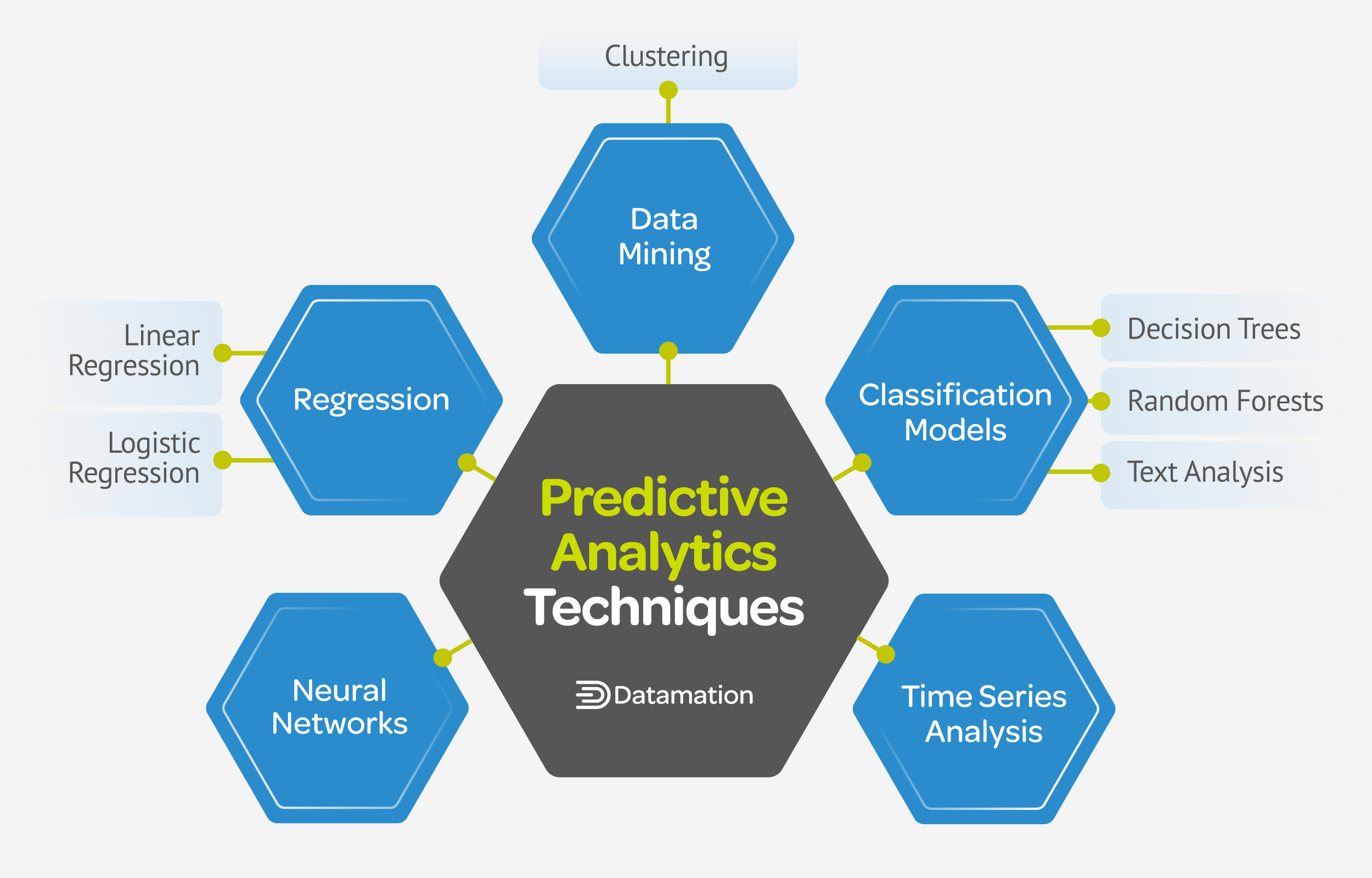
AI-driven predictive analytics transforms historical and real-time data into actionable foresight, enabling businesses to anticipate market shifts, consumer behaviors, and operational bottlenecks. By applying machine learning algorithms to structured and unstructured datasets, organizations move from reactive decision-making to proactive strategy, effectively reducing uncertainty in capital allocation, supply chain management, and customer retention efforts.
Understanding the Role of Predictive Analytics in Modern Operations
Predictive analytics is not merely about forecasting; it is about quantifying the probability of future outcomes using historical data, statistical modeling, and machine learning techniques. In a business context, artificial intelligence accelerates this process by identifying non-linear patterns that traditional statistical models often miss.
When a company integrates AI into its analytics pipeline, it shifts the focus from asking "What happened?" to "What is likely to happen next?" This shift is critical for operational efficiency. For instance, in manufacturing, predictive maintenance algorithms analyze sensor data to signal equipment failure weeks before it occurs, preventing costly downtime. In retail, demand forecasting models ingest macroeconomic indicators, social sentiment data, and historical sales velocity to optimize inventory levels, reducing carrying costs and stockouts.
The integration requires a robust data infrastructure. AI systems perform poorly on fragmented or "dirty" data. Therefore, the prerequisite for successful deployment is a unified data strategy—often implemented via a centralized data lake or warehouse—that ensures high data fidelity, lineage, and accessibility across departments.
Key Components of an AI Predictive Stack
Building an effective predictive engine requires a synthesis of data engineering, model development, and operational oversight. Organizations must address four core layers to ensure scalability:
- Data Ingestion and Preprocessing: Raw data is cleaned, normalized, and labeled. This stage consumes approximately 70-80% of total project time.
- Model Selection and Training: Data scientists select algorithms—such as regression, decision trees, or neural networks—tailored to specific business objectives.
- Deployment and Integration: The model is containerized and connected to existing business systems (e.g., CRM or ERP) via APIs to provide real-time scores or predictions.
- Monitoring and Retraining: AI models suffer from "data drift" as market conditions change. Continuous monitoring systems ensure that model accuracy remains within acceptable thresholds, triggering retraining when performance dips.
Comparative Framework: Choosing the Right Predictive Approach
Businesses often struggle to choose between custom-built models and off-the-shelf software solutions. The following table outlines the comparative trade-offs for organizations evaluating their implementation strategy in 2026.
| Feature | Off-the-Shelf AI Platforms | Custom-Developed ML Models |
|---|---|---|
| Time to Value | Fast (Weeks) | Slow (Months) |
| Customization | Low (Limited to platform features) | High (Tailored to specific workflows) |
| Upfront Cost | Moderate (Subscription fees) | High (Engineering salaries/compute) |
| Maintenance | Managed by vendor | Internal responsibility |
| Competitive Edge | Industry-standard insights | Proprietary, unique advantages |
Strategic Implementation Steps
Implementing predictive AI requires a phased approach to manage risk and demonstrate incremental value.
Phase 1: Problem Scoping Focus on high-impact, low-complexity use cases. Avoid attempting to solve company-wide problems immediately. Instead, target specific bottlenecks, such as reducing churn in a subscription service or refining lead scoring in a sales pipeline.
Phase 2: Data Audit Before purchasing software or hiring a data team, assess your data maturity. Verify that you have sufficient historical records to train a model. For example, if you are attempting to predict customer churn, you need a minimum of 18–24 months of customer interaction data, including touchpoints, purchase history, and support logs.
Phase 3: Pilot Execution Run a "proof of concept" (PoC) using a controlled dataset. Evaluate the output against a blind test set. If the model fails to predict known outcomes with sufficient accuracy, audit the feature engineering process to ensure the model is ingesting relevant variables.
Phase 4: Operational Integration Once the model is validated, integrate it into the business workflow. This is often the point of failure. If the sales team ignores lead scores because they do not understand the underlying logic, the investment is wasted. Success requires "Explainable AI" (XAI) features that allow end-users to see the variables contributing to a specific prediction.
Addressing Operational and Technical Limitations
AI is not a panacea, and relying solely on algorithms can introduce new risks. The primary technical limitation is "Model Decay." As market environments evolve—such as sudden economic shifts or changes in consumer regulations—models trained on static past data become obsolete.
Furthermore, legal and ethical considerations are paramount. In jurisdictions with strict data privacy frameworks, organizations must ensure that their predictive models remain compliant, particularly regarding bias and non-discrimination. Regularly auditing models for "fairness" to ensure they are not inadvertently discriminating based on sensitive demographic variables is a standard best practice for 2026 enterprises.
Frequently Asked Questions
How does predictive analytics differ from standard business intelligence? Business intelligence provides a rearview mirror, explaining past performance through dashboards and reports. Predictive analytics uses that past performance to simulate future scenarios, allowing for forward-looking adjustments.
What is the minimum amount of data required to start? There is no universal minimum, as it depends on the complexity of the question. Generally, you need enough data points to account for seasonality and noise. A good rule of thumb is at least 10 times the number of variables you intend to test, covering multiple complete business cycles.
How do I prevent bias in my predictive models? Bias usually enters the model through the training data. If your historical data contains human biases—such as favoring certain customer segments—the AI will replicate them. Use fairness-auditing software tools to identify and prune variables that correlate with protected classes.
Can small businesses afford AI-driven predictive analytics? Yes. In 2026, the proliferation of low-code AI platforms and SaaS-based predictive tools has lowered the barrier to entry significantly, removing the need for massive internal data science teams.
What should I prioritize: high accuracy or explainability? In highly regulated industries like finance and healthcare, explainability is mandatory. In other sectors, high accuracy is preferred. Aim for a balance, as a highly accurate model that "black boxes" its reasoning will struggle to gain internal stakeholder buy-in.
Recommendation for Immediate Next Steps
Begin by identifying one business process where human intuition frequently yields inconsistent results. Document the historical decision-making process and the available data inputs. Engage a small cross-functional team—comprising both domain experts and IT stakeholders—to run a 90-day pilot project. By limiting the scope to a single, measurable outcome, you can establish the internal ROI necessary to justify enterprise-wide adoption.