American General Life Insurance Company—which issues policies under the Corebridge Financial brand—sets strict age limits based on product structure, term duration, and underwriting class. Issue ages generally range from 18 to 80 for term life insurance, 0 to 85 for universal life policies, and 50 to 80 for guaranteed acceptance whole life coverage. Term conversion options typically expire at age 70.
Overview of American General Life Insurance Age Rules
When evaluating life insurance coverage through American General Life Insurance Company (AGLIC), age is one of the primary factors determining policy eligibility, maximum coverage limits, available term lengths, and premium rates. Formerly operating under the AIG Life & Retirement banner, AGLIC rebranded under Corebridge Financial while maintaining its traditional product lines and underwriting standards.
Age limits for life insurance generally fall into three distinct operational categories:
- Minimum Issue Age: The legal and structural minimum age at which a policy owner or insured person can apply for coverage.
- Maximum Issue Age: The cutoff age beyond which the insurer will no longer issue a new policy for a specific product line.
- Maximum Expiration or Conversion Age: The maximum age to which a policy can remain in force, renew, or convert into a permanent policy without requiring medical evidence of insurability.
Because risk increases with age, insurance carriers cap term lengths for older applicants to balance mortality risk with affordable pricing. American General applies different age matrices across its core product lines, including its flagship Select-a-Term product, Quality of Life (QoL) flexible term series, universal life (UL) products, and guaranteed issue whole life plans.
Issue Age Limits by Product Category
Understanding the exact age parameters for each product category allows applicants and financial planners to choose policies that fit specific financial horizons, such as income replacement during working years or estate liquidity in retirement.
[Minimum Issue Age] ---------------------------- [Maximum Issue Age] Term Life (Select-a-Term): 18 --------------------------------- 80 (10-yr term) Universal Life (IUL / UL): 0 (18 days) ------------------------ 85 Guaranteed Acceptance: 50 --------------------------------- 80
Term Life Insurance (AG Select-a-Term)
American General’s primary term product, AG Select-a-Term, offers high flexibility by allowing policyholders to select custom term durations ranging from 10 to 30 years (and in some cases up to 35 years). However, the maximum issue age drops steadily as the chosen term length increases.
- Minimum Issue Age: 18 years old across all term lengths.
- 10-Year Term: Maximum issue age is typically 80 years old.
- 15-Year Term: Maximum issue age is typically 75 years old.
- 20-Year Term: Maximum issue age is typically 70 years old.
- 25-Year Term: Maximum issue age is typically 65 years old.
- 30-Year Term: Maximum issue age is typically 50 to 58 years old (varying based on tobacco use and risk classification).
- 35-Year Term: Maximum issue age is typically 45 to 50 years old.
For older applicants—such as those aged 70 to 80—only shorter terms (10 or 15 years) remain accessible. In addition, tobacco usage further reduces the maximum issue age on longer-duration terms due to the compounding mortality risk.
Universal Life & Index Universal Life (IUL)
Universal life insurance offers permanent protection coupled with flexible premiums and cash value accumulation. Products such as Value+ IUL or Max Accumulator IUL are designed for both wealth transfer and long-term liquidity.
- Minimum Issue Age: 0 (or 18 days post-birth, depending on state regulations).
- Maximum Issue Age: Typically 80 to 85 years old.
While universal life policies can be issued to seniors in their 70s and early 80s, underwriting criteria become notably strict. Applicants over age 70 must demonstrate clear financial justification for large face amounts, along with medical records indicating manageable chronic conditions.
Guaranteed Acceptance Whole Life Insurance
Designed specifically for final expenses, funeral costs, and small debt settlement, American General’s Guaranteed Acceptance Whole Life product bypasses medical exams and health questionnaires altogether.
- Minimum Issue Age: 50 years old.
- Maximum Issue Age: 80 years old (in select states, maximum limits may be capped at 75 or 85 based on local insurance department approvals).
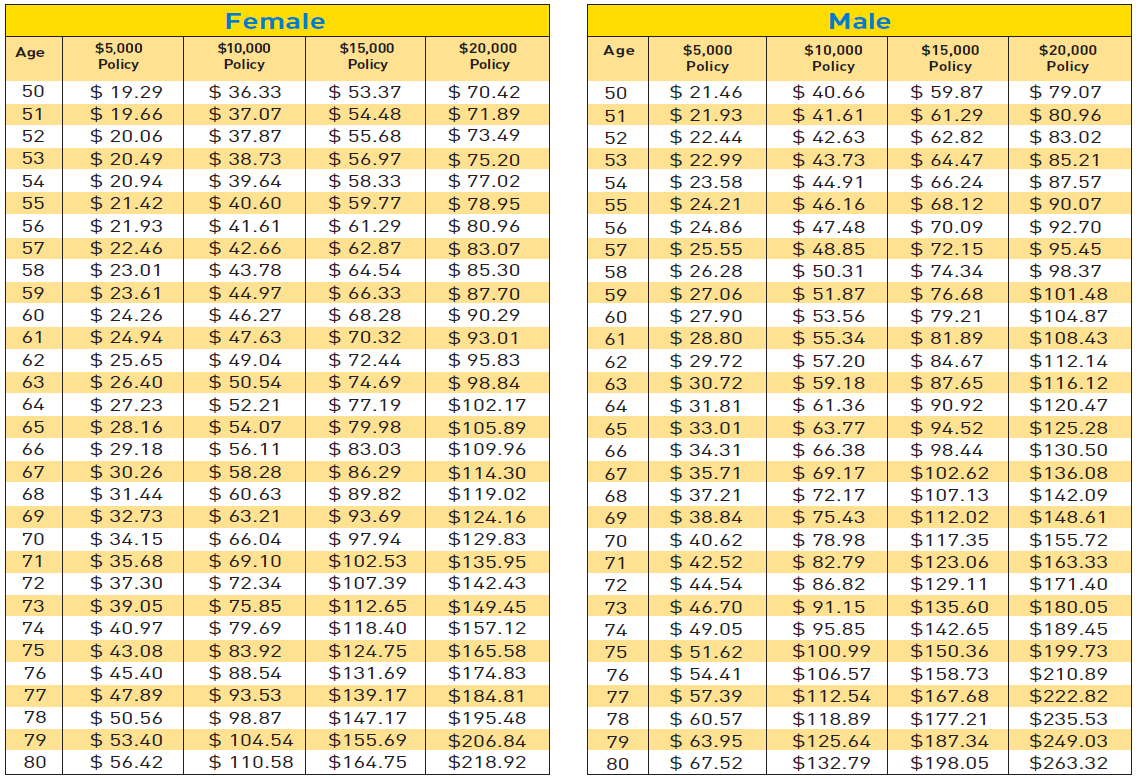
- Coverage Caps: Usually limited to face amounts between $5,000 and $25,000.
Because approval is guaranteed regardless of health status, these policies enforce a graded death benefit during the first two policy years. If the insured dies of natural causes within the first 24 months, the beneficiary receives a return of premiums paid plus interest (typically 10%), rather than the full face value. Full death benefits apply immediately for accidental death.
Comparison Matrix: American General Product Eligibility by Age
The table below outlines issue ages, conversion thresholds, and maximum coverage limits across the primary American General policy offerings available through Corebridge Financial.
| Product Line | Minimum Issue Age | Maximum Issue Age | Maximum Conversion / Maturity Age | Standard Face Amount Limits |
|---|---|---|---|---|
| AG Select-a-Term (10-Yr) | 18 | 80 | Age 70 or term end | $100,000 to $10,000,000+ |
| AG Select-a-Term (20-Yr) | 18 | 70 | Age 70 or term end | $100,000 to $10,000,000+ |
| AG Select-a-Term (30-Yr) | 18 | 55 (Non-smoker) | Age 70 or term end | $100,000 to $10,000,000+ |
| QoL Flex Term (Accelerated Benefits) | 18 | 65–75 (Varies by term) | Age 70 | $100,000 to $2,000,000+ |
| Value+ / Max Accumulator IUL | 0 (18 days) | 85 | Policy Maturity (Age 121) | $50,000 to $10,000,000+ |
| Guaranteed Acceptance Whole Life | 50 | 80 | Life (Paid-up at age 100+) | $5,000 to $25,000 |
Note: Product terms, maximum issue ages, and state availability may vary slightly depending on individual jurisdiction rules and underwriting guidelines.
Term Conversion Age Limits and Guidelines
One of the most valuable features of an American General term life policy is the Term Conversion Privilege. This contractual right allows policyholders to convert a temporary term policy into a permanent universal life or index universal life policy without submitting new medical evidence, undergoing blood work, or answering health questions.
However, conversion privileges are subject to rigid age and time constraints:
Conversion Expiration Rules
Under standard American General policy contracts, conversion must occur before the earlier of two dates:
- The expiration date of the level term period.
- The policy anniversary following the insured person’s 70th birthday.
For example, if an individual purchases a 20-year term policy at age 58, the policy would normally expire at age 78. However, because American General caps conversions at age 70, the policyholder only has until age 70—12 years into the term—to exercise the conversion option without medical underwriting.
Partial vs. Full Conversion
Policyholders can choose to convert the entire face amount or a portion of it:
- Full Conversion: Converts the entire death benefit into a permanent contract.
- Partial Conversion: Converts a portion (e.g., $250,000 of a $1,000,000 policy) into permanent coverage while keeping the remaining term coverage in place, provided the remaining term amount meets the minimum requirement (typically $100,000).
Exercising conversion before reaching the age 70 limit is an effective risk-management strategy for individuals who develop chronic medical conditions later in life that would render them otherwise uninsurable on the open market.
Rider Availability and Age Restrictions
Optional policy riders allow buyers to customize coverage for disability, long-term illness, or family members. However, riders carry their own issue age limits, which are often lower than the base policy limits.
Accelerated Death Benefit Riders (Quality of Life Living Benefits)
American General is widely recognized for its Quality of Life (QoL) living benefit suite, which allows policyholders to access a portion of the death benefit if diagnosed with a qualifying terminal, critical, or chronic illness.
- Issue Age Limits: Generally align with the base policy issue ages (18 to 65 or 75 depending on term duration).
- Activation Rules: Chronic illness triggers typically require an inability to perform 2 out of 6 Activities of Daily Living (ADLs) or severe cognitive impairment.
Waiver of Premium Rider
This rider waives future insurance premiums if the insured becomes totally disabled according to policy terms.
- Minimum Issue Age: 18 years old.
- Maximum Issue Age: Usually 55 or 60 years old.
- Expiration Age: Coverage for the rider itself generally terminates at age 65, even if the base term policy remains active beyond that point.
Accidental Death Benefit Rider
Provides an additional death benefit payout if the insured dies as a direct result of an accident.
- Minimum Issue Age: 18 years old.
- Maximum Issue Age: 60 to 65 years old.
- Termination Age: The rider typically expires when the insured reaches age 70.
Child Term Insurance Rider
Allows parents or grandparents to add term coverage for dependent children on an adult policy.
- Child Issue Ages: 15 days to 19 years old.
- Expiration / Conversion Age: Child coverage remains in effect until the child reaches age 25, at which point the child has the right to convert the rider into an independent permanent policy up to 5 times the rider's original face value without health questions.
Impact of Age on Medical Underwriting and Pricing
Age not only dictates whether an applicant qualifies for a specific policy type, but also dictates the strictness of the underwriting process and the cost per thousand dollars of coverage.
AGE 18-40: Accelerated / Automated Underwriting (No Exam for Qualified Applicants) AGE 41-60: Standard Underwriting Thresholds (Exam Required Based on Coverage Amount) AGE 61-80+: Full Senior Underwriting (Exam, ECG, Medical Records, Cognitive Screening)
Underwriting Thresholds by Age Group
- Ages 18 to 40: Applicants requesting coverage up to $1,000,000 or $2,000,000 may qualify for American General’s accelerated underwriting process. This streamlined evaluation relies on electronic prescription checks, motor vehicle records, and credit-based financial scores, often waiving paramedical exams and blood samples for healthy individuals.
- Ages 41 to 60: Accelerated options remain available for lower face amounts, but standard underwriting frequently requires a physical exam, blood draw, urine analysis, and attending physician statements (APS) for higher death benefits ($1,000,000+).
- Ages 61 to 80+: Accelerated underwriting is generally unavailable. American General requires full senior underwriting, which often includes comprehensive medical records, physical exam, resting electrocardiogram (ECG), and specialized cognitive or mobility assessments (such as a word recall test or timed get-up-and-go test) to screen for dementia or frail health.
Cost Trajectory Across Age Brackets
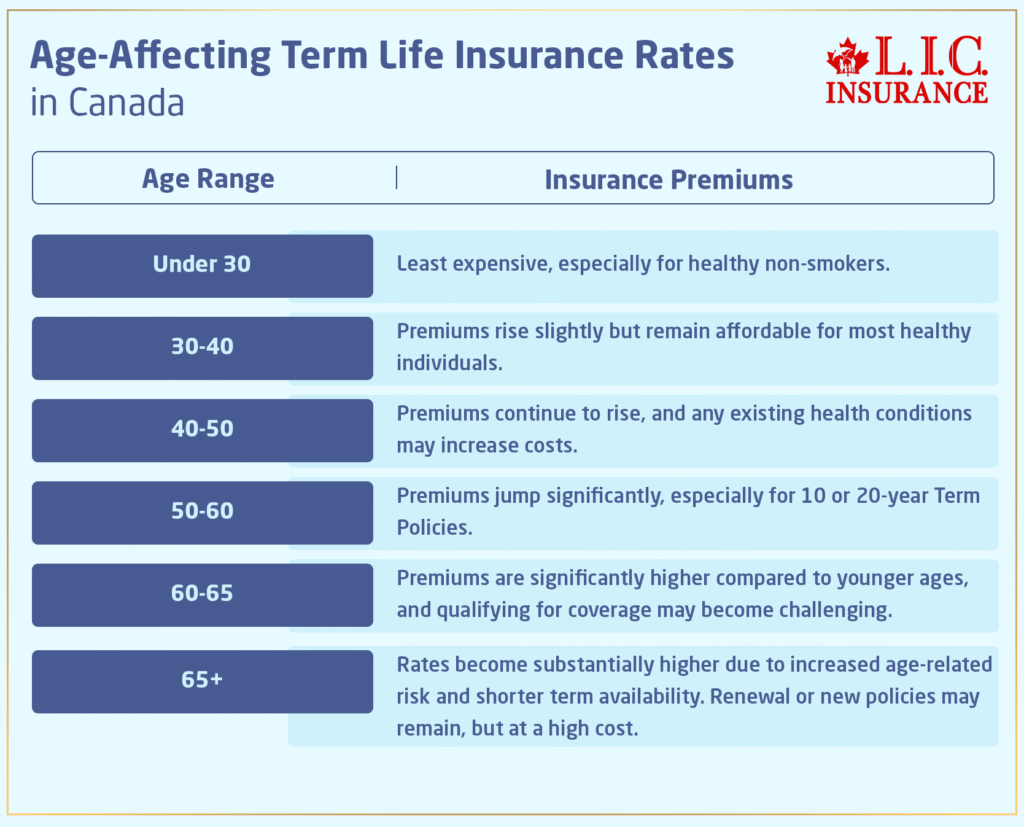
Life insurance premiums increase exponentially, rather than linearly, with age. Mortality tables show that the risk of death doubles roughly every 7 to 8 years.
For instance, a 10-year term policy with a $500,000 death benefit for a healthy non-smoker might cost:
- At Age 30: ~ $15 to $20 per month
- At Age 50: ~ $45 to $65 per month
- At Age 60: ~ $130 to $180 per month
- At Age 70: ~ $450 to $650 per month
Buying coverage early locks in preferred underwriting rates and avoids the steep cost jumps that occur in older age brackets.
Steps to Apply When Nearing Maximum Age Limits
If you or a family member are applying for American General life insurance past age 60 or 70, following a structured approach minimizes delays and avoids unnecessary rejections.
- Verify Exact Product Availability: Consult with an independent agent to confirm that your target term length or permanent product is still issued at your current age in your state.
- Retrieve Full Medical Records in Advance: Because older applicants almost always require an Attending Physician Statement (APS), having recent doctor visit summaries, lab reports, and cardiology clearings readily available accelerates the underwriting timeline.
- Establish Clear Financial Justification: For high face amounts past age 65, American General’s underwriting team requires clear financial justification, such as estate tax liability, business succession needs, or income replacement ratios (typically capped at 5x to 10x annual income for ages 60–65, and 1x to 5x for ages 66–75).
- Schedule the Senior Paramedical Exam Promptly: If a physical exam is triggered, complete the fast, fasting blood test and urine screen as instructed. Refrain from heavy physical exertion or high-sodium meals 24 hours prior to prevent false spikes in blood pressure or kidney markers.
- Review Conversion Windows if Existing Policyholder: If you already own an American General term policy and are approaching age 70, evaluate whether to convert to permanent coverage before the age 70 contractual window closes permanently.
FAQ: American General Life Insurance Age Limits
What is the maximum age to buy a 30-year term policy from American General?
The maximum issue age for a 30-year AG Select-a-Term policy is generally 50 to 55 years old for non-smokers. Smokers or higher-risk applicants may face a lower maximum issue age cutoff, often capped around age 45 to 50.
Can I get life insurance from American General after age 80?
Yes, but choices are limited. American General offers Guaranteed Acceptance Whole Life insurance up to age 80. Certain universal life products may accept applicants up to age 85, subject to full medical underwriting and medical record reviews. Term life products are generally not issued past age 80.
Does American General require a medical exam for seniors?
For seniors aged 60 and older applying for standard term or universal life policies, American General almost always requires a full paramedical exam, blood work, urine sample, and doctor records. However, their Guaranteed Acceptance Whole Life policy (ages 50–80) requires no medical exam, blood work, or health questions.
What happens to my American General term policy when I turn 70?
Turning 70 does not automatically cancel your term policy if your chosen level term period (e.g., a 20-year term bought at age 58) extends past age 70. However, turning 70 represents the standard deadline for converting that term policy into a permanent universal life policy without a medical exam. Past age 70, conversion rights generally expire.
Can I add a Waiver of Premium rider if I am over 60?
No. The Waiver of Premium rider with American General typically has a maximum issue age of 55 or 60. If you purchase a policy past age 60, this specific rider is no longer available.
Strategic Summary and Next Steps
Choosing the right American General life insurance policy requires aligning your current age with the carrier’s strict issue limits and long-term conversion rules.
- If you are under age 50: You have access to the full spectrum of products, including 30-year and 35-year term policies, maximum living benefit riders, and streamlined automated underwriting.
- If you are between ages 50 and 70: Term coverage remains available, but term lengths are capped at 10, 15, or 20 years. If you own an existing term policy, keep age 70 in mind as the crucial deadline for converting to permanent coverage without health questions.
- If you are between ages 71 and 85: Focus on short 10-year terms (if under 80), Universal Life policies for estate planning, or Guaranteed Acceptance Whole Life (up to age 80) for final expense needs.
To explore specific pricing and confirm state-specific age cutoffs, request a personalized quote through a licensed independent broker who represents Corebridge Financial / American General Life Insurance Company.