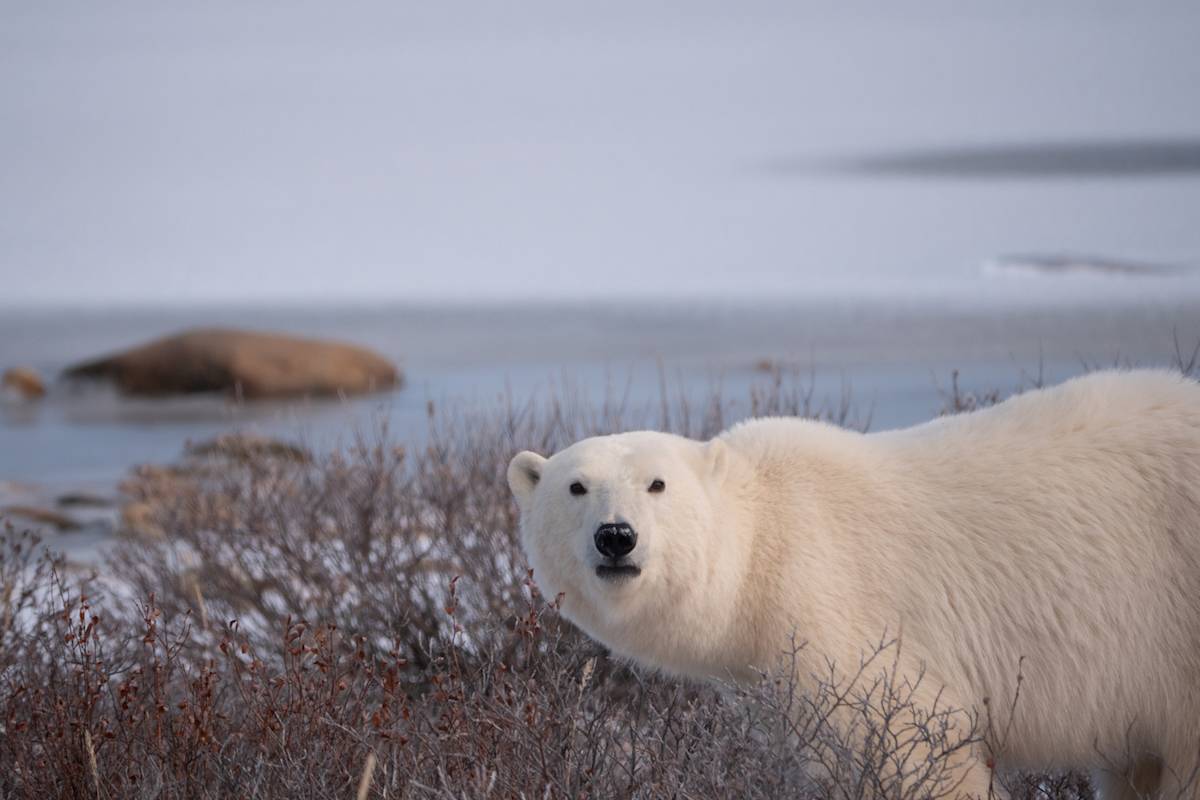
No, there are no wild polar bears in Michigan. The natural habitat of the polar bear (Ursus maritimus) is restricted to the circumpolar regions of the Northern Hemisphere, far north of the United States-Canada border, making the state's temperate climate and ecosystems entirely unsuitable for these Arctic apex predators.
Understanding why polar bears do not inhabit Michigan involves examining the strict ecological requirements of the species, their geographic distribution, and the historical biogeography of North America. While Michigan boasts a diverse array of native wildlife, including large mammals like the American black bear, the physical and biological traits that allow polar bears to thrive in the high Arctic are absent in the Great Lakes region.
The Natural Habitat and Geographic Range of Polar Bears
Polar bears are marine mammals closely tied to sea ice. Their evolutionary adaptations—such as a thick layer of blubber, water-repellent fur, and specialized hunting techniques designed for capturing seals through breathing holes in ice—require an environment that remains frozen for a significant portion of the year.
The global population of polar bears is distributed across five nations with Arctic territory: Canada, the United States (specifically Alaska), Greenland, Norway, and Russia. Within the United States, polar bears are found exclusively along the northern and western coasts of Alaska, bordering the Beaufort and Chukchi Seas.
| Region | Presence of Polar Bears |
|---|---|
| High Arctic | Primary habitat (permanent and seasonal ice) |
| Northern Alaska | Permanent resident populations |
| Canada (Nunavut) | Large concentrations along Hudson Bay coast |
| Michigan | Completely absent (wild populations) |
The southernmost permanent population of polar bears is found in the James Bay and Hudson Bay regions of Canada, situated between latitudes 50°N and 60°N. In contrast, Michigan spans latitudes roughly between 41°N and 48°N. Even the northernmost point of Michigan's Upper Peninsula is situated hundreds of miles south of the sub-Arctic conditions required by polar bears during the ice-free summer months.
Why Michigan’s Environment Cannot Support Polar Bears
The ecosystems of Michigan present several insurmountable barriers to polar bear survival. These factors span climate, food web availability, and physiological constraints.
Climate and Temperature Limitations
Polar bears are biologically engineered to endure extreme cold, with core body temperatures and metabolic rates optimized for sub-zero temperatures. Their thick fur and dense blubber layers make them highly susceptible to overheating. In Michigan, summer temperatures frequently rise above 80°F (27°C) across both the Lower and Upper Peninsulas. Sustained exposure to warm temperatures causes severe heat stress in polar bears, potentially leading to hyperthermia and fatal physiological collapse.
Absence of Sea Ice
Unlike typical terrestrial bears that hibernate in dens during winter, polar bears do not true-hibernate. Pregnant females construct snow dens for giving birth, but active polar bears spend the winter hunting on sea ice. Michigan experiences seasonal freezing on the Great Lakes, but lake ice is dynamic, unstable, and entirely absent during the warm months. Without permanent or semi-permanent ice sheets to serve as a platform for hunting ringed and bearded seals, polar bears would starve.
Dietary Mismatch
Polar bears are hypercarnivores whose diet consists almost entirely of marine mammals, primarily ringed seals and bearded seals, which provide the high caloric density and fat content necessary for survival. Michigan's ecosystems lack marine mammal populations capable of supporting apex predators of this scale. While the Great Lakes host aquatic species such as fish and freshwater mussels, they do not support seals or walruses, forcing any displaced polar bear into a state of chronic starvation.
Native Bears of Michigan: The American Black Bear
Confusion regarding bears in Michigan often stems from the presence of the state's native ursid species, the American black bear (Ursus americanus). Citizens or visitors encountering a large bear in the northern forested regions of the state occasionally mistake them for other species due to color variations or size.
- Distribution: Black bears are permanent residents in Michigan, with a thriving population estimated by the Michigan Department of Natural Resources (DNR) to exceed 10,000 individuals. The vast majority of these bears reside in the Upper Peninsula, though a growing breeding population is established in the northern half of the Lower Peninsula.
- Color Variations: While named "black" bears, their fur can range widely in color, including brown, cinnamon, blonde, and even rare blue-gray phases. This color diversity sometimes leads to mistaken identity among casual observers.
- Behavior and Diet: Unlike polar bears, black bears are omnivores, consuming a diet rich in vegetation, berries, nuts, insects, and occasionally carrion. They undergo true winter dormancy (hibernation) in protected dens, emerging in the spring when food sources become accessible.
Captive Polar Bears in Michigan Facilities
While wild polar bears do not exist in Michigan, captive individuals have occasionally been housed in accredited zoological institutions within the state for educational and conservation purposes.
Maintaining polar bears in captivity requires specialized, highly engineered environments designed to replicate sub-zero conditions and provide chilled water pools. These habitats are expensive to construct and maintain, leading many modern zoos to phase out polar bear exhibits in favor of species better suited to temperate climates. When evaluating historical or contemporary animal exhibits in Michigan, visitors should distinguish between regional wildlife and specialized zoological holdings.
Frequently Asked Questions
Are there any Arctic animals that migrate to Michigan in the winter?
While polar bears never travel to Michigan, some Arctic bird species, such as the snowy owl (Bubo scandiacus), migrate south into Michigan and surrounding northern states during the winter months in search of food. These irruptions bring temporary visitors from the tundra, but no large Arctic mammals make a similar journey.
Could climate change ever drive polar bears south into Michigan?
No. Climate change is currently threatening polar bear populations by reducing the duration and extent of Arctic sea ice, but it is not shifting their climate zone southward. Rising global temperatures make Michigan increasingly warm, pushing the environment further away from the sub-Arctic conditions required by the species.
What should I do if I see a large bear in Michigan?
If you encounter a bear in Michigan, it is an American black bear. Keep your distance, do not approach or run, make yourself look large by raising your arms, and make noise to encourage the animal to move away. Secure all residential garbage and food sources to prevent attracting wildlife to human settlements.
How far south do polar bears naturally roam?
The southernmost extent of the polar bear's natural range is James Bay in Ontario, Canada, located near latitude 51°N. They remain tethered to this region because Hudson Bay and James Bay freeze over completely during the winter, allowing bears to hunt seals far south of the high Arctic circle, though they must move inland during the summer melt.
Conclusion and Next Actions
Wild polar bears do not live in Michigan, nor can the state's climate and ecosystems support them. Residents and visitors encountering bears in the outdoors are interacting with native American black bears. For those interested in observing Arctic wildlife, viewing specialized documentaries, supporting accredited conservation organizations working in the high Arctic, or visiting northern zoological facilities remains the most effective approach. For further information on Michigan's native wildlife management, consult official resources provided by the Michigan Department of Natural Resources (DNR).