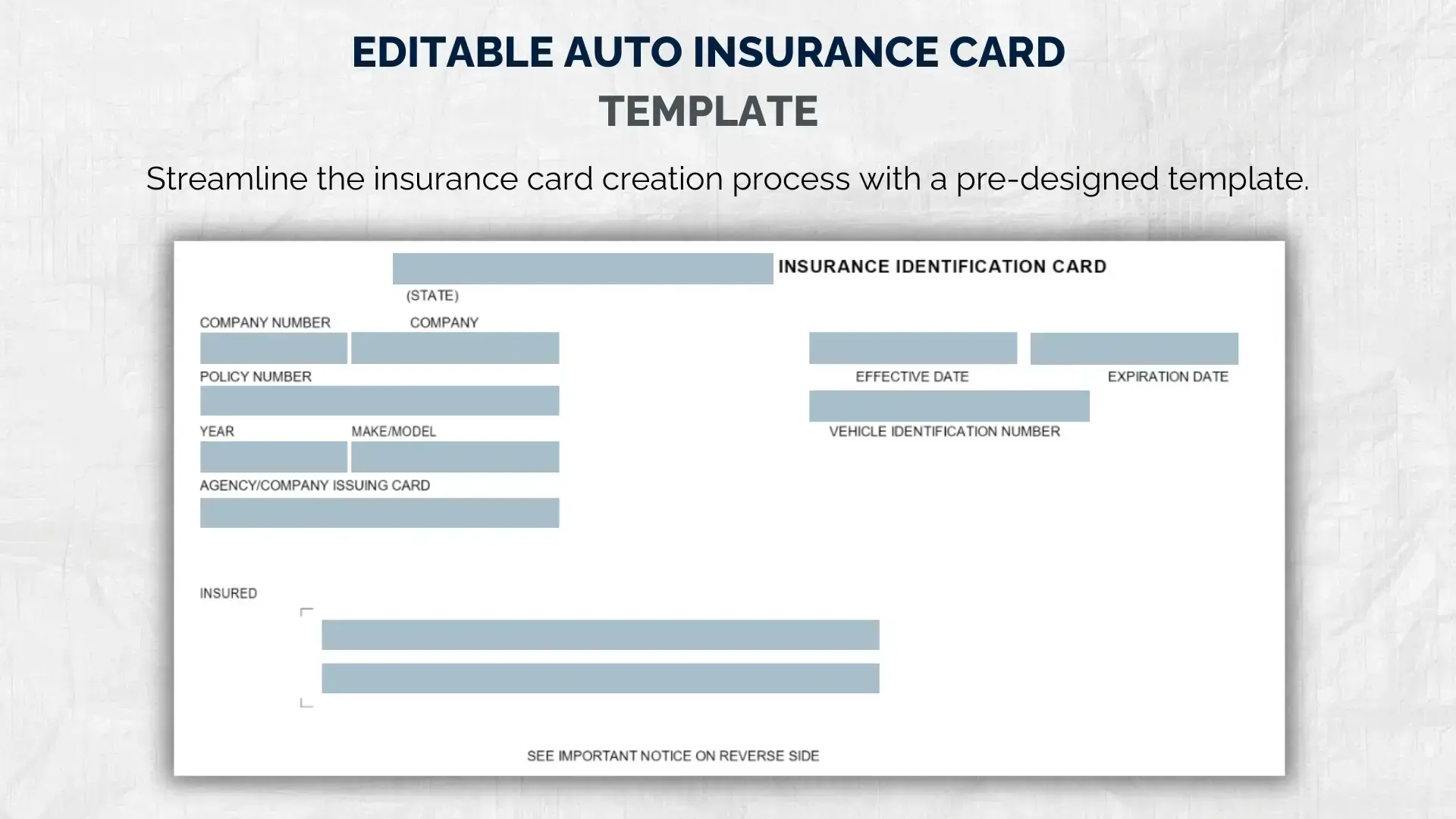
Auto insurance templates are worth using primarily for administrative efficiency, internal record-keeping, and standardizing agency workflows, provided they are sourced from reputable compliance-focused providers. However, they carry significant legal risks if used to bypass official regulatory channels or if they fail to meet specific 2026 state-level mandates for policy language and digital verification.
The landscape of insurance documentation has evolved rapidly. In 2026, the transition from paper-based systems to integrated digital ecosystems is nearly complete. Despite this, the question of whether to use a "template"—a pre-formatted document designed to represent policy details, certificates of insurance, or claim notifications—remains highly relevant for small agencies, fleet managers, and individual policyholders. To determine their true value, one must weigh the immediate convenience of a template against the long-term liability of non-compliance.
The Evolution of Auto Insurance Documentation in 2026
To understand the utility of templates, we must first define what they are in the current market. An auto insurance template is no longer just a static Word document. In 2026, templates often take the form of dynamic JSON or XML schemas used in automated document generation (ADG) systems, or high-fidelity PDF layouts used by independent agents to present coverage summaries to clients.
The primary driver for using these templates is the need for standardization. Whether you are an independent broker managing multiple carriers or a business owner overseeing a vehicle fleet, having a uniform way to display information is critical for clarity. However, the "worth" of these templates depends entirely on their application:
- For Insurance Agencies: Templates are essential for "Quick Quote" summaries and internal policy review documents that aggregate data from different underwriters into a single, brand-consistent format.
- For Businesses (Fleet Management): Templates are often used for internal Certificates of Insurance (COI) tracking or providing drivers with standardized accident report forms.
- For Individuals: Templates are frequently sought for proof of insurance or for organizing personal records, though this is where the highest risk of fraud and rejection occurs.
The Benefits: Why Templates Remain Popular
1. Administrative Efficiency and Speed
The most immediate advantage of using a template is the reduction in "time-to-document." In a high-volume environment, such as a local agency or a logistics company, manually drafting a coverage summary for every vehicle is inefficient. A well-designed template allows for the rapid input of variables—VIN numbers, coverage limits, and effective dates—ensuring that the document is ready in minutes rather than hours.
2. Brand Consistency and Professionalism
For independent agents, templates offer a way to maintain a professional "look and feel" regardless of which carrier is actually underwriting the policy. By using a consistent template for policy summaries and welcome letters, an agency builds brand equity. A cohesive aesthetic suggests stability and attention to detail, which are vital traits in the financial services sector.
3. Simplified Data Interpretation
Official insurance policies are notoriously dense, often spanning dozens of pages of legal definitions and exclusions. A template-based Policy Declaration Summary serves as a "bridge" document. It extracts the most vital information—such as Bodily Injury Liability limits, Uninsured Motorist coverage, and Deductibles—and presents it in a digestible format. This helps clients understand what they are paying for without needing a law degree.
The Critical Risks: Compliance, Fraud, and Rejection
While the benefits are clear, the risks of using generic or unverified auto insurance templates are substantial. In 2026, insurance regulators have become increasingly sophisticated in tracking document authenticity.
1. Legal Compliance and State Mandates
Auto insurance is regulated at the state level (in the U.S.) or by national authorities elsewhere. Every jurisdiction has specific requirements for what must appear on an insurance ID card or a policy disclosure. For instance, some states require specific font sizes for "Warning" text regarding insurance fraud. A generic template downloaded from a global site may lack these jurisdiction-specific legal headers, rendering the document legally void or subjecting the user to fines.
2. The Trap of "Fake Proof of Insurance"
There is a dark side to the template market: templates designed to look like official ID cards from major carriers like Geico, State Farm, or Progressive. Using these templates to create "proof" of insurance without an active policy is felony insurance fraud. In 2026, most law enforcement agencies use real-time database verification (such as updated versions of the DMV’s Online Insurance Verification System). If a driver presents a template-generated card that does not match the state’s digital record, the legal consequences are immediate and severe.
3. Outdated Forms and The ACORD Standard
In the commercial sector, the ACORD 25 (Certificate of Liability Insurance) and ACORD 50 (Insurance Identification Card) are the industry standards. Using a "look-alike" template that does not strictly adhere to the latest ACORD formatting can lead to the document being rejected by lenders, contractors, or government agencies. Templates that are not updated to the 2026 revisions of these standards are essentially worthless for professional use.
Comparing Documentation Methods in 2026
To decide if a template is right for your needs, compare it against other modern methods of document generation.
| Method | Best For | Pros | Cons |
|---|---|---|---|
| Generic Online Templates | Personal organization, Mock-ups | Free/Low cost, Easy to edit | High risk of non-compliance, Often rejected by DMV |
| ACORD Official Forms | Commercial insurance, Professional brokers | Industry-standard, Legally robust | Requires subscription/membership, Rigid format |
| Carrier-Generated Docs | Legal proof of coverage, Claims | 100% Authentic, Real-time verification | Cannot be customized, Often difficult to read |
| InsurTech API Generation | Modern agencies, App developers | Dynamic, Real-time data, Highly professional | High technical barrier, Monthly software costs |
| Custom Agency Templates | Client communication, Summaries | Brand-aligned, Simplifies complex info | Requires regular legal review to ensure accuracy |
Technical Deep-Dive: What Makes a Template "Worth Using"?
If you decide to utilize templates for your business or agency, they must meet certain technical and functional criteria to be considered viable in 2026.
Data Security and PII Protection
Insurance documents contain Personally Identifiable Information (PII), including names, addresses, and VINs. In the current regulatory environment (following the expansion of the CCPA and GDPR-like frameworks in various regions), a template is only as good as the system it sits in. If you are using a template within a cloud-based editor, that provider must offer end-to-end encryption. Using an unsecure, third-party "online PDF filler" for insurance documents is a major security risk that could lead to identity theft.
Integration with Management Systems
A "static" template is a liability because it requires manual data entry, which leads to human error. The most valuable templates in 2026 are those that are schema-compatible. This means the template can "suck in" data directly from an Agency Management System (AMS) or a CRM via an API. When the data flows directly from the underlying policy record into the template, the risk of typos—such as a transposed digit in a VIN—is eliminated.
Version Control
Insurance laws change. A template that was compliant in 2024 may be illegal in 2026 due to changes in minimum liability limits or new requirements for "No-Fault" disclosures. A worth-while template system must have a robust version control mechanism, ensuring that old versions are archived and only the most current, legally vetted version is available for use.
Common Mistakes to Avoid
- Using "Sample" Templates as Final Documents: Many websites offer "sample" insurance cards for educational purposes. Users often mistake these for functional templates. Using a document marked "Sample" or one that lacks a valid barcode/QR code for 2026 digital verification is a recipe for a traffic citation.
- Ignoring the "Disclaimer" Section: Legal templates often include a section stating that the document is a "Summary of Coverage" and not the policy itself. Removing this to make the document look "cleaner" can create a massive professional liability (Errors and Omissions) if the client later claims they were misled about their coverage limits.
- Failing to Test Print/Digital Display: In 2026, most proof of insurance is shown on a smartphone. A template that looks great on a 27-inch monitor but is unreadable on a mobile screen is useless during a roadside stop or at a registration desk.
When to Seek Professional Alternatives
There are specific scenarios where templates should be abandoned in favor of professional legal or technical services:
- Complex Commercial Risks: For high-limit commercial auto policies involving hazardous materials or interstate trucking, generic templates cannot capture the necessary "Endorsements" and "Filings" (like the MCS-90).
- High-Stakes Legal Proof: When providing proof of insurance to a court or for a mortgage application, only carrier-issued, certified copies should be used.
- New Agency Launch: If you are starting an agency, don't just "find templates." Hire a compliance consultant to vet your document suite to ensure you aren't violating state-specific deceptive trade practice acts.
Frequently Asked Questions
Are insurance templates legally binding?
A template itself is not a legal contract; it is a container for information. The legal weight comes from the underlying insurance policy issued by a licensed carrier. A template-generated "Summary of Coverage" is generally not legally binding if it contradicts the actual policy language. Always include a disclaimer stating that the master policy takes precedence.
Can I use a template to create my own insurance ID card?
You should only use a template for an ID card if you are an authorized agent of the insurance company or if you are using an official digital portal provided by your insurer. Creating an ID card for a policy that does not exist is fraud. If you have a valid policy but lost your card, it is always safer to download the official version from your carrier’s mobile app.
What is the difference between a template and an ACORD form?
An ACORD form is a specific, industry-standardized template managed by the Association for Comprehensive Operations Research and Development. While all ACORD forms are templates, not all templates are ACORD forms. ACORD forms are globally recognized by brokers and underwriters, whereas generic templates are often for internal or unofficial use.
Do insurance companies provide templates for their agents?
Yes, most major carriers provide their "captive" or independent agents with a suite of approved templates. These are the "gold standard" because they have already been vetted by the carrier’s legal team for compliance with state laws and company branding.
How do I verify if an auto insurance template is up to date for 2026?
Check the bottom or sidebar of the document for a "Revision Date" or "Form Number." Cross-reference this with the National Association of Insurance Commissioners (NAIC) or your state’s Department of Insurance website. If the template references laws or liability minimums that have since been increased, the template is obsolete.
Can I use templates for international auto insurance (Green Cards)?
International insurance, such as the European "Green Card" system, has extremely rigid formatting requirements that often include specific paper colors or security features. Generic digital templates are almost never acceptable for international border crossings; you must use the official document issued by your insurer or the national bureau.
Practical Recommendation: The "Hybrid" Approach
For most users in 2026, the best path is a hybrid approach. Use templates for internal organization, client-facing "explainer" documents, and streamlined data collection. These "unofficial" documents provide immense value in terms of clarity and speed.
However, when it comes to official proof of coverage, legal filings, or claims submissions, always rely on carrier-generated documents or official ACORD forms. The time saved by using a $10 online template is never worth the risk of a $5,000 fine for presenting non-compliant or fraudulent documentation. If you are an agency owner, invest in an automated document generation system that links your templates directly to your verified policy data, ensuring that every document produced is both professional and accurate.