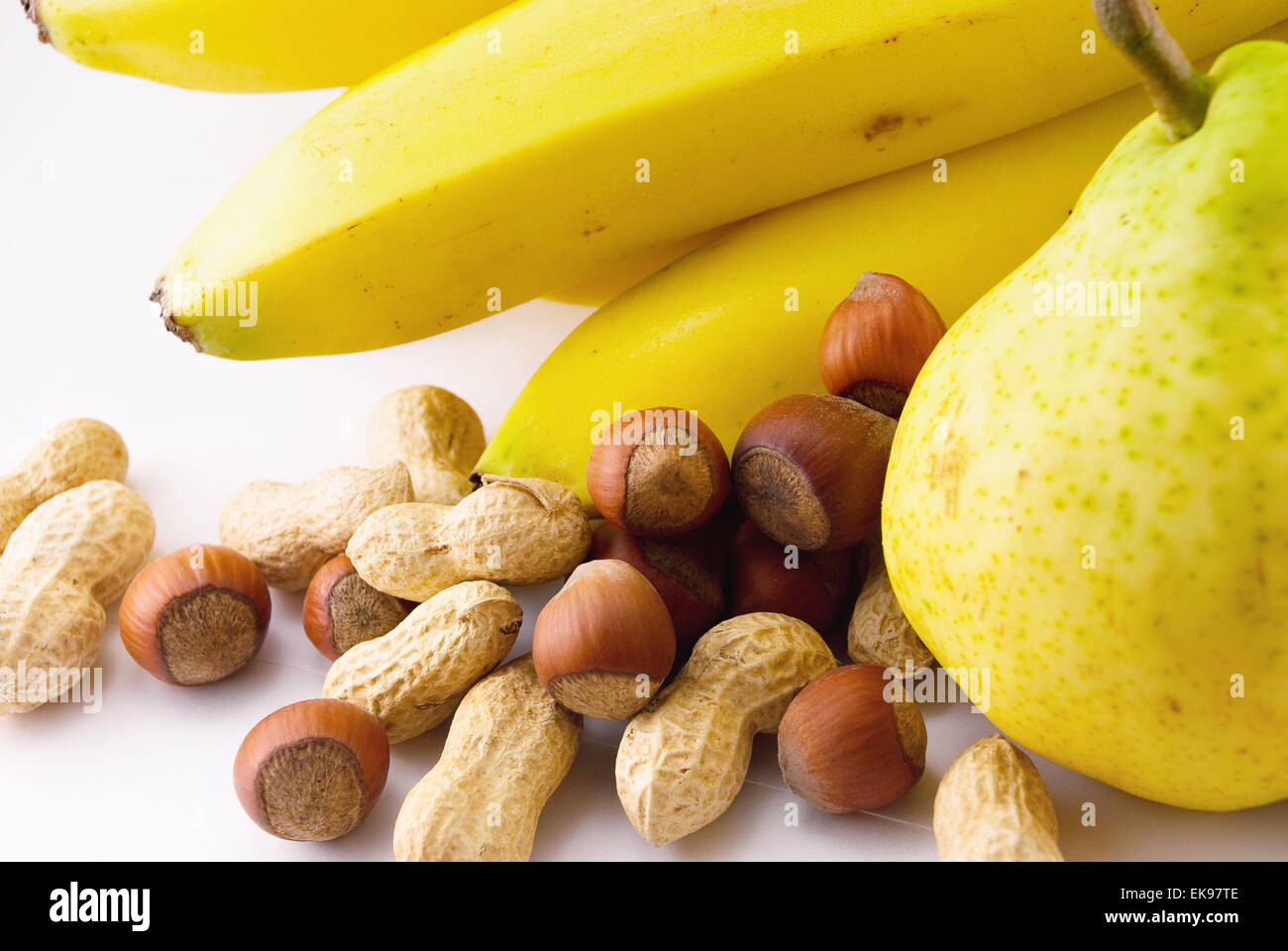
No, bananas are not nuts; they are botanically classified as berries. While common language often categories fruits based on how we eat them, botanical science identifies a berry as a fleshy fruit produced from a single ovary. Bananas meet these criteria, whereas true nuts have hard shells and do not split open to release seeds.
The question of whether a banana is a nut often stems from the confusion between culinary definitions and botanical classifications. In a kitchen, we use "nut" to describe almost anything crunchy and oily, and "berry" to describe small, round, sweet fruits like strawberries or raspberries. However, in the world of plant biology, many of our favorite "berries" are not berries at all, and some of our most common "fruits"—like the banana—fit the definition of a berry perfectly.
In 2026, as our understanding of plant genetics and food science continues to evolve, it remains important to distinguish between these categories for nutritional, agricultural, and scientific clarity. This article explores the anatomical reasons why bananas are berries, why the banana plant is technically an herb, and how these classifications compare to actual botanical nuts.
The Botanical Definition of a Berry
To understand why a banana is a berry, we must first look at what defines a berry in the eyes of a botanist. In botany, a berry is a fleshy fruit produced from a single ovary. This definition is quite specific and excludes many fruits that have "berry" in their common name.
A true botanical berry must possess three distinct layers:
- Exocarp: The outermost layer, which we often refer to as the skin or peel.
- Mesocarp: The middle layer, which is the fleshy part of the fruit that we eat.
- Endocarp: The innermost layer, which surrounds the seeds.
In a berry, the endocarp is soft and fleshy rather than hard or stony. Furthermore, berries are "multiseeded" fruits, meaning they typically contain more than one seed (though some exceptions exist due to selective breeding). When you examine a banana, you can clearly see these three layers. The yellow peel is the exocarp, the sweet white fruit is the mesocarp, and the central core where tiny black specks reside is the endocarp.
Why Bananas Fit the Berry Criteria
While it might seem strange to call a long, curved fruit a berry, the banana meets every technical requirement:
- Derived from one ovary: The banana fruit develops from a single flower with one ovary.
- Fleshy pericarp: The entire fruit wall is fleshy and succulent.
- Internal seeds: Even though the commercial bananas we eat (the Cavendish variety) have been bred to have sterile, non-functional seeds, they still retain the vestigial remains of seeds in the center of the fruit.
Interestingly, wild bananas look very different from the ones in the grocery store. Wild varieties are filled with large, hard, black seeds that are roughly the size of a pea. In these wild specimens, the "berry" classification is even more obvious, as the seeds are distributed throughout the fleshy interior just like in a grape or a tomato.
What Defines a True Botanical Nut?
If a banana isn't a nut, what is? To the average consumer, a nut is any hard, crunchy kernel found inside a shell. However, botanical science is much stricter. A true nut is a dry fruit with a single seed (rarely two) in which the ovary wall becomes very hard (stony or woody) at maturity. Crucially, true nuts are indehiscent, meaning they do not split open on their own to release the seed.
Common examples of true botanical nuts include:
- Acorns
- Hazelnuts
- Chestnuts
Many of the things we call nuts in 2026 are actually other types of fruits. For example, walnuts, almonds, and pecans are technically drupes (stone fruits), where the "nut" we eat is actually the pit or seed inside a fleshy outer layer that is removed during processing. Peanuts are legumes, meaning they are more closely related to beans and lentils than to acorns or bananas.
Comparison Table: Bananas vs. Nuts vs. Drupes
| Feature | Banana (Berry) | Hazelnut (True Nut) | Almond (Drupe) |
|---|---|---|---|
| Ovary Origin | Single ovary | Single ovary | Single ovary |
| Fruit Type | Fleshy | Dry | Fleshy (outer layer removed) |
| Shell | Soft peel (Exocarp) | Hard, woody shell | Hard pit (Endocarp) |
| Seeds | Multiple (vestigial) | Usually one | Usually one |
| Dehiscence | Does not split naturally | Does not split naturally | Splits to reveal pit |
The Banana Plant: The World’s Largest Herb
Another reason people often confuse the classification of bananas is the nature of the plant itself. Many people refer to "banana trees," but botanically speaking, there is no such thing. The banana plant is actually a perennial herb.
A tree is defined by having a woody trunk made of secondary xylem. Banana plants do not have wood. Instead, they have a "pseudostem," which is a structure made of tightly packed, overlapping leaf bases. This pseudostem is incredibly strong and can support the weight of heavy banana bunches, but it remains a succulent, non-woody structure.
Because the plant dies back to the ground after fruiting and regrows from a subterranean structure called a corm (or rhizome), it fits the definition of an herb. This makes the banana plant the largest flowering herbaceous plant in the world. This distinction further separates bananas from most nut-bearing plants, as true nuts (like walnuts or acorns) almost exclusively grow on actual woody trees.
Why the Confusion Exists: Culinary vs. Botanical Language
The disconnect between "banana is a berry" and "strawberry is not a berry" creates significant confusion for the general public. This happens because culinary language is based on usage, flavor, and texture, while botanical language is based on reproductive structures and evolutionary lineage.
The Misleading "Berry" Label
In the kitchen, a berry is small, sweet, and typically used in desserts or eaten whole. This is why we call strawberries, raspberries, and blackberries "berries." However, none of these are botanical berries:
- Strawberries: These are "aggregate fruits." The red fleshy part is actually swollen receptacle tissue, and the "seeds" on the outside are the actual fruits (called achenes).
- Raspberries/Blackberries: These are "aggregate fruits" made of many tiny drupelets clustered together.
The Misleading "Nut" Label
Similarly, the culinary world uses "nut" to describe any edible kernel with a high fat content. This category is massive and includes seeds (sunflower seeds), legumes (peanuts), drupes (walnuts), and true nuts (hazelnuts). Because bananas are soft, sweet, and starchy, they are never culinarily associated with nuts, which makes the botanical truth even more surprising to most people.
Nutritional Profile: Banana vs. Nuts
Understanding that a banana is a berry rather than a nut is also helpful when looking at its nutritional profile. As of 2026, health guidelines emphasize the importance of identifying nutrient density across different food groups. Bananas and nuts offer vastly different benefits to the human diet.
Banana Nutrition (The Berry Profile)
As a berry, the banana is high in carbohydrates and water. Its primary nutritional value comes from:
- Potassium: Vital for heart health and muscle function.
- Vitamin B6: Essential for brain development and immune function.
- Vitamin C: An antioxidant that supports skin health and tissue repair.
- Fiber: Specifically pectin and resistant starch (in greener bananas), which support digestive health.
Nut Nutrition (The Nut/Seed Profile)
True nuts and culinary nuts are defined by high fat and protein content. They generally contain:
- Healthy Fats: Monounsaturated and polyunsaturated fats that support cardiovascular health.
- Protein: A significant plant-based protein source.
- Vitamin E: A fat-soluble antioxidant.
- Magnesium: Important for bone health and energy production.
Because bananas are berries, they are much lower in calories per gram than nuts. A medium banana typically contains about 100 calories, mostly from sugar and starch, whereas an equivalent weight of walnuts or almonds would contain over 500 calories, mostly from fats.
Evolutionary History of the Banana Berry
The classification of the banana as a berry is rooted in its evolutionary history. The ancestors of the modern banana originated in Southeast Asia and were likely consumed by early primates and humans for thousands of years. The berry structure—a fleshy, sweet fruit with many seeds—was an evolutionary strategy to encourage animals to eat the fruit and disperse the seeds through their droppings.
Over centuries, humans began to domesticate these wild berries. They selected for plants that produced fewer, smaller seeds and more edible flesh. This process, known as parthenocarpy, allows the fruit to develop without fertilization. This is why the commercial Cavendish bananas we eat today are sterile berries that must be propagated through cloning (using suckers from the parent plant) rather than seeds.
This evolutionary path is very different from that of a nut. Nuts evolved hard shells to protect the seed from being eaten, relying on animals like squirrels to "forget" where they buried their winter stores so that the seed could eventually germinate. The banana berry evolved to be eaten, while the nut evolved to be guarded.
Frequently Asked Questions
Are bananas related to any nuts?
No, bananas are not closely related to true nuts or most culinary nuts. Bananas belong to the family Musaceae and the order Zingiberales, which also includes ginger, cardamom, and turmeric. Most true nuts belong to the orders Fagales (like oaks and hazelnuts) or Sapindales (like cashews and pistachios).
Is a banana allergy related to a nut allergy?
Generally, no. A banana allergy is usually distinct from a tree nut or peanut allergy. However, people with a latex-fruit syndrome may be allergic to bananas because the proteins in bananas are similar to those found in natural rubber latex. Some people with nut allergies may also have multiple food sensitivities, but there is no direct cross-reactivity between banana proteins and nut proteins.
If a banana is a berry, is a pumpkin a berry too?
Yes! Botanically, pumpkins, watermelons, and cucumbers are all classified as a specific type of berry called a pepo. They have a thick outer rind (exocarp), fleshy interior (mesocarp and endocarp), and multiple seeds, fitting the berry definition perfectly.
Why do some people think bananas are herbs?
They aren't "herbs" in the culinary sense (like basil or oregano), but the plant they grow on is botanically an herb. This is because the plant does not produce a woody stem and dies back after the growing season. The fruit itself is the berry; the plant is the herb.
Are there any "nuts" that are actually berries?
Surprisingly, yes. The coffee bean is often called a bean, but it is actually the seed of a berry (often called a coffee cherry). Similarly, while not often called a nut, the fruit of the cacao plant (used to make chocolate) is also a type of berry.
Conclusion and Final Recommendation
The botanical world is often at odds with our everyday terminology. While we may never refer to a banana as a "berry" at the breakfast table, acknowledging its scientific classification helps us understand the complex diversity of the plant kingdom. The banana is a fleshy, multi-seeded fruit derived from a single ovary, which makes it a berry. It grows on a non-woody, herbaceous plant, which distinguishes it from the trees that produce actual botanical nuts like acorns and hazelnuts.
For those interested in gardening or botany, the most important takeaway is that form follows function. The banana's berry structure is an evolutionary marvel designed for seed dispersal through consumption, while the nut's hard shell is a fortress for a single embryo.
Next Action: If you are managing food allergies or dietary requirements in 2026, always rely on clinical testing and professional medical advice rather than botanical classifications alone. While a banana is not a nut, sensitivities can overlap in unexpected ways. For further reading on fruit classifications, consult the USDA National Agricultural Library or the Botanical Society of America.