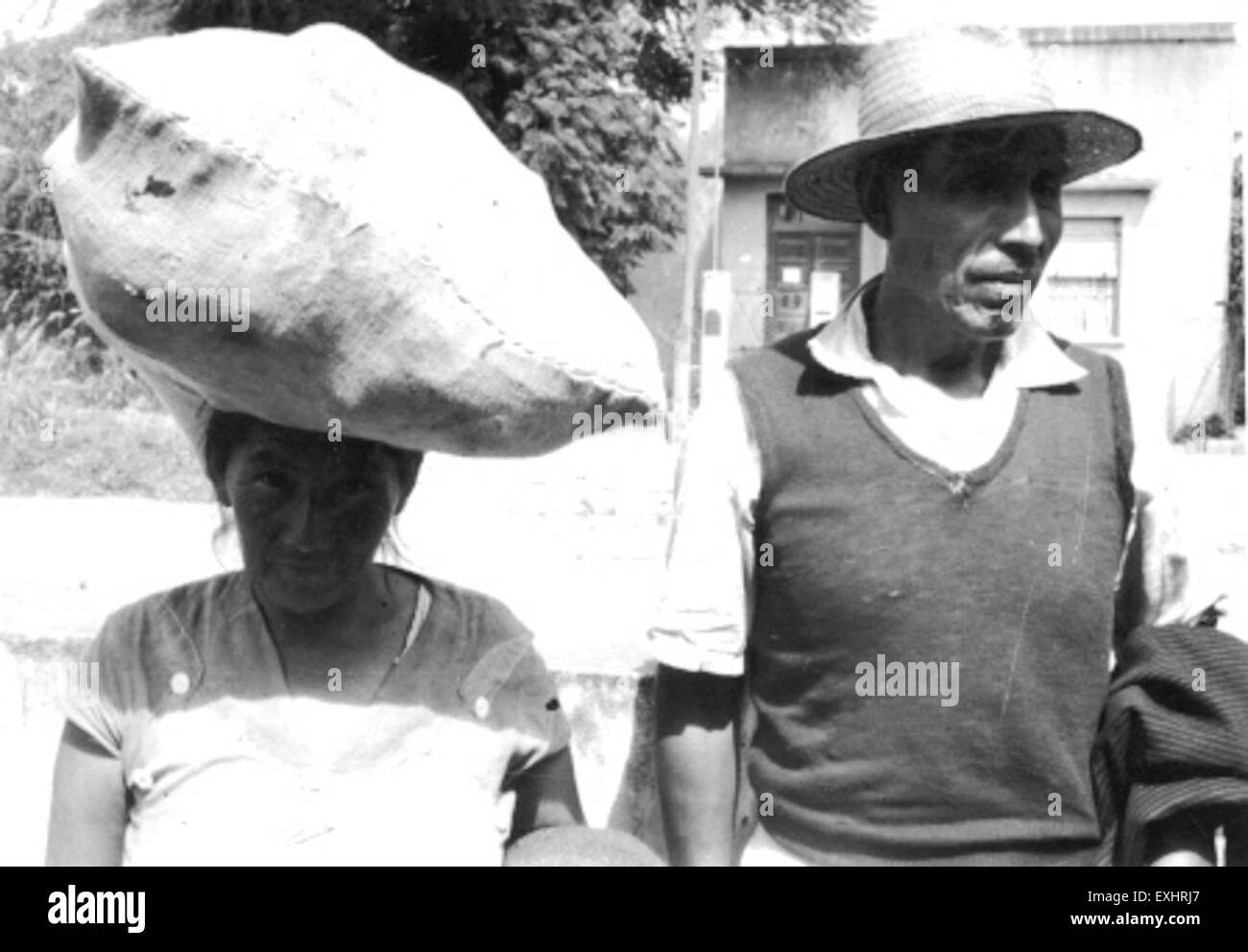
Argentina has a significant and diverse Black population, comprising both descendants of enslaved Africans and recent immigrants from Africa and the Caribbean. While long obscured by national "whitening" narratives, 2026 census data and social movements confirm that hundreds of thousands of Argentines identify as Afro-descendant, reclaiming a vital part of the nation's heritage.
For decades, the global perception of Argentina has been one of a "European" enclave in South America. This image was not accidental; it was the result of deliberate state policies in the 19th and 20th centuries aimed at erasing the African presence from the national consciousness. However, the reality of Argentina in 2026 is one of profound rediscovery. To understand the presence of Black people in Argentina today, one must look past the surface-level stereotypes and examine the historical forced migrations, the systematic efforts at "invisibilization," and the modern resurgence of Afro-Argentine culture and activism.
The Historical Foundation: Slavery in the Río de la Plata
The history of Black people in Argentina begins long before the country’s independence. During the colonial era, the port of Buenos Aires and the inland city of Córdoba were major hubs for the slave trade. Between the 16th and 19th centuries, thousands of enslaved people from regions such as Angola, Congo, and Mozambique were brought to the Río de la Plata region.
By the late 18th century, the Black population was substantial. In 1778, a census conducted by the Spanish colonial administration revealed that in the city of Buenos Aires, nearly 30% of the population was of African descent. In northern provinces like Santiago del Estero and Salta, the percentage was even higher, sometimes exceeding 50%. These individuals were the backbone of the colonial economy, working in domestic service, artisanal trades, and agriculture.
The contributions of Afro-Argentines to the independence movement were also pivotal. Enslaved men were often promised freedom in exchange for military service. Thousands fought in the armies of General José de San Martín, contributing significantly to the liberation of Argentina, Chile, and Peru. Despite these contributions, the transition from a colonial society to an independent nation marked the beginning of a long process of erasure.
The Myth of Disappearance: How the State Erased Afro-Argentines
A common question often asked is, "What happened to the Black population of Argentina?" For much of the 20th century, the official state narrative provided three primary answers: the wars of independence, the yellow fever epidemic of 1871, and the "dilution" through intermarriage. While these factors played a role, historians now recognize that they were used to construct a myth of total disappearance.
The "wars of independence" theory suggests that Black men were used as "cannon fodder" and thus died out. While casualties were high, women and children remained, continuing the lineage. The yellow fever epidemic did hit poor Afro-Argentine neighborhoods hard, but it did not wipe out an entire demographic. Instead, the most powerful factor was the state-sponsored "whitening" policy.
In the late 19th century, leaders like Domingo Faustino Sarmiento and Juan Bautista Alberdi sought to modernize Argentina by modeling it after Europe. They actively encouraged massive European immigration—primarily from Italy and Spain—while simultaneously implementing policies that marginalized non-white populations. The national census stopped including "race" or "color" categories after 1887, effectively making the Afro-descendant population statistically invisible. If you are not counted, you do not exist in the eyes of the law or history.
Analyzing the "Whitening" Narrative vs. Genetic Reality
The "whitening" of Argentina was as much a cultural project as it was a demographic one. As millions of European immigrants arrived between 1880 and 1930, the Afro-Argentine population was pushed to the margins, both geographically and socially. Many Afro-Argentines, facing intense discrimination, began to "pass" as white or identify as pardo or trigueño (wheat-colored) to avoid the stigma associated with Blackness.
However, modern genetic studies conducted by the University of Buenos Aires and other scientific institutions have consistently debunked the myth of a purely European Argentina. Research indicates that a significant percentage of the "white" population in Buenos Aires and surrounding areas carries African genetic markers. This "genetic memory" proves that the Afro-descendant population didn't disappear; it was absorbed into the broader population, hidden under a veneer of European identity.
In 2026, the conversation has shifted from "where did they go?" to "how do we recognize those who stayed?" This shift is largely due to the 2010 and 2022 national censuses, which reintroduced questions about Afro-descendant identity, allowing people to self-identify for the first time in over a century.
Modern Demographics: The 2026 Landscape
As of 2026, the Afro-Argentine population is categorized into two distinct but overlapping groups: the "ancestral" Afro-Argentines and the "new" Afro-Argentines. Understanding the difference is crucial for a complete picture of the country's demographics.
Ancestral Afro-Argentines
These are the descendants of the original enslaved populations. They are often found in provinces like Corrientes, Entre Ríos, and the suburbs of Buenos Aires. For many in this group, the journey has been one of reclaiming a stolen history. Organizations like AfroXango and Misibamba work to preserve ancestral traditions and advocate for social justice.
New Afro-Argentines: African and Caribbean Migration
Since the 1990s, and accelerating through the 2020s, Argentina has seen a new wave of migration from West Africa (particularly Senegal, Nigeria, and Sierra Leone) and the Caribbean (Haiti, Cuba, and the Dominican Republic).
- Senegalese Community: Often visible in urban centers as street vendors, this community has faced significant challenges regarding residency permits and police harassment but has established a firm presence in Argentine cities.
- Haitian and Dominican Migration: Many have come to Argentina for educational opportunities or to escape economic instability, contributing to the professional and service sectors.
| Demographic Group | Primary Origins | Geographic Concentration | Key Current Issues (2026) |
|---|---|---|---|
| Ancestral Afro-Argentines | Enslaved people (Angola, Congo) | Buenos Aires, Corrientes, Santa Fe | Historical visibility, land rights, systemic racism. |
| Cape Verdean Argentines | Cape Verde (voluntary migration 1900s) | Ensenada, Dock Sud | Preservation of language (Crioulo) and maritime history. |
| African Migrants | Senegal, Nigeria, Ghana | Buenos Aires, Rosario, La Plata | Legal status, labor rights, language barriers. |
| Caribbean Migrants | Haiti, Cuba, Dominican Republic | Urban centers nationwide | Social integration, credential recognition, housing. |
Cultural Contributions: The African Heart of Argentine Identity
One of the most persistent ironies of Argentine culture is that its most famous symbols—Tango and the Gaucho—have deep African roots. For much of the 20th century, these roots were sanitized or ignored, but in 2026, the African influence is widely acknowledged in academic and cultural circles.
Tango and Candombe
The word "Tango" itself is believed to have African origins, possibly referring to the places where enslaved people gathered to dance. The rhythmic structure of early Tango was heavily influenced by Candombe, a percussion-based music and dance style developed by Afro-Argentines. While Tango was eventually adopted by the white elite and "refined" for European ballrooms, its syncopation and "milonga" rhythm remain fundamentally African.
The Gaucho Myth
The iconic Argentine "cowboy" or Gaucho is often portrayed as a mestizo or white figure. However, historical records show that a large percentage of Gauchos were Black or mulatto. These men were essential to the cattle industry and the expansion of the frontier, yet their likeness was often altered in national literature and art to fit the "European" ideal.
Culinary Influence
Even the Argentine "asado" (barbecue) has ties to the Afro-Argentine experience. Enslaved people and their descendants often worked in the mataderos (slaughterhouses) and were given the leftover cuts of meat that the elite didn't want—such as the achuras (offal) and the tira de asado (ribs). They developed techniques to slow-cook these tough cuts, creating the foundation for what is now the national cuisine.
Confronting Systemic Racism and the Path Forward
Despite the growing visibility of Black people in Argentina, systemic racism remains a significant challenge. The myth that "there are no Black people in Argentina" has long served as a shield against addressing racial discrimination. Because the state claimed the country was white, it could claim that racism was an "imported" problem from countries like the United States or Brazil.
In 2026, Afro-Argentine activists are dismantling this shield. They highlight how Afro-descendants are disproportionately affected by poverty, have less access to higher education, and are more likely to be targeted by "random" police stops. The fight for the Ley de Cupo Laboral Afro (Afro Labor Quota Law) is a central pillar of the current political discourse, aiming to ensure representation in public sector jobs.
Furthermore, the education system is undergoing a massive overhaul. In 2026, many provincial curricula now include mandatory units on Afro-Argentine history, moving beyond the stereotypical "Black street vendor" roles often assigned to Afro-descendants during school plays about the May Revolution.
Frequently Asked Questions
Why do you rarely see Black players on the Argentine National Football Team?
The lack of Black players on the national team is often cited as "proof" that Argentina has no Black people. This is a complex issue involving socio-economics and historical demographics. Many Afro-Argentines historically lived in poverty and lacked access to the elite youth academies that feed the national team. Additionally, because of the "whitening" of the population, many players with African ancestry may not identify as Black or may appear "white" or "mestizo" to a global audience. However, as self-identification grows, this visibility is expected to change in the coming athletic generations.
Is Argentina a safe country for Black travelers in 2026?
Generally, yes. Argentina does not have the same history of segregated violence found in some other nations. However, Black travelers may experience "racialized curiosity" or microaggressions, such as being stared at or asked where they are "really" from. In urban centers like Buenos Aires, there is a growing familiarity with Black residents due to recent migration, which has improved the environment for travelers.
What is the "Dia de los Afroargentinos"?
Celebrated on November 8th, the National Day of Afro-Argentines and Afro-Culture commemorates María Remedios del Valle, a Black woman who fought in the wars of independence and was named a Captain by General Manuel Belgrano. It is a day of pride and cultural festivals across the country.
Are there specific neighborhoods in Buenos Aires where Afro-Argentines live?
Historically, the San Telmo and Monserrat neighborhoods were the heart of the Afro-Argentine community (the Barrio del Tambor). Today, the population is more dispersed, though many recent African immigrants live in areas like Once and Flores, while ancestral Afro-Argentine communities remain strong in the southern suburbs of Greater Buenos Aires.
How has the 2022 Census changed things for 2026?
The 2022 Census was the most comprehensive effort to date to count the Afro-descendant population. It provided the data necessary for the government to implement targeted social programs and validated the claims of activists who argued that the population was much larger than previously estimated. This data serves as the foundation for all current (2026) legislative and social justice initiatives.
Practical Recommendations for Learning More
To truly understand the presence and contributions of Black people in Argentina, interested parties should move beyond general search terms and engage with specific cultural landmarks and organizations:
- Visit the Museo Nacional del Cabildo: Look for the specific exhibits dedicated to the Afro-Argentine soldiers and their role in the 1810 Revolution.
- Support Afro-Argentine Media: Follow platforms like Revista Afro or organizations like the Agrupación Afro Xangô for current news on the community.
- Explore Candombe in San Telmo: On Sunday evenings, the comparsas (drumming groups) often parade through the streets of San Telmo, providing a living link to Argentina's African heartbeat.
- Academic Inquiry: Consult the works of historians such as Erika Edwards and George Reid Andrews, who have meticulously documented the "hidden" history of Blackness in the Río de la Plata.
The presence of Black people in Argentina is not a new development or a "return"—they have always been there. In 2026, the country is finally beginning to look in the mirror and accept the full, multi-colored reality of its identity.