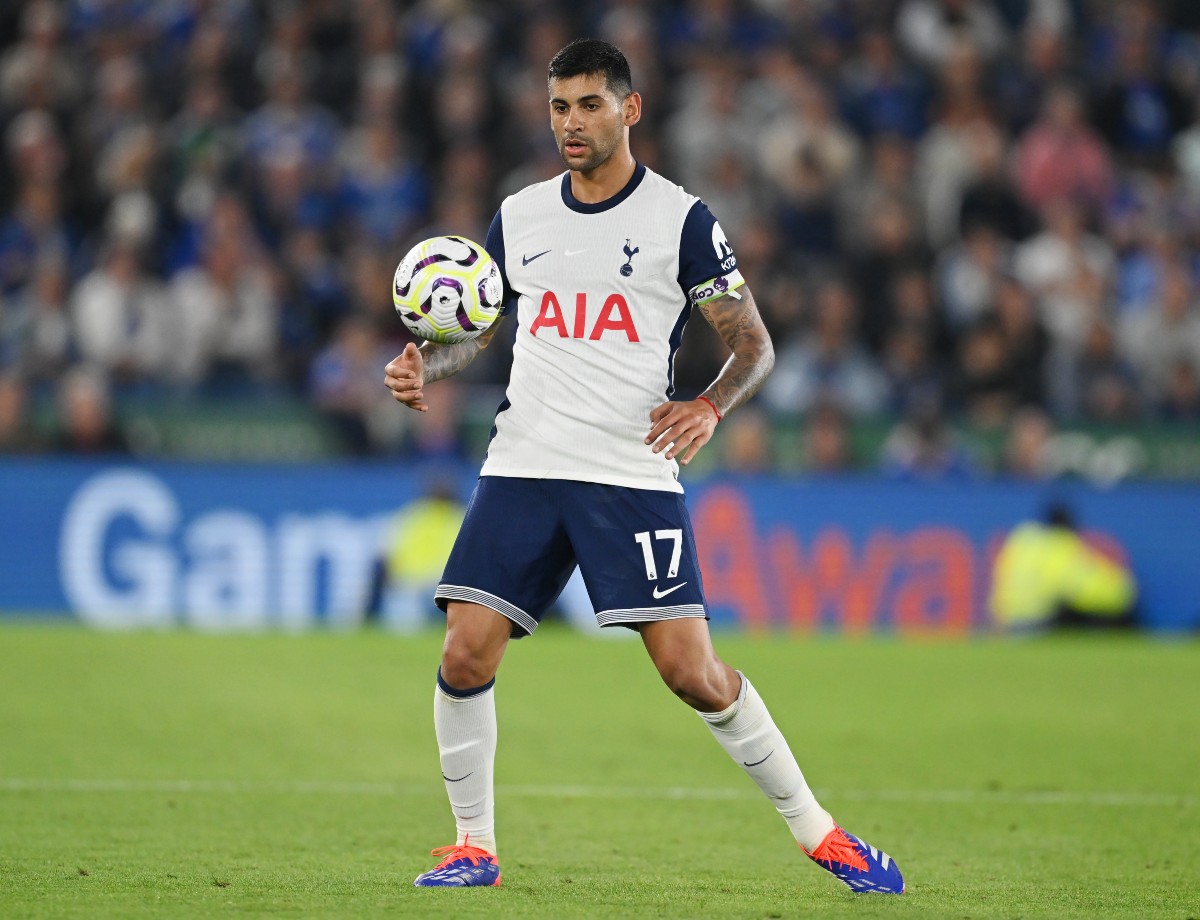
The strategic acquisition of Cristian Romero by Tottenham Hotspur represents a landmark shift in Premier League recruitment, moving away from reactive defending toward proactive, high-risk, high-reward tactical systems. By analyzing his transition from Atalanta, it is evident that his elite recovery speed and aggressive front-foot intervention became the blueprint for modern defensive scouting.
In the landscape of elite football, few transfers have provided as much tactical clarity as the move of Cristian "Cuti" Romero from Serie A to the English Premier League. As we stand in 2026, looking back at the trajectory of the Argentine powerhouse, the transfer is no longer viewed merely as a squad reinforcement but as a foundational shift in how top-tier clubs value the "proactive" center-back. Romero’s journey—spanning from the youth ranks of Belgrano to becoming a World Cup winner and a Premier League icon—offers a masterclass in scouting, financial engineering, and tactical integration.
This analysis examines the multi-layered strategy behind his transfer, the financial mechanisms that facilitated his move, and the profound impact he has had on both his club and the Argentine national team.
The Tactical Archetype: Why Romero Redefined the Market
Before his move to London, the scouting profile for a Premier League center-back often prioritized physical height and aerial dominance in a low-block system. However, the evolution of football toward high-pressing systems necessitated a different kind of defender. Cristian Romero emerged as the ultimate "interceptor"—a player who does not wait for the attack to reach the box but kills the danger in the middle third.
Proactive Defending vs. Reactive Positioning
Romero’s primary strength lies in his "front-foot" philosophy. Unlike traditional defenders who drop deep to protect the goalkeeper, Romero is coached to step out of the defensive line to challenge strikers before they can turn. This requires an elite understanding of timing and a high degree of physical bravery. Statistically, during his peak years, Romero consistently ranked in the 99th percentile for interceptions and successful tackles in the middle third of the pitch.
Recovery Speed and the High Line
As tactical systems like those of Ange Postecoglou became prevalent by 2026, the need for recovery speed became non-negotiable. Romero’s ability to sprint back and cover vast spaces behind a high defensive line allowed his teams to commit more players forward. This "strategic insurance" is what made his transfer fee, which initially seemed high to some critics, look like a bargain in retrospect.
The Financial Engineering: From Genoa to London
The transfer history of Cristian Romero is a complex web of loans, options to buy, and strategic pivots involving three major clubs: Juventus, Atalanta, and Tottenham Hotspur. Understanding this sequence is vital for any analysis of modern football finance.
The Juventus-Atalanta Nexus
Juventus originally identified Romero’s talent early during his time at Genoa. However, in a move that showcased the logistical complexities of Serie A, he was loaned back to Genoa and then eventually to Atalanta. Atalanta, led by the astute recruitment of Gian Piero Gasperini’s staff, recognized that Romero was a perfect fit for their man-marking, high-intensity system.
Atalanta secured a loan deal with an option to buy for approximately €16 million. After Romero won the Serie A Defender of the Year award in 2021, Atalanta exercised that option immediately, only to flip the player to Tottenham Hotspur for a fee reported to be in the region of €50 million (£42.5 million).
The Tottenham Structure
Tottenham’s recruitment of Romero was a statement of intent orchestrated by then-Managing Director of Football, Fabio Paratici. The deal was structured as an initial season-long loan to manage Financial Fair Play (FFP) requirements, with an "obligation to buy" that was triggered based on performance metrics. This allowed the club to spread the cost over multiple financial years while securing the player's services immediately.
| Phase of Transfer | Club Involved | Estimated Fee | Strategic Value |
|---|---|---|---|
| Initial Scouting | Belgrano to Genoa | €4M | Low-cost entry into European football. |
| The Investment | Genoa to Juventus | €26M | Recognition of elite potential by a giant. |
| The Breakthrough | Juventus to Atalanta (Loan/Buy) | €16M | Tactical refinement in a high-press system. |
| The Apex | Atalanta to Tottenham | €50M+ | Transition to a global lead defender role. |
The "Scaloni Effect" and National Team Synergy
One cannot analyze Romero’s transfer without acknowledging his status as a cornerstone of the Argentine national team. His performance in the 2021 Copa América and the 2022 FIFA World Cup provided the ultimate "proof of concept" for his aggressive style.
Lionel Scaloni’s Argentina utilized Romero as the primary aggressor, allowing Nicolas Otamendi to sweep up behind him. This partnership was instrumental in Argentina’s dominant period between 2021 and 2025. For Tottenham, seeing Romero thrive on the international stage validated their investment. A player who can handle the pressure of a World Cup final against elite forwards like Kylian Mbappé is a player who can handle any Premier League derby.
By 2026, Romero has become not just a defender but a symbol of the "new" Argentina: technically gifted but fiercely competitive. This reputation has significantly increased his commercial value and his influence within the dressing room, often being cited as a future captaincy candidate for both club and country.
Strategic Impact on Team Building
When a club spends over £40 million on a defender, the expectation is more than just clean sheets; it is a transformation of the team's identity. Romero’s arrival at Tottenham facilitated several strategic shifts:
- Enabling the High Press: With Romero’s speed, the midfield could push higher, knowing that "long balls over the top" would likely be dealt with by his recovery runs.
- Ball Progression: Romero is not just a tackler; he is an accomplished passer. His ability to break lines with vertical passes into the feet of creative midfielders or wingers added a new dimension to his team's buildup play.
- Aggression as a Deterrent: His physical presence often forces opposing managers to alter their tactics, frequently opting to play wing-heavy systems to avoid the central "trap" set by Romero.
Risk Management: The Cost of Aggression
Every strategic lens must account for risk. Romero’s greatest strength—his aggression—is also his primary liability. Throughout his career, his disciplinary record has been a point of contention. The "strategic lens" here involves the coaching staff balancing his match-winning interceptions against the risk of bookings or dismissals.
By 2026, Romero has significantly matured in his decision-making, reducing his "rash" challenges while maintaining the intensity that defines him. This maturation is a key reason his value has remained high despite the physical toll of his playing style. Analysis shows that the number of goals prevented by his aggressive interventions far outweighs the points lost due to occasional suspensions.
Comparative Market Analysis: 2021–2026
To understand the value of Romero's transfer, one must compare it to other landmark defensive signings of the same era.
- Virgil van Dijk (Liverpool): The benchmark for the "transformative" defender. While Van Dijk brought composure, Romero brought chaos-management.
- Josko Gvardiol (Manchester City): A similar ball-playing profile but often utilized in a more flexible, hybrid role. Romero remains a more "pure" center-back in terms of defensive duty.
- Harry Maguire (Manchester United): A contrast in styles. Maguire’s struggles in a high line highlighted exactly why clubs shifted toward the "Romero-style" scouting model.
Romero’s transfer fee was roughly half of what some rival clubs paid for defenders who lacked his mobility. This makes the Romero deal one of the most efficient uses of capital in recent Premier League history.
Frequently Asked Questions
Why was Cristian Romero's transfer to Tottenham structured as a loan first?
The loan-to-permanent structure is a common financial strategy used by Premier League clubs to comply with Profit and Sustainability Rules (PSR). By delaying the full payment until the following fiscal year, the club can balance its books while ensuring the player is integrated into the squad immediately.
What makes Romero different from traditional Argentine defenders?
While Argentina has a long history of "hard" defenders (like Walter Samuel or Roberto Ayala), Romero combines that traditional "garra" (grit) with the technical ball-playing abilities required by modern coaches like Pep Guardiola or Ange Postecoglou. He is as comfortable starting an attack as he is stopping one.
How has Romero’s value changed since his move to the Premier League?
Upon his arrival, he was valued at approximately €35-40 million. Following his success in the World Cup and consistent performances in England, his market valuation by 2026 is estimated to be well over €80 million, reflecting his status as one of the world's top three center-backs.
Has his disciplinary record affected his career trajectory?
Early in his Premier League career, Romero faced criticism for frequent yellow cards. However, tactical adjustments and personal growth have seen him channel his aggression more effectively. His importance to the team's structure is so high that managers generally accept the risk of occasional cards as a trade-off for his defensive dominance.
What is the "strategic lens" mentioned in the title?
The "strategic lens" refers to looking at the transfer not just as a player purchase, but as a calculated decision to change a team's tactical DNA. It involves evaluating scouting data, financial structuring, and how the player's specific attributes enable a specific style of play (like the high-line defense).
Final Recommendation: The Blueprint for Future Scouting
For clubs looking to replicate the success of the Cristian Romero transfer, the takeaway is clear: prioritize proactive intelligence over passive physical traits. In 2026, the elite defender must be a dual-threat—capable of destroying an opponent's transition through aggressive positioning and initiating their own team's attack through progressive passing.
Clubs should focus on the Italian market (Serie A) as a proving ground for defensive discipline, much like Tottenham did with Romero. The combination of South American intensity and European tactical education remains the "gold standard" for defensive recruitment. As Romero continues to lead from the back, his transfer stands as a testament to the power of identifying a player who doesn't just fit a system but defines it.