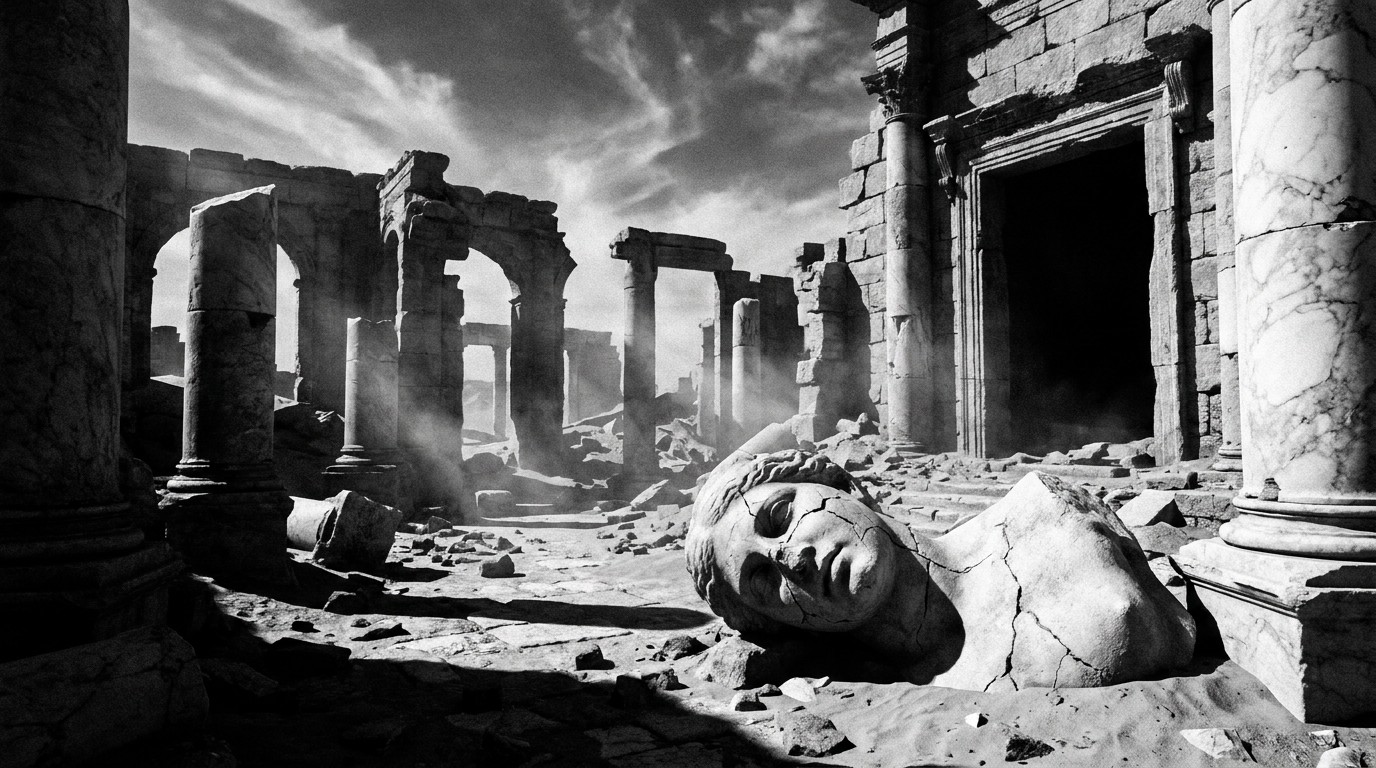
The "forgotten empire" revealed by Argentina's ruins refers to the southern expansion of the Inca Empire (Tawantinsuyu) and the sophisticated pre-Inca Diaguita-Calchaquí civilizations. Recent excavations and LiDAR surveys in 2026 have confirmed that sites like Shincal de Quimivil served as major provincial capitals, integrating vast territories of Northwestern Argentina into a complex socio-political network long before European arrival.
The vast landscapes of Northwestern Argentina, characterized by high-altitude deserts, lush valleys, and the towering Andes, hold the silent remains of a political and social sophistication that rivaled any in the ancient world. For decades, the narrative of South American empires was centered almost exclusively on Cusco, Peru. However, as of 2026, a series of breakthrough archeological discoveries across the provinces of Catamarca, Salta, and Jujuy have forced a rewrite of history. These ruins do not merely represent small tribal outposts; they reveal the deliberate, strategic expansion of the Inca Empire and the resilient cultures that both fought and merged with them.
The Magnitude of the Inca Presence in Kollasuyu
To understand the "forgotten empire" in Argentina, one must first understand the structure of the Inca state. By the late 15th century, the Inca Empire was divided into four quarters, or suyus. The southern quarter, known as Kollasuyu, encompassed what is now Northern Chile and Northwestern Argentina.
Unlike the rapid military conquests often depicted in popular media, the integration of Argentina into the Inca fold was a nuanced process of diplomacy, ritual exchange, and massive infrastructure projects. The ruins found today at sites like Pucará de Tilcara and Santa Rosa de Tastil demonstrate a high level of administrative planning. These sites were not merely dwellings but hubs for tax collection (often in the form of labor or mita), agricultural experimentation, and religious ceremonies designed to solidify the power of the Sapa Inca.
The scale of this presence is best evidenced by the Qhapaq Ñan, the Great Inca Road. In Argentina alone, this road network covers thousands of kilometers, connecting remote mining sites and agricultural terraces to the heart of the empire. The presence of tambos (waystations) every 20 to 30 kilometers reveals a logistical precision that allowed for the rapid movement of messengers, troops, and goods across some of the most inhospitable terrain on Earth.
Shincal de Quimivil: The "New Cusco" of the South
If there is one site that encapsulates the forgotten grandeur of the empire in Argentina, it is Shincal de Quimivil in the Catamarca province. Occupying more than 30 hectares, Shincal was not a local village that the Inca moved into; it was a planned city built according to the sacred topography of Cusco.
Architectural Symbolism and Power
Archeologists have identified over 100 structures at Shincal, including kallankas (large rectangular halls used for administrative purposes) and qollqas (circular storehouses). The most significant feature, however, is the ushnu. This truncated ceremonial pyramid sits in the center of a vast plaza and served as the throne for the Inca governor or even the Sapa Inca during royal visits.
The layout of Shincal was a deliberate piece of political theater. By replicating the architecture of the capital, the Inca were projecting their presence into the southern territories, signaling to the local Diaguita and Belén populations that they were now part of a larger, divine order. The site’s alignment with surrounding mountain peaks suggests that the Inca integrated local "Apu" (mountain spirit) worship into their own sun-centric religion, a brilliant move of cultural assimilation.
Economic and Ritual Significance
Recent findings in 2026 have highlighted the importance of Shincal as a center for textile production and metalworking. The discovery of large quantities of camelid bones and spindle whorls indicates that the city was a hub for processing wool from the high-altitude plateaus. Furthermore, the presence of specialized bronze alloys suggests that Argentinian ruins were once part of a sophisticated industrial chain that fed the empire's demand for ritual objects and weaponry.
The Quilmes Ruins and the Spirit of Resistance
While the Inca successfully integrated much of the region, the ruins of Quilmes in the Tucumán province tell a different story—one of defiance and the endurance of local identity. The Quilmes were a Diaguita people who built one of the most impressive pre-Columbian urban centers in Argentina.
At its peak, the city of Quilmes housed approximately 5,000 people. The ruins are a marvel of defensive engineering, featuring complex stone tiers built into the side of the mountain. This "fortress-city" allowed the inhabitants to overlook the Santa María Valley, providing a strategic advantage against both rival tribes and the encroaching Inca.
The relationship between the Quilmes and the Inca was complex. While the Inca eventually established dominance in the region, the Quilmes retained a high degree of autonomy, partly due to their formidable defensive position. The ruins today show a blend of local architectural styles—such as the "pirca" (dry stone) walls—and Inca influences in pottery and agricultural terracing.
The tragedy of the Quilmes occurred later, during the Spanish conquest. After resisting the Spanish for 130 years, the remaining population was forcibly marched to Buenos Aires in 1666. However, the ruins remain a powerful testament to the "forgotten" complexity of these pre-Hispanic societies that flourished long before the 16th century.
High-Altitude Sanctuaries: The Llullaillaco Discoveries
Perhaps the most haunting and revealing aspect of the empire in Argentina is found at the summits of the highest peaks. The Inca transformed the Andes into a sacred landscape, performing the Capacocha ritual—a ceremony involving the sacrifice of children to the mountain deities.
The most famous of these sites is the volcano Llullaillaco, standing at 6,739 meters above sea level. In 1999, the remarkably preserved bodies of three children were recovered, and subsequent studies into 2026 have provided unprecedented insight into the empire's reach.
- Logistical Mastery: Reaching these altitudes required a level of physical conditioning and logistical support that is difficult to fathom. The ruins of small shelters found near the summit show that the Inca established base camps at altitudes where modern climbers often require oxygen.
- Genetic Diversity: DNA analysis of the "Children of Llullaillaco" has revealed that they were brought from different parts of the empire, some thousands of kilometers away. This proves that the empire in Argentina was a melting pot of ethnicities and that the central government had the power to mobilize people across vast distances for religious purposes.
- Climate Records: The clothing and offerings found with the children—fine textiles, gold figurines, and rare Spondylus shells from the tropical Pacific—reveal a vast trade network that funneled luxury goods into the high deserts of Argentina.
Modern Exploration: LiDAR and the 2026 Archeological Landscape
The reason these empires were "forgotten" for so long often comes down to the sheer scale and difficulty of the terrain. However, in 2026, the use of LiDAR (Light Detection and Ranging) has revolutionized Argentinian archeology. This technology allows researchers to "see through" dense vegetation and detect subtle variations in the ground surface from aircraft or drones.
In the Yungas (cloud forests) of Salta and Jujuy, LiDAR has recently identified dozens of previously unknown settlements and road segments. These findings suggest that the Inca and their predecessors had a much larger presence in the humid eastern slopes of the Andes than previously thought. These "new" ruins are revealing agricultural terraces and irrigation systems that allowed these ancient peoples to manage the soil and prevent erosion on steep mountain slopes, providing lessons in sustainable land use that are still relevant today.
| Major Archeological Site | Province | Primary Culture | Key Feature |
|---|---|---|---|
| Shincal de Quimivil | Catamarca | Inca | A "New Cusco" with a large ceremonial Ushnu. |
| Quilmes Ruins | Tucumán | Diaguita | Massive hillside fortress-city of 5,000 residents. |
| Pucará de Tilcara | Jujuy | Tilcara/Inca | Defensive stronghold overlooking the Quebrada de Humahuaca. |
| Santa Rosa de Tastil | Salta | Pre-Inca/Atacama | One of the largest urban centers in the pre-Hispanic Andes. |
| El Shinkal | Catamarca | Inca/Local | Strategic administrative center on the Qhapaq Ñan. |
| Llullaillaco | Salta | Inca | World's highest archeological site at 6,739m. |
Practical Guidance for Visiting the Ruins
For those looking to explore these ruins, Northwestern Argentina offers a well-developed but rugged tourism circuit. As of 2026, many of these sites are managed in collaboration with local indigenous communities, ensuring that tourism revenue supports the preservation of the ruins and the welfare of the descendants of those who built them.
Access and Logistics
- Gateway Cities: Salta and San Salvador de Jujuy are the primary hubs. From here, you can rent a 4x4 vehicle or take local buses to the sites.
- Best Time to Visit: The dry season (April to October) is ideal. During the summer months (December to February), heavy rains in the mountains can cause flash floods and road closures, particularly in the Calchaquí Valleys.
- Altitude Awareness: Many sites, including Pucará de Tilcara and Tastil, are located at altitudes above 2,500 meters. Visitors should acclimatize in Salta for a day or two and stay hydrated to avoid altitude sickness (soroche).
Ethical Considerations
When visiting these ruins, it is crucial to respect the sacred nature of the sites. Many are still used by local Pachamama (Mother Earth) worshippers for annual ceremonies.
- Stay on Marked Paths: Ancient stone walls are fragile; climbing on them causes irreparable damage.
- Hire Local Guides: At sites like Quilmes, local guides provide a perspective that academic textbooks often miss, sharing oral histories passed down through generations.
- Photography: While generally allowed, always ask for permission before photographing local people or ongoing ritual ceremonies.
FAQ: Understanding Argentina's Ancient Empires
Why is the Inca presence in Argentina often called a "forgotten" empire?
Historical narratives have traditionally focused on the Inca heartland in Peru. Argentina was seen as a peripheral frontier. It is only through modern archeology and a shift toward "decolonizing" history that the scale and sophistication of the Argentine sites have been fully recognized as integral parts of the imperial structure.
Were the Quilmes people part of the Inca Empire?
The Quilmes were part of the broader Diaguita cultural group. While they were influenced by and eventually paid tribute to the Inca, they maintained a distinct identity and resisted total assimilation. Their city is a prime example of the "intermediate" societies that existed between total independence and imperial absorption.
How can I see the artifacts found at these ruins?
The Museum of High Altitude Archaeology (MAAM) in Salta houses the Llullaillaco mummies and their offerings. It is one of the most advanced conservation facilities in the world and provides a deep dive into the ritual life of the forgotten empire.
Is the Inca Road (Qhapaq Ñan) still visible in Argentina?
Yes, significant portions of the Qhapaq Ñan are UNESCO World Heritage sites. In areas like the Quebrada del Toro and near Shincal, the stone paving and drainage systems are still remarkably intact after 500 years.
What is the most significant discovery made recently in 2026?
The most significant development is the mapping of "hidden" agricultural systems in the Yungas region using LiDAR. This has proved that the empire was not just a desert and mountain civilization but had successfully mastered the challenges of the high-altitude rainforest, significantly increasing the known population density of the region.
The Path Forward for Argentinian Archeology
The revelation of this forgotten empire is far from complete. As of 2026, only a small fraction of the identified sites in Northwestern Argentina have been fully excavated. The ongoing challenge for the Argentine government and international bodies like UNESCO is to balance the need for tourism with the necessity of preservation.
The "forgotten empire" teaches us that the history of South America is much more than a story of conquest; it is a story of adaptation, engineering, and the enduring power of human organization in the face of extreme environments. For the modern visitor, these ruins offer more than just a photo opportunity—they offer a window into a civilization that mastered the Andes long before the modern world began.
Next Action: If you are planning a visit, start by researching the National Parks Administration of Argentina for current trail conditions and entry requirements for protected archeological zones.