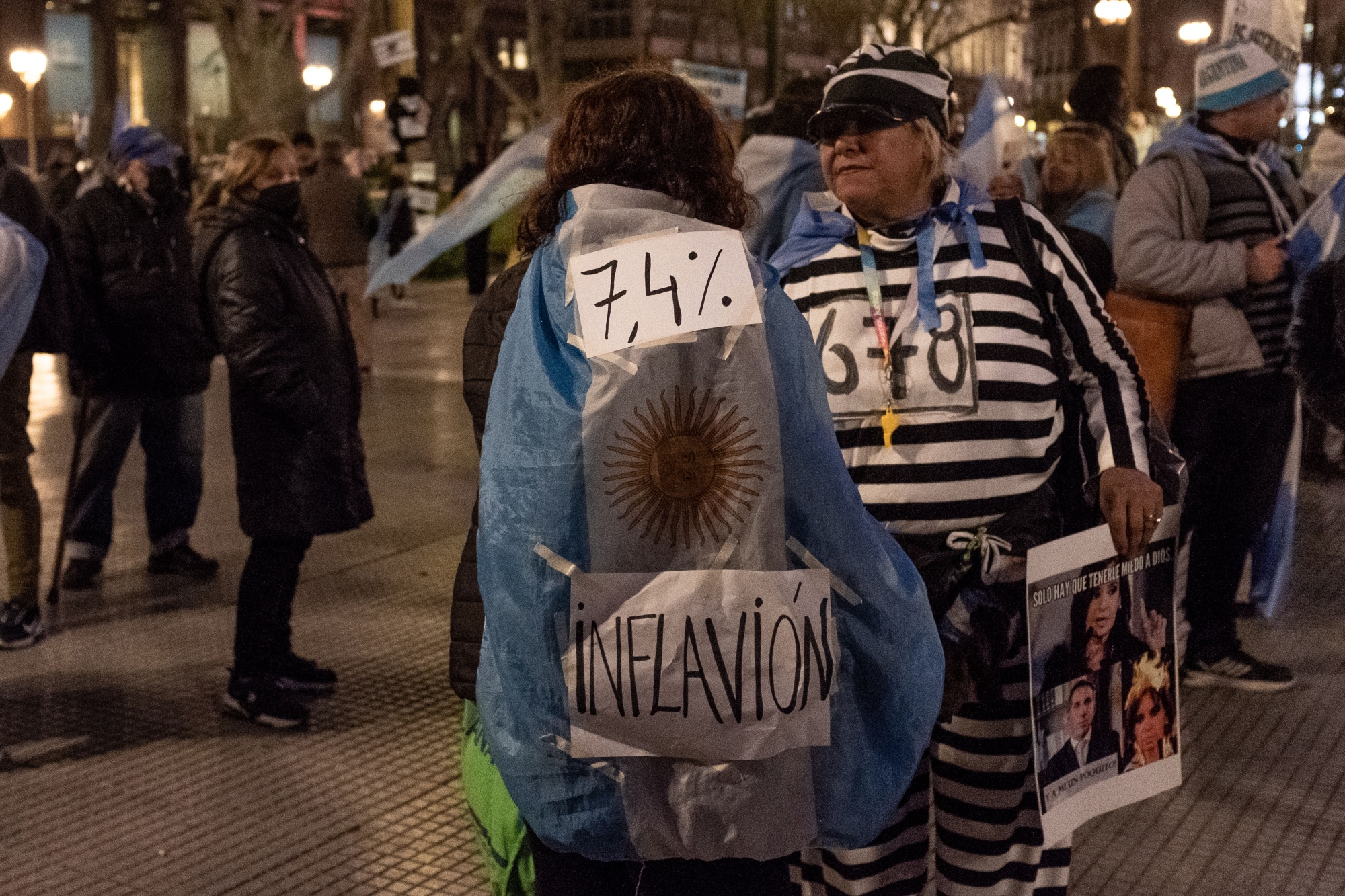
Argentina’s political landscape in 2026 is defined by a radical ideological shift toward fiscal austerity and market deregulation initiated by the Javier Milei administration. The nation currently grapples with the long-term consequences of "shock therapy" economics, a deeply polarized legislative environment, and the structural tension between achieving macroeconomic stability and addressing record-high poverty levels.
The Paradigm Shift: From Populism to Libertarianism
For much of the 21st century, Argentina was synonymous with Kirchnerism—a left-leaning, populist strain of Peronism that emphasized state intervention, high public spending, and protectionist trade policies. However, the systemic failure of this model, characterized by chronic hyperinflation and a depleted central bank, led to the 2023 election of Javier Milei. By 2026, the central political issue is no longer whether the state should intervene, but how quickly it can be dismantled without triggering a total social collapse.
The "libertarian experiment" has moved beyond its initial honeymoon phase. The administration’s core philosophy—anarcho-capitalism in theory, but pragmatic fiscal conservatism in practice—has fundamentally altered the political discourse. The traditional "crack" (la grieta) between Peronists and the center-right has been replaced by a new divide: those who support a total market-driven overhaul and those who advocate for a social safety net and state-led development. This shift has forced every political actor, from provincial governors to union leaders, to redefine their identity in relation to the executive branch’s "chainsaw" (motosierra) budget cuts.
Macroeconomic Stabilization and the Social Cost
The most pressing political issue in 2026 remains the fragile state of the economy. While the government has achieved a sustained fiscal surplus—a feat unseen in decades—the social cost has been immense. Politics in Argentina is currently a race against time: the government must lower inflation to single digits annually before the erosion of purchasing power leads to an unmanageable loss of public support.
The Challenge of Poverty and the Informal Sector
As of 2026, poverty rates remain stubbornly high, often hovering near 50% as the withdrawal of state subsidies for energy, transport, and healthcare has hit the middle and lower classes simultaneously. This creates a political paradox. While the macro-indicators show a stabilizing currency and reduced country risk, the micro-indicators—real wages and consumption—reflect a period of deep recession. The political survival of the current administration depends on its ability to transition from "stabilization" to "growth," a transition that requires private investment that has been slow to arrive due to Argentina’s history of policy reversals.
The Role of the IMF and External Debt
Argentina remains the International Monetary Fund's (IMF) largest debtor. In 2026, political negotiations with the IMF are not merely about repayment schedules but serve as a proxy for international legitimacy. The government’s ability to negotiate a new program that provides fresh liquidity while maintaining strict fiscal targets is a constant source of friction in Congress. Opposition leaders frequently cite these "strictures" as a surrender of national sovereignty, making the IMF a perennial scapegoat in Argentine political rhetoric.
Institutional Fragility and Legislative Gridlock
A defining feature of the 2026 political climate is the tension between a powerful Executive and a fragmented Legislative branch. Because the ruling party, La Libertad Avanza (LLA), began with a minority in both the Chamber of Deputies and the Senate, governance has relied heavily on Necessity and Urgency Decrees (DNUs) and complex alliances with the center-right remnants of the Juntos por el Cambio coalition.
The Power of Provincial Governors
Argentina’s federal structure grants significant power to provincial governors, who control local resources and influence their representatives in the National Senate. In 2026, the conflict over "Coparticipación" (federal tax revenue sharing) has reached a fever pitch. The central government’s strategy of cutting discretionary transfers to provinces has led to a "legal war," with several provinces filing lawsuits before the Supreme Court. This creates a bottleneck for any structural reforms—such as labor or tax changes—that require legislative approval.
Judicial Activism and Legal Challenges
The judiciary has become the ultimate arbiter of political issues. From the constitutionality of labor reforms to the privatization of state-owned enterprises like Aerolíneas Argentinas, almost every major executive initiative is currently being challenged in court. This "judicialization of politics" slows the pace of reform and contributes to an environment of legal uncertainty, which continues to deter the very foreign investment the government seeks.
Social Movements, Unions, and the Right to Protest
The General Confederation of Labor (CGT) and various "piquetero" movements (unemployed workers' organizations) remain the most potent extra-parliamentary opposition. In 2026, the struggle between the government’s "Anti-Picket Protocol"—designed to prevent road blockades—and the constitutional right to protest is a daily flashpoint.
- Labor Unions: The CGT has moved from general strikes to more targeted sector-specific actions. Their primary goal is to preserve the "model of the unions," which includes control over healthcare funds (obras sociales) and centralized collective bargaining.
- Social Movements: As the government bypasses traditional intermediaries in social spending, these groups have lost significant political leverage, leading to increased radicalization in some sectors.
- The Security Doctrine: The government has framed security and "order" as a cornerstone of its political identity. This has resonated with an electorate tired of years of crime and social disruption, but it has also drawn criticism from international human rights organizations regarding the use of force during demonstrations.
Comparison of Major Political Blocs (2026 Landscape)
| Political Coalition | Core Ideology | Economic Stance | View on the State |
|---|---|---|---|
| La Libertad Avanza (LLA) | Libertarianism / Right-wing Populism | Hard-line fiscal surplus; full deregulation. | The state is an "enemy" that must be minimized. |
| Unión por la Patria (UxP) | Peronism / Kirchnerism | State-led consumption; protectionism. | The state is the primary engine of social equity. |
| PRO / Center-Right | Liberal-Conservatism | Institutional reform; gradual fiscal order. | The state should be efficient and support the private sector. |
| UCR (Radicals) | Social Democracy / Institutionalism | Mixed economy; focus on public education. | The state must guarantee basic rights and institutional stability. |
Foreign Policy Realignments
Argentina’s foreign policy in 2026 represents a 180-degree turn from the previous decade. The country has pivoted sharply toward the United States and Israel, seeking a "special relationship" that grants it access to technology and military cooperation.
This realignment has had significant political repercussions domestically. The decision to distance Argentina from the BRICS bloc (specifically China and Russia) has complicated trade relationships, as China remains a primary buyer of Argentine soy and lithium. Political opponents argue that this ideological alignment ignores the pragmatic necessity of maintaining good relations with major trading partners, while supporters view it as a necessary step to rejoin the "civilized Western world."
FAQs: Key Political Questions in 2026
Why is inflation still the dominant political issue?
Despite the government’s success in eliminating the fiscal deficit, inflation in Argentina has a massive "inertial" component. Contract indexing, the history of currency devaluations, and the lack of central bank reserves make prices highly sensitive. Politically, if inflation does not drop to levels comparable to neighboring countries, the government’s narrative of "stability" loses credibility with the voters.
How does the Milei administration pass laws without a majority?
The administration relies on "situational alliances." By negotiating with individual provincial governors and the moderate wing of the PRO party, the executive trades regional benefits or infrastructure promises for legislative votes. However, this makes every legislative session a high-stakes negotiation, often resulting in "watered-down" versions of original reform bills.
What happened to the traditional Peronist party?
Peronism is currently undergoing a deep identity crisis and fragmentation. Without a clear leader after the 2023 defeat, the movement is split between the "hard" Kirchnerist wing and the "federal" Peronism of the provincial governors who are more willing to negotiate with the current administration. This internal struggle has limited their ability to present a unified alternative to the current government's policies.
Is "Dollarization" still on the political agenda?
While the rhetoric of total dollarization has cooled in favor of "currency competition," it remains a ultimate goal for the more radical sectors of the government. The political issue is that dollarization requires a level of central bank reserves that Argentina has not yet secured. In 2026, the debate has shifted toward a legal framework that allows contracts to be settled in any currency, effectively diminishing the role of the Argentine Peso.
What is the role of the "youth vote" in 2026?
The youth remain the strongest demographic base for the libertarian movement. Having grown up in a decade of stagnation, many younger voters view the traditional political class (la casta) with contempt. The government maintains its support through aggressive social media communication, bypassing traditional press outlets which they view as biased.
Practical Recommendation for Navigating Argentine Politics
For observers, investors, or residents, the key to understanding Argentina in 2026 is to look beyond the volatile headlines and focus on institutional durability. The primary indicator of political stability is no longer the exchange rate alone, but whether the government can achieve a consensus-based legislative framework for its reforms.
Those engaging with the country should monitor the decisions of the Supreme Court and the results of provincial-level negotiations, as these are the true barometers of whether the current ideological shift will become a permanent structural change or remain a temporary disruption in Argentina’s long cycle of political volatility.