Argentina’s per capita income is a measure of the country's economic output per person, calculated by dividing the Gross Domestic Product (GDP) by its total population. As of 2026, this figure serves as a primary indicator of the nation’s standard of living, reflecting the complex interplay between massive natural resource wealth, high inflationary cycles, and ongoing structural economic reforms.
Understanding Argentina’s per capita income requires looking beyond a single dollar amount. Because the country has historically experienced significant currency volatility and maintains a dual exchange rate system, the "official" income figure often differs from the "real" purchasing power of its citizens. To grasp the full picture, one must distinguish between nominal GDP per capita and GDP per capita adjusted for Purchasing Power Parity (PPP).
Understanding the Difference: Nominal vs. PPP Per Capita Income
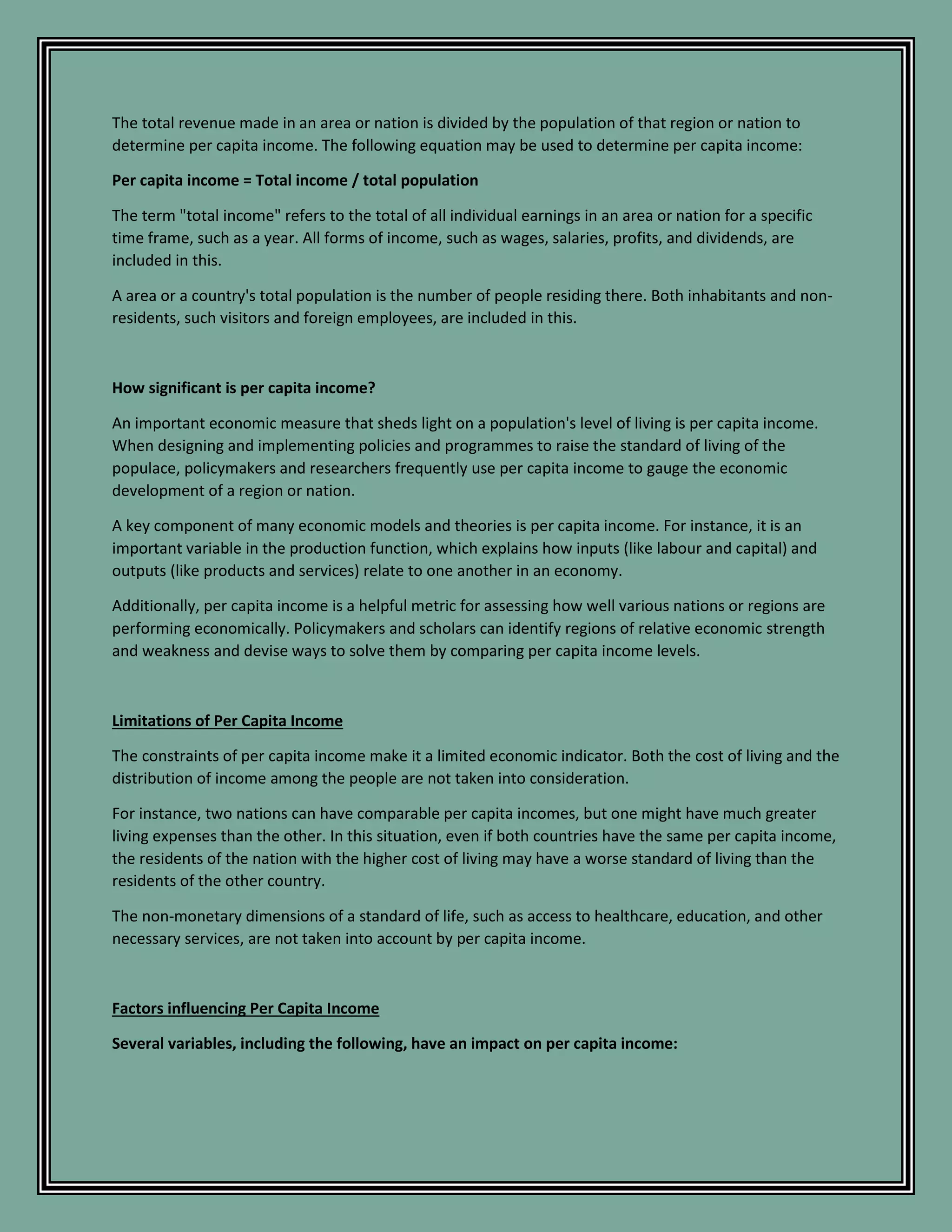
When analyzing Argentina's wealth, economists use two primary metrics. Nominal GDP per capita is the most common; it converts the value of all goods and services produced within the country into U.S. dollars using prevailing market exchange rates. This figure is highly sensitive to the devaluation of the Argentine Peso. When the peso loses value against the dollar, the nominal per capita income appears to drop sharply, even if the actual production of goods remains the same.
Purchasing Power Parity (PPP), on the other hand, adjusts for the relative cost of living and inflation rates. In Argentina, where local services, utilities, and food can be significantly cheaper in dollar terms than in the United States or Europe, the PPP-adjusted per capita income is almost always higher than the nominal figure. PPP provides a more accurate reflection of what an individual can actually buy within the domestic economy.
For international comparisons, the World Bank and the International Monetary Fund (IMF) use these metrics to categorize Argentina as an upper-middle-income economy. However, the gap between these two figures is often wider in Argentina than in more stable economies, highlighting the distortions caused by domestic price levels and currency controls.
The State of Argentina’s Per Capita Income in 2026
By 2026, Argentina’s economic landscape has been shaped by the "shock therapy" and fiscal adjustment programs initiated in previous years. The per capita income figures reflect an economy attempting to transition from a closed, subsidized model to a more market-oriented framework. This transition has resulted in a period of statistical correction where nominal figures have begun to align more closely with market realities as exchange rate gaps have narrowed.
Current data indicates that while nominal per capita income remains sensitive to global commodity prices—particularly soy, corn, and lithium—the focus for most analysts is on "Real GDP" growth. Real income per capita accounts for inflation, providing a clearer view of whether the average Argentine is actually getting wealthier or merely seeing their wages adjust to rising prices.
Historical Context: The "Boom and Bust" Cycles
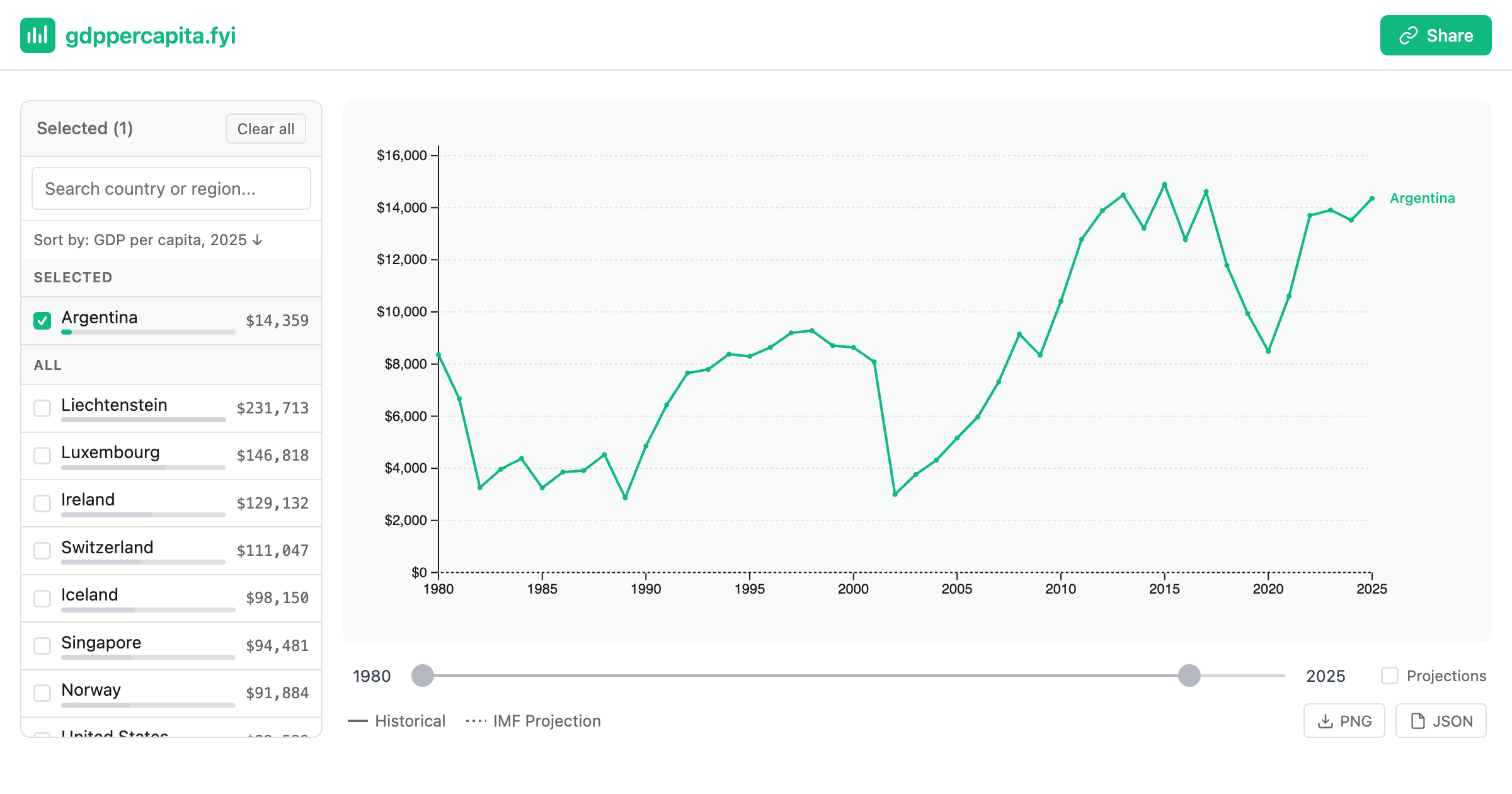
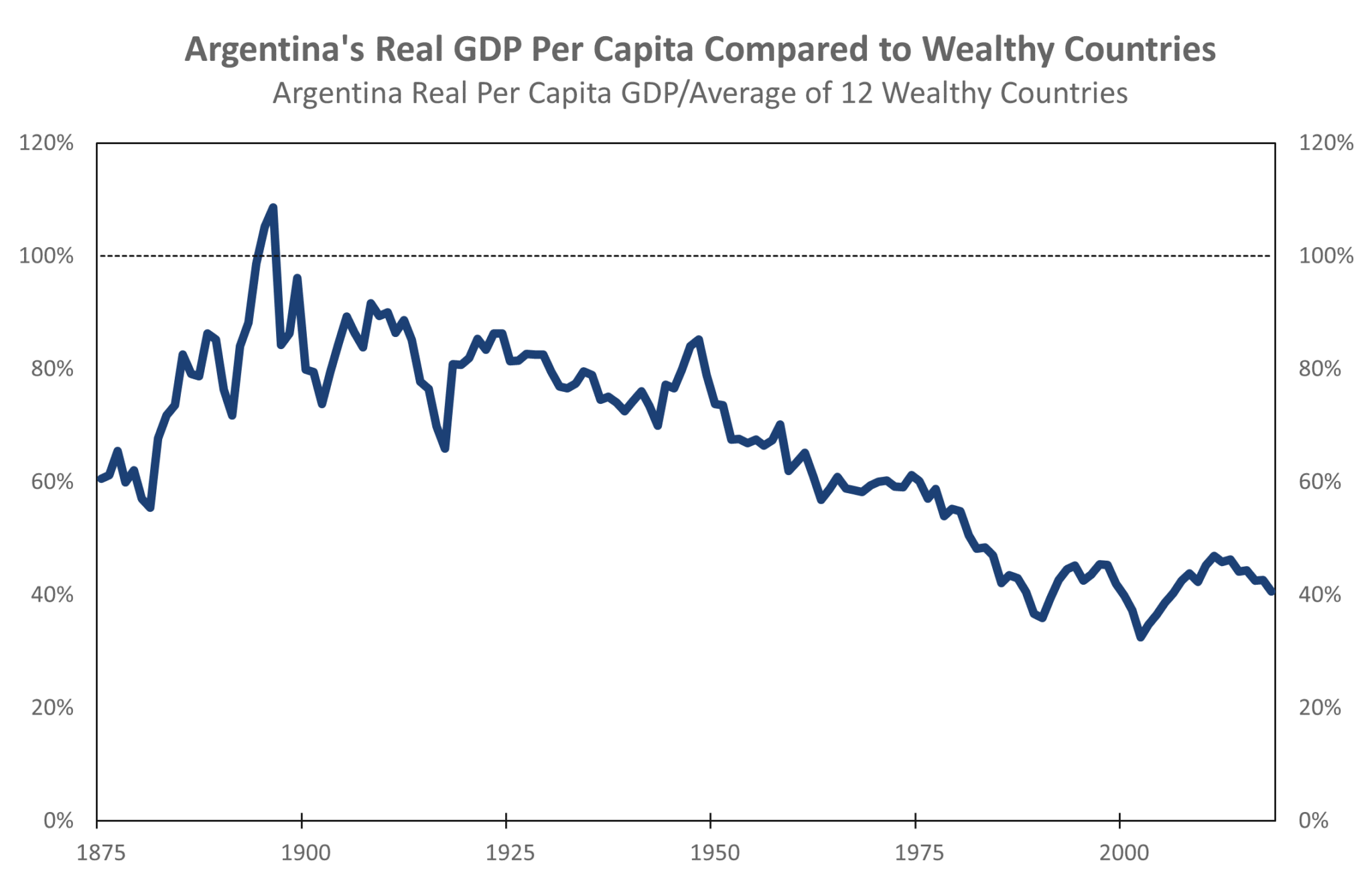
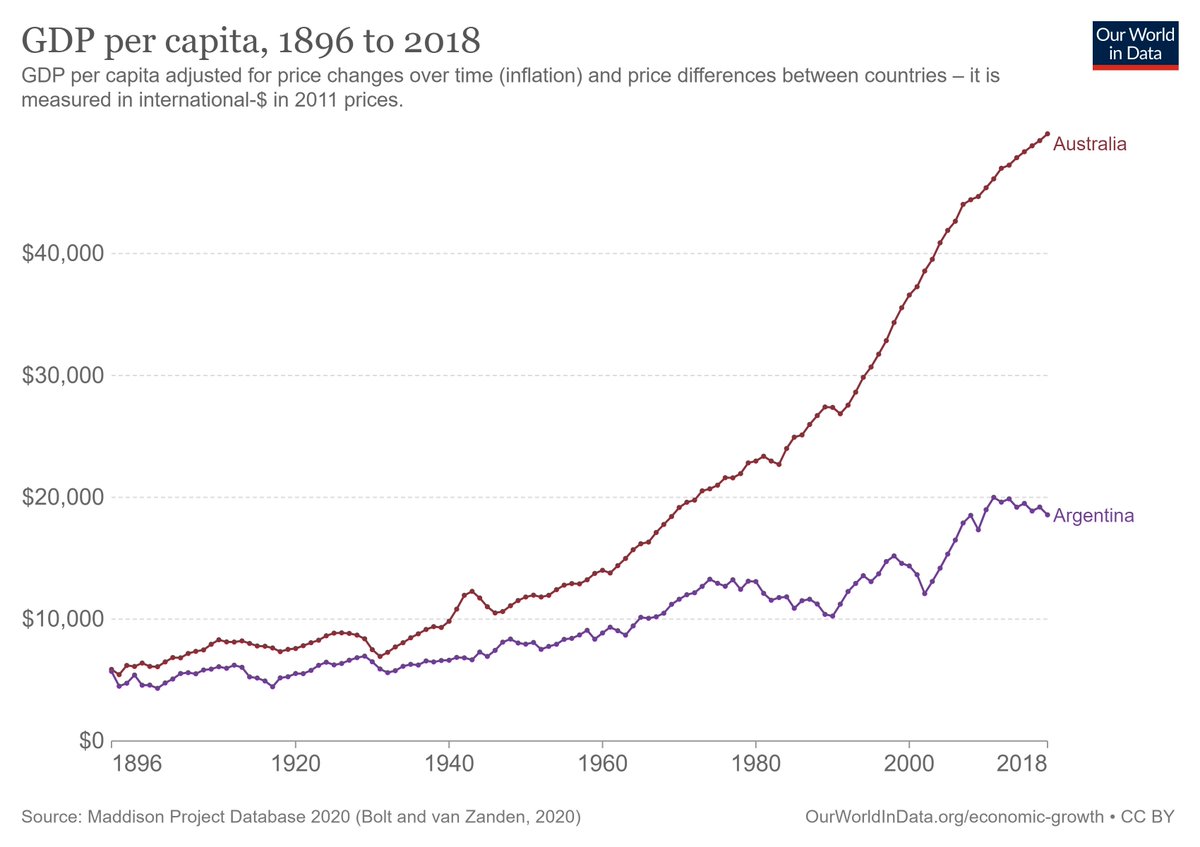
To explain Argentina’s per capita income, one must acknowledge its history as one of the world's wealthiest nations in the early 20th century. In 1913, Argentina ranked among the top ten countries globally in terms of per capita GDP. Since the mid-20th century, however, the country has been defined by extreme volatility.
The 2001-2002 economic crisis saw a massive collapse in per capita income as the "Convertibility Plan" (which pegged the peso to the dollar) ended. This was followed by a decade of rapid growth driven by the "Commodity Super-Cycle" in the 2010s, which significantly boosted income levels. However, the subsequent decade was marked by stagnation and debt crises. This historical context is vital because it explains the "Middle-Income Trap" that Argentina has struggled to escape: the inability to sustain long-term growth due to low investment and high institutional instability.
Key Drivers of Argentine Economic Output
Argentina's per capita income is heavily influenced by specific sectors that drive the majority of its foreign exchange earnings and domestic productivity.
The Agricultural Powerhouse
Argentina remains one of the world’s leading exporters of soybean products, corn, and wheat. The "Pampa" region is the engine of the economy. When global grain prices are high, per capita income generally rises, and the government sees an increase in tax revenue through export duties (retenciones). Conversely, droughts—such as the historic one in 2023—can lead to immediate and painful contractions in per capita income.
Energy and Mining: Vaca Muerta and Lithium
A major shift in the 2020s has been the development of the Vaca Muerta shale formation, one of the largest deposits of unconventional oil and gas in the world. As Argentina moves from an energy importer to a net exporter, this sector has begun to contribute more significantly to the GDP, potentially raising the ceiling for per capita income in the coming years. Additionally, the "Lithium Triangle" in the north has attracted billions in foreign direct investment, positioning Argentina as a key player in the global electric vehicle supply chain.
The Knowledge-Based Economy
Unlike many of its neighbors, Argentina has a robust "knowledge economy" (economía del conocimiento). This includes software development, biotechnology, and professional services. Companies like Mercado Libre and Globant started in Argentina, and the sector provides high-paying jobs that contribute to a higher income tier, though these workers often struggle with how to bring their foreign currency earnings into the local banking system.
The Impact of Inflation and Currency Devaluation
Inflation is the single most disruptive factor in explaining Argentina’s per capita income. When inflation reaches triple digits, as it has in the mid-2020s, the "nominal" growth of the economy is illusory.
The National Institute of Statistics and Censuses (INDEC) is the official body responsible for tracking these metrics. To understand the real standard of living, economists subtract the inflation rate from the nominal GDP growth. If the economy grows by 100% but inflation is 120%, the real per capita income has actually shrunk. This erosion of purchasing power is why many Argentines measure their true income in U.S. dollars rather than pesos, leading to a "bimonetary" culture.
Regional Comparisons: Argentina vs. Its Neighbors
Comparing Argentina to other South American nations provides a benchmark for its economic health. Historically, Argentina had the highest per capita income in the region. In recent years, countries like Chile and Uruguay have surpassed or leveled with Argentina in nominal terms due to their greater currency stability and lower inflation.
| Metric (Est. 2026) | Argentina | Chile | Uruguay | Brazil |
|---|---|---|---|---|
| Nominal GDP per Capita (USD) | ~$13,500 | ~$17,200 | ~$21,500 | ~$11,000 |
| GDP per Capita (PPP) | ~$26,800 | ~$28,500 | ~$29,000 | ~$19,500 |
| Gini Coefficient (Inequality) | 0.43 | 0.45 | 0.40 | 0.48 |
| Annual Inflation Rate | High (Declining) | Low | Low | Moderate |
Note: Data represents generalized economic projections for the 2026 period based on IMF World Economic Outlook trends.
The Role of the Informal Economy
A significant hurdle in accurately explaining Argentina’s per capita income is the "informal economy" (trabajo en negro). Estimates suggest that between 30% and 45% of economic activity in Argentina occurs outside official channels. This means that millions of people receive income that is not captured in the official GDP figures.
While this suggests that the actual per capita income might be slightly higher than official statistics indicate, it also points to structural weaknesses. Informal workers lack social security, health insurance, and pension contributions, which impacts the long-term economic stability of the household. For the state, a large informal sector means a smaller tax base, making it harder to fund infrastructure and education—the very things needed to grow per capita income in the future.
Challenges and the "Middle-Income Trap"
Argentina faces several structural challenges that prevent sustained growth in per capita income:
- Debt Sustainability: The country has a long history of sovereign defaults and a massive debt obligation to the IMF. Servicing this debt often requires fiscal austerity, which can stifle short-term GDP growth.
- Labor Productivity: While Argentina has a highly educated workforce, labor laws are often cited by businesses as a barrier to formal hiring, leading to stagnation in productivity per worker.
- Capital Flight: Due to a lack of trust in the local currency, Argentines hold billions of dollars abroad or "under the mattress." If this capital were invested domestically, it would significantly boost the country’s GDP and per capita income.
Practical Guidance for Interpreting the Data
For those looking at Argentina’s per capita income for investment or relocation purposes, the nominal figure is often the least useful. Instead, look at the Real Wage Index and the Total Basic Basket (CBT) costs provided by INDEC. These metrics show whether the average income is enough to cover essential goods and services.
Furthermore, it is essential to monitor the "Gap" (Brecha) between the official exchange rate and the parallel market (Blue Dollar). A wide gap usually indicates that a significant devaluation is imminent, which will overnight reduce the nominal per capita income when expressed in U.S. dollars.
Frequently Asked Questions
What is a "good" per capita income in Argentina? In 2026, a "good" income is relative to the cost of the "Basic Basket." Because of inflation, a fixed number becomes obsolete quickly. Generally, an income that puts an individual in the top 10% of earners is significantly lower in USD terms than in the US or Europe, but provides a high standard of living locally due to lower costs for services and dining.
How does the IMF influence Argentina's per capita income? The IMF influences income indirectly through fiscal targets. To meet IMF goals, the government may reduce subsidies on electricity, gas, and transport. While this helps balance the budget and eventually lower inflation, it temporarily reduces the "disposable" per capita income of the population as living costs rise.
Why is PPP GDP per capita so much higher than Nominal GDP in Argentina? This happens because the Argentine Peso is often undervalued in terms of local purchasing power. Things like haircuts, medical visits, and local food items do not follow the international dollar price perfectly. Therefore, your dollars "go further" in Argentina, which is what the PPP metric attempts to quantify.
Does high per capita income mean there is no poverty? No. Per capita income is an average. Argentina has a high Gini coefficient, meaning wealth is not evenly distributed. In 2026, even if the per capita income rises, a significant portion of the population may still live below the poverty line if the gains are concentrated in the export and tech sectors.
What is the outlook for Argentina's per capita income by 2030? The outlook depends on the successful stabilization of the macroeconomy. If inflation remains under control and the energy sector (Vaca Muerta) reaches full export capacity, Argentina has the potential to see a steady 2-3% annual growth in real per capita income, finally breaking the cycle of stagnation.
Final Recommendation
To truly understand Argentina’s per capita income, one must look at the convergence of the exchange rates. When the "Blue Dollar" and the official rate are close, the nominal GDP per capita becomes a much more reliable indicator of the country's actual economic standing. For 2026, investors and analysts should focus on the Investment-to-GDP ratio; only when this ratio exceeds 20% can Argentina expect a sustainable increase in the wealth of its average citizen.