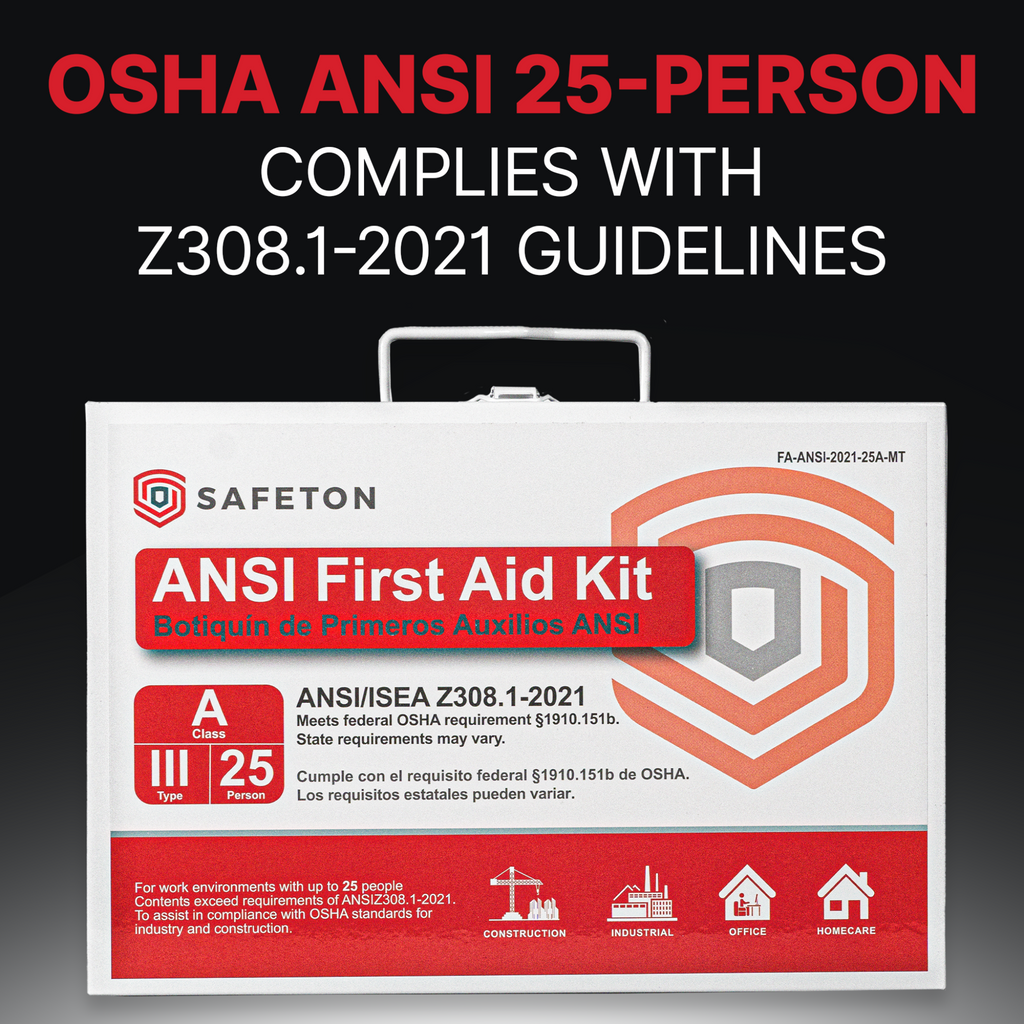
Under current occupational safety guidelines, workplace compliance with ANSI first aid kit requirements is governed by the ANSI/ISEA Z308.1-2021 standard. To meet federal OSHA rules and protect employees, organizations must select between Class A kits (for common workplace hazards) and Class B kits (for broader, high-risk operational environments), housed in appropriate Type I through Type IV container enclosures.
Understanding ANSI/ISEA Z308.1 Standards and OSHA Enforcement
Occupational safety regulations in the United States establish that employers are legally obligated to provide a safe working environment, which includes immediate access to medical and first aid supplies. The primary standard defining what constitutes an adequate supply kit is ANSI/ISEA Z308.1, titled Minimum Requirements for Workplace First Aid Kits and Supplies, developed jointly by the American National Standards Institute (ANSI) and the International Safety Equipment Association (ISEA).
While ANSI is a private, non-profit standards organization rather than a regulatory enforcement agency, its specifications carry legal weight through the Occupational Safety and Health Administration (OSHA).
How ANSI Standards Connect to OSHA Requirements
OSHA's general industry standard for medical services and first aid is codified in 29 CFR 1910.151. The regulation states that in the absence of an infirmary, clinic, or hospital in near proximity to the workplace, a person or persons shall be adequately trained to render first aid, and adequate first aid supplies shall be readily available.
Because 29 CFR 1910.151 does not detail every specific item required in a kit, OSHA’s non-mandatory Appendix A explicitly references ANSI/ISEA Z308.1 as the national consensus standard for basic first aid equipment. In practice, federal and state OSHA inspectors use the ANSI/ISEA Z308.1 standard during facility audits to determine whether an employer’s first aid provisions meet the statutory requirement of being "adequate."
Active Standard Status
The standard in effect is ANSI/ISEA Z308.1-2021, which was approved in late 2021 and officially took effect on April 15, 2022. This version replaced the earlier 2015 edition. Employers preparing for compliance reviews must ensure their supplies conform to the Z308.1-2021 requirements, as old 2015-compliant kits lack several mandatory items introduced in the updated specification, such as expanded bleeding control components and mandatory foil blankets across all kit classifications.
Class A vs. Class B First Aid Kits: Core Classifications
The ANSI/ISEA standard divides workplace first aid kits into two distinct operational classes: Class A and Class B. The fundamental distinction lies in the intended work environment, the variety of anticipated injuries, and the volume of medical supplies needed to manage casualties effectively.
- Workplace Hazard Evaluation
- Is the environment high-hazard? (Heavy machinery, chemicals, outdoor work, remote sites)
- YES
- Select CLASS B Kit
- Expanded supply volume
- Includes padded splint
- Includes tourniquet
- NO
- Select CLASS A Kit
- Basic injury response
- Low-risk office/retail
- Standard supply volume
- YES
- Is the environment high-hazard? (Heavy machinery, chemicals, outdoor work, remote sites)
Class A First Aid Kits (Low-Hazard Environments)
Class A workplace first aid kits are engineered to treat the most common types of minor injuries that occur in typical working environments. These injuries include small cuts, minor abrasions, light burns, and minor eye irritations.
- Target Environments: Administrative offices, corporate headquarters, retail stores, customer service centers, financial branches, and light assembly areas.
- Operational Scope: Intended for low-population work spaces where employee density is moderate and high-risk mechanical, electrical, or chemical hazards are absent.
- Minimum Item Types: Requires 19 distinct supply categories containing a total minimum count of mandatory individual items.
Class B First Aid Kits (High-Hazard & Complex Environments)
Class B first aid kits are designed to address a broader range and higher severity of occupational injuries. They carry significantly higher quantities of essential supplies to handle multiple victims or severe trauma cases in high-risk operational settings.
- Target Environments: Industrial manufacturing plants, construction jobsites, chemical processing facilities, warehouses, logistics centers, automotive repair facilities, and forestry or agricultural operations.
- Operational Scope: Designed for environments utilizing heavy machinery, power tools, high-voltage equipment, hazardous chemicals, or work conducted in remote areas far from emergency medical services (EMS).
- Key Supplemental Requirements: In addition to larger quantities of Class A items, Class B kits strictly mandate advanced emergency items, specifically a limb tourniquet (designed to control severe arterial bleeding) and a padded splint (for immobilizing fractured limbs).
ANSI/ISEA Z308.1 Mandatory Minimum Supply Requirements
To maintain strict compliance, safety managers must ensure kits contain both the required categories and the exact minimum quantities specified by the ANSI/ISEA Z308.1 standard.
The following mandatory table details the precise minimum component requirements for both Class A and Class B workplace first aid kits:
| Required First Aid Component | Minimum Required Quantity (Class A) | Minimum Required Quantity (Class B) | Minimum Specifications & Usage Notes |
|---|---|---|---|
| Adhesive Bandage | 16 | 50 | 1" x 3" (2.5 cm x 7.5 cm), sterile |
| Adhesive Tape | 1 roll | 2 rolls | Total 5 yards (4.57 m) min width 3/8" (0.95 cm) |
| Antibiotic Application | 10 packages | 25 packages | Topical application, 1/57 oz (0.5 g) packets |
| Antiseptic | 10 packages | 50 packages | Antiseptic wipes/swabs, min 1/57 oz (0.5 g) |
| Breathing Barrier | 1 | 1 | Single-use CPR face shield with one-way valve |
| Burn Dressing (Gel Soaked) | 1 | 2 | Minimum 4" x 4" (10 cm x 10 cm), sterile |
| Burn Treatment | 10 packages | 25 packages | Water-soluble gel, 1/57 oz (0.5 g) packets |
| Cold Pack | 1 | 2 | Single-use instant cold pack, min 4" x 5" |
| Eye Coverage | 2 pads | 5 pads | Sterile eye pads with attachment adhesive |
| Eye/Whip Wash | 1 fl oz (29.6 mL) | 4 fl oz (118.3 mL) | Sterile eye wash solution, single-use |
| First Aid Guide | 1 copy | 1 copy | Basic concise emergency first aid manual |
| Foil Blanket | 1 | 1 | Retains body heat; min size 52" x 84" |
| Hand Sanitizer | 6 packages | 10 packages | Alcohol-based gel/wipe, min 60% alcohol |
| Medical Exam Gloves | 2 pairs (4 gloves) | 4 pairs (8 gloves) | Non-latex, powder-free, disposable |
| Roller Bandage (2-inch) | 1 roll | 2 rolls | Conforming stretch bandage, 2" x 4 yards |
| Roller Bandage (4-inch) | 0 | 1 roll | Conforming stretch bandage, 4" x 4 yards |
| Scissors | 1 pair | 1 pair | Medical shears, min 4.5" length, blunt tip |
| Splint | 0 | 1 | Padded splint, minimum size 4" x 24" |
| Sterile Pad | 2 | 10 | Minimum size 3" x 3" (7.5 cm x 7.5 cm) |
| Tourniquet | 0 | 1 | Mechanical/windlass limb tourniquet, min 1" wide |
| Trauma Pad | 2 | 4 | Minimum size 5" x 9" (12.7 cm x 22.8 cm) |
| Triangular Bandage | 1 | 2 | Minimum size 40" x 40" x 56" with safety pins |
First Aid Container Types (Type I through Type IV)
Having the correct internal medical components is only half of the ANSI compliance equation. The standard also classifies first aid containers into four distinct physical types based on their structural durability, mounting options, mobility, and resistance to environmental factors like moisture and dust.
| Container Type | Description |
|---|---|
| Type I | Indoor, fixed mount, non-portable (e.g., Office wall cabinet) |
| Type II | Indoor, portable, carrying handle (e.g., Breakroom kit) |
| Type III | Portable, water-resistant, indoor/outdoor (e.g., Utility van) |
| Type IV | Heavy-duty, waterproof, drop-resistant (e.g., Construction site) |
Type I Containers
- Design Features: Intended for stationary, indoor use where the kit remains permanently mounted to a wall or cabinet structure. They are generally non-portable or intended to remain inside a dedicated safety station.
- Environmental Resistance: Standard indoor protection against light dust and debris; no weatherproofing or impact resistance required.
- Typical Applications: Executive offices, light administrative facilities, carpeted commercial space, and permanent break rooms.
Type II Containers
- Design Features: Portable indoor containers equipped with carrying handles or designed for easy removal from mounting brackets.
- Environmental Resistance: Basic indoor durability; protects contents from ambient dust and indoor exposure, but lacks moisture seals.
- Typical Applications: School classrooms, small retail stores, indoor light assembly lines, and staff rooms.
Type III Containers
- Design Features: Portable units designed for combined indoor and outdoor application. Must incorporate a gasket seal or equivalent closure to protect contents against moisture penetration.
- Environmental Resistance: Water-resistant and dust-resistant. Required to pass specific splash and water-ingress testing as outlined by ANSI/ISEA guidelines.
- Typical Applications: General contracting vehicles, delivery fleets, light outdoor maintenance work, and indoor warehouse settings subject to washdown protocols.
Type IV Containers
- Design Features: Heavy-duty, highly durable portable containers designed for rugged outdoor environments and extreme industrial settings.
- Environmental Resistance: Waterproof, weather-resistant, dust-tight, and impact-tested to prevent internal damage when dropped or roughly handled. Must feature corrosion-resistant latches and heavy gasket seals.
- Typical Applications: Heavy civil construction sites, forestry operations, maritime vessels, oil refineries, mining operations, and outdoor utility repair crews.
How to Conduct a Workplace First Aid Needs Assessment
Selecting between a Class A and Class B kit—and picking the right container type—requires a documented workplace hazard assessment. Relying on generic assumptions often leaves facilities non-compliant during OSHA audits or unprepared during medical emergencies.
Hazard Assessment Workflow:
- Step 1: Identify Physical & Chemical Hazards
- Step 2: Calculate Staffing, Shift Sizes, & Spatial Footprint
- Step 3: Determine EMS Response Time & Distance
- Step 4: Integrate Supplemental Items (AEDs, Eye Wash, OTC)
Step 1: Physical Hazard Identification
Examine every department within the facility to catalog potential injury risks. Look for:
- High-speed moving parts, cutting blades, or stamping presses (indicates high risk for severe lacerations or traumatic amputations requiring a Class B kit with a tourniquet and padded splint).
- Exposure to corrosive chemicals, solvents, or thermal heat sources (mandates enhanced burn dressings and dedicated, high-volume eyewash stations).
- Slip, trip, and fall hazards from height or uneven terrain (requires multiple trauma pads, splints, and cold packs).
Step 2: Employee Count and Spatial Layout Evaluation
ANSI standard minimums are designed as base baselines for small-to-medium work environments. Large facilities must scale up their kit quantities:
- Single vs. Multiple Kits: A single Class A or Class B kit is typically sized to support up to 25 to 50 workers in a concentrated area. Large facilities employing hundreds of workers across expansive footprints must install multiple first aid stations to maintain acceptable travel distances.
- Travel Distance Guidelines: Emergency medical protocols recommend that first aid kits be accessible within a 3-to-5-minute walk from any point in the facility. In multi-story buildings, at least one compliant kit should be available on every occupied floor.
Step 3: Proximity to Emergency Medical Services (EMS)
Evaluate the physical travel distance and average response time of local municipal emergency response teams:
- If the facility is located in an urban center where paramedics can arrive within 3 to 5 minutes, basic Class A or Class B kits provide adequate stabilization prior to professional arrival.
- If the facility is located in a rural, off-shore, or remote industrial location where EMS response times exceed 15 to 30 minutes, standard ANSI kits must be supplemented with expanded trauma supplies, advanced bleeding control equipment, and specialized transport stretchers. Safety managers can review national workplace health guidelines from the CDC/NIOSH for recommendations on remote medical preparedness.
Step 4: Integrating Supplemental & Specialty Supplies
ANSI Z308.1-2021 explicitly encourages employers to supplement standard kits based on their specific risk assessment. Common supplemental additions include:
- Over-the-Counter (OTC) Oral Medications: Single-dose, tamper-evident packets of analgesics (aspirin, ibuprofen, acetaminophen), antihistamines, and antacids. Note: Oral medications are not mandatory under ANSI, and employers must check internal corporate medical policies before stocking them.
- Bleeding Control Kits: Dedicated trauma packs containing hemostatic gauze dressings, compression bandages, and secondary tourniquets placed adjacent to Class B kits in high-risk zones.
- Automated External Defibrillators (AEDs): While governed by separate medical device protocols, AEDs should be co-located with ANSI first aid stations for rapid access during sudden cardiac arrest events.
Maintenance, Inspection, and Expiration Management
Purchasing an ANSI-compliant first aid kit is not a one-time event. OSHA requires employers to maintain supplies in a clean, organized, and fully stocked condition at all times. Deficient, expired, or contaminated supplies represent a major point of non-compliance during safety inspections.
Inspection Protocols and Checklists
Establish a rigid routine inspection schedule—typically monthly—managed by a designated safety coordinator or trained first aid officer:
- Verify Seal and Integrity: Check that container latches operate correctly and that weather gaskets (on Type III and Type IV kits) are free of cracks or dry rot.
- Audit Mandatory Supply Counts: Compare existing inventory against the ANSI minimum requirements table for the kit's class. Immediately replace missing items used during routine incidents.
- Inspect Packaging Integrity: Ensure sterile items (adhesive bandages, sterile pads, burn dressings, and eye pads) remain sealed in their original manufacturer packaging. Any sterile item with torn, water-damaged, or compromised packaging must be discarded and replaced immediately.
- Check Expiration Dates: Topical medications, antibiotic ointments, antiseptic wipes, eye wash solutions, and burn gels carry finite shelf lives (typically 2 to 5 years). Expired items must be removed prior to their expiration date, as degraded active ingredients can cause skin irritation or fail to prevent infection.
Common Compliance Pitfalls and How to Avoid Them
Even well-intentioned safety programs frequently fall into common compliance traps that lead to OSHA citations or inadequate emergency response:
- Mixing Class A and Class B Standards: Assuming a Class A kit can be converted into a Class B kit simply by dropping in a tourniquet. Class B compliance requires meeting all expanded supply counts (such as 50 antiseptic wipes instead of 10, and 10 sterile pads instead of 2).
- Inaccessible Location Placement: Storing kits inside locked manager offices, behind cluttered storage stacks, or in locations requiring keys or security badges. First aid kits must remain completely unlocked and unobstructed whenever employees are present on shift.
- Using Expired Medical Supplies: Leaving expired burn gels, eye wash, or antiseptic ointments inside an active kit. Regulators treat expired medical supplies as non-existent inventory, which can reduce an otherwise compliant kit below ANSI minimum thresholds.
- Failure to Upgrade Container Types for Outdoor Work: Utilizing basic Type I or Type II cardboard or plastic indoor cabinets on outdoor construction sites or inside utility service trucks. Moisture and road vibration will degrade unsealed supplies rapidly, violating Type III/IV structural rules.
- Lack of Hazard Assessment Documentation: Failing to document why a Class A kit was chosen over a Class B kit. If an inspector questions kit adequacy after a severe industrial injury, documented hazard assessments serve as critical evidence of due diligence.
Frequently Asked Questions
What is the difference between ANSI/ISEA Z308.1-2015 and ANSI/ISEA Z308.1-2021?
The 2021 edition introduced several key updates to the 2015 rules, including making foil blankets mandatory across both Class A and Class B kits, expanding guidelines for limb tourniquets in Class B kits, clarifying eye wash solution specifications, and placing greater emphasis on conducting a formal workplace hazard assessment to guide kit selection.
Is ANSI compliance legally mandatory under federal OSHA regulations?
OSHA standard 29 CFR 1910.151 mandates that employers provide "adequate" first aid supplies. While OSHA itself does not publish itemized supply lists, it explicitly points to ANSI/ISEA Z308.1 in its official compliance guidance as the standard for minimal adequacy. Failing to meet ANSI standards leaves employers open to OSHA citations under 1910.151 or the General Duty Clause.
How many first aid kits are required for a workplace with 100 employees?
The ANSI standard defines minimum contents per kit rather than setting a rigid kit-to-employee ratio. The number of required kits depends on physical layout, multi-story access, hazard severity, and distance. As a general industry rule of thumb, one Class A or Class B kit is installed for every 25 to 50 employees per distinct work area, ensuring supplies are reachable within a 3-to-5-minute walk.
Can an employer add over-the-counter medications like aspirin to an ANSI kit?
Yes. Employers are permitted to add supplemental supplies, including single-dose, individually wrapped over-the-counter (OTC) pain relievers, cold medications, or antacids. However, these are optional additions and do not count toward mandatory ANSI minimum supply quantities. Employers must ensure OTC offerings comply with internal medical directives and state regulations.
Does a tourniquet need to be included in every workplace first aid kit?
No. A mechanical tourniquet is mandatory only in Class B first aid kits, which are intended for high-hazard work environments like manufacturing plants, construction sites, and heavy industrial facilities. Class A kits, designed for low-hazard office environments, do not mandate a tourniquet, though safety managers may choose to add one based on localized hazard assessments.
How often do first aid kits need to be inspected for compliance?
First aid kits should be inspected at least once a month to verify that mandatory supply counts are maintained, sterile packaging remains intact, and no items have crossed their printed expiration dates. Inspections should also occur immediately following any workplace accident where supplies were consumed.
Next Steps for Facility Safety Managers
To bring your facility into full alignment with ANSI first aid kit requirements, execute the following implementation plan:
- Perform a Physical Audit: Walk your facility to locate all existing first aid cabinets and portable kits. Compare their container types (Type I–IV) against their physical operating environments.
- Review Internal Inventory: Audit cabinet contents against the ANSI/ISEA Z308.1 mandatory component matrix. Identify missing items, broken sterile seals, or expired medications.
- Document Your Hazard Assessment: Formalize a written assessment detailing work risks, shift counts, EMS response times, and travel distances to justify your selection of Class A or Class B kits.
- Establish Replenishment Protocols: Assign a designated safety team member or partner with a qualified safety vendor to execute mandatory monthly inspections and restock missing components promptly.
Professional Advice Disclaimer: This article is intended for educational and informational purposes only and does not constitute formal legal, medical, or occupational safety consulting. Workplace safety requirements vary by state jurisdiction, municipal code, and industry sector. Safety managers should consult official OSHA regulations and the complete ANSI/ISEA Z308.1 publication published by the International Safety Equipment Association (ISEA) for official regulatory interpretation.