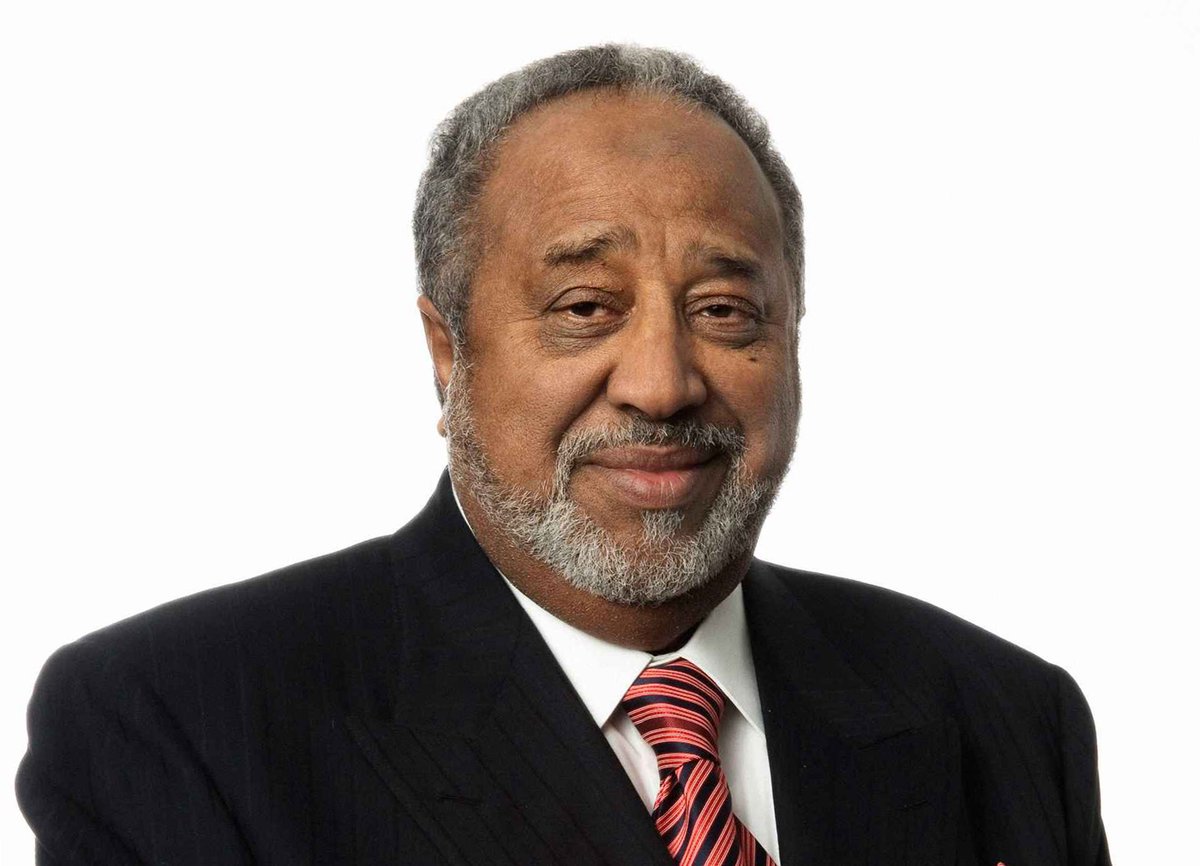
Sheikh Mohammed Hussein Al Amoudi has not died. Reports and viral social media claims alleging the Ethiopian-born Saudi billionaire has passed away are false. Al Amoudi remains alive, having maintained a deliberate low public profile since his release from Saudi detention in January 2019 while continuing to oversee his diversified international business conglomerate, MIDROC.
Fact Check: Addressing the Rumors Surrounding Mohammed Al Amoudi
Persistent rumors regarding the health and supposed death of Mohammed Hussein Al Amoudi have surfaced intermittently across digital platforms, particularly on Telegram, Facebook, and regional forums across East Africa and the Middle East. These reports lack any confirmation from official spokespersons, the Ethiopian government, Saudi authorities, or MIDROC (Mohammed International Development Research and Organization Companies).
Public interest in Al Amoudi’s well-being stems from a combination of factors: his advanced age, his high-profile fifteen-month detention in Riyadh between November 2017 and January 2019, and his prolonged withdrawal from the public eye. In contemporary media ecosystems, extended silence from prominent international figures frequently creates an information vacuum. Speculative bloggers and opportunistic social channels exploit this vacuum to generate engagement through unverified death announcements.
Furthermore, confusion occasionally arises from the deaths of other prominent members of the extended Al Amoudi merchant family or related business associates in Jeddah and Addis Ababa. Whenever an elder member of the broader diaspora passes away, truncated headlines often trigger waves of misinformation asserting that the billionaire industrialist himself has died. Authoritative verification protocols confirm that Sheikh Al Amoudi is alive and that his global commercial enterprise remains active.
The Profile of Mohammed Hussein Al Amoudi
To understand why claims regarding Al Amoudi’s death elicit intense public reaction, one must examine his unique position at the intersection of Ethiopian national development, Saudi private wealth, and international commerce.
Early Life and Ascent to Wealth
Born in July 1946 in Dessie, Ethiopia, to a Saudi father of Hadhrami Yemeni origin and an Ethiopian mother, Al Amoudi holds a unique dual heritage. He emigrated to Saudi Arabia in the mid-1960s, establishing citizenship and entering the Kingdom’s booming construction and real estate sectors. His primary commercial breakthrough occurred during the reign of King Fahd, when his company, Midroc, secured critical contracts under the Saudi Strategic Storage Program—a multi-billion-dollar subterranean defense initiative designed to secure petroleum reserves.
The capital generated from Saudi public infrastructure projects enabled Al Amoudi to expand internationally. He structured investments across Western Europe and Sub-Saharan Africa, becoming one of the wealthiest individuals of African descent in the world. His personal net worth, which Forbes estimated at over $12 billion prior to 2017, established him as a critical economic bridge between the Persian Gulf and the Horn of Africa.
- Early Roots: Dessie, Ethiopia
- Move to Saudi Arabia (1965)
- Saudi Strategic Storage Program (1980s)
- Formation of MIDROC Conglomerate
- European Energy: Preem
- Ethiopian Private Sector
MIDROC Ethiopia and National Economic Footprint
Al Amoudi’s influence in Ethiopia is unmatched by any single private investor in modern East African history. Following the fall of the Derg military regime in 1991, Al Amoudi entered the opening Ethiopian market under the leadership of the Ethiopian People's Revolutionary Democratic Front (EPRDF), headed by Prime Minister Meles Zenawi.
Commercial Diversity and Dominance
Through MIDROC Ethiopia—the local subsidiary of his broader corporate empire—Al Amoudi acquired and developed substantial stakes across nearly every foundational industry:
- Natural Resources and Mining: MIDROC Gold operated the Lega Dembi open-pit gold mine, historically Ethiopia’s primary source of commercial gold exports. This operation anchored foreign currency generation for decades, though it later faced environmental disputes and temporary license suspensions.
- Hospitality and Urban Real Estate: In 1998, Al Amoudi opened the Sheraton Addis, a Luxury Collection hotel that served as the diplomatic and political nexus of the African Union. His real estate operations acquired massive land allocations across central Addis Ababa for commercial development.
- Agro-Industry and Food Security: Through Elfora Agro-Industries, Horizon Plantations, and Saudi Star Agricultural Development, Al Amoudi invested hundreds of millions of dollars into commercial livestock, commercial coffee production, and large-scale rice farming in regions such as Gambela.
- Manufacturing and Construction: MIDROC entered cement production through the Derba MIDROC Cement plant, steel manufacturing, pharmaceuticals, and transportation logistics.
At its peak, MIDROC Ethiopia employed tens of thousands of citizens, serving as the largest private-sector employer in the country. Because Al Amoudi operated not merely as an investor but as a quasi-sovereign financial backstop for Ethiopian national projects—donating extensively to public health campaigns, athletics, and the Grand Ethiopian Renaissance Dam (GERD)—unverified reports concerning his death carry severe social, political, and financial ramifications within the country.
The 2017 Ritz-Carlton Detention and Structural Realignment
A central reason the public frequently questions Al Amoudi’s current status is the secrecy that enveloped his detention during the 2017 Saudi purge.
In November 2017, Crown Prince Mohammed bin Salman launched an unprecedented anti-corruption sweep, detaining hundreds of royals, ministers, and prominent tycoons inside the Ritz-Carlton hotel in Riyadh. Mohammed Hussein Al Amoudi was among the most prominent figures arrested. Unlike several Saudi princes who reached swift settlements within weeks, Al Amoudi’s confinement extended for over fourteen months.
During this period, persistent rumors claimed that his health had collapsed or that he had died in custody. Diplomatic interventions were staged; former Ethiopian Prime Minister Hailemariam Desalegn and his successor, Prime Minister Abiy Ahmed, made high-level diplomatic appeals directly to Riyadh requesting his release, citing his vital role in the Ethiopian macroeconomy.
Release and Post-Detention Terms
In late January 2019, Saudi authorities released Al Amoudi. He returned to his private residence in Jeddah. While details of the financial settlement reached between Al Amoudi and the Saudi state remain confidential under state non-disclosure protocols, international financial outlets reported that he relinquished substantial liquid assets and specific domestic holdings to resolve claims against him.
Crucially, Al Amoudi retained ownership of his primary international assets, including Preem, Sweden's largest petroleum refining company, and his vast commercial holdings in Ethiopia. However, the experience permanently altered his operational model. He ceased attending public galas, stepped back from public relations events, and delegated day-to-day corporate stewardship to long-standing executives.
Current Status and Operational Reorganization
Entering 2026, Mohammed Hussein Al Amoudi remains alive, residing principally between Saudi Arabia and private international retreats, maintaining strict operational privacy.
MIDROC Ethiopia has undergone an internal modernization and restructuring process. Historically, the conglomerate operated under a highly centralized decision-making structure centered on Al Amoudi and his long-time executive manager, Dr. Arega Yirdaw. Following executive departures and the changing political dynamics under Prime Minister Abiy Ahmed's administration, MIDROC rebranded components of its operations, introducing fresh corporate governance, divesting non-performing assets, and resolving long-standing land and environmental disputes with regional states.
The operational reality of his empire reflects a deliberate shift toward corporate autonomy, insulating the commercial enterprises from the personal life cycle of their founding shareholder. This dynamic—where the corporate entity operates normally while the owner remains invisible—often fuels recurring rumors among observers that the principal must be incapacitated or deceased.
Asset Comparison: Overview of Key Al Amoudi Holdings
To assess the ongoing status of Al Amoudi's international operations, consider the verified status of his major asset holdings:
| Enterprise / Holding | Operational Sector | Geographic Base | Current Operating Status |
|---|---|---|---|
| Preem Holding AB | Petroleum Refining & Supply | Sweden | Wholly owned via Corral Petroleum; active; transitioning toward renewable fuels. |
| Svenska Petroleum Exploration | Oil & Gas Exploration | United Kingdom / International | Operations rationalized; asset portfolio divested or restructured post-2020. |
| MIDROC Investment Group | Diversified Holdings (Agriculture, Industry) | Ethiopia | Fully operational under modernized executive governance structure. |
| Sheraton Addis Hotel | Luxury Hospitality | Ethiopia | Operating normally under Marriott International’s Luxury Collection brand. |
| Derba MIDROC Cement | Construction Materials | Ethiopia | Active; central supplier to major civil and national infrastructure projects. |
| Lega Dembi Mine | Mineral Extraction | Ethiopia | Subject to revised licensing, regulatory agreements, and environmental compliance frameworks. |
Why Rumors Disproportionately Target Sheikh Al Amoudi
The recurring false narratives declaring Al Amoudi dead illustrate broader patterns in digital disinformation concerning elite international figures. Multiple structural dynamics cause these rumors to spread rapidly:
1. The Intersection of Two Distinct Media Climates
Al Amoudi operates within the media climates of Saudi Arabia and Ethiopia. Saudi Arabia’s elite wealth networks operate with high institutional privacy; personal developments, health issues, and private settlements are rarely broadcast through public channels. Conversely, Ethiopia's digital media landscape features intense, polarized political competition across domestic and diaspora channels. When unverified claims jump from one media landscape to the other, linguistic and contextual barriers prevent audiences from checking facts directly.
2. Disinformation for Financial and Political Leverage
Al Amoudi’s investments in Ethiopia have consistently carried political weight. In past decades, opposition networks viewed him as an economic architect of the ruling EPRDF coalition. In contemporary politics, disputes over urban land leases, resource concessions, and foreign exchange allocations generate intense regional debates. False rumors of an owner’s death can temporarily disrupt asset values, confuse supply contracts, and alter negotiations regarding commercial permits.
3. The Shift to Professional Corporate Governance
Prior to 2017, Al Amoudi personally cut ribbons, attended state banquets, and distributed large charitable donations on live television. After 2019, he discontinued public-facing appearances. To the general public, the complete absence of photos, television interviews, or public speeches over several consecutive years is easily interpreted as a sign of incapacitation or death, even when legal corporate registries document continuous ownership.
How to Verify Reports Concerning International Figures
When evaluating sudden online breaking news regarding the death of prominent global figures, researchers, journalists, and investors should follow disciplined verification steps rather than relying on social media posts.
Step 1: Consult Official Government News Agencies
Deaths of figures possessing billionaire status or holding sovereign decorations are invariably announced through official state apparatuses.
- For Al Amoudi, verify through the Saudi Press Agency (SPA) or the Ethiopian News Agency (ENA).
- If neither statutory source has issued a bulletin, the report lacks foundational confirmation.
Step 2: Check Regulatory Corporate Disclosures
Large-scale corporations cannot conceal the death of a controlling beneficial shareholder due to international capital market laws.
- Al Amoudi’s Preem Holding AB issues publicly traded debt securities on European exchanges.
- Under European Union market abuse regulations and Swedish corporate governance frameworks, the passing of an ultimate controlling owner requires an immediate regulatory filing to bondholders and market regulators. An absence of market filings conclusively disproves viral death claims.
Step 3: Scrutinize Source Attribution and Media Integrity
Disinformation surrounding African and Middle Eastern tycoons frequently originates on automated aggregators or unverified social media profiles that lack professional mastheads or verifiable editorial teams. Reputable international business journals (e.g., Bloomberg, Reuters, Financial Times) maintain active obituaries for major global billionaires. A story claiming a high-profile death that appears exclusively on unverified blogs is functionally baseless.
Frequently Asked Questions
Has Mohammed Hussein Al Amoudi died?
No. Mohammed Hussein Al Amoudi has not died. Official channels, corporate records, and verified reporting confirm that the Ethiopian-Saudi billionaire remains alive.
Where is Mohammed Al Amoudi living today?
Al Amoudi resides primarily in Saudi Arabia, maintaining personal residences in Jeddah, alongside private properties internationally. Since his release from the Ritz-Carlton in January 2019, he lives quietly, delegating public appearances to corporate representatives.
Who controls MIDROC Ethiopia if Al Amoudi is not appearing publicly?
MIDROC Investment Group operates under executive management teams led by designated corporate directors and chief executives. While Al Amoudi remains the definitive ultimate beneficial owner, operational decision-making has been institutionalized across separate industrial, agricultural, and service divisions.
Why was Mohammed Al Amoudi arrested in Saudi Arabia?
Al Amoudi was detained in November 2017 as part of a sweeping anti-corruption investigation launched by the Saudi National Anti-Corruption Committee. The crackdown targeted prominent princes, cabinet ministers, and private business magnates to resolve financial disputes, recover public funds, and restructure the relationship between the private sector and the state.
Is MIDROC Ethiopia still operating?
Yes. MIDROC remains one of the largest conglomerates in East Africa. Its core enterprises—including the Sheraton Addis, Derba Cement, Elfora Agro-Industries, and extensive industrial holdings—continue full commercial operations.
Summary and Next Steps
The recurring assertions that Sheikh Mohammed Hussein Al Amoudi has died are unfounded. They reflect the vulnerabilities of modern digital platforms, which easily turn extended personal privacy into false news. Al Amoudi remains alive, his global corporate holdings remain legally documented, and his operating enterprises continue their normal functions across Sweden, Saudi Arabia, and Ethiopia.
Recommended Actions for Observers and Researchers:
- Verify Corporate Disclosures: Rely on European debt registries linked to Preem Holding AB or formal corporate communications from the MIDROC Investment Group rather than unsourced online commentary.
- Monitor Official Channels: Treat claims regarding the health or life status of major bilateral investors as unproven until corroborated by the Ethiopian Ministry of Foreign Affairs or the Saudi Press Agency.
- Flag Disinformation: When encountering unverified claims on community forums or social platforms, look for the absence of institutional citations and verify against established international news wires before sharing.