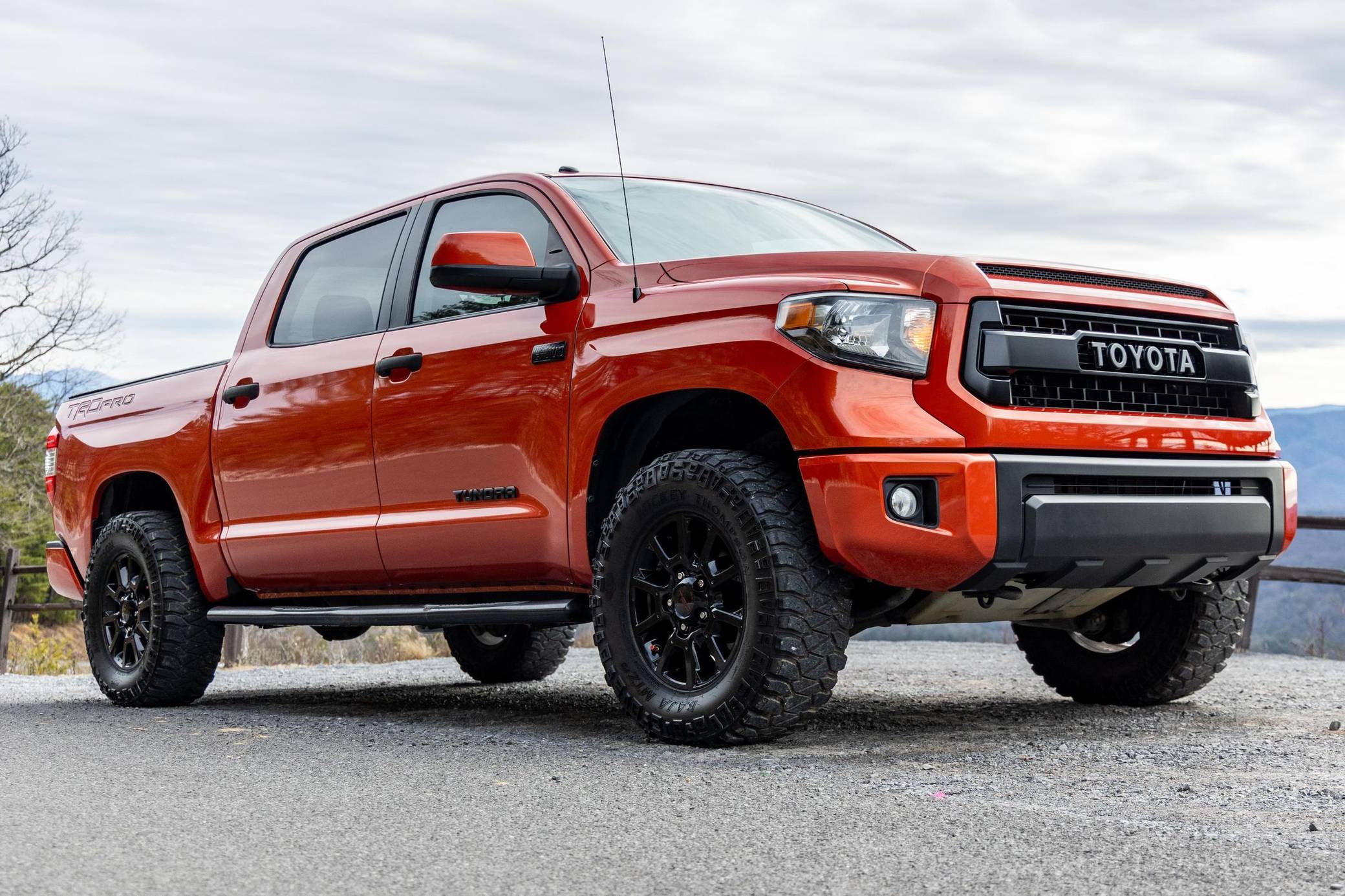
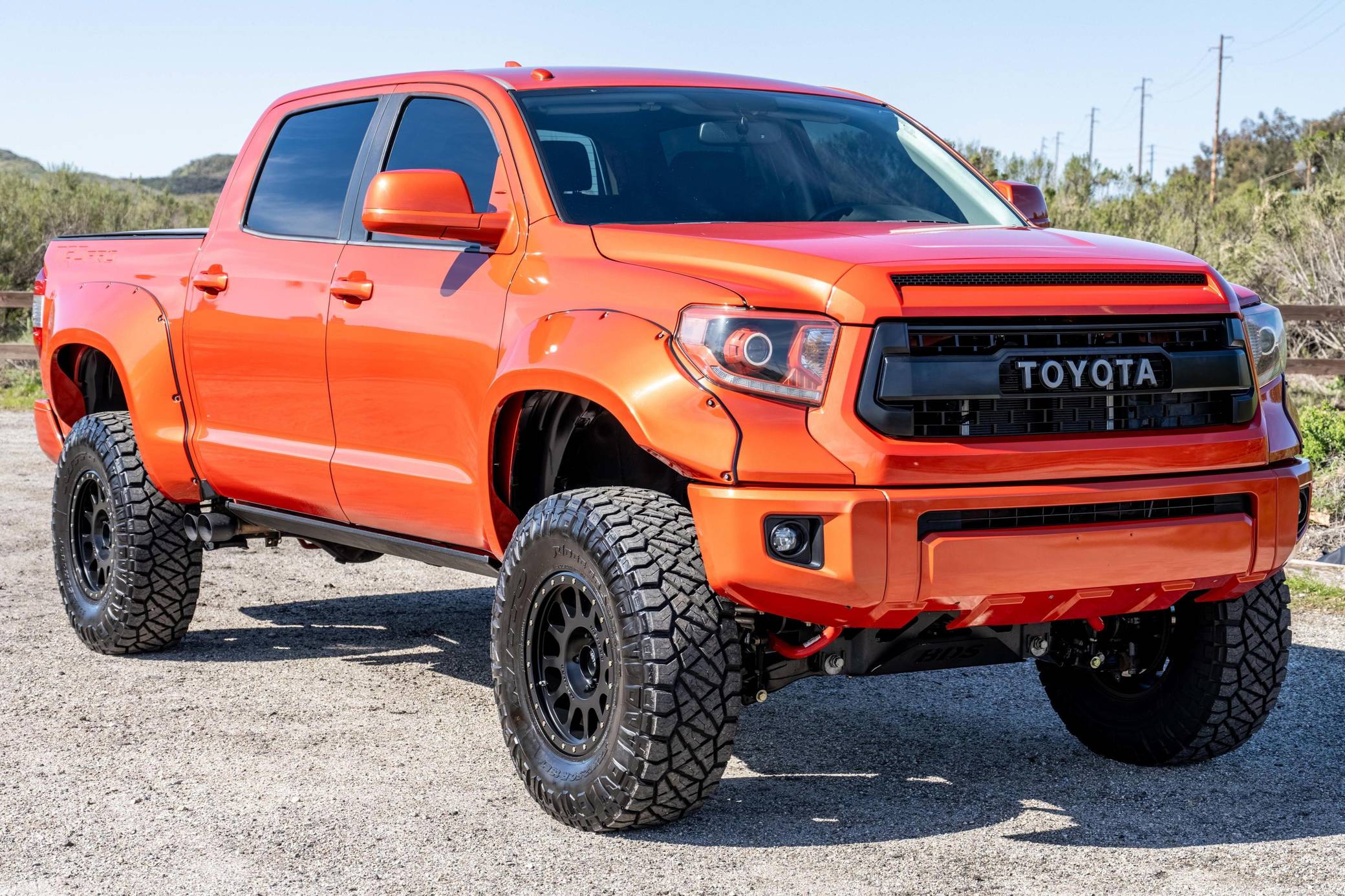
The 2015 Toyota Tundra TRD Pro marked a significant shift in Toyota’s off-road strategy, introducing a factory-tuned suspension and distinct styling that replaced the previous T/X Baja package. Its primary changes included a Bilstein remote-reservoir shock system, a 2-inch front lift, a unique "TOYOTA" heritage grille, a TRD dual exhaust, and specialized interior branding.
As we look back from 2026, the 2015 Tundra TRD Pro remains a landmark vehicle in the evolution of the full-size truck market. While it was celebrated for its ruggedness and legendary reliability, it also sparked intense debates regarding its value proposition, towing capacity, and how it compared to high-speed desert runners like the Ford Raptor. Understanding these changes and the discussions they sparked is essential for any enthusiast or used-market buyer evaluating this specific model year.
1. The Suspension Overhaul: Bilstein Remote Reservoirs
The most significant technical change for the 2015 TRD Pro was the introduction of a suspension system specifically tuned by Toyota Racing Development (TRD). Unlike the standard Tundra, which utilized traditional gas-charged shocks, the TRD Pro featured 2.5-inch Bilstein front shocks and 2.0-inch rear shocks with remote reservoirs.
The Technical Advantage
Remote reservoirs are designed to increase oil capacity. In off-road conditions where the suspension is cycling rapidly, the friction creates immense heat. In a standard shock, this heat causes the oil to foam (aeration), leading to "shock fade" where the dampening becomes inconsistent and soft. By moving the oil into a separate reservoir, the system can dissipate heat more effectively, allowing the truck to maintain performance over long stretches of washboard roads or technical trails.
The Spring Rate Change
Toyota didn't just swap the shocks; they reduced the spring rate. The 2015 TRD Pro used softer Eibach coils in the front. This was a deliberate choice to provide a more compliant ride over rocks and ruts. While this improved off-road articulation and low-speed comfort, it introduced one of the most persistent debates about the truck’s road manners, which we will explore later.
2. Aesthetic Identity: The Heritage Grille and Bed Stamping
Before 2015, the Tundra followed a somewhat conservative design language. The TRD Pro broke this mold by leaning into Toyota’s racing history. The most notable change was the "TOYOTA" block-letter grille, a direct callback to the iconic FJ40 and the off-road racing trucks of the 1980s.
Permanent Branding
Unlike other trims that relied on stickers or decals, Toyota chose to "stamp" the TRD Pro logo directly into the sheet metal of the rear quarter panels. This "TRD PRO" bed stamp was a bold manufacturing move that signaled the trim was a permanent, integrated part of the lineup rather than an aftermarket add-on package.
Interior Refinements
Inside, the 2015 model received specific TRD appointments that distinguished it from the SR5 or Limited trims. This included:
- Unique black fabric seats with red contrast stitching.
- A TRD-branded shift knob.
- Custom TRD Pro floor mats.
- A simplified center console focused on utility.
While these changes were appreciated, they also fueled a debate regarding the "luxury vs. utility" balance of the truck.
3. Increased Ride Height and Geometry
The 2015 Tundra TRD Pro came with a factory-installed 2-inch front lift. This wasn't just for looks; it was designed to level the truck and provide better approach angles. By lifting the front, Toyota eliminated the "rake" (where the front sits lower than the rear) common in work trucks meant to carry heavy loads.
Off-Road Geometry
This change increased the front wheel travel by approximately 2 inches. It allowed for the fitment of 32-inch BFGoodrich All-Terrain T/A KO tires on unique 18-inch black alloy wheels. These wheels were specifically chosen to provide more sidewall than the 20-inch wheels found on the Platinum or 1794 trims, which is crucial for airing down tires on soft sand or jagged rocks.
4. The Performance Dual Exhaust System
One of the most audible changes was the inclusion of the TRD dual cat-back exhaust. While many truck owners install aftermarket exhausts, the 2015 TRD Pro was one of the few factory offerings that prioritized an aggressive exhaust note.
Engineering the Sound
The system was engineered to reduce backpressure, which theoretically provided a slight bump in mid-range torque for the 5.7L i-Force V8. However, the primary goal was character. The stainless steel system exited behind both rear wheels with black chrome tips. This change was widely praised for its deep, throaty growl, though it became a point of contention for owners who used the truck for long-distance highway towing.
5. Shift in Market Positioning
The final major change was the consolidation of off-road features into a flagship trim. Before 2015, if you wanted a Tundra that could handle serious trails, you usually bought a base truck and went to the aftermarket. The 2015 TRD Pro was Toyota’s way of saying they could provide a turnkey solution with a full factory warranty.
This shift meant that the 2015 TRD Pro was positioned as the "halo" truck for the Tundra line, focusing on durability and high-speed trail riding rather than the luxury-oriented focus of the 1794 Edition.
Comparison: 2015 Tundra TRD Pro vs. Standard SR5 4x4
To understand the value of these changes, it is helpful to look at the technical differences side-by-side.
| Feature | 2015 Tundra SR5 (TRD Off-Road) | 2015 Tundra TRD Pro |
|---|---|---|
| Front Shocks | 32mm Gas-Charged | 2.5-inch Bilstein w/ Remote Reservoirs |
| Rear Shocks | 32mm Gas-Charged | 2.0-inch Bilstein w/ Remote Reservoirs |
| Front Lift | 0 inches | 2 inches (Leveling) |
| Spring Rate | Standard (Firmer) | TRD Tuned (Softer) |
| Wheels | 18-inch Alloy | 18-inch TRD Black Alloy |
| Exhaust | Standard Single Exit | TRD Dual Cat-Back |
| Grille | Chrome/Color-Keyed Slat | "TOYOTA" Heritage Block Letter |
| Bed Branding | Decals (Optional) | Stamped Sheet Metal |
The 5 Great Debates Surrounding the 2015 Tundra TRD Pro
Despite its success, the 2015 TRD Pro was not without its critics. These five debates have persisted for over a decade in the Toyota community.
Debate 1: The "Build vs. Buy" Dilemma
Perhaps the most heated debate centered on whether the TRD Pro was worth its premium over an SR5. In 2015, the price difference was several thousand dollars. Critics argued that for the same amount of money, an owner could buy an SR5 and install superior aftermarket suspension (like King or Icon coilovers) and even larger tires.
Proponents of the TRD Pro argued that the factory warranty and the resale value of a genuine TRD Pro outweighed the benefits of aftermarket parts. Historically, the TRD Pro has held its value significantly better than modified SR5s, proving that the market values factory-engineered packages.
Debate 2: Towing and Payload Compromise
Because Toyota softened the spring rates to improve off-road performance, the 2015 TRD Pro suffered from more "squat" when a heavy trailer was attached. While the 5.7L V8 had plenty of power to pull 9,000+ pounds, the suspension geometry wasn't as stable as the standard Tundra under heavy load. This led to a debate about whether the TRD Pro was a "real" truck or just a "toy." For users who spent 90% of their time towing, the TRD Pro was often viewed as a downgrade from the standard suspension.
Debate 3: The Interior "Luxury Gap"
In 2015, the TRD Pro was the most expensive Tundra model outside of the ultra-luxury trims. However, it lacked many of the features found in the Platinum or 1794 trims, such as cooled seats, a sunroof (initially), and premium leather. Toyota argued that the TRD Pro was a "purpose-built" machine where cloth seats were more practical for off-roading. Buyers, however, debated whether a flagship truck should be missing premium comforts that competitors like the Ram Rebel or Ford Raptor provided.
Debate 4: Fuel Economy and Range
The 5.7L i-Force V8 is legendary for its durability, but by 2015, it was already considered thirsty. The TRD Pro, with its 4.30 rear axle ratio and less aerodynamic front lift, exacerbated this issue. Furthermore, the 2015 model initially came with a 26.4-gallon fuel tank, which many owners felt was too small for a truck intended for long-distance overland adventures. This debate eventually led Toyota to offer a 38-gallon tank in later years, but for the 2015 launch, the limited range was a major talking point.
Debate 5: Is it a "Raptor Killer"?
When the TRD Pro launched, it was inevitably compared to the Ford Raptor. The debate was fierce: the Raptor had more suspension travel and a wider track, but the Tundra was significantly more reliable and cheaper to maintain. The consensus eventually settled on the fact that the TRD Pro was a "trail truck," while the Raptor was a "desert racer." However, the debate over which truck was "better" for the average enthusiast lasted for years, with the Tundra winning on long-term ownership costs.
Technical Maintenance and Long-Term Reliability
For those looking at a 2015 TRD Pro in 2026, the Bilstein suspension remains a point of technical interest. Unlike the Fox shocks used in later 2019+ models, the 2015 Bilsteins are generally considered more "set and forget." However, at this age, even the most durable shocks may require a rebuild or replacement.
One common mistake owners make is replacing the specific TRD Pro Bilsteins with standard aftermarket shocks, which ruins the carefully tuned geometry of the truck. If the reservoirs are leaking or the dampening has faded, it is highly recommended to seek out specialized rebuild services or genuine Toyota replacements to maintain the vehicle's unique handling characteristics.
FAQ: Understanding the 2015 Tundra TRD Pro
Did the 2015 TRD Pro come with a sunroof?
No, the 2015 Tundra TRD Pro was not available with a sunroof. Toyota omitted it to maintain structural rigidity and reduce weight for off-road use. It wasn't until the 2019 model year that a sunroof became an option for the TRD Pro trim.
Is the TRD Pro dual exhaust too loud for highway driving?
This is subjective, but many owners report a noticeable "drone" at approximately 1,800 to 2,000 RPM. This often coincides with highway cruising speeds. While many love the aggressive sound, those sensitive to noise or those who frequently tow heavy loads may find the constant hum fatiguing over long distances.
Can I fit 35-inch tires on a stock 2015 TRD Pro?
Fitting 35-inch tires on a 2015 TRD Pro requires modifications. While the truck has a 2-inch lift, 35s will typically rub on the body mount and the front plastic liner during full-lock turns. Most owners stick with 33-inch tires (275/70R18) to avoid cutting or grinding the truck's frame.
How does the 2015 TRD Pro hold its value compared to other trims?
The 2015 TRD Pro has some of the highest resale values in the full-size truck market. Because it was the inaugural year of the TRD Pro line and featured the "bulletproof" 5.7L V8 before Toyota transitioned to twin-turbo V6 engines, it has become a collector's item of sorts for Toyota purists.
Practical Recommendation for Buyers
If you are considering a 2015 Tundra TRD Pro today, focus your inspection on the remote reservoir hoses. Over time, the rubber lines connecting the reservoirs to the shock bodies can degrade or leak. Replacing these is a specialized task. Additionally, verify that the truck still has the original TRD dual exhaust; many owners swapped them out, but the original system is a key part of the vehicle's value and performance profile.
Ultimately, the 2015 Tundra TRD Pro is a truck for someone who values mechanical simplicity and proven durability over modern gadgets. It remains the "gold standard" for the first generation of Toyota's high-performance factory off-roaders.