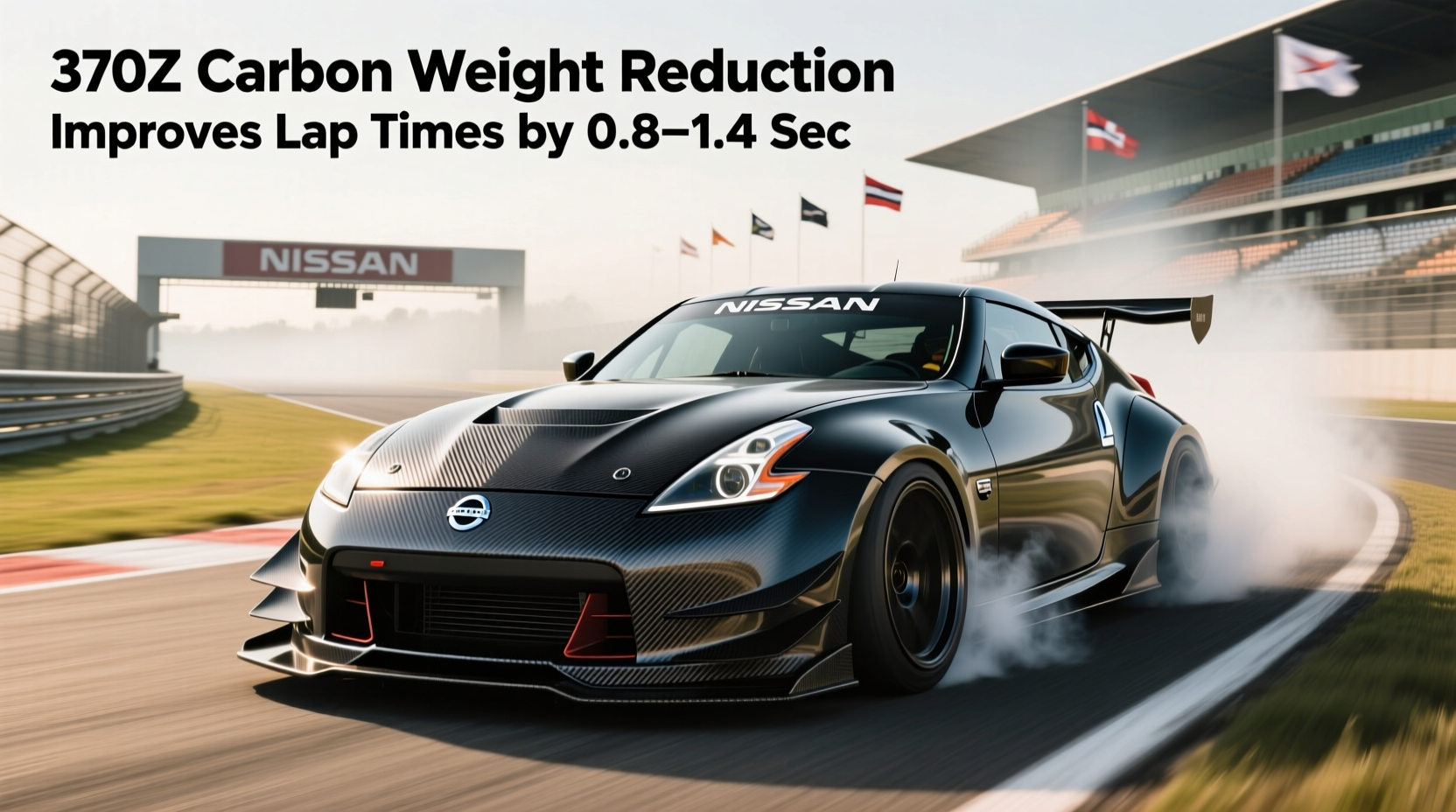
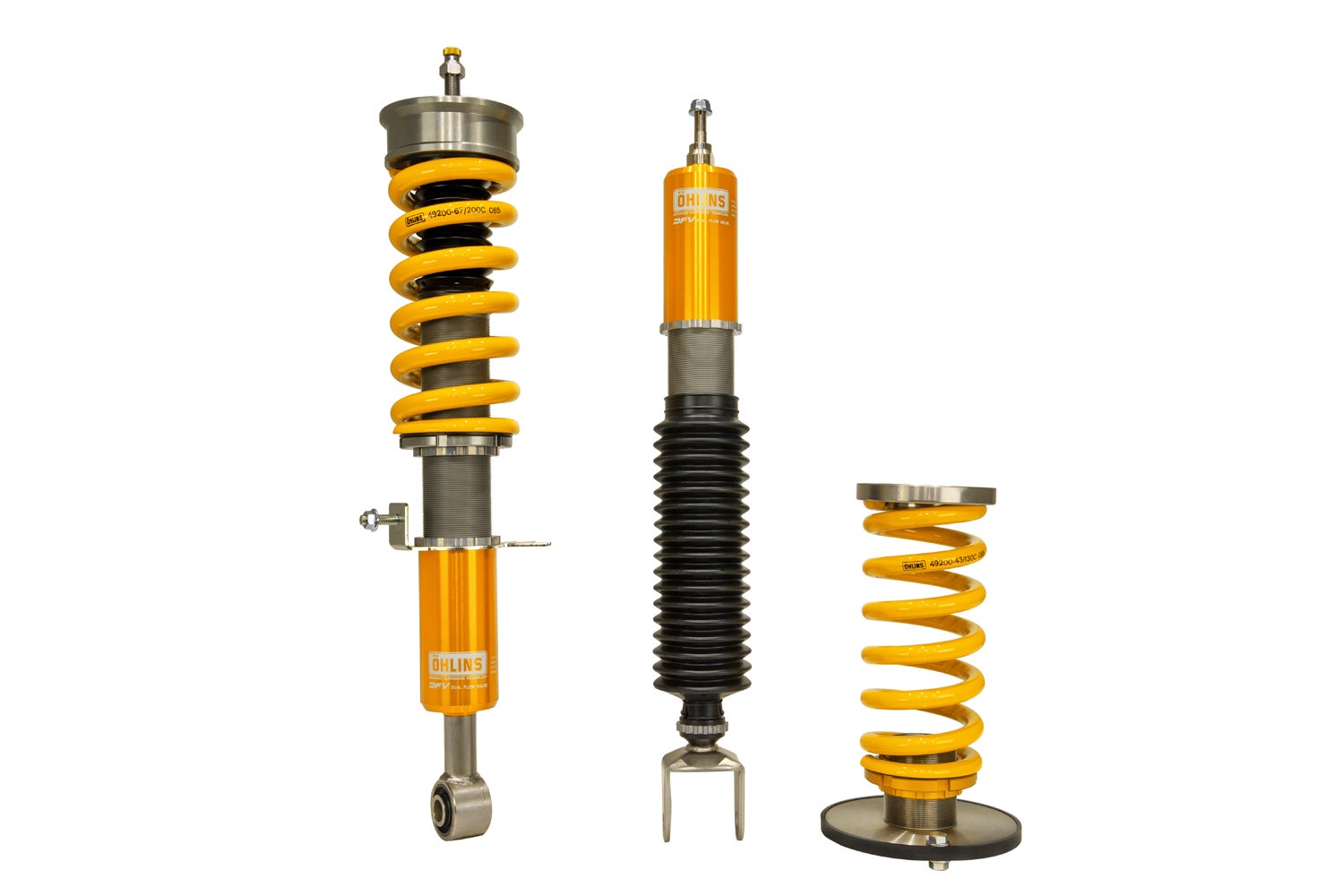
The Nissan 370Z (Z34) remains a benchmark for naturally aspirated rear-wheel-drive performance, with its most notable official lap record being a 3:07.3 at Virginia International Raceway (VIR) during the 2015 Car and Driver Lightning Lap. While it never claimed a global production car crown at the Nürburgring, its consistent sub-8:30 times and dominance in various Japanese Time Attack series at Tsukuba Circuit cemented its legacy as a formidable track-day tool.
The Nissan 370Z, produced from 2009 through 2021, represents the end of an era for Nissan’s "Z" lineage—a pure, high-revving V6 sports car without the aid of turbochargers or extensive electronic interventions. As of 2026, the 370Z is viewed by the enthusiast community as a "modern classic" that offers a raw mechanical connection often missing in newer, digitized performance vehicles. Understanding its track lap records requires looking at the car not just as a single entity, but as an evolving platform that saw significant revisions through its NISMO variants and various mid-cycle refreshes.
The Benchmark: Virginia International Raceway (VIR)
For North American enthusiasts, the gold standard for production car performance is the Car and Driver Lightning Lap, held at Virginia International Raceway’s Grand Course. This 4.1-mile circuit is notoriously difficult, featuring high-speed straights, technical "S" curves, and significant elevation changes.
The 370Z appeared at VIR several times over its decade-long production run, providing a clear look at how the chassis evolved.
- 2009 Nissan 370Z (Sport Package): In its debut year, the 370Z posted a lap time of 3:12.0. This placed it firmly in the "LL2" category (cars priced between $35k and $65k at the time). It outperformed many contemporary rivals but was noted for its cooling issues, which would become a recurring theme for the platform.
- 2011 Nissan 370Z NISMO: With revised suspension and a slight power bump, the NISMO variant trimmed the time down to 3:11.1.
- 2015 Nissan 370Z NISMO: The most significant jump occurred with the 2015 refresh, which featured improved aerodynamics and a revised 7-speed automatic transmission option (though the record was set with the 6-speed manual). It clocked a 3:07.3, a remarkable improvement that showcased the effectiveness of the NISMO-tuned suspension and downforce-oriented bodywork.
The Nürburgring Nordschleife Performance
The Nürburgring Nordschleife is the ultimate testing ground for sports cars. While Nissan famously used the Nürburgring to market the GT-R, the 370Z’s presence there was more about engineering validation than headline-grabbing records.
Nissan never released an "official" factory hero-lap for the base 370Z in the same way they did for the GT-R NISMO. However, independent testing and manufacturer-backed sessions have provided reliable data. A standard 370Z with the Sport Package typically laps the "Green Hell" in approximately 8:30.
Later NISMO versions were reportedly capable of dipping into the 8:15 to 8:20 range under optimal conditions with professional drivers. While these times are eclipsed by modern turbocharged competitors like the Supra or the new RZ34 Nissan Z, they remain respectable for a naturally aspirated car from its era. The Z34's performance at the Ring is often praised for its high-speed stability through the Flugplatz and Fuchsröhre sections, though it struggles on the long Döttinger Höhe straight compared to forced-induction rivals.
Tsukuba Circuit and the Japanese Time Attack Scene
In its homeland of Japan, the 370Z (known as the Fairlady Z Z34) is a staple of the Tsukuba Circuit. This short, technical track favors chassis balance and low-end torque over outright top speed.
- Stock Performance: A factory-spec 370Z usually laps Tsukuba in the 1:04.5 to 1:06.0 range.
- The NISMO Advantage: The Z34 NISMO versions consistently shave this down to roughly 1:03.5.
- Aftermarket Dominance: The 370Z’s true potential is often seen in the Japanese Time Attack scene. Modified Z34s from tuners like Amuse (the "Vestito" Z34) or SunLine Racing have pushed the platform into the 58-second range at Tsukuba, proving that the VQ37VHR and the FM (Front Midship) chassis have immense ceiling height when the factory cooling and weight constraints are removed.
Comparison of 370Z Track Variants
To understand the 370Z's lap record history, one must distinguish between the various trim levels. The differences in braking hardware, aerodynamic downforce, and differential types significantly impact track times.
| Variant | VIR Grand Course | Tsukuba Circuit | Key Performance Features |
|---|---|---|---|
| Base / Enthusiast | ~3:15.0 | ~1:06.5 | Open differential, smaller brakes, standard cooling. |
| Sport Package | 3:12.0 | 1:05.1 | VLSD, Akebono 4-piston brakes, 19-inch Rays wheels. |
| NISMO (2009-2014) | 3:11.1 | 1:04.2 | Increased rigidity, NISMO suspension, 350 HP. |
| NISMO (2015-2021) | 3:07.3 | 1:03.4 | Revised aero (GT-R style), improved dampers. |
| 40th/50th Anniv. | 3:11.8 | 1:05.0 | Mostly aesthetic; performance identical to Sport. |
Technical Factors Influencing 370Z Lap Times
The Nissan 370Z's lap times are a direct result of several key engineering choices, some of which helped its performance and some of which hindered it in stock form.
The VQ37VHR Engine
The heart of the 370Z is the 3.7-liter V6 featuring VVEL (Variable Valve Event and Lift). This engine produces 332 to 350 horsepower. On the track, this engine provides a linear power delivery that allows drivers to modulate the throttle mid-corner with high precision. However, the lack of low-end torque compared to modern turbocharged engines means the Z34 requires the driver to maintain high RPMs (above 5,000) to achieve record-setting laps.
The Front Midship (FM) Platform
The 370Z utilizes Nissan’s FM platform, where the engine is pushed as far back toward the firewall as possible. This results in a near 50/50 weight distribution (actually 55/45 for better front-end bite on turn-in). This layout is the primary reason the 370Z remains competitive in technical sections of tracks like VIR or Laguna Seca.
Braking and Heat Management
One of the biggest hurdles in achieving consistent lap records with the 370Z has always been heat.
- Brake Fade: The Sport and NISMO trims feature large Akebono-sourced brakes. While powerful, they suffer from lack of airflow in stock form. On tracks with heavy braking zones, such as Road Atlanta, lap times often drop after the third or fourth lap due to pedal softening.
- Oil Temperatures: The 370Z is infamous for high oil temperatures. Without an aftermarket oil cooler, the ECU will often trigger a "limp mode" (reducing RPM limits) during a hot lap in ambient temperatures above 80°F. Most "official" lap times were recorded on fresh cars in optimal, cool conditions to circumvent this.
Legacy and Comparisons
By 2026, the 370Z’s lap records are often compared to its successor, the RZ34 Nissan Z. The newer Z, with its 400 HP twin-turbo VR30DDTT engine, has predictably eclipsed the 370Z’s times. At VIR, the newer Nissan Z Performance has recorded times in the 3:02.9 range, nearly 5 seconds faster than the best stock 370Z NISMO.
However, the 370Z often holds its own against contemporary rivals from its own production window:
- vs. BMW M3 (E92): The 370Z NISMO is often neck-and-neck with the V8-powered M3 on shorter, tighter tracks, though the BMW pulls away on longer circuits.
- vs. Porsche Cayman S (987.2): The Cayman generally offers faster lap times due to its mid-engine balance and lighter weight, but the 370Z provides a similar "analog" experience for a fraction of the maintenance cost.
Practical Guidance for Achieving Records Today
If you are attempting to beat historical 370Z lap records in 2026 using a pre-owned Z34, there are several "bottleneck" areas to address. Achieving a sub-3:10 time at VIR or a sub-1:04 at Tsukuba requires more than just driver skill; it requires correcting the factory's compromises.
- Tires: Historical records were set on Bridgestone Potenza RE050A or Dunlop SP Sport MAXX GT tires. Modern "Super 200tw" tires like the Bridgestone Potenza RE-71RS or Michelin Pilot Sport Cup 2 will instantly shave 1.5 to 2 seconds off any historical 370Z lap time.
- Differential: The factory Viscous Limited Slip Differential (VLSD) is known to "open up" once the fluid gets hot, leading to poor exit speeds. Switching to a mechanical 1.5-way LSD (like Cusco or OS Giken) is the single most effective way to improve lap consistency.
- Weight Reduction: The 370Z is relatively heavy, ranging from 3,250 to 3,450 lbs. Removing the interior and switching to a lightweight exhaust can bring the car closer to 3,100 lbs, significantly improving the power-to-weight ratio.
Frequently Asked Questions
What is the fastest official lap time for a stock 370Z?
The fastest widely recognized lap time for a production-spec Nissan 370Z is 3:07.3 at the Virginia International Raceway (VIR) Grand Course, achieved by the 2015 NISMO model. On the Nürburgring, the car is generally regarded as an 8:30-range vehicle in standard trim.
Why is the 370Z NISMO faster than the base model on tracks?
The NISMO isn't just about the extra 18 horsepower. It features a significantly stiffer chassis with additional structural braces, specifically tuned Yamaha performance dampers, and a unique aerodynamic package that reduces lift at high speeds. These changes allow the NISMO to carry higher speeds through sweepers where the base car might feel unsettled.
Does the 370Z have an official Nürburgring lap record?
No, Nissan never published an official "certified" lap time for the 370Z at the Nürburgring Nordschleife. Unlike the GT-R, which was designed to break records, the 370Z was marketed as a driver's car focused on "Z-ness" (the connection between car and driver) rather than outright lap dominance.
How does the 370Z's track performance compare to the newer Nissan Z (2023+)?
The newer Nissan Z (RZ34) is significantly faster in a straight line and on the track due to its twin-turbocharged engine. The newer Z is roughly 4-5 seconds faster at VIR. However, many track enthusiasts still prefer the 370Z for its naturally aspirated throttle response and more communicative steering.
Can a 370Z sustain a full 20-minute track session?
In stock form, usually not. Without an external oil cooler, most 370Zs will hit oil temperatures of 250°F+ within 10-15 minutes of hard driving, triggering a limp mode. For anyone serious about matching historical lap records, an aftermarket 25-row or 34-row oil cooler is considered a mandatory modification.
Final Recommendation
For those looking to evaluate or purchase a 370Z for track use in 2026, focus on the 2015-2021 NISMO models. These versions represent the pinnacle of factory development and provide the most stable platform for high-speed circuit driving. If the NISMO is outside your budget, a Sport Package model (identifiable by the 19" Rays wheels and red Akebono calipers) is the necessary baseline; avoid the "Base" trim for track use as it lacks the cooling, braking, and differential hardware required to safely and effectively navigate a race circuit.