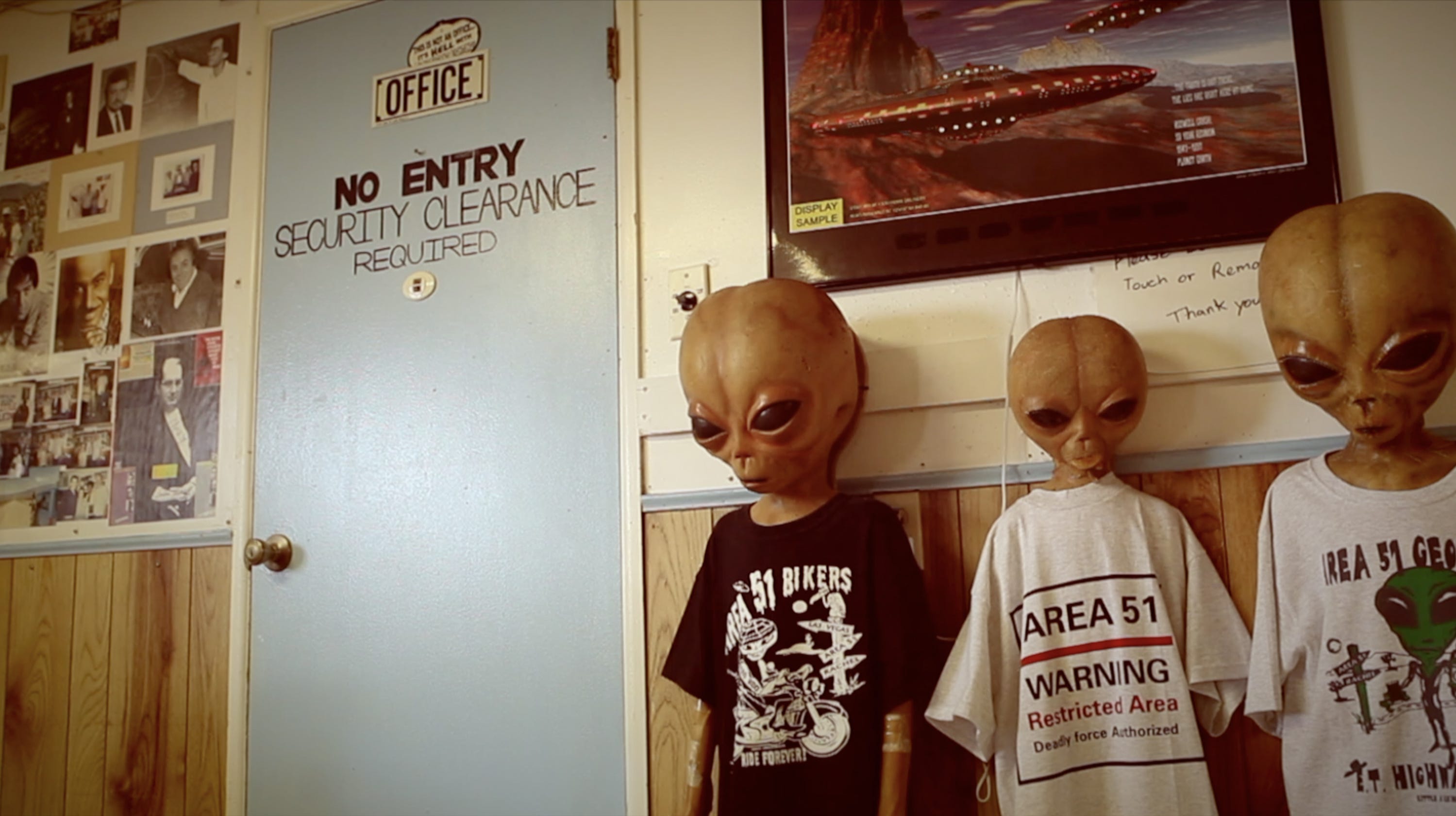
The narrative linking Bob Lazar to Area 51 remains one of the most persistent cultural phenomena in ufology. Lazar’s claim—that he was hired in the late 1980s to reverse-engineer extraterrestrial spacecraft at a clandestine facility known as S-4 near Groom Lake—fundamentally shaped modern public perception of Area 51, transforming a secretive military testing site into the epicenter of extraterrestrial conspiracy theories.
The Origins of the S-4 Narrative
In 1989, a man named Bob Lazar appeared on a Las Vegas news program, KLAS-TV, under the pseudonym "Dennis." Through investigative reporter George Knapp, Lazar alleged that he had been employed by the United States government to work on advanced propulsion systems derived from recovered alien technology. His primary claim centered on a facility referred to as S-4, located south of the main Area 51 site at Groom Lake, Nevada.
According to Lazar, the facility contained nine flying saucers housed in bunkers built into the side of a mountain. He described his role as a physicist tasked with reverse-engineering the craft's power source, which he claimed utilized Element 115 (Moscovium) as fuel. Lazar stated that the fuel operated through the generation of gravity waves, allowing the craft to manipulate space-time to travel vast distances.
This narrative provided a specific, technical vocabulary for the UFO community. By introducing terms like "gravity propulsion," "stable isotopes," and "anti-matter reactors," Lazar shifted the conversation from anecdotal sightings to a framework of speculative physics.
Investigating the Credentials Controversy
The most significant challenge to Lazar’s narrative involves his academic and professional background. Throughout the decades since his initial claims, investigators, journalists, and skeptics have attempted to verify his stated credentials. Lazar famously claimed to have earned degrees from the California Institute of Technology (Caltech) and the Massachusetts Institute of Technology (MIT).
However, exhaustive searches through institutional records, alumni registries, and faculty archives have failed to produce evidence of Lazar’s attendance or graduation from these universities. Similarly, investigations into his employment history have struggled to link him to Los Alamos National Laboratory as a physicist. While some records indicate he was a contract technician in the area during the period in question, no documentation supports his assertion that he worked as a senior researcher on top-secret defense projects.
Lazar has consistently maintained that the government engaged in a systematic effort to erase his personal history, including academic transcripts, birth certificates, and employment records, to discredit his testimony. Skeptics, conversely, argue that the absence of these records is consistent with an individual who simply did not attend those institutions.
The Technical Framework of the Lazar Claims
Lazar’s impact on the subject of Area 51 is largely due to the technical detail he provided. Regardless of the veracity of his background, the concepts he popularized—specifically concerning Element 115—remain staples in speculative science.
Element 115 (Moscovium)
When Lazar first discussed Element 115 in 1989, it had not yet been synthesized by conventional physics. In 2003, researchers at the Joint Institute for Nuclear Research in Dubna, Russia, and the Lawrence Livermore National Laboratory successfully synthesized the element. While this was a monumental achievement in nuclear chemistry, scientists quickly noted that the synthesized version is highly unstable, decaying in a fraction of a second.
Lazar’s claim requires the existence of a "stable island" of this element, capable of being mined or manufactured in large enough quantities to serve as a power source. Mainstream nuclear physics currently lacks evidence for the existence of such stable super-heavy isotopes, leaving the core of Lazar’s propulsion theory unverified by independent scientific review.
Gravity Waves and Propulsion
Lazar described the propulsion system as a method of "amplifying the strong nuclear force," which would then manifest as a gravitational distortion. While general relativity allows for the warping of space-time, the energy requirements to achieve this on the scale described by Lazar exceed any current understanding of physics. There is no publicly available experimental data to support the existence of craft that utilize gravity waves for propulsion.
Comparison of Claims vs. Recorded History
To understand the weight of the evidence, it is necessary to compare the claims made by Lazar against the verifiable history of the Groom Lake facility.
| Claim Category | Bob Lazar's Assertion | Historical/Scientific Consensus |
|---|---|---|
| Employment | Physicist at S-4 (Area 51) | No record of physicist employment. |
| Education | Degrees from MIT and Caltech | No record of attendance or graduation. |
| Element 115 | Stable, fuel for craft | Synthesized, but highly unstable/radioactive. |
| Area 51 Function | Reverse-engineering alien tech | Military aircraft development (U-2, SR-71). |
| Documentation | Erased by government | No forensic evidence of mass erasure. |
The Cultural Evolution of Area 51
Before the Lazar narrative gained traction, Area 51 was primarily known to aviation enthusiasts as the home of advanced, highly classified reconnaissance aircraft. The site hosted projects such as the Lockheed U-2, the A-12 Oxcart, and the F-117 Nighthawk. These programs were shrouded in secrecy, which inevitably led to civilian sightings of "unidentified" flying objects—most of which were later declassified as experimental military planes.
Lazar’s contribution was to provide a "science fiction" overlay to these existing military secrets. By aligning his story with the actual secrecy surrounding the Groom Lake base, he created an environment where the absence of government transparency was interpreted as confirmation of his claims. For many observers, the fact that the government denied the existence of Area 51 for years acted as a form of "proof" that they were hiding more than just conventional fighter jets.
Understanding the Skeptical Perspective
Skepticism toward the Lazar story generally follows three lines of inquiry: the documentation gap, the lack of physical evidence, and the inconsistency of his technical claims.
- The Paper Trail: Proponents of the story argue that a "shadow government" possesses the capability to strike a person from history. Skeptics note that such an operation would be unprecedented and, in an era of decentralized, globalized record-keeping, technically improbable to execute without leaving a single trace in secondary sources like yearbooks, social security records, or regional tax archives.
- The Burden of Proof: In science, the burden of proof rests on the claimant. Since Lazar has never produced a sample of the alleged alien material or provided verifiable data from his tenure at the site, his narrative remains anecdotal.
- The "S-4" Location: Geographically, the area cited by Lazar as S-4 has been surveyed extensively by private individuals using high-resolution satellite imagery and long-range optics. While there are support buildings associated with the base, no evidence of a mountain-side hangar door configuration has been corroborated by independent geologists or satellite surveillance.
The Role of Media and Documentation
It is important to acknowledge the role of documentary media in the 2026 landscape. Programs and films focused on Lazar have often highlighted his consistency over time. Supporters argue that the fact he has told the same story for nearly four decades is proof of his honesty. From a psychological perspective, however, memory consolidation can often reinforce a narrative, even if the initial premise was fabricated or misunderstood.
Journalists have noted that the "Lazar phenomenon" thrives on the intersection of genuine government secrecy and the human desire for a narrative. Area 51 serves as a blank canvas; because the public cannot see what happens behind the fence, it is easy to project any number of theories onto the location.
Practical Guidance for Researchers
For those looking to distinguish between historical facts regarding Area 51 and the claims surrounding Bob Lazar, consider the following approach:
- Consult Declassified Documents: The CIA and the Department of Defense have declassified significant portions of the histories of the U-2 and SR-71 programs. These documents detail the exact nature of the work performed at Groom Lake.
- Verify Institutional Records: If evaluating claims of academic credentials, contact the registrar’s offices directly. Institutional websites often provide search tools for degree verification.
- Distinguish Scientific Theory from Speculation: Research the difference between theoretical physics (e.g., the Alcubierre drive) and the engineering claims made by individuals. Theoretical physics operates within the constraints of mathematics; speculative claims often rely on the assertion that "unknown physics" explains the lack of empirical data.
- Analyze Geographic Data: Use official USGS (United States Geological Survey) maps of the Groom Lake area to understand the topography, rather than relying on unofficial diagrams derived from enthusiast blogs.
Frequently Asked Questions
Did the government confirm that Bob Lazar worked at Area 51?
No. There has never been an official confirmation from any government agency that Bob Lazar was employed at a facility called S-4 or worked on reverse-engineering projects.
Is Element 115 used in extraterrestrial spacecraft?
There is no scientific evidence to support this. While Element 115 (Moscovium) exists, it is a product of laboratory synthesis and is extremely unstable. It does not possess the physical properties required to act as a stable energy source in any known technology.
Why do people continue to believe the Lazar story?
The story persists because it offers a narrative explanation for the deep secrecy surrounding military bases. It aligns with long-standing public interest in UFOs and the human tendency to trust individuals who maintain a consistent, long-term position, even in the absence of hard evidence.
Can I visit the site where Lazar claims he worked?
The area surrounding the Groom Lake facility, including the perimeter of the Nevada Test and Training Range, is restricted. Unauthorized entry is a federal offense, and the perimeter is heavily monitored by military security. It is not open to the public.
How has the definition of "Area 51" changed over time?
Historically, it was a designated test range for classified military aviation. Following the rise of conspiracy theories in the late 1980s, the term has become a cultural shorthand for any government site suspected of harboring evidence of extraterrestrial life.
Conclusion and Recommendations
The case of Bob Lazar and Area 51 occupies a unique space between historical documentation and modern mythology. While the story lacks the necessary empirical evidence to satisfy the requirements of scientific verification, its influence on the cultural perception of aerospace secrecy is undeniable.
For those interested in the reality of the Nevada desert and the history of the facility, the best course of action is to focus on the declassified records of the Cold War era. Organizations like the National Archives and Records Administration (NARA) provide a factual, evidence-based view of the technological milestones achieved at Groom Lake. Readers are encouraged to prioritize primary source documentation over third-party, speculative narratives when forming conclusions about historical events. By focusing on verified history, one gains a far deeper understanding of the genuine advancements in aviation and defense that have actually occurred at this iconic location.