No, your contact lens prescription and your glasses prescription are not the same. They are fundamentally different, both in how they are measured and how they interact with your eyes. While both serve the purpose of correcting refractive errors like myopia, hyperopia, or astigmatism, they are calibrated for distinct distances from the surface of your eye and require different physical specifications.
The Fundamental Physics of Vision Correction
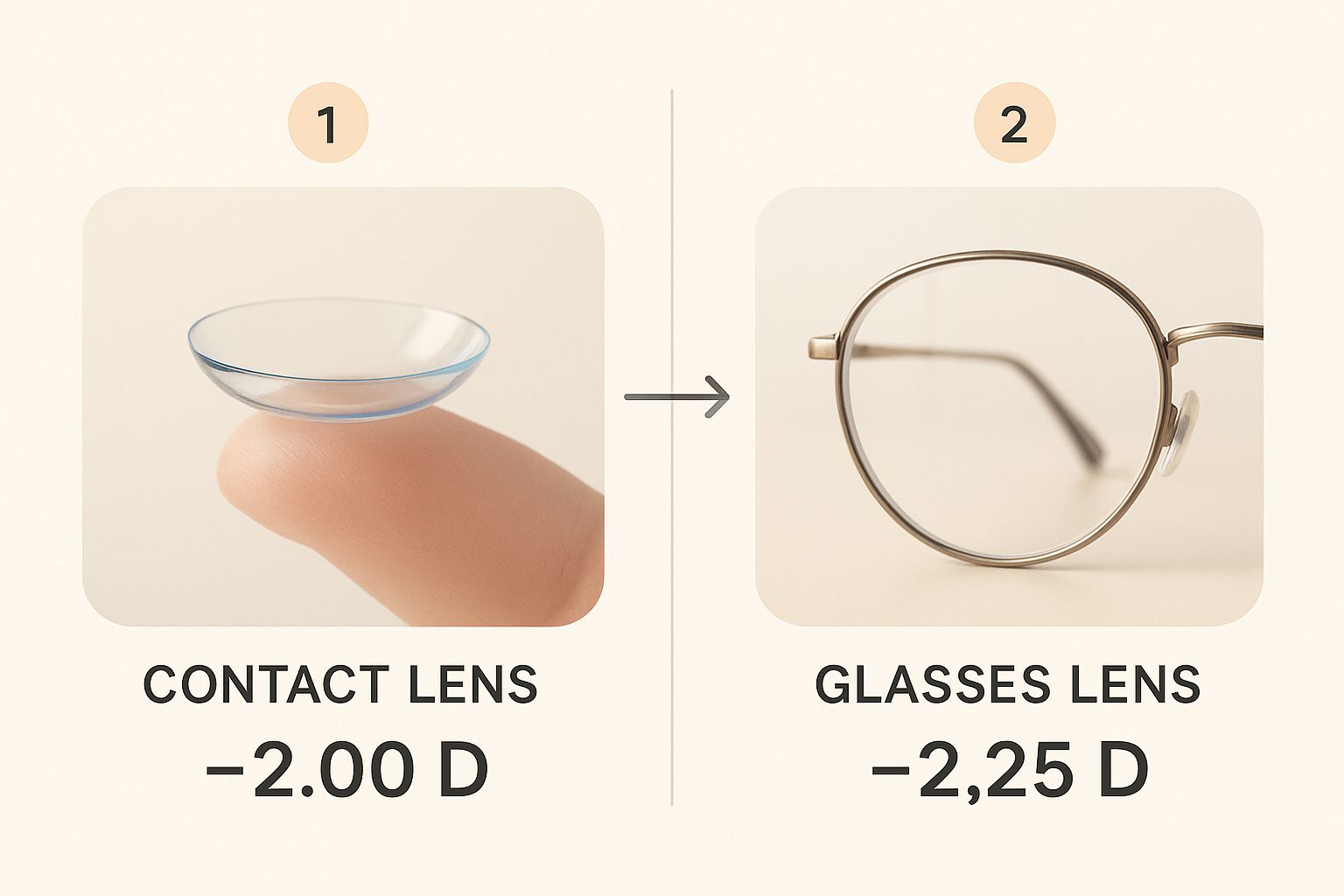
The primary reason these two prescriptions differ is the vertex distance. Glasses sit approximately 12 to 14 millimeters away from your eyes, resting on the bridge of your nose. In contrast, contact lenses sit directly on the surface of the cornea. This difference in physical placement dictates the power of the lens required to focus light onto the retina correctly.
Because glasses are positioned further away, the light rays travel a longer distance after passing through the lens before entering the eye. Contact lenses, being flush against the cornea, require a different optical strength to compensate for that lack of distance. Furthermore, your eyes may have specific curvatures that need to be accommodated by the shape of the contact lens, a requirement entirely absent from spectacle design.
Key Differences in Prescription Specifications
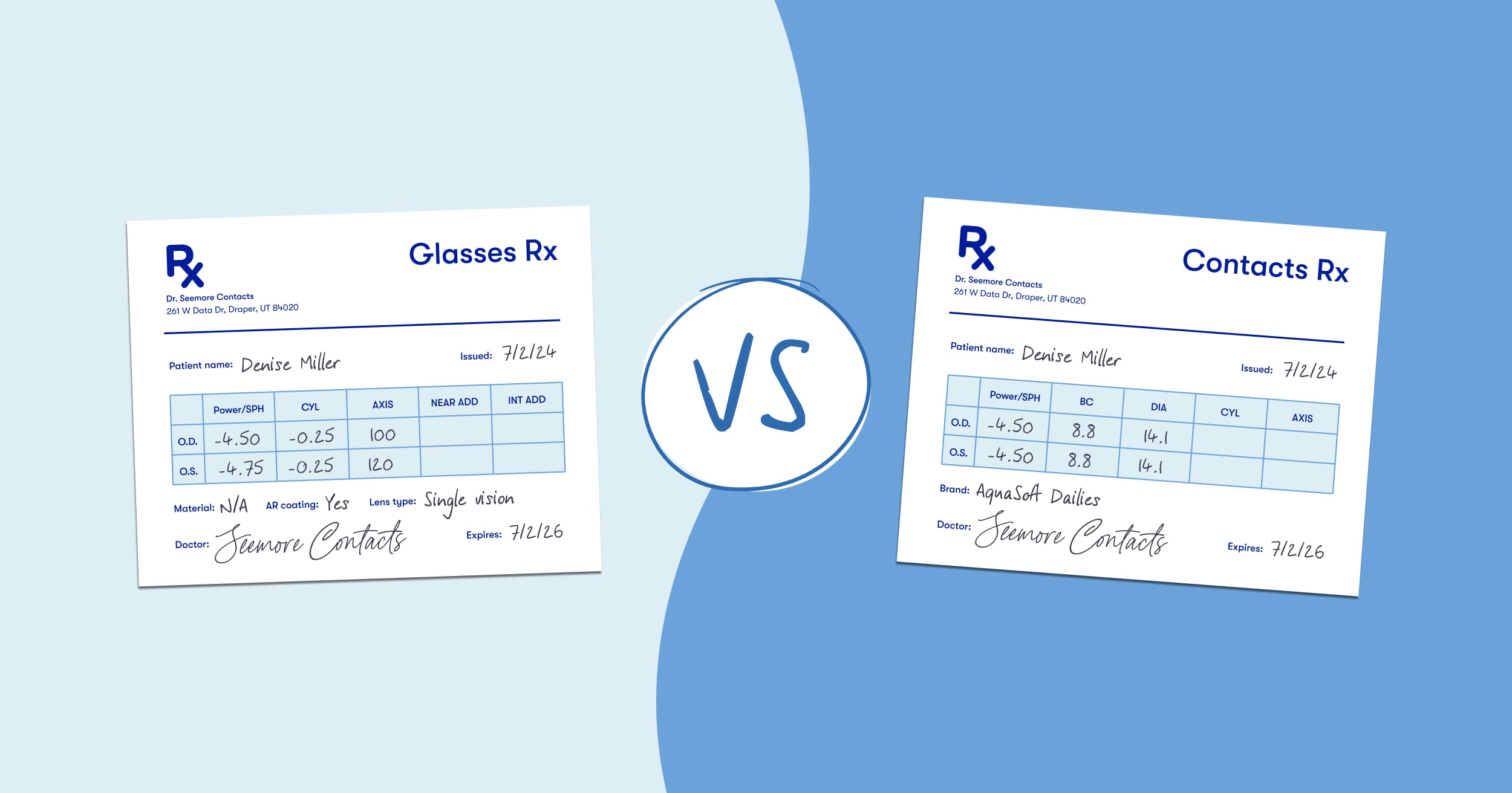
When you receive a prescription, you will notice that the contact lens version contains data points that do not appear on your eyeglasses prescription. Understanding these components is essential for anyone ordering corrective eyewear.
1. Base Curve (BC)
The Base Curve describes the curvature of the contact lens. It is measured in millimeters and determines how the lens will fit the specific curvature of your cornea. Glasses do not require a Base Curve because the lenses are held in a frame rather than needing to conform to your eye shape. If the Base Curve is incorrect, the contact lens may be too tight, causing discomfort and potential eye health issues, or too loose, causing the lens to slip or rotate.
2. Diameter (DIA)
The Diameter of a contact lens represents the width of the lens measured from one edge to the other. Like the Base Curve, this is a physical measurement designed to ensure the lens covers the cornea completely while remaining comfortable. Eyeglasses have a frame size, but they do not have a "diameter" measurement related to the surface of the eye.
3. Vertex Distance
As noted previously, the difference in focal distance is calculated by an optometrist during your fitting. While the power of your glasses (measured in diopters) might be similar in magnitude to your contact lens power, they are rarely identical. A small change in distance requires a mathematical adjustment to the lens strength to maintain visual acuity.
Why You Cannot Use One for the Other
It is a common error for patients to attempt to purchase contact lenses using the information found on their glasses prescription. This practice is dangerous and clinically ineffective for several reasons:
- Inaccurate Optical Power: Using a glasses prescription for contacts often leads to over-correction or under-correction, resulting in eye strain, headaches, and blurred vision.
- Fitment Complications: An improper fit (wrong Base Curve or Diameter) can restrict oxygen flow to the cornea. The cornea needs to "breathe" to stay healthy; a lens that is too tight can lead to hypoxia, corneal abrasions, or chronic inflammation.
- Material Sensitivity: Contact lens prescriptions often include specifications for lens material or water content, which are irrelevant to spectacle lenses but crucial for tear film stability and comfort in a contact lens user.
Standardized Comparison: Glasses vs. Contact Lens Prescriptions
| Feature | Glasses Prescription | Contact Lens Prescription |
|---|---|---|
| Primary Focus | Optical power only | Optical power, shape, and fit |
| Placement | 12-14mm from eye | Directly on the cornea |
| Base Curve (BC) | N/A | Essential for comfort/fit |
| Diameter (DIA) | N/A | Essential for coverage |
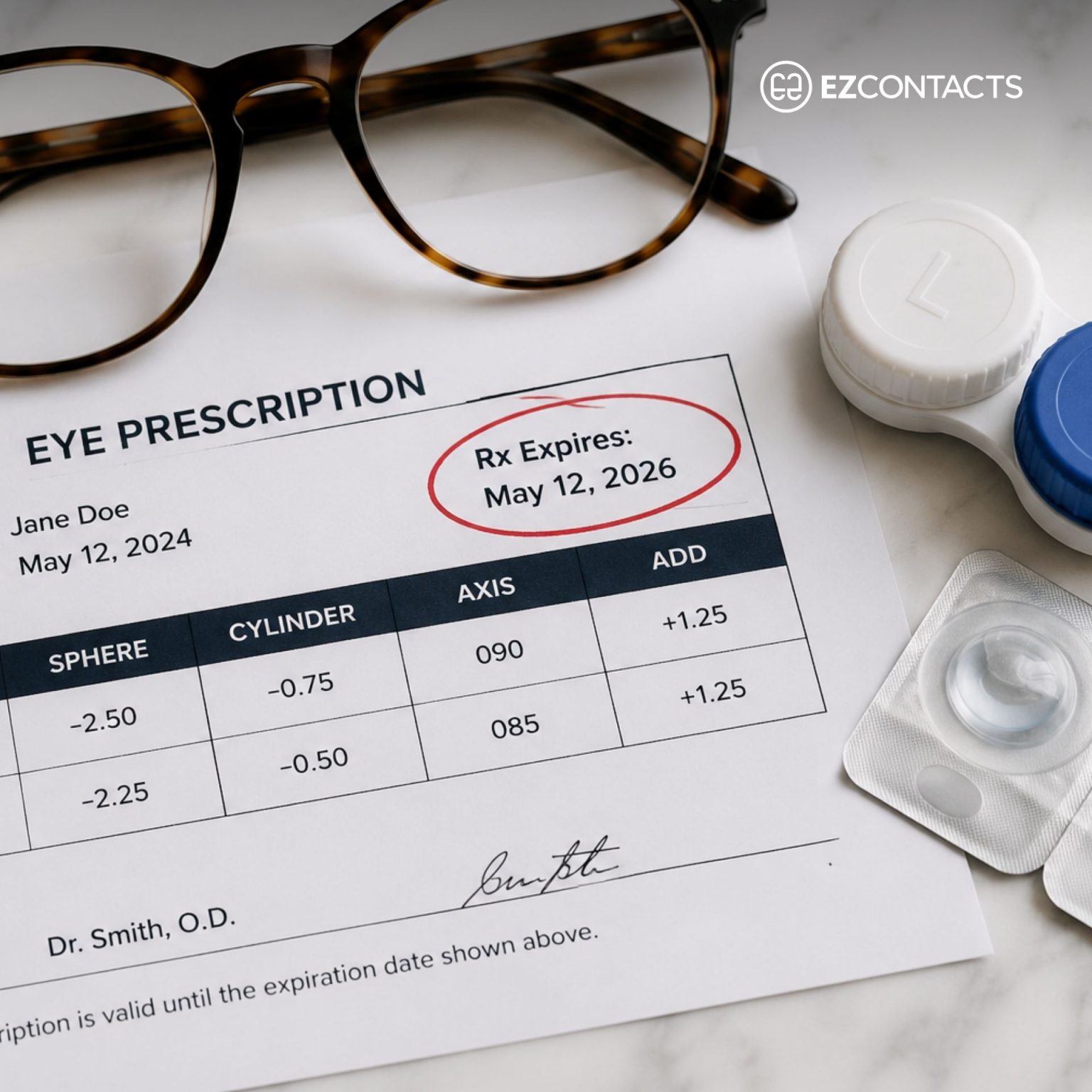
| Expiration | Typically 1–2 years | Typically 1 year |
| Material/Brand | Frame independent | Specific to brand/type |
The Importance of the Contact Lens Fitting
To obtain a contact lens prescription, you must undergo a specific contact lens fitting. Even if you have 20/20 vision with your glasses, you cannot skip this step. During a fitting, the eye care professional measures your corneal curvature using an instrument called a keratometer. They then observe how different trial lenses move on your eye when you blink and how they settle after a period of wear.
In 2026, many providers emphasize that this fitting is not just about comfort; it is a clinical assessment of how your ocular surface interacts with a foreign body. Certain conditions, such as severe dry eye or specific tear film compositions, may require specialized lens materials or shapes that go beyond standard mass-produced contact lenses.
Expiration Dates and Legal Requirements
Both types of prescriptions have expiration dates, but they are governed by different sets of administrative standards. Glasses prescriptions typically last longer because the physical shape of the eye is considered stable over a longer duration. Contact lens prescriptions often expire in one year because the health of the cornea can change based on how the eyes respond to the contacts themselves.
It is important to remember that by law in many jurisdictions, your optometrist must provide you with a copy of your prescription once a contact lens fitting is finalized. However, this document is only valid for the specific brand and parameters tested during your appointment. You cannot simply take an old prescription and order a different brand of lenses, as every brand uses unique proprietary designs and materials.
Frequently Asked Questions
Can I use my glasses power to calculate my contact lens power?
No. While there are mathematical formulas to approximate the conversion, they do not account for the physical fit of the lens, the oxygen permeability of the material, or the unique curvature of your eye. Always rely on a professional assessment.
Does a higher glasses prescription mean I need more expensive contacts?
Not necessarily. The price of contact lenses is usually driven by the lens modality (daily, bi-weekly, or monthly replacement) and the complexity of the vision correction (e.g., astigmatism correction or multifocal lenses) rather than the raw diopter power.
Can I wear the same contact lenses if I change my glasses frame?
Yes. Changing your spectacle frame does not change your contact lens prescription. However, you should still schedule routine eye exams annually to ensure your current contact lens prescription remains appropriate for your eye health.
What happens if I wear contacts with a glasses prescription?
You will likely experience significant visual discomfort. Because the vertex distance is incorrect, your eyes will have to exert extra effort to focus. This frequently results in "computer vision syndrome," dry eyes, and in extreme cases, vision that feels "distorted" or "off."
Can I use an online vision test for a contact lens prescription?
Most regulatory guidelines in 2026 do not accept simple online vision tests as a substitute for a full, in-person contact lens fitting. A contact lens fitting requires physical observation of the lens on your eye by a licensed practitioner to prevent long-term damage to the cornea.
Next Steps for Your Vision Health
If you are planning to switch from glasses to contact lenses, or if you simply wish to have both options available, the most important step is to schedule a comprehensive eye exam and a dedicated contact lens consultation. When booking your appointment, specify that you intend to wear contacts so the office can block out the additional time required for fitting and assessment.
Prioritize your eye health by following the wear-and-care instructions provided by your eye doctor. Never sleep in lenses not approved for overnight wear, and always adhere to the replacement schedule prescribed to you, as this is based on the specific material composition of the lenses you were fitted with. Your eyes are unique, and your prescription should be treated as a tailored medical specification, not a generic set of numbers.