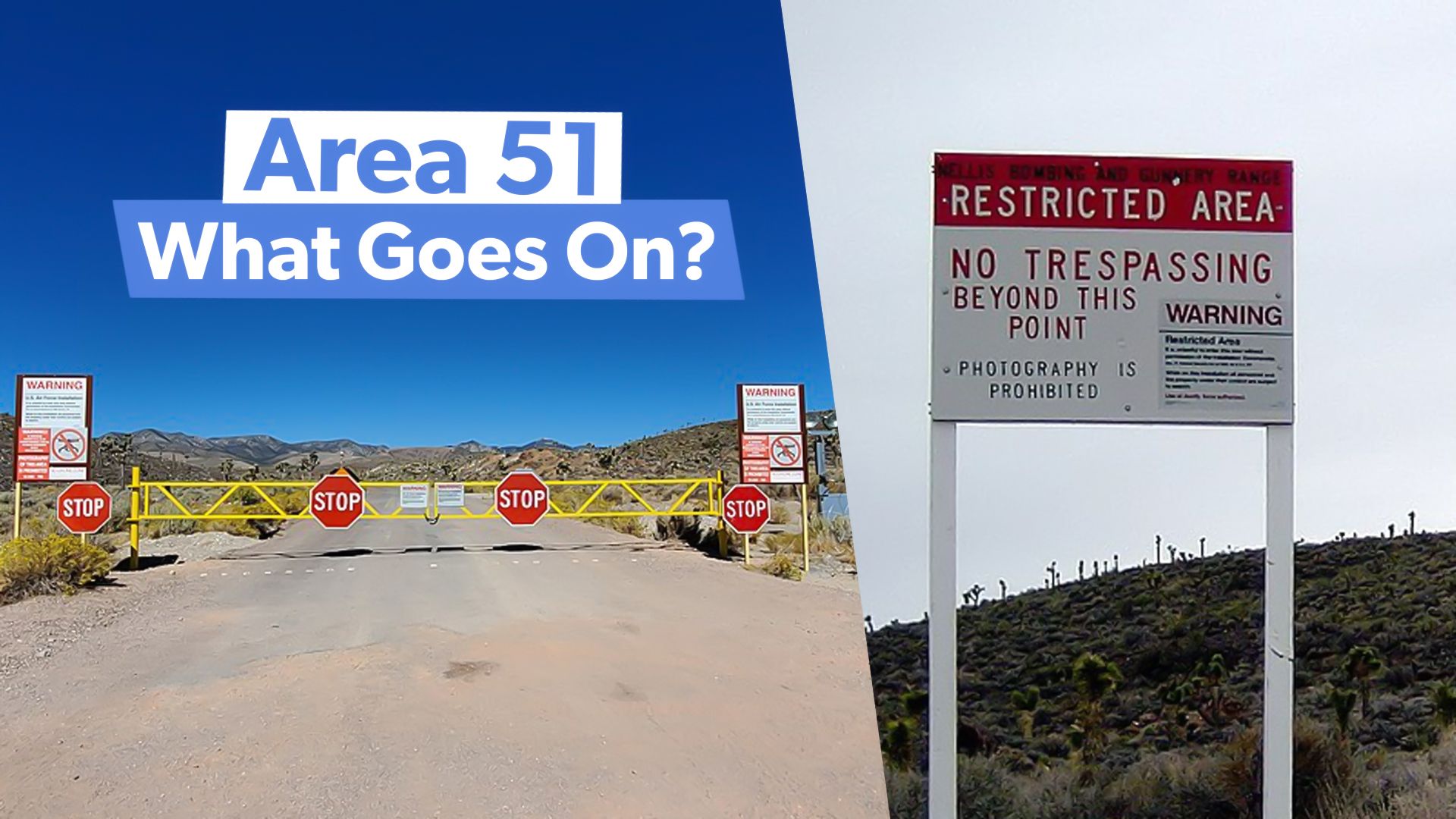
Area 51 is a highly classified United States Air Force facility located within the Nevada Test and Training Range. Officially known as Homey Airport or Groom Lake, the site has served for decades as a primary location for the research, development, and testing of advanced aerial reconnaissance and stealth technology. While it is the center of extensive cultural speculation regarding extraterrestrial life, its true history is defined by its role in clandestine Cold War aviation projects and modern aerospace engineering.
The Origins and Establishment of Groom Lake
The site now referred to as Area 51 was selected in 1955 by the Central Intelligence Agency (CIA) and the Lockheed Corporation. The primary requirement for the facility was a remote location suitable for testing the U-2 "Dragon Lady" high-altitude reconnaissance aircraft. The site’s geography—a dry lake bed surrounded by mountain ranges—provided the necessary isolation and favorable terrain for long runways and minimal observation from outside parties.
The name "Area 51" originates from a grid system used by the Atomic Energy Commission during nuclear testing in the Nevada desert. Each test area was assigned a number; Groom Lake happened to fall within parcel 51. Over the decades, the facility expanded, moving from a temporary testing site for a single aircraft program to a permanent, sophisticated aerospace research complex.
Key Aerospace Programs Conducted at Area 51
The historical significance of Area 51 is rooted in its contribution to American military aviation. The facility was the birthplace of several "Black Budget" programs—projects kept secret from the public and even from many members of Congress due to their sensitive nature.
The U-2 Reconnaissance Program
The U-2 was designed to fly at altitudes previously thought impossible, allowing the United States to conduct surveillance over the Soviet Union. Testing at Groom Lake focused on flight envelope expansion and the training of pilots who would conduct these high-stakes overflights. The secrecy of the program was absolute, necessitating the extreme measures for personnel transport and site security that persist to this day.
The OXCART (A-12) and SR-71 Blackbird
Following the U-2, the CIA initiated the OXCART program to develop a successor capable of Mach 3 speeds. The resulting A-12 aircraft, and its subsequent iteration, the SR-71 Blackbird, revolutionized reconnaissance. The extreme heat generated by friction at these speeds required specialized engineering and materials testing that could only be performed in the controlled environment of Area 51.
Stealth Technology Development
During the 1970s and 1980s, the facility became the hub for the development of low-observable, or "stealth," technology. This included the F-117 Nighthawk. Unlike previous programs, the development of stealth required unprecedented integration of computer-aided design, radar cross-section testing, and specialized manufacturing. Area 51 provided the infrastructure to integrate these systems away from the prying eyes of foreign satellite surveillance.
Comparison of Known Programs at Area 51
The table below outlines the primary aircraft and technology programs verified by declassified government documents that have utilized the Groom Lake facility.
| Program | Aircraft/Technology | Era of Testing | Primary Purpose |
|---|---|---|---|
| Project Aquatone | U-2 Dragon Lady | 1955–1960s | High-altitude surveillance |
| Project OXCART | A-12 Oxcart | 1962–1968 | Mach 3+ reconnaissance |
| Have Blue | F-117 Prototype | 1977–1981 | Radar cross-section testing |
| Tacit Blue | Stealth Technology | 1982–1985 | Battlefield surveillance |
| Foreign Materiel | Soviet-made aircraft | 1970s–1980s | Evaluating captured airframes |
The "UFO" Phenomenon and Public Perception
Much of the public fascination with Area 51 stems from the belief that the base is a storage facility for crashed extraterrestrial spacecraft and biological remains. This narrative gained significant momentum in the late 1980s and early 1990s through media coverage and individual testimonies.
Historians and intelligence analysts note that these myths were often inadvertently fueled by the military itself. Because the programs at Area 51 were so highly classified, the Air Force could not confirm what was happening at the base. When civilian pilots or observers witnessed unconventional flight patterns or unidentifiable aircraft shapes in the sky above the Nevada desert, the military was unable to provide a truthful explanation. In the absence of official facts, public imagination filled the void with speculative narratives regarding advanced or non-human technology.
Government documents released under the Freedom of Information Act (FOIA) have confirmed that many of these sightings were indeed secret military aircraft that were decades ahead of public aviation technology. The "aliens" reported by witnesses were, in many cases, early flight tests of stealth technology that defied the standard aerodynamic expectations of the time.
Security Protocols and Operational Access
Area 51 remains an active, restricted military installation. Access is strictly controlled, and the perimeter is monitored using ground sensors and patrols. Unlike a public military base, the facility is not open for tours, and it does not have a public relations office for external inquiries.
- Airspace Restrictions: The airspace surrounding Groom Lake, often referred to as "The Box," is permanently restricted. Civilian aircraft are prohibited from entering this zone, and automated tracking systems monitor all activity.
- Personnel Transport: Workers at the site are typically flown in from specific locations in Las Vegas on private, unmarked charter aircraft, a process designed to minimize the footprint of the workforce and maintain the security of the commute.
- Legal Status: The U.S. government did not officially acknowledge the existence of "Area 51" by name until 2013, when the CIA released a declassified history of the U-2 program. Prior to that, the base was referred to by various operational names.
The Role of Foreign Materiel Evaluation
One of the more tangible and less-discussed roles of the facility has been the exploitation of foreign technology. During the Cold War, the U.S. successfully acquired several Soviet-era fighter aircraft through defection or clandestine means. These aircraft, such as the MiG-21 and MiG-23, were flown at Groom Lake to assess their performance, identify their vulnerabilities, and train U.S. pilots on how to counter them in combat. This "Foreign Materiel Evaluation" is a standard practice in global intelligence, though the nature of the secrecy at Area 51 gave these operations a unique, clandestine dimension.
Environmental and Health Considerations
Beyond the technological history, there have been legal challenges regarding the environmental impact of activities at the base. In the 1990s, former civilian contractors filed lawsuits against the Air Force and the Environmental Protection Agency (EPA), alleging that they had been exposed to toxic chemicals burned in open pits at the site. These workers claimed that they suffered long-term health complications due to the inhalation of hazardous materials used in stealth aircraft production.
The government successfully invoked the "State Secrets Privilege" to prevent the disclosure of classified information during these proceedings, effectively stalling the lawsuits. This demonstrated the immense power of the government to shield its operations at the base from legal discovery, highlighting the tension between national security and the rights of government employees.
Frequently Asked Questions (FAQ)
Is Area 51 still in operation today? Yes. As of 2026, the facility remains an active, highly restricted site. It continues to be used by the U.S. Air Force and various intelligence agencies for the testing of advanced aviation technologies and electronic warfare systems.
Can members of the public visit Area 51? No. The base is surrounded by a restricted zone that is heavily guarded. While there are public roads near the border of the Nevada Test and Training Range, crossing the boundary markers is illegal and carries significant penalties, including arrest and heavy fines.
What is the "Black Budget"? The "Black Budget" refers to funding allocated for classified government projects that are not disclosed to the public or broken down in standard budget reports. Area 51 is a primary recipient of this funding to ensure that research into sensitive military technologies remains hidden from foreign adversaries.
Did the government ever admit to what happens at Area 51? The government has acknowledged that Area 51 is a research and testing facility for aviation technology. However, it maintains that the specific projects currently under development are classified for national security reasons. It has consistently denied the presence of extraterrestrial materials.
Why is there so much focus on extraterrestrials at this base? The focus on extraterrestrials is largely a cultural phenomenon born from the secrecy of the base. Because the military could not disclose the nature of experimental aircraft, the resulting mystery encouraged public speculation, which was eventually absorbed into mainstream pop culture.
Recommendations for Further Research
For those interested in the authentic history of the base, the most reliable information is found in declassified government archives. Specifically, the CIA’s "The Central Intelligence Agency and Overhead Reconnaissance: The U-2 and Oxcart Programs" provides a detailed account of the early years of the site. When researching, prioritize documentation released via official FOIA requests from agencies like the National Archives and Records Administration, as these records provide the factual baseline for all verified activity at Groom Lake.