Architecture professional liability insurance, commonly referred to as Errors and Omissions (E&O) coverage, protects design professionals against financial loss resulting from claims of negligence or mistakes in their professional services. It covers legal defense costs and settlement fees when a client alleges that an architect's design, specifications, or advice caused them financial harm.
In the complex landscape of 2026, where integrated project delivery and sustainable material technologies have introduced new layers of risk, understanding professional liability insurance (PLI) is no longer just a contractual box to check—it is a cornerstone of firm survival. This guide breaks down the mechanics, coverage nuances, and strategic importance of PLI for modern architectural practices.
The Foundational Concept of Professional Liability
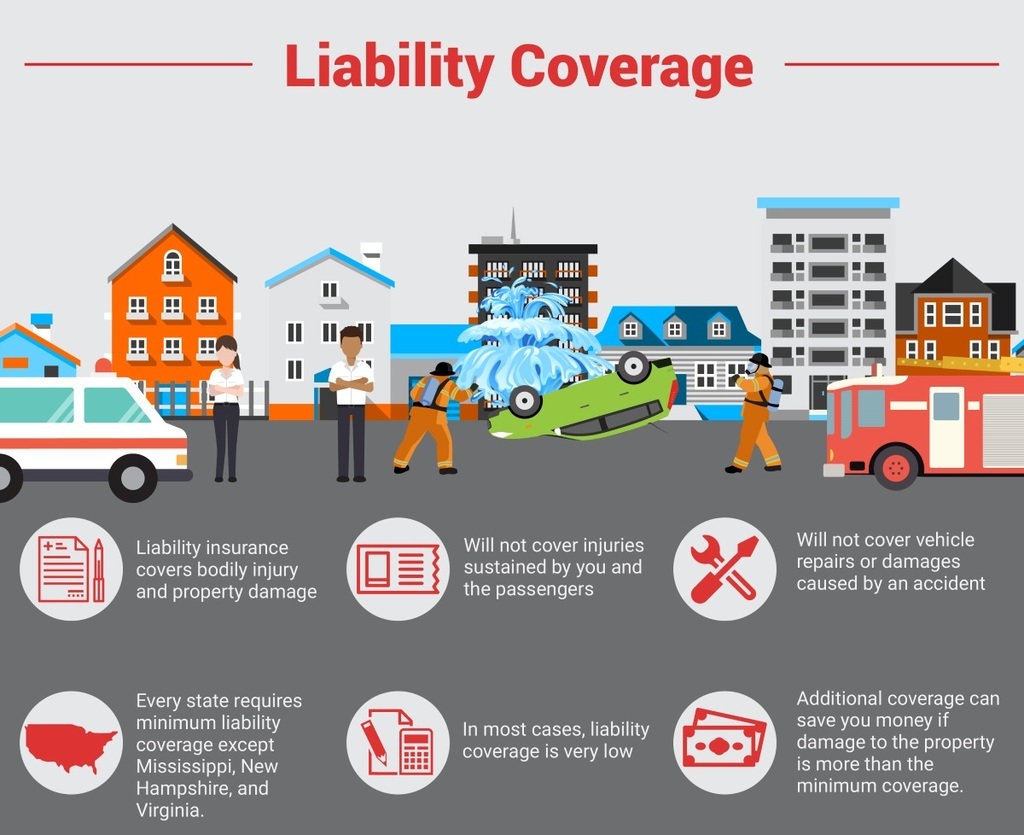
Unlike General Liability insurance, which addresses physical injuries or property damage (such as a visitor tripping in your office), Professional Liability insurance focuses on the intangible products of an architect's mind: their designs, advice, and technical specifications. The core of any PLI claim is the allegation that the architect failed to meet the Standard of Care.
The Standard of Care is a legal benchmark. It does not require an architect to be perfect or to produce a flawless set of drawings. Instead, it requires the architect to perform with the same degree of skill and care ordinarily exercised by other qualified architects practicing under similar circumstances, at the same time, and in the same locality. If a design leads to a structural failure, a massive budget overrun due to drafting errors, or a violation of local building codes, the architect may be held liable for the resulting "economic loss" to the owner.
In 2026, the Standard of Care is increasingly influenced by digital transformation. As Building Information Modeling (BIM) and AI-assisted design become the industry norm, the expectations for precision and coordination have shifted. PLI provides the financial buffer necessary to defend against claims where these technologies might have been misused or where data interoperability caused a critical oversight.
What Does Architecture Professional Liability Insurance Cover?
A robust PLI policy is designed to address a wide spectrum of professional failures. In the current market, these policies have evolved to cover not just traditional drafting errors but also management and coordination failures.
Design Errors and Omission
This is the most frequent trigger for claims. An error is a mistake in the design that requires correction (e.g., a window scheduled for the wrong size). An omission is something forgotten entirely (e.g., failing to specify a necessary flashing detail in a moisture-prone area). PLI covers the costs associated with these mistakes, including the legal fees required to prove that the architect did or did not meet the Standard of Care.
Coordination of Consultants
Architects often act as the "Prime Consultant," hiring structural, MEP (mechanical, electrical, plumbing), and landscape engineers. If a sub-consultant makes a mistake, the owner typically sues the architect first because that is where the primary contract exists. While the architect can seek "contractual indemnification" from the consultant, their own PLI policy usually steps in first to manage the defense. This is known as vicarious liability.
Construction Administration and Observation
Claims often arise not from the drawings themselves, but from the architect's role during construction. If an architect fails to notice that a contractor is installing non-compliant materials during a site visit, the owner may claim the architect was negligent in their "observation" duties. Modern policies in 2026 specifically address these phases, providing coverage for disputes regarding Change Order reviews and RFI (Request for Information) response times.
Delay Claims and Budgetary Overruns
If an error in the design documents leads to a work stoppage or requires extensive rework, the project schedule can slip. In the high-interest environment of 2026, project delays translate into significant carry costs for developers. PLI can protect an architect if they are held liable for these consequential financial damages, provided the delay was caused by a professional error.
The Mechanics of "Claims-Made" Policies
One of the most critical aspects of architecture professional liability insurance is that it is almost universally written on a claims-made basis. This differs significantly from the "occurrence" policies used for auto or home insurance.
Under a claims-made policy, the insurance that is currently in effect at the time the claim is made is the policy that responds, regardless of when the actual design work was performed. However, two conditions must be met:
- The claim must be reported during the policy period.
- The error must have occurred after the policy's Retroactive Date.
The Retroactive Date is typically the first day the firm purchased PLI and has since maintained continuous coverage. If a firm allows its policy to lapse for even one day, they lose their retroactive date, effectively "wiping out" coverage for all past projects. This is why maintaining continuous coverage is the most important rule of risk management for architects.
The Importance of "Tail Coverage"
When an architect retires or closes their firm, they remain liable for their past work for a period defined by the local Statute of Repose (often 6 to 10 years depending on the jurisdiction). To protect themselves during this period, they must purchase an Extended Reporting Period (ERP), commonly known as Tail Coverage. This allows claims to be filed for work done in the past, even though the firm is no longer active.
Cost Factors and Premium Drivers in 2026
Insurance premiums for architects are not arbitrary; they are based on a complex risk profile. Understanding these factors can help a firm lower its costs over time.
- Firm Revenue: Generally, the more work a firm does, the higher the premium. Insurance companies use billings as a proxy for exposure.
- Project Type: This is a major driver. Residential condominiums and multi-family housing are historically the highest-risk sectors due to the high frequency of homeowner association (HOA) lawsuits. Conversely, master planning and interior design are often viewed as lower risk.
- Claims History: A firm with a "clean" loss run (no claims in the last 5 years) will see significantly lower rates than a firm with frequent litigation.
- Risk Management Practices: Many insurers in 2026 offer premium credits (often 5-10%) to firms that use standard American Institute of Architects (AIA) or EJCDC contracts, which contain limit-of-liability clauses and clear scopes of work.
- Location: Certain states or provinces are known for "judicial hellholes" where litigation is more frequent and settlements are higher, leading to higher localized premiums.
Comparing Insurance Types for Architects
It is common for new practitioners to confuse different types of business insurance. The following table clarifies the distinctions between the primary coverages required in 2026.
| Feature | Professional Liability (PLI/E&O) | General Liability (GL) | Workers' Compensation |
|---|---|---|---|
| Primary Trigger | Design errors, negligence, omissions. | Third-party bodily injury or property damage. | Employee injury or illness on the job. |
| Example Scenario | A balcony collapses due to a structural calculation error. | A client slips on a wet floor in the architect's lobby. | A drafter develops carpal tunnel or trips in the office. |
| Focus | Financial/Economic loss. | Physical/Tangible loss. | Statutory employee protection. |
| Policy Basis | Usually Claims-Made. | Usually Occurrence. | Statutory. |
| Defense Costs | Usually "inside" the limit (erodes the limit). | Usually "outside" the limit (additional to the limit). | Set by state/regional law. |
Emerging Risks: The 2026 Landscape
As we navigate 2026, several new risk factors have entered the architectural professional liability sphere.
Sustainability and Performance Guarantees
With stricter energy codes and carbon-neutral mandates, architects are often pressured to "guarantee" a building's performance (e.g., Net Zero status). However, PLI policies generally exclude coverage for "warranties and guarantees." If an architect signs a contract promising a specific energy outcome and the building fails to meet it, the insurance company may deny the claim, leaving the firm to pay for the "fix" out of pocket.
Cyber-Physical Risks
As buildings become "smart" and interconnected, a design flaw in the building's digital infrastructure could lead to a cyber breach or physical system failure. Modern PLI policies are increasingly being integrated with Cyber Liability to cover the overlap between a design error and a digital vulnerability.
Integrated Project Delivery (IPD) and BIM
In 2026, the lines between the architect, engineer, and contractor are blurring. In IPD models, where risks and rewards are shared, determining who is responsible for a specific "clash" in a BIM model can be difficult. Insurers are now offering "Project Specific" PLI policies to cover all design professionals on a single project, which eliminates the finger-pointing that often occurs in traditional litigation.
Defense Costs and the "Hammer Clause"
A unique feature of most PLI policies is that defense costs are "inside" the limits. This means that if you have a $1 million policy and the insurance company spends $300,000 on lawyers to defend you, you only have $700,000 left to pay for a settlement or judgment. In long, drawn-out architectural lawsuits, legal fees can quickly erode the available coverage.
Furthermore, most policies contain a "Consent to Settle" clause, sometimes called a Hammer Clause. If the insurance company wants to settle a claim for $100,000 but the architect refuses because they want to clear their name, the insurer may cap their liability at that $100,000. If the architect goes to court and loses for $500,000, they are responsible for the $400,000 difference.
How to Choose the Right Coverage
Selecting a policy requires more than just looking at the premium. Architects should evaluate:
- The Deductible: Ensure the firm has enough cash on hand to pay the deductible if a claim is filed. Many firms in 2026 utilize "Small Firm Programs" with deductibles as low as $1,000 to $5,000.
- The Carrier's Reputation: Look for "A-rated" carriers through agencies like A.M. Best. Architecture claims can last years; you need a carrier that will be solvent a decade from now.
- Specific Endorsements: Does the policy cover "Pollution" (essential if you deal with asbestos or site remediation) or "Cyber" risks?
- Prior Acts Coverage: Ensure the policy covers all work done since your original Retroactive Date.
Frequently Asked Questions
Is professional liability insurance legally required for architects?
In most jurisdictions, PLI is not legally mandated by the licensing board to hold an architectural license. However, it is a near-universal requirement in commercial contracts and is often required by lending institutions for any financed project. Practically speaking, it is impossible to run a professional firm without it.
What is a "Limit of Liability" clause in a contract?
A Limit of Liability (LoL) is a contractual agreement where the client agrees to limit the architect's total liability to a specific amount—often the architect's fee or the available insurance limit. These are highly effective risk management tools, and insurers often give premium discounts to firms that successfully include them in their client agreements.
Does PLI cover me if I work as a sub-consultant?
Yes, your PLI policy generally follows you whether you are the "Prime" or a "Sub." However, if you are a sub-consultant, the Prime architect will likely require you to provide a Certificate of Insurance (COI) proving you have your own coverage so they are not held responsible for your mistakes.
Can I buy insurance for just one specific project?
Yes. This is called Project Specific Professional Liability. It is common for very large or high-risk projects (like airports or stadiums). The benefit is that the limits are dedicated only to that project and do not get eroded by claims on the firm’s other work. However, these policies are significantly more expensive than annual practice policies.
What should I do if I suspect a mistake but no claim has been made?
Most 2026 policies include a "Pre-Claims Assistance" provision. If you discover an error, you should report it to your carrier immediately. They can often provide a "circumstance" file and pay for an expert or mediator to help fix the problem before it turns into a formal lawsuit. This help is often provided without a deductible and does not count as a formal claim.
Strategic Recommendation
For architects operating in 2026, professional liability insurance should be viewed as a dynamic part of the design process, not a static overhead cost. The first step for any firm—whether a sole proprietor or a large corporation—is to partner with a specialist insurance broker who understands the design industry. Standard "main street" brokers often miss the nuances of claims-made triggers and retroactive dates.
To minimize exposure, firms should combine their insurance coverage with rigorous internal quality control, the use of industry-standard contracts, and a culture of proactive communication with clients. By the time a lawyer is involved, the most effective risk management opportunities have usually passed. Use your insurance as a safety net, but build your practice on a foundation of documented, defensible professional standards.