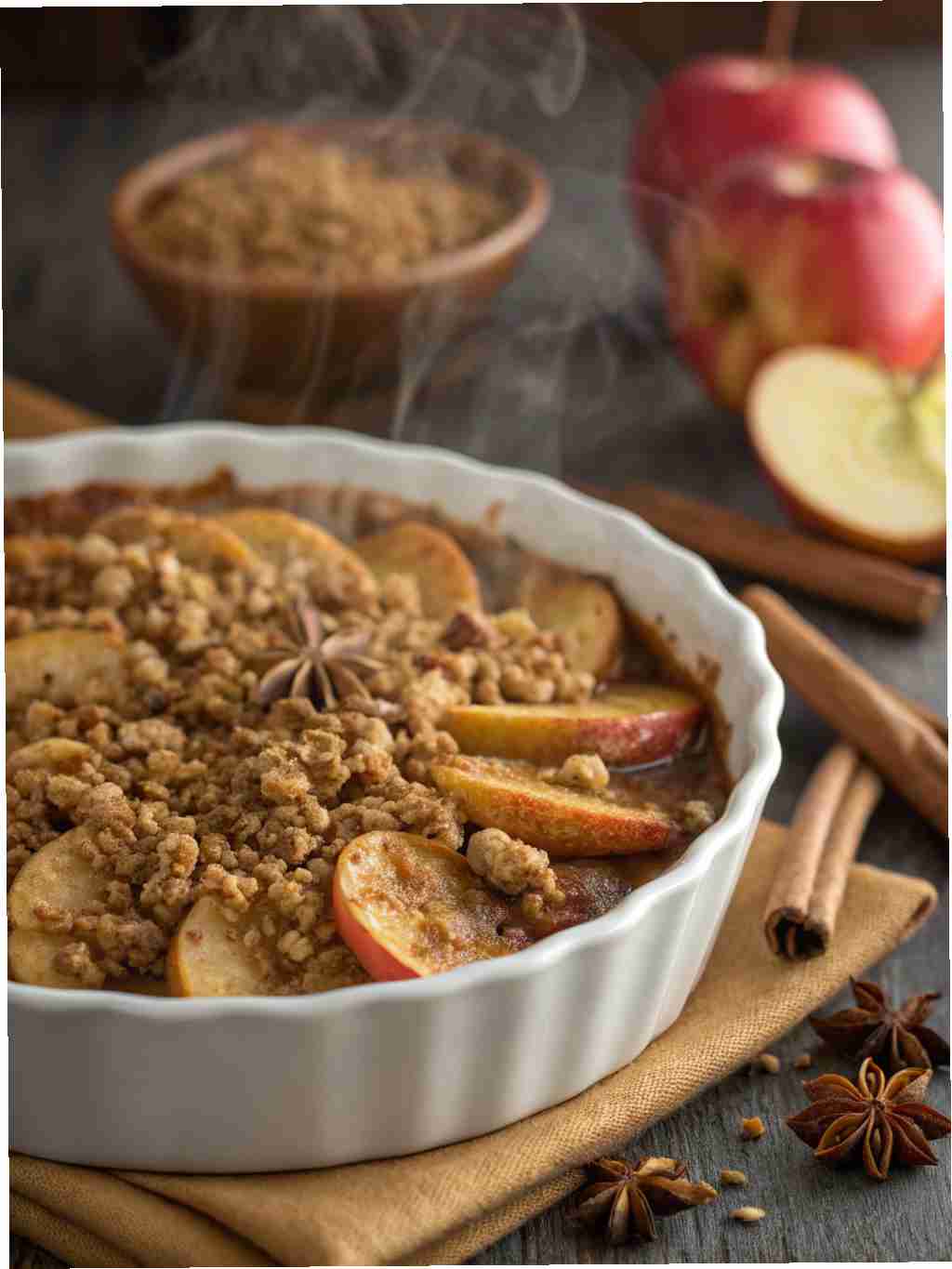
In Spanish, "apple crisp" is most accurately translated as crujiente de manzana. In many Spanish-speaking regions and modern culinary contexts, it is also frequently referred to as crumble de manzana con avena or postre crujiente de manzana. The term directly captures the dessert's signature texture—baked tender apples topped with a sweet, crunchy oat crust.
Translation and Linguistic Nuances of "Apple Crisp" in Spanish
Translating Western baked goods into Spanish requires an understanding of both literal vocabulary and regional culinary conventions. Unlike basic fruit terms, composite dessert names often blend literal translations with borrowed culinary terms.
- "Apple Crisp" in Spanish
- Formal / Main: Crujiente de manzana
- Loan Word: Crumble de manzana (con avena)
- Descriptive: Postre de manzana con cubierta crujiente
Primary Spanish Translations
- Crujiente de Manzana: This is the most accurate direct translation. Crujiente acts as a noun meaning "crisp" or an adjective meaning "crunchy," while de manzana specifies the fruit base.
- Crumble de Manzana con Avena: Because English baking terms have entered global culinary vocabulary, many cookbooks and restaurants in Spain and Latin America use the borrowed word crumble. Adding con avena (with oats) distinguishes an American-style crisp from a standard flour-based crumble.
- Postre de Manzana Crujiente: Translates to "crunchy apple dessert," commonly used on restaurant menus to clarify the style of dish to diner audiences unfamiliar with Anglo-American baked desserts.
Regional Variations Across the Spanish-Speaking World
Spanish is spoken across more than twenty countries, leading to subtle variations in how baked goods are named and described:
- Spain: The phrase crujiente de manzana is standard in contemporary baking literature. However, modern pastry shops (pastelerías) frequently list it as crumble de manzana, reflecting European pastry influences.
- Mexico and Central America: You will often see crujiente de manzana or postre de manzana horneada con avena. When brown sugar or unrefined cane sugar is highlighted, it may be referenced in relation to local ingredients like piloncillo.
- South America (Argentina, Chile, Colombia): In South America, crumble de manzana is widely understood due to European immigration and culinary influences. In Colombia, unrefined sugar toppings may reference panela.
Distinguishing Apple Crisp, Crumble, and Cobbler in Spanish
In English-speaking culinary traditions, clear technical boundaries separate a crisp, a crumble, and a cobbler. In Spanish, these distinctions require explicit descriptive phrases, as single-word equivalents do not exist for every style.
| English Term | Primary Spanish Translation | Key Technical Distinction in Spanish |
|---|---|---|
| Apple Crisp | Crujiente de manzana (con avena) | Features rolled oats (avena) and nuts for a crisp, crunchy topping. |
| Apple Crumble | Crumble de manzana / Manzana desmoronada | Traditional pastry topping of flour, butter, and sugar (usually without oats). |
| Apple Cobbler | Cobbler de manzana / Pastel de manzana estilo galleta | Topped with drop biscuit dough or a thick batter that bakes into a biscuit. |
The Role of Oats (La Avena)
The defining component of an American apple crisp is rolled oats mixed into the butter, flour, and brown sugar topping. When translating recipes into Spanish, specifying avena en hojuelas (rolled oats) is essential to preserve the authentic crisp structure. Without oats, Spanish speakers will interpret the dessert simply as a tarta or crumble de manzana.
Bilingual Glossary for Baking Apple Crisp
Navigating a recipe in Spanish requires familiarity with specific baking ingredients, units of measure, and kitchen equipment. The following reference table provides the exact terminology used in professional Spanish recipes.
| English Baking Term | Spanish Translation | Pronunciation (Phonetic) | Culinary Notes / Regional Synonyms |
|---|---|---|---|
| Apple Crisp | Crujiente de manzana | kroo-HYEN-teh deh mahn-ZAH-nah | Standard name in formal recipes |
| Apples | Manzanas | mahn-ZAH-nahs | Granny Smith = manzana verde |
| Rolled Oats | Avena en hojuelas | ah-VEH-nah en oh-HWEH-lahs | Also called avena enrollada |
| Brown Sugar | Azúcar moreno | ah-THOO-kar moh-REH-noh | Azúcar mascabado, piloncillo, or panela |
| All-Purpose Flour | Harina de trigo de todo uso | ah-REE-nah deh TREE-goh | Simply harina común in Latin America |
| Unsalted Butter | Mantequilla sin sal | mahn-teh-KEE-yah seen sahl | Called manteca in Argentina/Uruguay |
| Ground Cinnamon | Canela en polvo | kah-NEH-lah en POHL-boh | Key spice in the apple mixture |
| Ground Nutmeg | Nuez moscada | nweth mos-KAH-dah | Used sparingly for aromatic warm spice |
| Vanilla Extract | Extracto de vainilla | eks-TRAHK-toh deh bahy-NEE-yah | Essence = esencia de vainilla |
| Lemon Juice | Jugo de limón / Zumo de limón | HOO-goh / THOO-moh deh lee-MOHN | Zumo in Spain; Jugo in Latin America |
| Baking Dish | Molde para horneado | MOHL-deh PAH-rah or-NEH-ah-doh | Ceramic or glass baking pan |
| Preheat Oven | Precalentar el horno | preh-kah-lehn-TAHR el OR-noh | Standard recipe instruction |
Essential Ingredients and Chemical Roles in Spanish Baking
To execute an authentic crujiente de manzana, understanding the role of each ingredient ensures the crisp achieves its intended balance of tender fruit and crunchy topping.
- [ Top Layer: La Cubierta Crujiente ]
- Rolled Oats (Avena en hojuelas)
- Brown Sugar (Azúcar mascabado/moreno)
- Flour (Harina de trigo)
- Cold Butter (Mantequilla fría)
- [ Bottom Layer: El Relleno de Manzana ]
- Tart Apples (Manzanas verdes / Granny Smith)
- Cinnamon & Nutmeg (Canela y nuez moscada)
- Lemon Juice (Jugo de limón)
- Cornstarch (Fécula de maíz)
Apple Selection (Selección de Manzanas)
The best apples for a crisp are firm, tart varieties that maintain structural integrity during high-heat baking.
- Granny Smith (Manzana verde): High acidity balances the sweet topping, preventing the dish from becoming cloying.
- Honeycrisp or Fuji: Provide natural sweetness and crisp structure when blended with tart apples.
- Preparation: Apples should be peeled (peladas), cored (descorazonadas), and sliced into uniform pieces (cortadas en láminas o cubos).
Sweeteners and Moisture Control (Azúcares y Humedad)
- Azúcar Moreno / Mascabado: Brown sugar supplies moisture and caramel notes due to its molasses content. In Mexico, grated piloncillo is an authentic unrefined substitute; in Colombia, panela rallada yields a similar rich flavor profile.
- Fécula de Maíz (Cornstarch): Adding a small tablespoon of cornstarch to the spiced apple mixture binds excess fruit juices released during baking, preventing a soggy base.
Step-by-Step Recipe: Authentic Crujiente de Manzana
This standard recipe yields six servings of classic apple crisp, presented with clear Spanish instructions alongside English explanations.
Preparation Overview
- Prep Time (Tiempo de preparación): 20 minutes
- Bake Time (Tiempo de horneado): 40–45 minutes
- Oven Temperature (Temperatura del horno): 175°C (350°F)
Ingredients (Ingredientes)
For the Apple Layer (Para el relleno de manzana):
- 6 medium tart apples (6 manzanas medianas, preferentemente Granny Smith)
- 1 tablespoon lemon juice (1 cucharada de jugo de limón)
- 2 tablespoons granulated sugar (2 cucharadas de azúcar blanca)
- 1 teaspoon ground cinnamon (1 cucharadita de canela en polvo)
- 1 tablespoon cornstarch (1 cucharada de fécula de maíz o maizena)
For the Crisp Topping (Para la cubierta crujiente):
- 1 cup rolled oats (1 taza de avena en hojuelas)
- 1/2 cup all-purpose flour (1/2 taza de harina de trigo de todo uso)
- 1/2 cup brown sugar (1/2 taza de azúcar moreno o mascabado)
- 1/2 teaspoon ground cinnamon (1/2 cucharadita de canela en polvo)
- 1/4 teaspoon salt (1/4 de cucharadita de sal)
- 1/2 cup cold unsalted butter, cubed (1/2 taza de mantequilla sin sal, fría y cortada en cubos)
Step-by-Step Instructions (Instrucciones Paso a Paso)
Step 1: Prepare the Oven and Dish (Preparar el horno y el molde)
Preheat your oven to 175°C (350°F). Grease an 8x8-inch baking dish (engrasar un molde para horno de 20x20 cm) with a small amount of butter.
Step 2: Prepare the Apple Filling (Preparar el relleno de manzana)
Peel, core, and slice the apples into 1/4-inch thick slices. In a large mixing bowl, toss the sliced apples with lemon juice, granulated sugar, ground cinnamon, and cornstarch until evenly coated. Transfer the mixture to the prepared baking dish and spread it into an even layer.
Step 3: Mix the Dry Topping Ingredients (Mezclar los ingredientes secos de la cubierta)
In a separate bowl, combine the rolled oats, all-purpose flour, brown sugar, cinnamon, and salt. Stir well to ensure the brown sugar is free of large lumps.
Step 4: Cut in the Butter (Incorporar la mantequilla)
Add the cubed cold butter to the dry topping mixture. Using a pastry cutter (cortador de masa), two forks, or your fingertips, work the butter into the dry ingredients until coarse crumbs form. The mixture should resemble pea-sized clusters. Avoid overworking the butter, as cold fat pockets are essential for achieving a light, crispy texture.
Step 5: Assemble and Bake (Ensamblar y hornear)
Evenly scatter the topping over the spiced apple layer. Do not press the topping down hard; leave it loose so hot air can circulate. Place the dish in the preheated oven and bake for 40 to 45 minutes. The crisp is done when the topping is golden brown (dorado crujiente) and the apple juices are bubbling along the edges of the pan.
Step 6: Cool and Serve (Enfriar y servir)
Remove the dish from the oven and allow it to cool on a wire rack for 10 to 15 minutes. This resting period allows the fruit juices to thicken properly.
- [ Raw Assembly ]
- Loose Oat Topping
- Spiced Apple Slices
- [ 175°C / 40–45 Min ]
- High Heat Bakes Fruit & Crisp
- [ Golden Output ]
- Golden Crunchy Crust
- Tender Cinnamon Apples
Serving Suggestions and Cultural Pairings
In Spanish-speaking countries, serving baked fruit desserts often includes combining traditional accompaniments with local flavors.
Classic Serving (Servicio Clásico)
Serve warm (servir tibio) with a scoop of vanilla ice cream (una bola de helado de vainilla). The temperature contrast between hot baked apples and cold ice cream is a universal favorite.
Regional Twists (Variaciones Regionales)
- Con Dulce de Leche / Cajeta: Drizzling warm dulce de leche (Argentina/Uruguay) or goat's milk cajeta (Mexico) over the crisp topping introduces a rich caramel note that complements cooked apples.
- Con Crema Batida o Nata: In Spain, serving the crisp with unsweetened whipped cream (nata montada) offsets the richness of the brown sugar crust.
- Pairing with Beverages: Pair a slice of warm crujiente de manzana with café con leche, a warm mug of spiced Mexican hot chocolate, or a glass of chilled Spanish sweet cider (sidra dulce).
Common Baking Mistakes and Troubleshooting
Achieving the ideal balance between soft apples and a crunchy topping requires attention to technique.
1. Soggy Topping (Cubierta Blanda)
- Cause: Melted or warm butter used during mixing, or covering the dish tightly while hot.
- Solution: Always use cold, diced butter (mantequilla muy fría). Do not cover the pan with foil while baking, as trapped steam softens the oat crumble.
2. Excess Liquid at the Bottom (Exceso de Líquido en la Base)
- Cause: High-water-content apple varieties or omitting the starch binder.
- Solution: Stick to firm, dense apples like Granny Smith. Ensure you include a tablespoon of cornstarch (fécula de maíz) to gel the natural juice during baking.
3. Apples Undercooked While Topping Is Browned (Manzanas Duras)
- Cause: Slicing apples too thick or baking at excessively high heat.
- Solution: Slice apples uniformly to roughly 1/4-inch (0.5 cm) thickness. If the topping browns too quickly before the apples soften, loosely tent a sheet of aluminum foil over the top during the final 10 minutes of baking.
Frequently Asked Questions
What is the exact translation of "apple crisp" in Spanish?
The standard translation is crujiente de manzana. However, crumble de manzana con avena is widely used in modern culinary contexts across Latin America and Spain.
Is "apple crisp" the same as "apple crumble" in Spanish?
While the terms are often used interchangeably in Spanish translation (crumble de manzana), an authentic apple crisp explicitly contains rolled oats (avena) in the topping, creating a crunchier texture than a flour-only crumble.
How do I ask for an apple crisp at a restaurant in a Spanish-speaking country?
You can ask: * "¿Tienen crujiente de manzana?"* or * "¿Tienen crumble de manzana con avena?"* If it is on the menu, it will usually be listed under Postres (Desserts).
Which apples should I use when making crujiente de manzana?
Use firm, tart apples such as Granny Smith (manzana verde). They hold their structure under heat and offset the sweetness of the sugar and oat topping.
Can I substitute brown sugar with regional sugars like piloncillo or panela?
Yes. Grated piloncillo (Mexico) or panela (Colombia/Venezuela) works exceptionally well as a replacement for brown sugar (azúcar moreno), adding a deeper molasses flavor to the topping.
Practical Takeaway and Next Actions
When translating or preparing an apple crisp in Spanish, remember that clarity comes from specifying both the fruit base (manzana) and the texture or key ingredient (crujiente or con avena).
To bake an authentic crujiente de manzana:
- Select firm, tart apples like Granny Smith to balance the sugar profile.
- Incorporate cold butter into rolled oats (avena en hojuelas) to guarantee a crispy topping.
- Use cornstarch (fécula de maíz) to bind natural fruit juices during baking.
Whether reading a bilingual menu, translating a family recipe, or cooking for Spanish-speaking guests, using crujiente de manzana con avena guarantees clear communication and authentic culinary results.