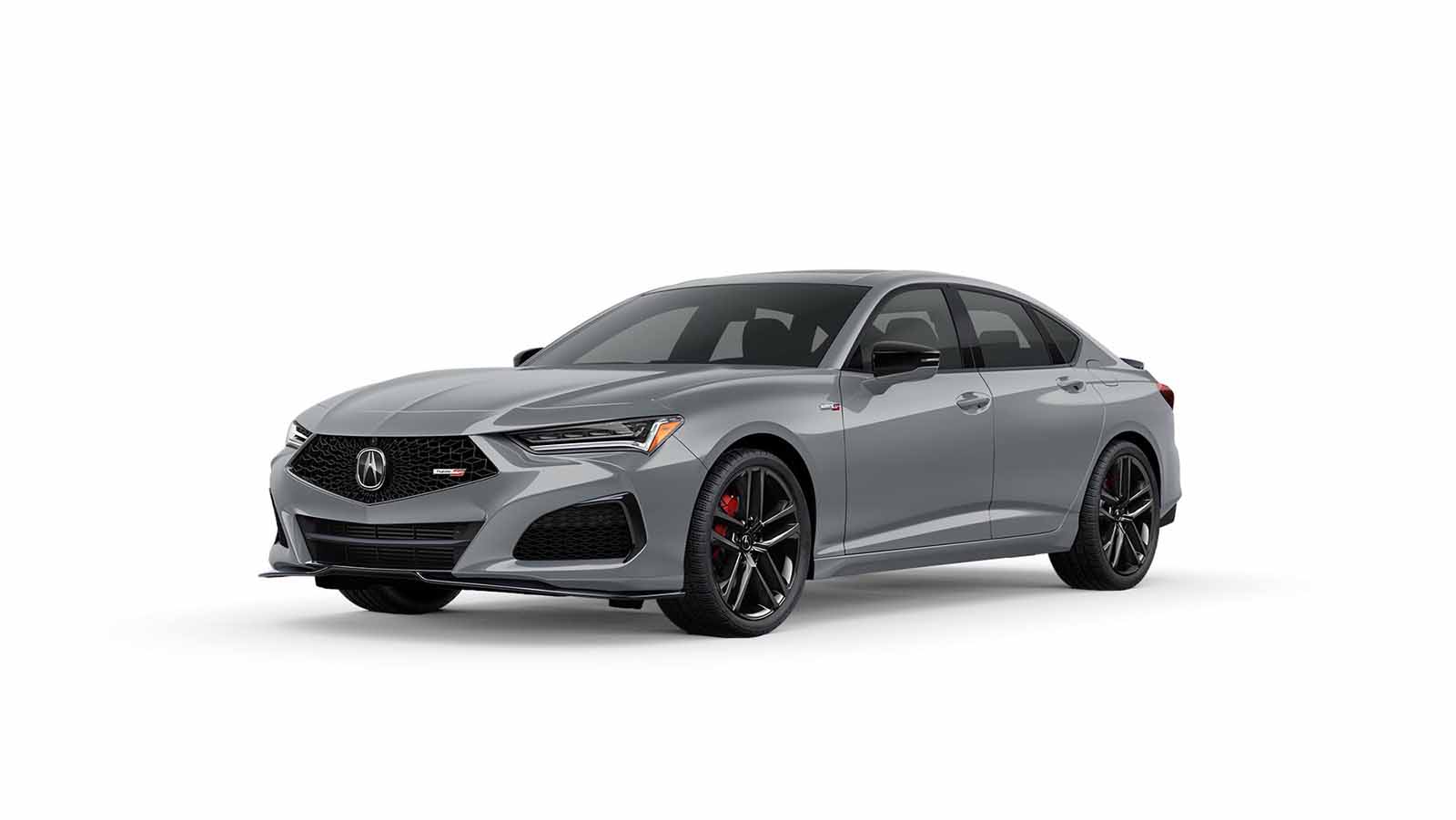
The Acura TLX drivetrain features a sophisticated 10-speed automatic transmission paired with either a front-wheel-drive (FWD) or an advanced Super Handling All-Wheel Drive (SH-AWD) system. Driven by a 2.0L turbocharged four-cylinder or a 3.0L V6 turbo in the Type S, it prioritizes precision torque vectoring and responsive shifting for a sport-oriented driving experience.
The Evolution of the Acura TLX Drivetrain
As we look at the Acura TLX in 2026, it is essential to understand that this vehicle represents the pinnacle of Acura's transition back to its "Precision Crafted Performance" roots. Unlike previous iterations that shared significant DNA with the Honda Accord, the current second-generation TLX platform is a dedicated sports sedan architecture. This shift allowed engineers to optimize the drivetrain layout, specifically the placement of the engine and the integration of the rear-biased all-wheel-drive system.
The drivetrain is the sequence of components that deliver power from the engine to the wheels. In the TLX, this involves the engine, the transmission, the driveshafts, and the differentials. By 2026, the TLX has refined these components to offer a balance between the fuel efficiency required for modern commuters and the mechanical aggression demanded by enthusiasts. The core of this identity is the Super Handling All-Wheel Drive (SH-AWD) system, which remains one of the most sophisticated torque-vectoring systems in the premium sedan segment.
The Heart of the Drivetrain: Engine Options
The drivetrain begins with the power source. The TLX utilizes two distinct engines, each dictating the stress loads and performance characteristics of the subsequent drivetrain components.
2.0-Liter Turbocharged VTEC Inline-4
Standard on the Technology and A-Spec trims, the 2.0L K20C engine produces approximately 272 horsepower and 280 lb-ft of torque. This engine uses a low-inertia mono-scroll turbocharger to minimize lag. From a drivetrain perspective, this engine’s broad torque curve—peaking as low as 1,600 RPM—places immediate pressure on the transmission and axles. The drivetrain must manage this low-end grunt without inducing significant torque steer in FWD models.
3.0-Liter Turbocharged 24-Valve V6
Exclusive to the TLX Type S, this engine is a masterpiece of modern engineering, producing 355 horsepower and 354 lb-ft of torque. Unlike the standard inline-4, the V6 uses a twin-scroll turbocharger. The drivetrain for the Type S is significantly beefed up to handle the extra 75+ lb-ft of torque, featuring reinforced shafts and a more robust cooling system for the transmission to ensure longevity under high-performance driving conditions.
The 10-Speed Planetary Automatic Transmission
One of the most critical components of the Acura TLX drivetrain is the 10-speed automatic transmission (10AT). Developed in-house by Honda/Acura, this transmission replaced the previous 9-speed unit and provides a much wider gear ratio spread.
Gear Ratio Optimization
The 10-speed unit features a very low first gear for aggressive off-the-line acceleration and a high tenth gear for efficient highway cruising. Because there are ten gears, the jumps between ratios are smaller. This allows the engine to stay within its optimal power band (the "sweet spot") more consistently. For the driver, this translates to smoother shifts and more immediate throttle response.
Direct Shift Capability
A standout feature of the TLX’s 10-speed transmission is its ability to perform "four-gear direct downshifts." If you are cruising in 10th gear and floor the accelerator, the transmission can skip intermediate gears and drop directly to 6th or even lower, depending on vehicle speed. This eliminates the "hunting" sensation often found in high-gear-count transmissions and provides the instantaneous acceleration needed for passing maneuvers.
Electronic Gear Selector and Paddle Shifters
The TLX uses a "Sequential SportShift" system controlled via steering-wheel-mounted paddle shifters. In the 2026 models, the software logic has been further refined to provide faster manual response times. The gear selection itself is handled by a shift-by-wire push-button console, which saves interior space and allows for electronic safeguards, such as automatically shifting into "Park" if the driver's door is opened while the vehicle is stopped.
Super Handling All-Wheel Drive (SH-AWD) Explained
The hallmark of the Acura TLX drivetrain is the fourth-generation Super Handling All-Wheel Drive system. While many AWD systems are designed primarily for traction in snow or rain, SH-AWD is designed for dry-road performance and cornering agility.
Mechanical Operation
SH-AWD uses a mechanical rear differential that contains two independent electromagnetic clutch packs. Unlike traditional AWD systems that use a center differential or a single rear clutch, SH-AWD can send up to 70% of the engine’s torque to the rear wheels. More importantly, it can distribute 100% of that rear-allocated torque to either the left or right wheel individually.
Torque Vectoring in Corners
When you enter a turn, the SH-AWD system monitors steering angle, lateral G-forces, and wheel speed. To help the car rotate, it sends more torque to the outside rear wheel. This creates a "yaw moment," effectively pushing the car into the corner and neutralizing understeer (the tendency for a car to push wide). This makes the TLX feel much smaller and more nimble than its actual dimensions would suggest.
Performance Statistics
Compared to the previous generation, the 4th-gen SH-AWD system in the current TLX offers:
- 40% more torque capacity at the rear.
- 30% faster torque transfer response.
- Improved logic for better stability during high-speed lane changes.
Front-Wheel Drive and Precision All-Wheel Steer
While SH-AWD is the star, the base TLX drivetrain utilizes front-wheel drive (FWD). Acura engineers have worked to minimize the downsides of FWD, such as torque steer and front-end "plowing."
The FWD TLX models often utilize a version of Precision All-Wheel Steer (P-AWS). This system allows the rear wheels to adjust their toe angles independently. During high-speed maneuvers, the rear wheels turn in the same direction as the front wheels to increase stability. During low-speed turns, they turn in the opposite direction to shorten the turning radius. During braking, both rear wheels "toe-in" to provide extra stability and stopping power.
For many 2026 buyers, the FWD configuration is preferred for its slightly better fuel economy and lower maintenance costs, as it lacks the rear differential and prop-shaft of the SH-AWD models.
The Integrated Dynamics System (IDS)
The drivetrain's behavior is heavily influenced by the Integrated Dynamics System, which acts as the "brain" of the vehicle. By turning a large dial on the center console, the driver can change how the drivetrain components interact.
- Comfort Mode: The 10-speed transmission shifts early to keep RPMs low, and the SH-AWD system prioritizes fuel efficiency by sending more power to the front wheels during steady-state cruising.
- Normal Mode: A balanced setting for daily driving.
- Sport Mode: The transmission holds gears longer, the throttle becomes more sensitive, and the SH-AWD system becomes more rear-biased to prepare for aggressive cornering.
- Sport+ (Type S Only): This maximizes the drivetrain's potential. Shifts are up to 40% faster, and the SH-AWD system is at its most aggressive, constantly shuffling torque to maintain maximum grip.
- Individual Mode: Allows the driver to mix and match settings (e.g., Sport engine response with Comfort steering).
Drivetrain Comparison: TLX Configurations
The following table outlines the technical differences across the 2026 Acura TLX drivetrain lineup.
| Feature | TLX 2.0T FWD | TLX 2.0T SH-AWD | TLX Type S (3.0T) |
|---|---|---|---|
| Engine Type | 2.0L Turbo I-4 | 2.0L Turbo I-4 | 3.0L Turbo V6 |
| Horsepower | 272 hp | 272 hp | 355 hp |
| Torque | 280 lb-ft | 280 lb-ft | 354 lb-ft |
| Transmission | 10-Speed Auto | 10-Speed Auto | 10-Speed Auto (Heavy Duty) |
| Drive Layout | Front-Wheel Drive | All-Wheel Drive | All-Wheel Drive (Standard) |
| Torque Vectoring | No (Uses Braking) | Yes (Mechanical) | Yes (High-Performance Bias) |
| Rear Steering | P-AWS (Select Models) | No | No |
Maintenance and Reliability of the Drivetrain
Acura’s reputation for reliability extends to the TLX drivetrain, but the complexity of the SH-AWD system requires adherence to specific maintenance intervals.
Transmission Fluid (ATF)
The 10-speed automatic uses a specialized ultra-low viscosity fluid. Acura's Maintenance Minder system usually triggers a transmission fluid change (Service Code 3) every 30,000 to 60,000 miles, depending on driving conditions. In the 2026 model, using genuine Acura ATF-Type 2.0 is critical to maintain shift quality and protect the internal clutches.
Rear Differential Fluid (Dual Pump Fluid II)
For SH-AWD models, the rear differential is the most sensitive component. It uses two electromagnetic clutch packs that generate heat. The fluid must be changed more frequently than in a standard differential—often as early as every 15,000 miles for the first change, and then every 30,000 miles thereafter. Neglecting this can lead to "chattering" or "groaning" sounds during tight turns.
Transfer Case and Propeller Shaft
The transfer case on SH-AWD models directs power from the front-mounted transmission to the rear wheels. This unit is generally robust but should be inspected for leaks during every oil change. The propeller shaft (driveshaft) uses sealed bearings that do not require regular lubrication but should be checked for vibrations, which could indicate a balancing issue or a worn carrier bearing.
Drivetrain Efficiency and Fuel Economy
In the 2026 landscape, fuel efficiency remains a priority despite the TLX's performance pedigree. The FWD 2.0T remains the most efficient, often achieving an EPA-estimated 22 city / 31 highway MPG. The addition of the SH-AWD system typically results in a 1–2 MPG penalty due to the added weight (approximately 200 lbs) and the mechanical friction of the extra spinning components.
The Type S, with its larger V6 and performance-tuned AWD, is less efficient, averaging around 19 city / 25 highway MPG. However, Acura uses cylinder deactivation (Variable Cylinder Management) in some V6 iterations and optimized shift logic to keep highway cruising as efficient as possible.
Expert Comparison: Why Choose SH-AWD?
Prospective buyers often ask if the SH-AWD system is worth the extra cost. From a technical perspective, the answer depends on your geography and driving style.
- For Performance Enthusiasts: SH-AWD is mandatory. It fundamentally changes the car's handling physics, making it feel more like a rear-wheel-drive car on corner exit.
- For Cold Climates: SH-AWD offers superior "get-going" traction compared to FWD. While it doesn't help you stop better (that's the job of the tires), it significantly improves stability on slushy or icy roads.
- For Commuters: The FWD model is lighter, more fuel-efficient, and has fewer maintenance requirements over a 100,000-mile ownership period.
Frequently Asked Questions
Does the Acura TLX use a CVT?
No, the Acura TLX does not use a Continuously Variable Transmission (CVT). Every model of the current generation TLX is equipped with a traditional 10-speed planetary automatic transmission. This provides a more direct mechanical connection and a sportier feel than CVTs found in some competitors.
How does SH-AWD differ from standard AWD?
Most standard AWD systems are reactive; they wait for a wheel to slip before sending power to the other wheels. SH-AWD is proactive. It uses "torque vectoring" to actively distribute power between the left and right rear wheels to improve cornering performance, even when there is no loss of traction.
Can the TLX drivetrain be used for towing?
The Acura TLX is not rated for significant towing. While some owners may install a light-duty hitch for bike racks, Acura generally does not recommend towing trailers with the TLX. Using the sedan for towing can put excessive strain on the 10-speed transmission and the SH-AWD rear differential clutches.
Is the Type S drivetrain different from the A-Spec?
Yes. While both use the 10-speed automatic and SH-AWD, the Type S features a 3.0L V6 instead of a 2.0L I-4. The Type S transmission is reinforced with stronger internal components, and the SH-AWD system is tuned for a more aggressive rear-power bias to handle the higher torque output of the V6 engine.
What are the common signs of drivetrain wear?
Common signs include hesitation during gear shifts, a high-pitched whine from the turbocharger, or a "shudder" during low-speed turns (usually indicating the rear differential fluid needs changing). If you notice a "clunk" when shifting from Park to Drive, it may indicate a worn engine or transmission mount.
Practical Recommendation
If you are considering an Acura TLX in 2026, the SH-AWD configuration is highly recommended for those who want the true Acura experience. It is the defining feature that sets the TLX apart from more generic luxury sedans. However, ensure you are prepared for the slightly higher maintenance frequency of the rear differential fluid. If your primary goal is a stylish, reliable commuter with lower operating costs, the FWD Technology Package remains a formidable and efficient choice. Always verify that the 10-speed transmission has received its software updates during routine service to ensure the smoothest possible shifting.