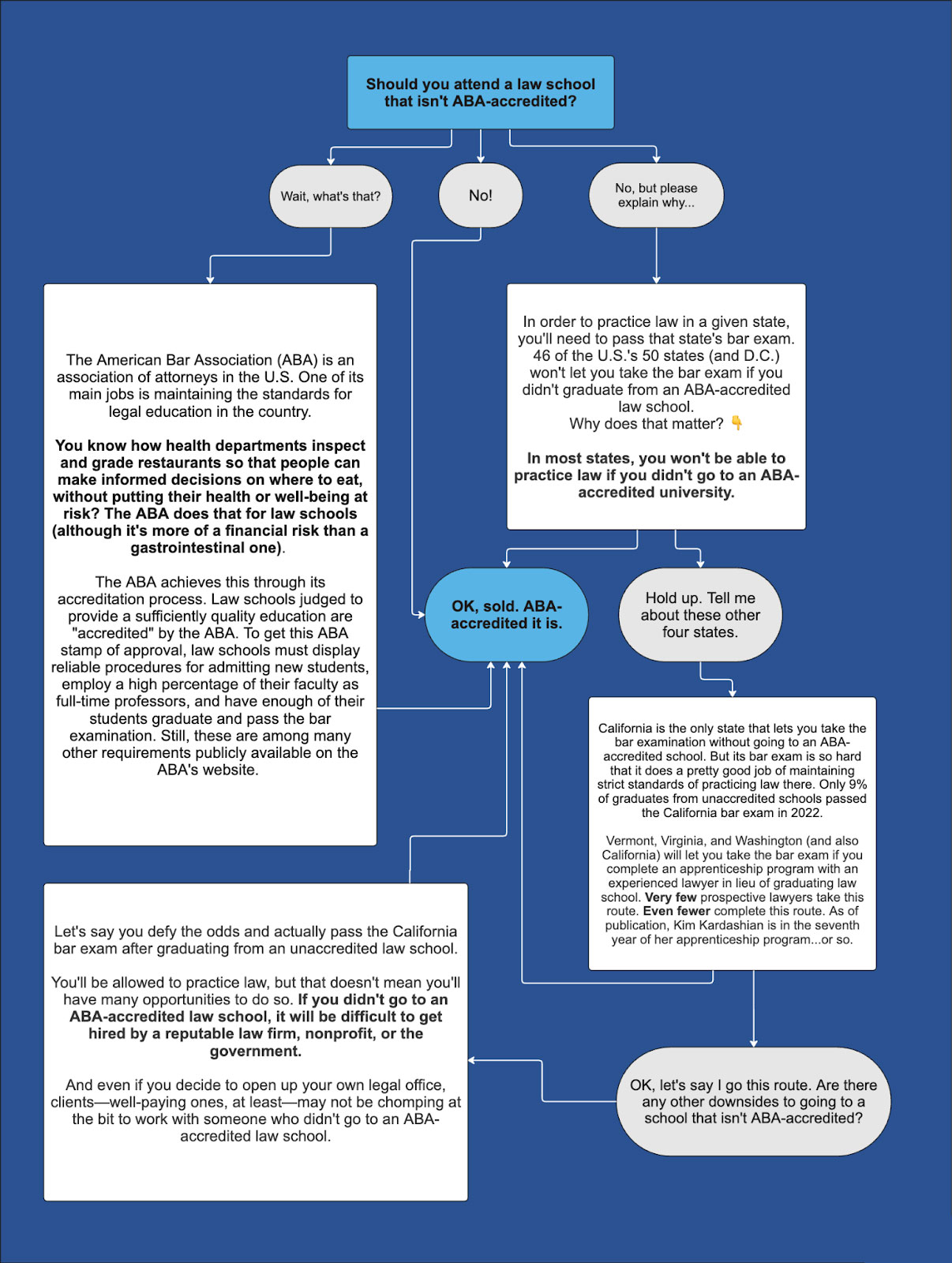
Obtaining American Bar Association (ABA) approval is the gold standard for legal education in the United States, as it determines a graduate’s eligibility for bar admission in most jurisdictions. To achieve this certification, law schools must comply with the ABA Standards and Rules of Procedure for Approval of Law Schools, which mandate rigorous criteria regarding faculty quality, physical facilities, curriculum structure, student services, and financial stability.
Understanding the ABA Approval Process
The ABA’s Section of Legal Education and Admissions to the Bar is the accrediting body recognized by the U.S. Department of Education. Being "ABA-approved" is not merely an institutional status but a functional requirement for students who intend to sit for the bar exam in the vast majority of states. Unlike regional university accreditation, which assesses the broader academic institution, ABA approval is specific to the Juris Doctor (JD) program.
The path to approval is a multi-year commitment involving provisional and full approval stages. A law school must first demonstrate that it has the resources and institutional support to meet all standards before applying for provisional approval. Once a school operates under provisional status for at least two years, it may apply for full approval. This oversight is designed to ensure that the education provided meets the demands of the modern legal profession and protects the interests of students.
Institutional Resources and Financial Stability
A primary requirement for any law school seeking or maintaining ABA certification is a demonstrated commitment to institutional resources. The ABA requires that a law school be an integral part of a university or a standalone entity with sufficient financial strength to support its mission.
The school must prove that its financial resources are sufficient to provide a program of legal education that complies with the standards. This includes, but is not limited to, maintaining an adequate library, suitable classrooms, technology infrastructure, and administrative support. If a school’s financial health is in jeopardy, its ability to maintain certification is at risk. Examiners look for evidence of sustained budget allocations that do not rely on speculative enrollment numbers, ensuring that even during cyclical downturns, the school can honor its educational obligations to current students.
Faculty Standards: Scholarship and Instruction
The ABA maintains stringent requirements regarding the composition and quality of the faculty. A law school must have a sufficient number of full-time, experienced faculty members to teach the curriculum, conduct research, and provide academic support to students.
The standards mandate that the faculty must possess a high degree of aptitude for legal scholarship and teaching. A significant portion of the teaching load must be handled by full-time professors rather than adjuncts. Furthermore, the school is required to support faculty research and scholarly production. This ensures that students are learning from experts who are active participants in the development of legal thought. The student-to-faculty ratio is also scrutinized, as it directly impacts the ability of the school to provide personalized instruction and mentorship.
Curriculum Requirements and Academic Rigor
The curriculum of an ABA-approved law school must satisfy specific credit-hour requirements and include a substantial amount of live-classroom instruction. The current standards require that a student complete at least 83 credit hours to graduate.
Beyond the raw credit counts, the ABA mandates that students receive rigorous instruction in professional responsibility and legal ethics. Furthermore, there are requirements for experiential learning—such as clinics, externships, or simulation courses—that provide students with practical skills training. These requirements are intended to bridge the gap between theoretical law study and the realities of practice. Schools must also demonstrate that they have a valid system for assessing student learning outcomes, ensuring that graduates possess the foundational competencies required to enter the bar.
Student Admissions and Academic Support
Admission standards represent a critical pillar of ABA compliance. An approved law school must maintain admission policies that are consistent with its mission and the objectives of the Standards. This requires the use of a valid and reliable admission test—typically the LSAT or an equivalent test approved by the ABA—to assess the potential for success in the study of law.
Furthermore, the school must demonstrate a commitment to providing equal opportunity. This includes policies that support the recruitment and retention of students from diverse backgrounds. Beyond admissions, schools are obligated to provide necessary academic support to ensure that students, particularly those who may struggle with the rigors of legal pedagogy, have a fair chance at graduation and bar passage. Data regarding student retention and attrition are audited periodically to ensure that the school is not admitting students who have no realistic chance of completing the degree.
Library and Information Resources
The law library is considered the heart of an ABA-approved law school. The standards require that the library provide access to a comprehensive collection of legal materials, both in print and electronic formats. The library must be managed by a professional staff that is qualified to assist students and faculty in complex legal research.
In 2026, the focus has shifted heavily toward digital accessibility and the integration of advanced research technologies. A law school must demonstrate that its students are trained in the use of contemporary legal databases and that the library budget is sufficient to maintain current subscriptions and materials. The physical facility must also provide adequate space for study, ensuring a conducive learning environment that aligns with modern educational standards.
Summary of Core ABA Requirements
| Category | Primary Focus | Regulatory Goal |
|---|---|---|
| Institutional Support | Financial stability and university affiliation | Ensuring operational longevity |
| Faculty Requirements | Full-time vs. adjunct ratio; scholarship | Maintaining academic expertise |
| Curriculum Structure | 83 credit hours; ethics; experiential learning | Ensuring practitioner readiness |
| Admissions Policy | Valid standardized testing; diversity | Academic and professional aptitude |
| Information Resources | Library budget; digital access; staffing | Providing necessary research tools |
Bar Passage and Employment Outcomes
Perhaps the most public-facing metric for ABA compliance is the bar passage rate and post-graduation employment. The ABA requires schools to provide accurate, transparent data regarding the percentage of their graduates who pass the bar exam within two years of graduation. If a school’s bar passage rate falls below specified benchmarks, it may be subject to monitoring or sanctions.
Similarly, employment outcomes are a matter of record. Schools must report how many of their graduates are employed in "bar passage required" or "JD advantage" jobs. This transparency serves two purposes: it informs prospective students of the potential return on their educational investment and acts as a market check on the quality of the education being provided. A school that fails to prepare its students for the realities of the legal job market may be deemed out of compliance with the standards regarding the provision of a professional education.
Addressing Non-Compliance and Troubleshooting
When a law school falls short of the ABA standards, it is typically notified and given a period of time to come into compliance. This might involve a remedial plan, such as hiring more full-time faculty, adjusting the library budget, or revising the admissions criteria.
In cases where a school fails to correct a deficiency, the Council of the Section of Legal Education and Admissions to the Bar may take formal action, which can include placing the school on probation or, in extreme cases, withdrawing approval. For current students, the primary concern is the status of the school’s accreditation. If a school loses its accreditation, it can have severe consequences for students' eligibility to sit for the bar in various states. It is critical for prospective and current students to regularly check the official ABA website for the current status of any law school they are considering.
Frequently Asked Questions
Does a degree from a non-ABA-approved school prevent me from practicing law? In many states, graduation from an ABA-approved school is a prerequisite for taking the bar exam. While some jurisdictions allow graduates of state-accredited or unaccredited schools to sit for the exam under specific conditions, these paths are often restrictive and limit your ability to practice in other states.
How can I verify if a law school is ABA-approved? The American Bar Association maintains a searchable, official directory of all ABA-approved law schools. Always consult this primary source rather than relying on school-provided brochures or third-party ranking sites to confirm current accreditation status.
Can a school lose its ABA certification? Yes. If a school consistently fails to meet standards—such as those regarding bar passage rates or financial stability—the ABA can revoke accreditation. Schools in danger of losing their status are typically listed as being under "probation" or "non-compliance" status by the ABA.
Do online law schools qualify for ABA approval? Currently, the ABA maintains strict standards regarding "distance education." While some remote coursework is permitted, there is no purely online law school that holds full ABA approval. Most ABA-approved programs require a significant, if not primary, amount of in-person, synchronous instruction.
What is the difference between regional accreditation and ABA approval? Regional accreditation applies to the university as a whole, covering everything from the dining hall to the science labs. ABA approval is a specialized, programmatic accreditation that focuses specifically on the quality of the Juris Doctor program and its ability to prepare students for the legal profession.
Next Steps for Prospective Students
If you are currently evaluating law schools, your first step should be to visit the official ABA website and filter for your prospective schools to ensure they are fully approved. Review the "Standard 509 Information Report" for each school you are considering; these reports provide standardized, verifiable data on tuition, living expenses, enrollment figures, and bar passage outcomes. By focusing on these objective metrics rather than subjective rankings, you can ensure your educational investment provides the necessary foundation for a long-term legal career.