The American Pharmacists Association (APhA) Group Term Life Insurance Plan offers active APhA members, spouses, and eligible dependents up to $2,000,000 in life insurance coverage underwritten by New York Life Insurance Company. Designed specifically for pharmacy professionals, the policy provides portable protection, terminal illness accelerated benefits, and age-banded premium rates that remain independent of employer-sponsored plans.
Overview of the APhA Group Term Life Insurance Plan
The American Pharmacists Association sponsors group insurance benefits tailored to the professional and financial security needs of pharmacists, pharmaceutical scientists, pharmacy technicians, and pharmacy students. Managed through program administrators like Association Member Benefits Advisors (AMBA) and underwritten by New York Life Insurance Company (51 Madison Avenue, New York, NY 10010), the APhA Group Term Life Insurance Plan is designed to supplement employer-provided coverage or serve as a foundational life insurance plan.
Group term life insurance provides pure death benefit protection over a specified term without building cash value. Unlike standard employer-provided group policies, which usually end when a practitioner changes employers, retires, or shifts from retail to clinical settings, APhA group term coverage is fully portable. As long as the primary member maintains active membership in the APhA, pays required premiums, and the group master policy remains active, coverage continues regardless of employment changes.
For financial planning professionals and pharmacists evaluating life insurance options, understanding the exact coverage thresholds, policy mechanics, underwriting tiers, and rider availability is essential. Group plans often leverage collective purchasing power to negotiate competitive rates, simplified underwriting options for specific age brackets, and specialized policy provisions tailored to medical and pharmaceutical career paths.
Detailed Coverage Limits and Policy Tiers
Coverage limits under the APhA Group Term Life Insurance Plan are structured around member age, health status, and underwriting approval. The plan allows members to select benefit amounts tailored to mortgage debts, income replacement, dependent care, and long-term financial obligations.
- APhA Group Term Life Insurance Maximum Limits
- Primary Member: Up to $2,000,000 (in increments)
- Spouse: Up to $1,000,000 (up to 100% of member)
- Dependent Child: Up to $10,000–$20,000 per child
Member Coverage Limits
- Maximum Benefit Amount: Active APhA members under age 65 can apply for up to $2,000,000 in total term life insurance coverage.
- Incremental Benefit Units: Coverage is typically purchased in select incremental tiers (such as $10,000, $25,000, or $50,000 increments), allowing applicants to customize the exact face value of their policy.
- Guaranteed Issue / Simplified Underwriting: Periodically, specialized enrollment windows or introductory coverage tiers offer guaranteed or simplified issue limits (e.g., $50,000 to $100,000) for new members or graduating pharmacy students without requiring full medical exams, subject to basic health questions.
Spouse and Domestic Partner Limits
- Maximum Spouse Benefit: Spouses or registered domestic partners of eligible APhA members can obtain coverage, frequently capped at $1,000,000 or up to 100% of the member’s approved coverage amount.
- Underwriting Alignment: Spouse coverage generally requires independent medical underwriting unless selected during specific guaranteed acceptance windows.
Dependent Child Limits
- Child Coverage Caps: Eligible unmarried dependent children (typically from 14 days old up to age 19, or up to age 23/25 if enrolled as full-time students) can be covered under a dependent rider for fixed amounts, usually ranging between $5,000 and $20,000 per child.
- Flat Premium Structure: A single dependent child premium typically covers all eligible children within the member's household, regardless of the total number of children.
Benefit Reduction Schedule by Age
Like most group term policies underwritten by major insurers, the maximum coverage available and the active benefit amount reduce progressively as the insured reaches senior age brackets:
- Ages Under 65: Full coverage up to policy maximums ($2,000,000).
- Age 65 to 69: Benefit amounts automatically decrease to a percentage of the original face value (typically 65% or 75% of the original benefit).
- Age 70 to 74: Benefit amounts reduce further (typically 45% to 50% of the initial benefit).
- Age 75 and Older: Coverage usually terminates or reduces to a minimal conversion threshold, requiring transition to individual permanent coverage if continued protection is required.
Core Policy Features and Optional Riders
The APhA Term Life Insurance policy includes built-in features and optional riders designed to enhance flexibility during critical life events or health crises.
1. Accelerated Death Benefit (Living Benefit)
The Accelerated Death Benefit provision allows insured members diagnosed with a qualifying terminal illness to receive a portion of their death benefit prior to death.
- Benefit Payout: Insured individuals can typically request up to 50% to 75% of their total active death benefit (up to a policy cap, often $250,000 or $500,000).
- Eligibility Threshold: A qualified physician must certify that the insured's life expectancy is 12 to 24 months or less (depending on state regulations and master policy terms).
- Tax Considerations: Accelerated benefits received for terminal illness are generally excluded from federal gross income under Section 101(g) of the Internal Revenue Code, though consultation with a certified tax professional is advised.
2. Premium Waiver for Total Disability
If an insured primary member becomes totally disabled prior to a specified age (usually age 60), the plan includes a Waiver of Premium benefit:
- Waiting Period: After a continuous disability period (typically 6 consecutive months), future premium payments are waived for as long as the total disability continues.
- Coverage Maintenance: Full life insurance coverage remains active during the approved waiver period without further financial outlay by the member.
3. Portability and Job Independence
Standard corporate group life insurance is tied to an employer's group policy master contract. If a pharmacist transitions from hospital pharmacy to retail, moves into industry consulting, or leaves the workforce, employer group coverage typically terminates or requires expensive COBRA conversion.
The APhA plan is portable. Because eligibility is linked to APhA membership rather than a specific employer, changing jobs, relocating across state lines, or starting an independent pharmacy practice does not affect the continuation of policy coverage.
4. Policy Conversion Privileges
If an APhA member reaches the age limit where group coverage ends, or if the group master policy terminates, insured members generally possess the right to convert their group term coverage into an individual permanent life insurance policy (such as Whole Life) offered by New York Life Insurance Company.
- No Medical Exam Requirement: Conversion can be executed without evidence of insurability or medical underwriting.
- Timeline: Conversion applications must be submitted within a strict window (typically 31 days) following the termination of group coverage.
Eligibility Criteria and Medical Underwriting
Understanding eligibility and the medical underwriting process ensures applicants select the appropriate policy amount and prepare necessary documentation.
Primary Eligibility Criteria
To apply for the APhA Group Term Life Insurance Plan, individuals must meet the following criteria at the time of application:
- Active Membership: Must be a current member in good standing of the American Pharmacists Association (including active pharmacists, associate members, pharmacy technicians, or student members).
- Residency: Must reside legally within the United States, Puerto Rico, or designated U.S. territories.
- Age Requirements: Primary applicants must typically be under age 65 or 70 at the date of issue.
Underwriting Pathways
Depending on the requested benefit amount and applicant age, the underwriter (New York Life) utilizes distinct underwriting pathways:
Application Submission
- Simplified Underwriting
- Lower Face Amounts
- Health Questionnaire Only
- No Lab Tests (Usually)
- Full Underwriting
- High Face Amounts ($500k+)
- Paramedical Exam & Labs
- Attending Physician Statement
- Simplified Underwriting
Simplified Underwriting: For lower benefit tiers or promotional enrollment periods, applicants complete a brief health statement answering medical history questions. Approval is determined based on self-reported health data, prescription database checks (such as Milliman IntelliScript), and Medical Information Bureau (MIB) records.
Full Medical Underwriting: For higher coverage amounts (typically exceeding $250,000 or $500,000) or higher-risk age brackets, full underwriting is required. This process includes:
- Detailed personal and family medical history questionnaire.
- Paramedical physical examination (blood pressure, height, weight, pulse).
- Blood sample and urinalysis screening (testing for cholesterol, blood sugar, kidney function, and nicotine/cotinine metabolites).
- Attending Physician Statement (APS) records requested from primary care providers.
Premium Structures and Age-Banded Costs
APhA Group Term Life Insurance premiums are structured using 5-year age bands. Rates are non-taxable employer benefits when paid out-of-pocket by individuals and are calculated based on the insured's age bracket, tobacco use status, and approved underwriting classification.
How 5-Year Age Bands Work
Unlike level-term individual policies (where premiums remain fixed for 10, 20, or 30 years), group term insurance rates adjust as the policyholder enters new age brackets:
- Standard age brackets begin at under 30, 30–34, 35–39, 40–44, 45–49, 50–54, 55–59, 60–64, 65–69, and 70+.
- As an insured member crosses into a higher age band, the monthly or semi-annual premium increases to reflect the statistical risk associated with that age group.
- Volume Discounts: The plan frequently incorporates rate discounts (volume bands) for higher face-amount coverage thresholds, such as reduced per-thousand-dollar rates for policies of $250,000, $500,000, or $1,000,000 and above.
Tobacco vs. Non-Tobacco Rate Tiers
Insured members who have avoided all tobacco and nicotine products (including cigarettes, cigars, pipes, smokeless tobacco, and electronic nicotine delivery systems/vapes) for at least 12 to 24 consecutive months qualify for preferred Non-Flyer/Non-Tobacco premium rates, yielding savings of 30% to 50% compared to tobacco rates.
Comparison: APhA Group Term vs. Alternative Insurance Types
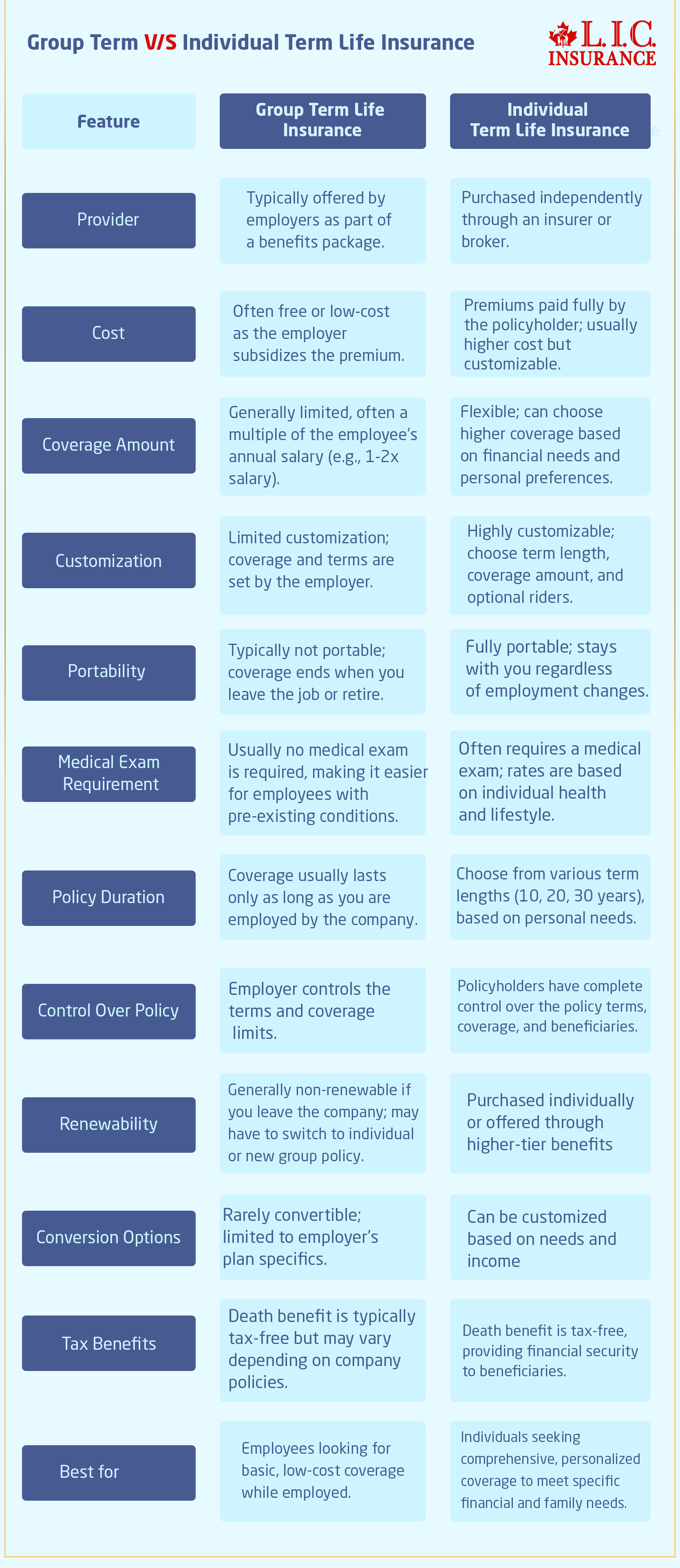
When structuring a comprehensive personal risk management portfolio, pharmacy professionals often evaluate APhA group coverage alongside employer-sponsored group life plans and individual level-term policies.
| Policy Feature | APhA Group Term Life Plan | Employer Group Life Plan | Individual Level-Term Policy |
|---|---|---|---|
| Primary Underwriter | New York Life Insurance Co. | Varies by employer benefit carrier | Selected insurance carrier |
| Maximum Coverage Limit | Up to $2,000,000 | Frequently capped at 1x–3x salary | Up to $5,000,000+ based on income |
| Portability | High: Retained across job changes if APhA membership is kept | Low: Ends upon job change or requires costly conversion | Maximum: Fully independent of employers or professional associations |
| Premium Structure | 5-Year Age Bands (increases every 5 years) | Step-rate or fully employer-subsidized | Guaranteed Fixed Level (10, 20, or 30 years) |
| Medical Underwriting | Simplified for lower amounts; Full for high amounts | Guaranteed Issue up to basic limit; Underwriting for supplemental amounts | Full underwriting required (except simplified-issue policies) |
| Association Requirement | Requires active APhA membership | Requires active employment status | None |
| Conversion Right | Yes (Convertible to New York Life permanent coverage) | Limited conversion windows upon termination | Yes (Convertible to carrier permanent products) |
Strategic Fit for Pharmacists
- Early-Career Pharmacists & Students: APhA group term insurance offers an affordable entry point for young pharmacists needing quick, portable coverage without entering 30-year fixed commitments while paying down pharmacy school debt.
- Mid-Career Supplemental Coverage: For pharmacists whose employers offer basic life coverage equal to 1x annual salary, purchasing an additional $500,000 to $1,000,000 through the APhA plan fills the financial gap without relying on employer stability.
- Independent Practice Owners: Self-employed pharmacy owners who do not have access to corporate group rates can leverage APhA's group purchasing power to secure institutional-grade protection underwritten by a top-rated carrier like New York Life.
Important Policy Exclusions and Limitations
To avoid unexpected coverage denials, policyholders should review standard policy exclusions and administrative requirements governing the APhA master contract.
General Exclusions
- Suicide Provision: Standard group life policies contain a 2-year suicide exclusion clause (1 year in select states). If the insured dies by suicide within two years of policy issuance or coverage increase, liability is limited to the return of paid premiums.
- Material Misrepresentation: Inaccurate reporting of tobacco use, medical history, or pre-existing conditions during the application process can lead to policy contestability within the first two years, potentially invalidating claims.
- Active Military Duty: Death resulting from acts of war or military service in combat zones may be excluded under master policy terms or subject to specific military exclusions.
Administrative Requirements
- Membership Maintenance: If an insured primary member allows their APhA membership to lapse, the administrator will issue a notification period. Failure to restore active APhA membership results in policy cancellation.
- Timely Premium Payment: Coverage includes a standard 31-day grace period for late premium payments. Failure to pay within the grace period results in policy termination, requiring medical re-underwriting to reinstate coverage.
Step-by-Step Application and Management Process
Enrolling in or managing an APhA Group Term Life Insurance policy follows a structured process:
- Verify APhA Membership Status: Ensure your membership ID is active. You can verify status through the official American Pharmacists Association Website.
- Calculate Coverage Needs: Evaluate total debts (mortgage, student loans, practice financing), income replacement requirements (e.g., 5 to 10 times annual salary), and final expenses to select an appropriate benefit tier up to $2,000,000.
- Submit Application: Apply online or via physical forms provided by the program administrator (AMBA/Mercer Consumer). Complete health questions accurately.
- Complete Underwriting Requirements: If applying for high benefit amounts, schedule paramedical exams or release medical records promptly when requested by New York Life underwriters.
- Designate Beneficiaries: Specify primary and contingent beneficiaries clearly, including full legal names, dates of birth, Social Security numbers, and distribution percentages.
- Establish Premium Payment Schedule: Select monthly automatic bank draft or quarterly/annual billing options to ensure continuous coverage without lapse.
Frequently Asked Questions
What is the maximum death benefit available under the APhA term life insurance plan?
Active APhA members under age 65 can apply for up to $2,000,000 in total term life insurance coverage. Spouses are eligible for up to $1,000,000 (not to exceed 100% of the member's benefit), and dependent children can be covered for up to $10,000 or $20,000 per child.
Who underwrites the APhA group term life insurance plan?
The APhA group term life plan is underwritten by New York Life Insurance Company (51 Madison Avenue, New York, NY 10010), one of the oldest and highest-rated mutual life insurance companies in the United States. The program is administered through specialized association benefit managers like AMBA (Association Member Benefits Advisors).
What happens to my APhA life insurance coverage if I change jobs or employers?
Your coverage remains fully active and intact. Because APhA term life insurance is a professional association group policy, it is independent of your employer. As long as you maintain your APhA membership and pay required premiums, your coverage travels with you across different employers, career shifts, or states.
Does the APhA term life insurance premium stay the same every year?
No. The APhA plan utilizes an age-banded premium structure (typically 5-year brackets). Your premium remains level within your current age bracket (e.g., ages 35–39) but increases automatically when you enter the next age bracket (e.g., age 40).
Can I get APhA life insurance without a medical exam?
Yes, under specific circumstances. Simplified underwriting or guaranteed acceptance promotions may allow members to secure lower coverage amounts (or introductory student/new practitioner tiers) by answering basic medical history questions without a paramedical exam. Higher benefit amounts (typically over $250,000 or $500,000) require standard medical underwriting, including lab work and medical records.
How does the Accelerated Death Benefit rider work?
If you are diagnosed by a licensed physician with a terminal illness resulting in a life expectancy of 12 to 24 months or less, the Accelerated Death Benefit allows you to request up to 50% to 75% of your active death benefit before death. These funds can be used for medical bills, care costs, or personal needs. The remaining benefit is paid to your beneficiaries upon death.
Summary and Practical Next Steps
The APhA Group Term Life Insurance Plan offers pharmacy professionals a flexible, highly portable financial safety net underwritten by New York Life Insurance Company. With maximum coverage limits up to $2,000,000 for members and $1,000,000 for spouses, the policy fills critical gaps left by basic employer-sponsored life plans.
Recommended Actions:
- Audit Existing Coverage: Compare your current life insurance total against your active debts, student loan balances, mortgage obligations, and family financial needs.
- Review Rate Bands: If you are nearing an age-bracket threshold (e.g., turning 35, 40, or 45), compare the age-banded group rates against 20-year or 30-year individual level-term policies to determine long-term cost efficiency.
- Keep Beneficiaries Current: Periodically update beneficiary designations following major life events such as marriage, birth of a child, or divorce.
- Consult Financial Professionals: For personalized guidance on structuring life insurance within an overall estate plan, consult a Certified Financial Planner (CFP) or licensed insurance advisor.
Disclaimer: Insurance terms, maximum limits, rate bands, and underwriting guidelines are subject to the specific terms of the master policy issued by New York Life Insurance Company to the American Pharmacists Association. Consult official APhA plan documentation for state-specific policy provisions.