Fastly serves as an API security gateway by processing, validating, and securing Application Programming Interface (API) traffic at the global CDN edge before requests reach backend origin infrastructure. By enforcing Web Application and API Protection (WAAP), rate limiting, Mutual TLS (mTLS), and JSON Web Token (JWT) validation directly on Fastly's edge cloud platform, organizations eliminate malicious traffic, mitigate distributed denial-of-service (DDoS) attacks, and enforce zero-trust security policies with sub-millisecond overhead.
The Role of Fastly in Modern API Gateway Architectures
Traditional API management relies heavily on centralized origin gateways hosted inside primary cloud regions or on-premises data centers. Tools like AWS API Gateway, Kong, Apigee, or NGINX execute request routing, authentication, rate limiting, and threat detection close to the application logic. However, as global API traffic volumes expand and automated attack bots proliferate, routing all raw HTTP/HTTPS API traffic directly to central origin gateways introduces significant latency penalties, compute resource consumption, and vulnerability to massive volumetric attacks.
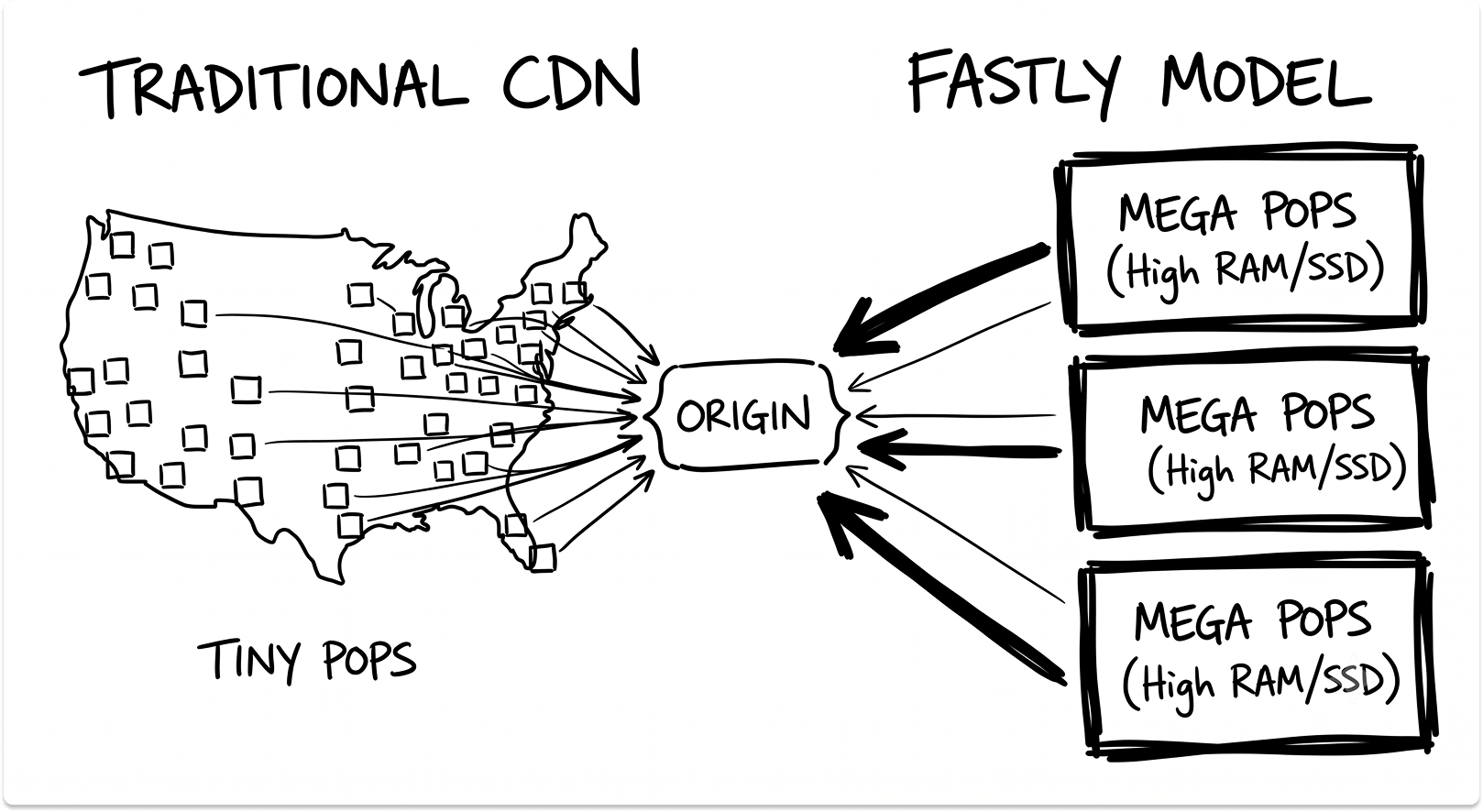
Deploying an API security gateway at the edge—leveraging Fastly’s globally distributed Point of Presence (POP) architecture—shifts the security perimeter from the central data center to the network edge. Fastly operates thousands of servers across more than 50 global locations, running a high-performance execution layer built on custom Varnish Configuration Language (VCL) environments and Fastly Compute (a WebAssembly-based Serverless/Edge environment).
When API requests land at the nearest Fastly POP, the platform evaluates authentication headers, enforces security rules, executes bot mitigation algorithms, and inspects request payloads before any traffic is passed across the long-haul network to the origin. This architecture establishes a defense-in-depth model where bad actors, unauthorized API requests, and scrapers are rejected at the edge POP nearest to the attacker, while legitimate API requests are cached, optimized, and routed over Fastly’s optimized network backbone to backend microservices.
Core Capabilities of Fastly Edge API Security Gateways
Building a robust API security gateway on Fastly requires combining multiple platform primitives into an integrated security pipeline. Fastly provides key modules and programmable execution contexts to satisfy enterprise security requirements.
Web Application and API Protection (Next-Gen WAF)
Fastly’s Next-Gen WAF (formerly Signal Sciences) provides modern layer-7 protection optimized for API structures, including REST, GraphQL, and SOAP services. Unlike legacy Web Application Firewalls that rely on complex regular expressions (which often produce high false-positive rates and latency bottlenecks), Fastly Next-Gen WAF utilizes signal-based detection.
The platform inspects incoming API payloads (JSON, XML, form data) for common injection attacks, including SQL Injection (SQLi), Cross-Site Scripting (XSS), Command Injection, and Remote Code Execution (RCE). Because API attacks frequently exploit broken object-level authorization (BOLA) or business logic vulnerabilities rather than basic syntax errors, the Next-Gen WAF monitors baseline telemetry across request endpoints to detect abnormal behavioral signals, such as anomaly surges in HTTP 4xx response codes, credential stuffing attempts, or structural fuzzing.
Edge-Based Rate Limiting and Quota Management
API rate limiting is vital for preventing resource starvation, protecting origin databases, and mitigating Layer 7 DDoS attacks. Fastly Edge Rate Limiting allows engineers to define granular rules that track request counts based on unique request properties, including:
- Client IP address or HTTP headers (e.g.,
Authorization,X-API-Key). - Session tokens or extracted JWT claims (such as
client_idortenant_id). - Specific URL paths, HTTP methods (GET, POST, PUT, DELETE), or GraphQL query operations.
Because rate counters are updated and synchronized globally across Fastly's high-speed distributed state store, clients that exceed defined thresholds receive an immediate HTTP 429 Too Many Requests response generated directly by the edge POP. This completely prevents origin infrastructure from processing unauthorized or excessive request floods.
Authentication and Authorization Offloading
Enforcing identity verification at the edge prevents unauthenticated traffic from occupying backend application worker threads. Fastly handles authentication offloading through two primary technical approaches:
- Mutual TLS (mTLS): For high-security Zero Trust environments, business-to-business (B2B) APIs, and financial services subject to Open Banking specifications, Fastly supports mTLS termination at the edge. Fastly verifies the client’s TLS certificate against trusted Certificate Authorities (CAs). Certificate attributes—such as Subject Alternative Names (SANs) or serial numbers—are stripped, cryptographically validated, and passed to upstream services in secure HTTP headers.
- JWT and OAuth 2.0 Validation: Using Fastly Compute (built on WebAssembly), edge nodes inspect the
Authorization: Bearerheader on incoming requests. The edge module verifies the cryptographic signature of JSON Web Tokens using public key sets (JWKS) retrieved from identity providers (such as Auth0, Okta, or Keycloak). It checks claims including expiration (exp), issuer (iss), audience (aud), and scope before granting access. Unauthenticated requests are rejected immediately at the edge with anHTTP 401 Unauthorizedstatus code.
API Schema Validation
Malicious payloads often exploit unvalidated input fields to execute buffer overflows, memory corruption, or backend database injection. Fastly Compute modules written in Rust, Go, or JavaScript can parse incoming API request bodies and validate them against predefined OpenAPI or JSON schemas. Requests containing extra unexpected fields, oversized strings, or invalid data types are dropped before reaching application servers.
Bot Management and Automated Threat Prevention
Automated scripts and headless browser bots account for a significant portion of API traffic. Fastly integrates telemetry analysis, IP reputation feeds, and behavioral scoring to identify and block automated API abuse. Features include:
- Fingerprinting: Analyzing TCP/IP parameters, HTTP/2 frame settings, and TLS Client Hello signatures to detect automated tools like Curl, Python Requests, or customized scraping bots masking as legitimate clients.
- Credential Stuffing Mitigation: Tracking failed login attempts across global endpoints to block automated bot networks attempting brute-force attacks against authentication APIs.
- Challenge Enforcement: Serving non-intrusive JavaScript or cryptographic challenges to doubtful requests to separate legitimate browser/application calls from script-driven bots.
Architectural Comparison: Edge API Gateway vs. Origin API Gateway
To evaluate how Fastly fits into an enterprise API architecture, consider how edge security capabilities compare to traditional origin-focused API gateways.
| Feature / Metric | Edge API Gateway (Fastly) | Origin API Gateway (e.g., Kong, AWS API Gateway) |
|---|---|---|
| Primary Execution Location | Globally distributed Edge POPs (50+ global locations) | Single or multi-region enterprise cloud infrastructure |
| DDoS & Volumetric Protection | Absorbs multi-terabit attacks at the network perimeter | Vulnerable to bandwidth exhaustion; billing spikes |
| Latency Impact | Sub-millisecond inspection; low-latency edge responses | Requires full network round-trip to origin data center |
| Authentication & Authorization | Edge mTLS & cryptographic JWT verification | Application-level authentication inside origin VPC |
| Schema & Payload Inspection | Pre-origin parsing in isolated WebAssembly sandboxes | Inspected inside origin computing cluster |
| Rate Limiting Scope | Global network edge (blocks traffic before origin hits) | Local cluster rate limiting; protects internal services |
| Response Caching | Native API caching for dynamic/semi-static endpoints | Requires external caching layer (e.g., Redis cluster) |
| Operational Responsibility | Edge infrastructure managed by Fastly SLA | Managed by enterprise platform and infrastructure teams |
Step-by-Step Implementation Strategy for Fastly Edge API Security
Configuring an enterprise-grade API security gateway on Fastly requires a structured implementation plan. The following deployment sequence details how security teams configure Fastly from network ingress down to application origin forwarding.
- Client Request
- Fastly Edge POP (2026)
- TLS & mTLS Termination: Reject Invalid Certificates
- Next-Gen WAF (WAAP): Block SQLi, XSS, Malicious Payloads
- Edge Rate Limiting: Return HTTP 429 if Quotas Exceeded
- Compute (Auth / JWT): Return HTTP 401 if Signature/Claims Invalid
- Response Cache Check: Return HTTP 200 (Cached API Response)
- Origin API Gateway (Valid Un-Cached Request)
- Internal Routing, Microservice Orchestration, Business Logic
Phase 1: TLS Termination and mTLS Configuration
The first line of defense is establishing secure transport encryption.
- Domain Setup & TLS Provisioning: Assign API hostname routes (e.g.,
api.example.com) to Fastly services using dual-SAN TLS certificates provisioned through Fastly's managed Certificate Authority services. - Enable mTLS Validation: For APIs requiring client authentication, configure Fastly TLS to mandate client certificates. Upload the trusted Root and Intermediate CA certificates to Fastly’s Certificate Manager.
- Header Injection: Configure VCL or Compute logic to extract client certificate details (e.g., client SHA-256 fingerprint, Subject DN) and populate downstream headers such as
X-Client-Cert-SHA256. Sign these headers using a shared secret or client-certificate key pair to prevent header spoofing when forwarding to the origin.
Phase 2: Deploying Authentication via Fastly Compute
Using Fastly Compute allows high-speed verification of signed OAuth 2.0 access tokens before requests hit origin systems.
- Fetch and Cache JWKS Keys: Write a Compute module (in Rust or JavaScript) that fetches public JSON Web Key Sets (JWKS) from your identity provider (e.g.,
https://identity.example.com/.well-known/jwks.json). Store these public keys in Fastly's Edge Dictionary or KV Store with an appropriate TTL to ensure zero-latency key lookups during request execution. - Decode and Verify JWT: Extract the
Authorization: Bearerheader from incoming HTTP requests. Verify the RSA/ECDSA signature against the cached JWKS key. - Validate Token Claims: Check standard claims:
- Expiration (
exp): Reject expired tokens. - Not Before (
nbf) & Issued At (iat): Ensure token timeliness. - Issuer (
iss) & Audience (aud): Confirm the token was issued specifically for your API ecosystem.
- Expiration (
- Context Injection: On successful verification, inject the decoded user identity, roles, and tenant metadata into downstream request headers (e.g.,
X-User-Id: user_12345,X-User-Roles: admin,write) and forward the request to the origin.
Phase 3: WAAP and Signal Sciences Next-Gen WAF Rule Integration
Integrate Fastly Next-Gen WAF to inspect incoming HTTP methods, paths, headers, and request bodies.
- Deploy Signal Sciences Agent/Module: Enable the Next-Gen WAF integration on your Fastly service.
- Define Inspection Boundaries: Configure payload inspection for specific MIME types (
application/json,application/xml,application/graphql). - Set Threshold Rules: Configure blocking thresholds for standard attack signals. Set rules to automatically block IPs that trigger more than a specified threshold of attack signals (such as repeated SQLi or RCE attempts) within a 1-minute window.
- Create Custom Signals for Business Logic Protection: Define custom rules to detect API-specific abuses, such as rapid variation of resource IDs in paths (e.g.,
/api/v1/users/1,/api/v1/users/2,/api/v1/users/3) indicative of Broken Object Level Authorization (BOLA) scanning.
Phase 4: Dynamic Edge Rate Limiting
Set up multi-tiered rate limiting to protect API endpoints according to their computational cost.
- Define Rate Limiting Keys: Group requests by IP, API Key, or JWT
sub(subject) claim. - Establish Tiered Rate Limits:
- Unauthenticated Endpoints: 60 requests per minute per IP address.
- Authenticated User Endpoints: 1,000 requests per minute per User ID.
- Resource-Intensive Endpoints (e.g., PDF generation, heavy search): 10 requests per minute per User ID.
- Configure Action Policy: Set the action policy to return a structured JSON response when limits are exceeded:
{ "error": "too_many_requests", "message": "API rate limit exceeded. Please retry after 60 seconds.", "status": 429 }
Phase 5: Real-Time Telemetry and Log Streaming
Securing APIs requires continuous monitoring and immediate feedback when anomalous behavior occurs.
- Configure Real-Time Log Streaming: Fastly supports real-time log streaming to SIEM and analytics platforms, including Datadog, Splunk, AWS S3, Elastic, and Sumo Logic.
- Sanitize Log Data: Ensure sensitive data—such as passwords, credit card numbers, authorization bearer tokens, and personally identifiable information (PII)—is masked or stripped using edge VCL/Compute log sanitization functions before logs leave the Fastly edge.
- Set Up Security Alerts: Configure alerts in your SIEM for sudden spikes in
HTTP 401,HTTP 403, orHTTP 429error rates, indicating an active brute-force or credential-stuffing campaign.
Mitigating the OWASP API Security Top 10 with Fastly
The Open Worldwide Application Security Project (OWASP) maintains a dedicated API Security Top 10 list outlining the most critical risks facing modern APIs. The table below maps these top threats to their specific mitigation mechanisms on the Fastly Edge Cloud platform.
| OWASP API Threat | Risk Description | Fastly Edge Mitigation Mechanism |
|---|---|---|
| API1: Broken Object Level Authorization (BOLA) | Attackers manipulate resource IDs in API requests to access unauthorized data. | Next-Gen WAF Behavioral Signals & Compute Context: Edge modules inject validated user context; Next-Gen WAF flags automated ID enumeration patterns. |
| API2: Broken Authentication | Compromised authentication mechanisms allow attackers to hijack client identities. | Edge JWT/mTLS Enforcement: Fastly Compute validates signatures, token expiry, and client certificates at the edge, blocking bad tokens before origin contact. |
| API3: Broken Object Property Level Authorization | Unauthorized exposure or manipulation of internal object properties (Mass Assignment). | Edge Schema Validation: Fastly Compute parses JSON payloads against strict OpenAPI schemas, stripping or rejecting undeclared input fields. |
| API4: Unrestricted Resource Consumption | Lack of rate limits leads to denial of service, resource exhaustion, and high cloud costs. | Fastly Edge Rate Limiting: Global distributed rate limiting tracks and enforces request quotas per IP, token, or API key at the edge. |
| API5: Broken Function Level Authorization | Flawed access control policies allow low-privilege users to access administrative functions. | Edge Authorization Checking: Compute modules evaluate claims within JWTs (e.g., roles) against the requested URL route (e.g., /admin/*) before routing. |
| API6: Unrestricted Access to Sensitive Business Flows | Bots exploit business workflows (e.g., automated buying, account creation) for financial gain. | Bot Management & Challenge Enforcement: TCP/TLS fingerprinting and rate limits block automated scripts from abusing business APIs. |
| API7: Server Side Request Forgery (SSRF) | Attackers force the backend API to make outbound HTTP requests to internal/unintended resources. | Input Validation & Next-Gen WAF: Inspects parameters and payload URLs for local network addresses (e.g., 169.254.169.254, localhost). |
| API8: Security Misconfiguration | Unsecured TLS parameters, exposed verbose error messages, or unhandled HTTP methods. | Edge Header Hardening & Synthetic Responses: Fastly standardizes CORS headers, enforces TLS 1.3, and sanitizes backend error responses before delivery. |
| API9: Improper Inventory Management | Shadow APIs, exposed non-production endpoints, or outdated API versions left unprotected. | Edge Path Routing & Deprecation Rules: Centralized edge routing tables reject traffic to unmapped paths and flag legacy API version endpoints. |
| API10: Unsafe Consumption of APIs | Backend services trust third-party API data without adequate security checks. | Edge Egress Protection & Payload Inspection: Filters incoming external webhook callbacks using signature verification and payload rules. |
Best Practices and Operational Considerations
While deploying an API security gateway on Fastly offloads significant burden from backend application servers, security architects must account for operational boundaries and design patterns.
Enforcing Defense-in-Depth
Relying entirely on an edge gateway without backend validation can expose architectures to perimeter-bypass risks. If an attacker discovers the direct IP address or hostname of your origin application server, they can bypass Fastly's edge controls entirely.
To prevent bypass attacks:
- Restrict Origin Access: Use Fastly IP Ranges to configure origin firewalls (e.g., AWS Security Groups, Azure Network Security Groups) to accept traffic exclusively from Fastly’s published IP blocks.
- Implement Origin Shielding and Mutual TLS: Mandate mTLS authentication between Fastly POPs and your origin infrastructure, using dedicated origin certificates to verify that requests originated from your managed Fastly service.
Handling Dynamic API Caching Safely
Fastly excels at caching responses, but improper caching rules on API endpoints can leak sensitive private user data.
- Respect
Cache-ControlHeaders: Ensure your origin applications output accurateCache-Control: private, no-storeheaders for endpoints returning user-specific data. - Vary by Authorization: If caching semi-static API responses that depend on client roles, include the
Authorizationor custom context header in Fastly’sVaryconfiguration. - Use Fastly Instant Purge: For dynamic API data (e.g., inventory levels, price updates), leverage Fastly's surrogate key architecture to execute global cache purges within milliseconds when underlying backend data changes.
Managing Distributed State and Performance
When running complex verification logic (like parsing large JSON schemas or validating complex crypto primitives) inside Fastly Compute, keep modules lightweight.
- Minimize Cryptographic Operations: Cache verified public keys (JWKS) aggressively in Fastly Edge Dictionaries or KV Stores to avoid executing external HTTP lookups during incoming request paths.
- Stream Large Payloads: Avoid loading multi-megabyte API payloads entirely into WebAssembly memory buffers whenever possible; use Fastly’s streaming body interfaces to inspect headers and initial bytes while passing the rest of the stream through.
Frequently Asked Questions
Can Fastly completely replace an origin API gateway like Kong or AWS API Gateway?
In many architectures, Fastly can handle the security, authentication, rate limiting, and caching duties of an API gateway. However, origin API gateways still provide specialized internal capabilities, such as service-mesh routing, microservice orchestrations, complex request transformations, and database protocol translations. The industry standard pattern is a hybrid model: Fastly handles perimeter security, edge caching, DDoS protection, and initial authentication, while an origin API gateway manages internal microservice routing and business logic.
How does Fastly handle mTLS termination without slowing down API performance?
Fastly terminates mTLS connections at the edge POP geographically closest to the API client. Handshakes occur over short network distances, drastically reducing round-trip latency compared to terminating mTLS deep inside a centralized cloud data center. Once the TLS handshake completes, Fastly forwards the request to the origin across a persistent, pre-established TCP/TLS connection using optimized network routing paths.
What is the difference between Fastly VCL and Fastly Compute for API security?
Fastly VCL operates on Fastly’s traditional execution engine, offering fast header manipulation, basic caching, and standard rate limiting. Fastly Compute runs compiled WebAssembly (Wasm) modules written in languages like Rust, Go, and JavaScript. Compute provides a full sandboxed execution environment capable of performing complex tasks that VCL cannot easily handle, such as cryptographic JWT signature parsing, deep JSON schema validation, and dynamic payload transformation.
How does Fastly prevent security edge rules from adding latency to API calls?
Fastly’s architecture is designed for edge performance. The Next-Gen WAF inspects request parameters asynchronously or inline using high-efficiency signal detection rather than bloated regular expression tables. Furthermore, WebAssembly sandboxes on Fastly Compute boot in microseconds with near-native execution speed. By stopping malicious requests at the edge, Fastly saves the origin cluster from processing useless overhead, often reducing total end-to-end API response times.
How does Fastly edge rate limiting synchronize across global POPs?
Fastly uses an optimized distributed state store that aggregates counters across all global Edge POPs in real-time. This prevents attackers from bypassing rate limits by rotating their requests across different geographical POPs. When a client exceeds their global quota, counter synchronization ensures all edge nodes enforce the block within seconds.
Technical Action Plan for Enterprise Security Teams
To implement or upgrade an API security gateway architecture using Fastly:
- Audit API Inventory: Map all exposed API endpoints, identifying authentication methods (OAuth, API keys, basic auth), data sensitivities, and dynamic caching potential.
- Implement Perimeter Isolation: Restrict origin firewalls to only accept inbound HTTP/HTTPS traffic originating from Fastly’s official IP ranges, and establish mTLS between Fastly and your origin infrastructure.
- Deploy Auth at the Edge: Shift JWT signature verification and claims validation to Fastly Compute to block unauthorized calls prior to backend compute consumption.
- Enforce WAAP & Rate Limiting: Activate Fastly Next-Gen WAF for payload inspection, and define granular rate-limiting policies tailored to specific API resource consumption tiers.
- Stream Logs to SIEM: Route sanitized, real-time edge logs to your central observability platform to maintain operational visibility and support threat-hunting workflows.