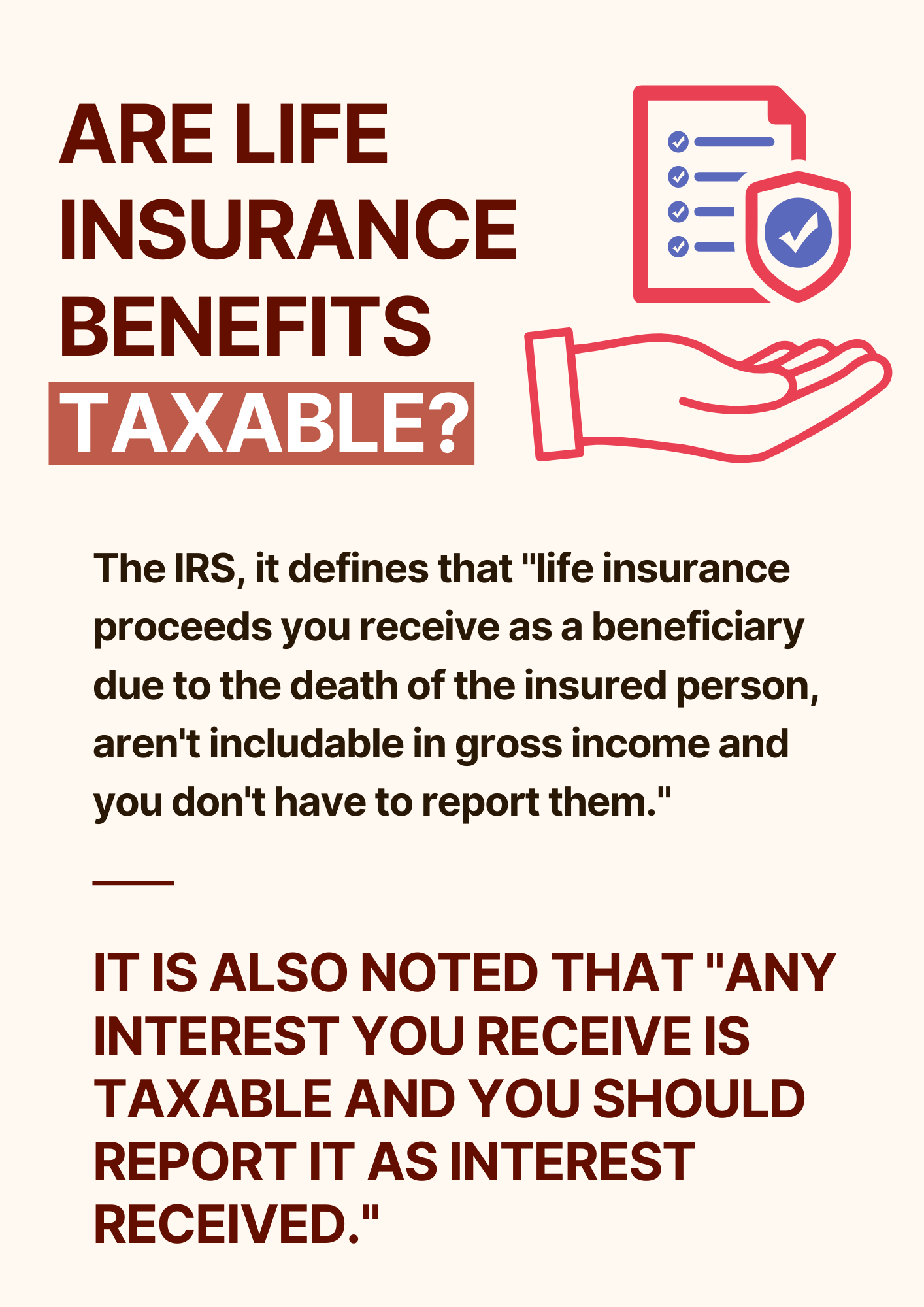
Generally, you are not responsible for income taxes on life insurance proceeds you receive as a beneficiary, but you may be subject to federal gift tax rules if you give that money away. In 2026, you can give up to the annual exclusion limit—typically around $19,000 to $20,000—per recipient without reporting it or paying taxes.
When a loved one passes away and you are the named beneficiary of their life insurance policy, the influx of capital can be life-changing. It is natural to want to share this windfall with family members, friends, or charitable causes. However, the transition from "receiving" money to "giving" money shifts the tax implications from the realm of income tax to the realm of gift and estate tax. Understanding these distinctions is vital in 2026, especially as significant changes to federal tax laws have recently taken effect.
Understanding the Tax Nature of Life Insurance Proceeds
Before addressing the act of giving the money away, it is essential to establish the tax status of the funds as they enter your possession. Under Internal Revenue Code Section 101(a)(1), life insurance death benefits paid to a beneficiary are generally not included in gross income. This means you do not pay federal income tax on the lump sum you receive.
There are, however, nuances to this rule:
- Interest Income: If the insurance company holds the proceeds for a period before paying you, any interest earned on that principal is taxable as ordinary income.
- Installment Payments: If you choose to receive the death benefit in installments rather than a lump sum, a portion of each payment representing interest will be taxable.
- Cash Value Policies: If the policy was sold or transferred for value prior to the insured's death, some portions of the benefit might be taxable.
Once the money is in your bank account, it is considered your personal asset. The IRS no longer views it as "life insurance money"; it is simply "your money." Consequently, when you decide to give it away, you must follow the same federal gift tax guidelines that apply to any other asset, such as cash, stocks, or real estate.
The Federal Gift Tax Landscape in 2026
In the United States, the gift tax is a tax on the transfer of property by one individual to another while receiving nothing, or less than full value, in return. A common misconception is that the person receiving the gift (the donee) pays the tax. In reality, the person giving the gift (the donor) is legally responsible for any gift tax liability.
The year 2026 marks a pivotal moment in tax history. Many provisions of the Tax Cuts and Jobs Act (TCJA) of 2017 were scheduled to expire at the end of 2025. This "sunset" means that the historically high lifetime gift and estate tax exemptions have reverted to pre-2018 levels, adjusted for inflation. For most individuals, this makes strategic gifting more complex than it was in the early 2020s.
The Annual Gift Tax Exclusion
The most common way to give away life insurance money without tax consequences is by utilizing the annual gift tax exclusion. This is a set amount that you can give to as many individuals as you like each year without having to report the gift to the IRS or dip into your lifetime exemption.
For the 2026 tax year, the annual exclusion is inflation-adjusted. If you give an amount equal to or less than this threshold (e.g., $19,000) to a single person, there is no tax filing requirement. If you are married, you and your spouse can "split" gifts, effectively doubling the amount you can give to a single recipient (e.g., $38,000) tax-free, provided both spouses agree and file the appropriate paperwork if necessary.
The Lifetime Estate and Gift Tax Exemption
If your gift exceeds the annual exclusion, you still likely won't pay out-of-pocket taxes immediately. Instead, the excess amount is subtracted from your lifetime estate and gift tax exemption.
In 2026, following the TCJA sunset, this lifetime exemption has decreased significantly from the $13+ million levels seen in 2025. It now sits closer to $7 million (adjusted for inflation). While this is still a substantial sum that protects most Americans from ever paying gift taxes, high-net-worth individuals who received large life insurance payouts must be much more cautious. Once you exhaust your lifetime exemption, any further gifts exceeding the annual exclusion are taxed at rates as high as 40%.
How Gifting Affects Your Tax Return
If you give away life insurance money in an amount that exceeds the annual exclusion to any one person, you must file IRS Form 709, the United States Gift (and Generation-Skipping Transfer) Tax Return.
Filing this form does not necessarily mean you owe money. Its primary purpose is to track how much of your lifetime exemption you have "used up." For example, if the annual exclusion is $19,000 and you give your child $50,000 of your life insurance proceeds, you have made a "taxable gift" of $31,000. You would file Form 709 to report that $31,000 has been deducted from your multi-million dollar lifetime limit.
Exceptions: Gifting Without Using Your Exemption
There are several ways to give away life insurance money that do not count toward your annual exclusion or your lifetime exemption. These are considered "non-taxable transfers" regardless of the amount:
- Spousal Gifts: Generally, you can give an unlimited amount of money to your spouse (provided they are a U.S. citizen) without triggering gift tax.
- Educational Expenses: If you use the life insurance money to pay for someone's tuition, the gift is tax-exempt only if you pay the educational institution directly. If you give the money to the student and they pay the school, it counts as a standard gift.
- Medical Expenses: Similar to tuition, payments made directly to a medical provider for someone else's care are exempt from gift tax. This includes premiums for health insurance.
- Political Organizations: Contributions to political organizations for their use are generally not subject to gift tax.
- Charitable Donations: Giving life insurance money to a qualified 501(c)(3) nonprofit is not subject to gift tax and may even provide you with an income tax deduction.
2026 Gift Tax Reference Table
The following table outlines the estimated thresholds and rules for gifting in 2026. Note that annual exclusion amounts are subject to final IRS inflation adjustments.
| Category | 2026 Rule/Threshold (Estimated) | Tax Responsibility | Filing Requirement |
|---|---|---|---|
| Annual Exclusion (Per Person) | ~$19,000 - $20,000 | Donor (if limit exceeded) | None if under limit |
| Married Couple (Split Gift) | ~$38,000 - $40,000 | Donor (if limit exceeded) | Form 709 usually required |
| Direct Tuition Payments | Unlimited | None | None |
| Direct Medical Payments | Unlimited | None | None |
| Lifetime Exemption | ~$7 Million (Inflation Adj.) | Donor (after exhaustion) | Form 709 for all excess gifts |
| Maximum Gift Tax Rate | 40% | Donor | Annual Form 709 |
Strategic Considerations for 2026
Given the lower lifetime exemption in 2026, beneficiaries of large life insurance policies (such as $5 million or $10 million policies) should consider a multi-year gifting strategy.
The Power of "Gifting Up"
If you intend to give a large portion of the proceeds to your children or grandchildren, spreading the gifts over several calendar years allows you to maximize the annual exclusion. For instance, if you receive a $100,000 payout and want to give it to your two children, giving each $20,000 in December 2026 and another $20,000 in January 2027 allows you to move $80,000 out of your estate with zero impact on your lifetime exemption.
529 Plans and Front-Loading
If you wish to use the life insurance money for a relative's future education, 2026 tax law continues to allow for "front-loading" 529 plans. You can contribute up to five years' worth of annual exclusions in a single year. For example, if the exclusion is $19,000, you could contribute $95,000 at once. This is treated as if you gave $19,000 each year for five years, effectively shielding a large lump sum of your life insurance money from future estate taxes.
Present Interest vs. Future Interest
To qualify for the annual exclusion, the gift must be a "present interest." This means the person receiving the money must have the immediate right to use, possess, or enjoy it. If you put the life insurance money into a trust where the recipient cannot access it for ten years, it may be considered a "future interest," which does not qualify for the annual exclusion and must be charged against your lifetime exemption regardless of the amount.
Common Pitfalls and Misconceptions
One of the most frequent errors is the belief that the "bank will report it, so the IRS knows." While banks must report cash transactions over $10,000 under the Bank Secrecy Act, this is related to anti-money laundering, not gift taxes. The responsibility to file Form 709 rests solely on the taxpayer.
Another pitfall involves "informal" gifts. If you use your life insurance money to buy a house for a relative and put the title in their name, that is a gift of the fair market value of the house. Similarly, adding a non-spouse to a bank account where they can withdraw the life insurance funds constitutes a gift the moment they withdraw the money for their own use.
Disclaimer: This information is for educational purposes and does not constitute legal, financial, or tax advice. Tax laws are subject to change and vary by jurisdiction. You should consult with a qualified CPA or tax attorney regarding your specific situation.
Frequently Asked Questions
Does the recipient of my life insurance money have to pay income tax on it?
No. In the United States, gifts are not considered income to the recipient. Whether you give them $100 or $1,000,000, they do not report that money on their income tax return. The tax obligations, if any, fall entirely on you as the donor.
Can I give money to my church or a charity tax-free?
Yes. Gifts to qualified charitable organizations are not subject to gift tax. Furthermore, because you are giving away money that was received income-tax-free (the life insurance), and then potentially taking an income tax deduction for the donation, charitable giving is one of the most tax-efficient ways to use life insurance proceeds.
What happens if I forget to file Form 709 for a gift over the limit?
If you fail to file Form 709, the IRS can assess penalties and interest. More importantly, the statute of limitations for the IRS to challenge the value of the gift never begins to run if the return is not filed. This can cause significant legal and financial headaches for your heirs during the probate process after your death.
If I give money to multiple people, do I add them together for the limit?
No. The annual exclusion applies per recipient. In 2026, if the limit is $19,000, you can give $19,000 to your son, $19,000 to your daughter, and $19,000 to a friend (totaling $57,000) without ever filing a gift tax return or paying taxes.
Does the state I live in charge a gift tax?
Most states do not have a gift tax. As of 2026, Connecticut remains the only state with a standalone gift tax that mirrors federal law. However, several states have "inheritance taxes" or "estate taxes" that might "pull back" gifts made shortly before death (usually within 3 years) into your taxable estate.
Final Recommendation
If you have received life insurance proceeds and intend to give away more than $15,000–$20,000 to any one individual, your first step should be to document the transfer clearly. Keep records of the check or wire transfer. If the amount is significantly higher than the annual exclusion, schedule a brief consultation with a tax professional before the end of the tax year.
Because 2026 is a "reset" year for lifetime exemptions, proactive planning is more important now than it has been in a decade. A simple strategy of splitting gifts with a spouse or paying tuition directly to a university can save your estate hundreds of thousands of dollars in future taxes while ensuring your beneficiaries receive the full intended impact of your gift.