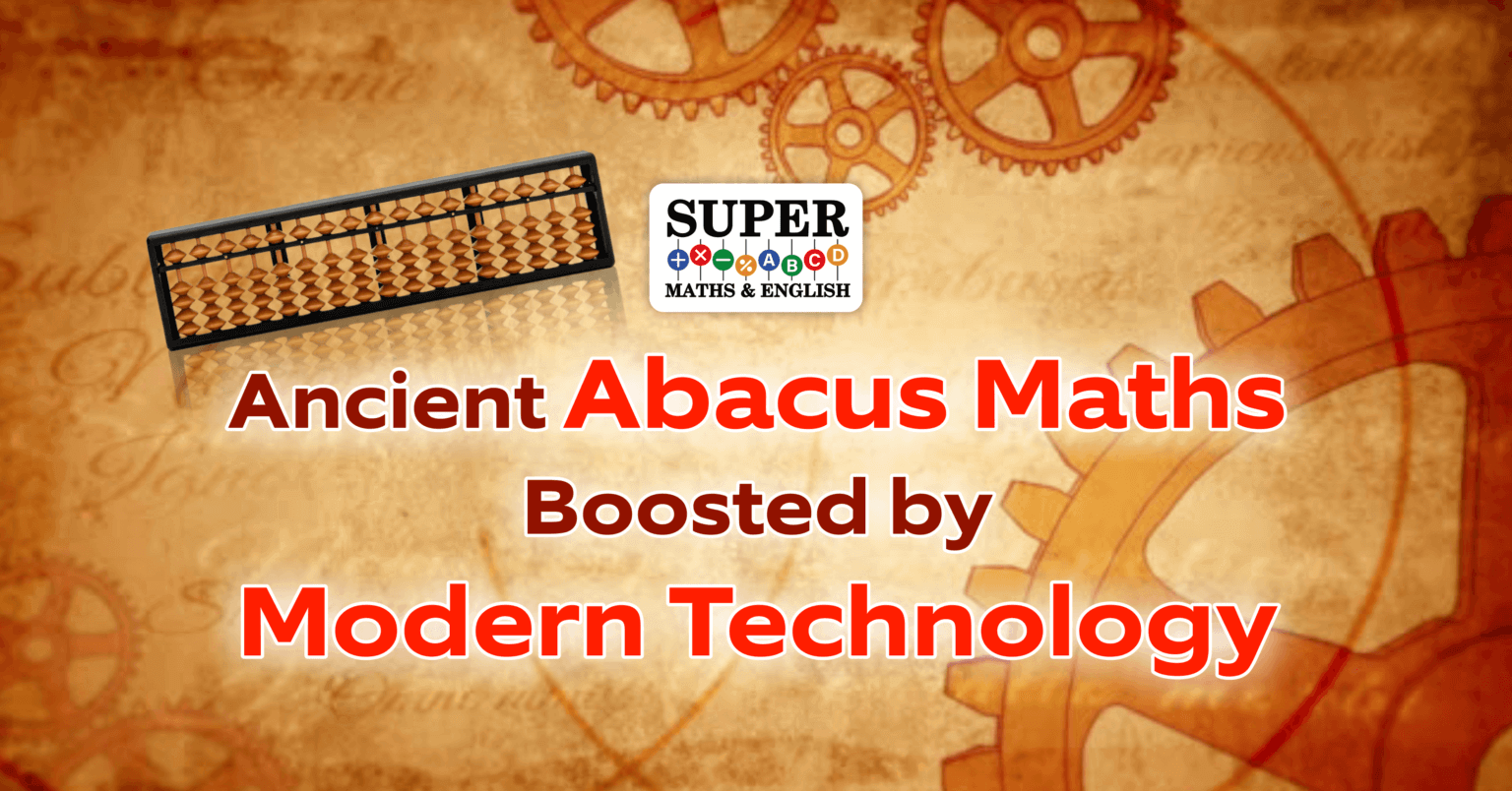
The abacus stands as one of humanity’s oldest and most enduring computing tools, evolving from Sumerian clay tablets and Mesopotamian counting boards to become a sophisticated instrument for pedagogical development in modern classrooms. By bridging the gap between tactile physical manipulation and abstract numerical reasoning, it remains a critical asset for cognitive growth in mathematics education today.
The Origins: Counting Boards of Mesopotamia
The genesis of the abacus lies not in a single invention, but in the necessity of commerce and agricultural accounting in the ancient Near East. Around 2400–2000 BCE, in the region of Sumer, record-keepers began using a form of the "dust abacus." These were portable surfaces—often trays of sand or dust—where lines were drawn and pebbles (calculi) were placed to represent numerical values.
The term "calculi" is itself revealing, deriving from the Latin word for pebble, reflecting the foundational link between physical objects and mathematical operations. In the Sumerian administrative system, the abacus was an extension of the sexagesimal (base-60) system. By manipulating these pebbles across defined zones on the board, scribes could perform addition, subtraction, and rudimentary multiplication, which were essential for tracking grain yields, livestock, and labor taxes. This method provided a visual, modular way to handle large numbers that were cumbersome to record solely through cuneiform impressions on clay tablets.
Evolution Across Civilizations: The Diffusion of the Computing Board
As civilization expanded, so too did the reliance on the counting board. The mechanism migrated from the Near East to Egypt, Greece, and eventually Rome. The Roman abacus represented a significant technical shift: it evolved from a loose-pebble surface to a more rigid instrument featuring metal grooves and counters.
This transition from a loose surface to a fixed-track system allowed for greater precision and reduced the likelihood of error caused by shifting pebbles. During the Medieval period, the "exchequer" or cloth-covered table (often patterned with a grid) became the standard for European accounting. The term "exchequer" survives today in government terminology, tracing back to the days when officials moved counters across a checkered cloth to balance the royal accounts.
Meanwhile, in East Asia, the tool underwent a parallel evolution. The Chinese suanpan emerged during the Han Dynasty (though perfected later, around the 12th century CE) and featured a frame with beads sliding on rods, divided into two sections. This "bead-frame" design is the direct ancestor of the modern abacus used today. The Japanese soroban, a refinement of the Chinese suanpan, further optimized this design for speed by reducing the number of beads per rod.
Structural Mechanics: Comparing Abacus Traditions
The effectiveness of the abacus lies in its positional notation system. Unlike early tally marks, the abacus uses spatial location to denote place value (units, tens, hundreds, etc.). This mirrors the modern decimal system, making the transition from physical calculation to mental arithmetic highly effective.
| Feature | Chinese Suanpan | Japanese Soroban | Roman/Medieval Board |
|---|---|---|---|
| Beads per rod | 7 (2 top, 5 bottom) | 5 (1 top, 4 bottom) | Variable (grooves/pebbles) |
| Base System | Decimal (Base-10) | Decimal (Base-10) | Mixed (Decimal/Duodecimal) |
| Primary Use | General accounting | Speed calculation | Royal/Legal finance |
| Ergonomics | Stability-focused | Speed-optimized | Fixed grooves |
The technical distinction between these models often reflects the specific mathematical needs of the era. The soroban’s 1:4 bead ratio is particularly well-suited for high-speed mental calculation, as it requires fewer finger movements to represent numbers 0 through 9, minimizing the physical "travel time" of the fingers during rapid computation.
The Abacus in the 2026 Classroom
In the contemporary educational landscape, the abacus has transitioned from a professional tool for accountants to a powerful didactic instrument for children. In 2026, many primary schools integrate the abacus into their curriculum to provide a tactile foundation for abstract concepts.
The pedagogical value of the abacus is rooted in neuro-mathematical development. Research indicates that when students use an abacus, they are not merely performing a calculation; they are engaging in a sensory-motor process that reinforces the concept of place value. By physically shifting beads to "carry" a value from the units rod to the tens rod, a student gains a concrete understanding of why regrouping works, a concept that often remains abstract when taught using pencil-and-paper algorithms alone.
Furthermore, proponents of "Mental Abacus" training highlight that children who achieve proficiency can eventually discard the physical frame entirely. By visualizing the abacus in their "mind’s eye," these students can perform complex arithmetic with extraordinary speed, tapping into the brain's spatial processing centers rather than relying purely on verbal or rote memory.
Challenges and Prerequisites for Implementation
While the benefits of abacus education are well-documented, integrating it into a modern classroom is not without challenges. For educators and parents looking to introduce the tool, there are specific requirements to ensure success:
- Instructional Framework: A standard arithmetic abacus is not self-explanatory. Users require a structured curriculum that teaches the "fingering" techniques required to move beads efficiently.
- Consistency: Proficiency is a cumulative skill. Occasional use often leads to frustration; daily, short-duration practice (10–15 minutes) is the industry standard for maintaining skill acquisition.
- Progression: Learners must first master simple addition and subtraction before moving on to multiplication, division, and decimal fractions.
- Hardware Quality: For classroom use, durable plastic or wooden frames with smooth-sliding beads are required to prevent frustration caused by "sticky" components.
Common Mistakes and Misconceptions
One of the most frequent errors in adopting the abacus is the assumption that it competes with digital calculators. In reality, the two tools serve fundamentally different purposes. A digital calculator provides a result; the abacus provides a method for understanding how the result was reached.
Another misconception is that the abacus is obsolete. While it has been replaced in the workforce by electronic systems, it is rarely "replaced" in the cognitive sense. When students rely solely on digital interfaces, they may lose the "number sense"—an intuitive understanding of numerical magnitude and relationships. The abacus serves as a cognitive safeguard, grounding mathematical thinking in the physical movement of units.
Frequently Asked Questions
Does using an abacus improve standardized math test scores? Many studies suggest that students trained in abacus-based mental math outperform peers in standardized tests concerning arithmetic speed and accuracy. The improvement is often attributed to enhanced working memory and spatial reasoning developed through bead manipulation.
Can adults learn to use an abacus, or is it only for children? Adults can certainly learn the abacus. While children often master the "mental" aspect faster due to neuroplasticity, adults can benefit from the tool as a way to sharpen focus and re-engage with the logic of arithmetic.
What is the difference between an abacus and a bead counter (abacus toy)? An educational abacus is designed with specific bead-to-rod ratios (like the 1:4 Japanese model) to facilitate mathematical operations. A "toy" abacus often has a random number of beads (e.g., 10 beads per row), which is useful for basic counting but lacks the place-value structure required for multiplication or long division.
How does the abacus handle negative numbers? Advanced abacus techniques involve assigning a specific rod to represent the sign or simply keeping track of the sign mentally while performing the operations on the magnitude of the numbers.
Recommendation for Success
For educators or parents aiming to leverage the historical and cognitive power of the abacus in 2026, the first step is to acquire a standard 1:4 Japanese-style soroban. Avoid complex multi-colored toys that lack proper place-value functionality. Begin by teaching the concept of the "active" bead (the bead moved toward the center bar). Once the student can reliably represent numbers 0–9, proceed to simple addition. The goal is not to reach a high-speed competition level immediately, but to transform the abstract, invisible processes of arithmetic into a tangible, logical sequence that the student can control with their own hands.