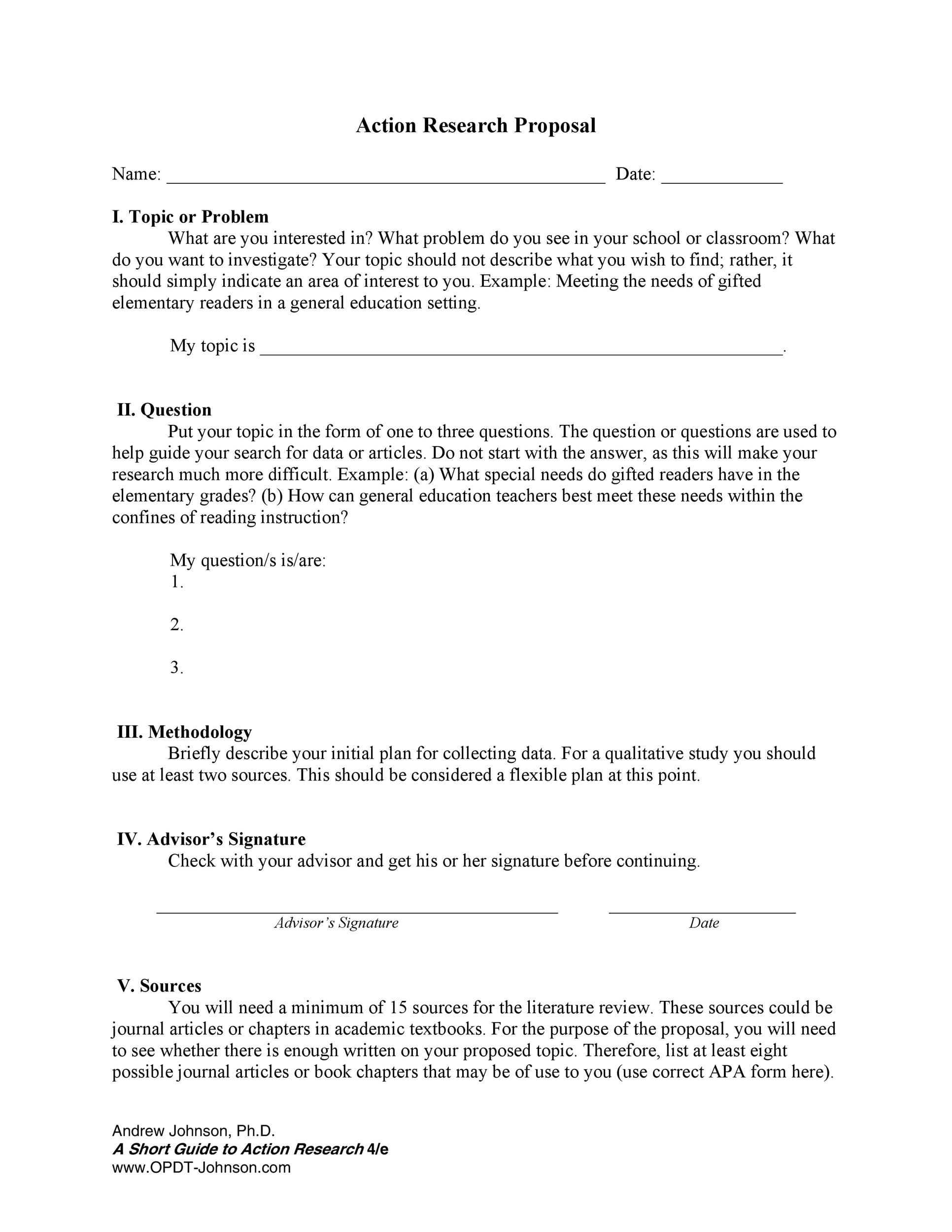
An APA research proposal is a structured document that outlines the rationale, methodology, and significance of a proposed study following American Psychological Association (APA) guidelines. It serves as a blueprint for researchers to secure institutional approval or funding by demonstrating a rigorous plan for systematic inquiry and ethical data collection.
The Strategic Purpose of a Research Proposal
As of 2026, the APA 7th Edition remains the standard for behavioral and social science documentation. A research proposal is not merely a preliminary draft of a final paper; it is a persuasive document designed to convince a committee, supervisor, or funding body that a research question is worth investigating and that the researcher has a viable plan to answer it.
The proposal must demonstrate that the researcher is familiar with the existing body of knowledge and has identified a "gap" that the new study will address. Unlike a completed research paper, the proposal is written primarily in the future tense regarding the methodology ("data will be collected") and the present or past tense when discussing existing literature ("Smith argued" or "current evidence suggests").
Formatting Foundations for 2026
Before examining the specific sections of an example, one must master the general formatting requirements. Proper APA formatting signals professional competence and ensures that the document is easy for reviewers to navigate.
- Margins and Spacing: Use 1-inch margins on all sides. The entire document must be double-spaced, including the reference list and block quotes.
- Typography: While APA 7th Edition allows for various accessible fonts, common choices in 2026 include 12-point Times New Roman, 11-point Calibri, or 11-point Arial. Consistency throughout the document is mandatory.
- Page Headers: For student proposals, the page number is placed in the top right corner. For professional-grade proposals (such as those for grant applications), a "running head" (a shortened version of the title in all caps) is required in the top left, opposite the page number.
- Paragraph Alignment: The first line of every paragraph should be indented 0.5 inches. The text should be left-aligned with a "ragged" right edge; do not use full justification.
The Title Page: Establishing First Impressions
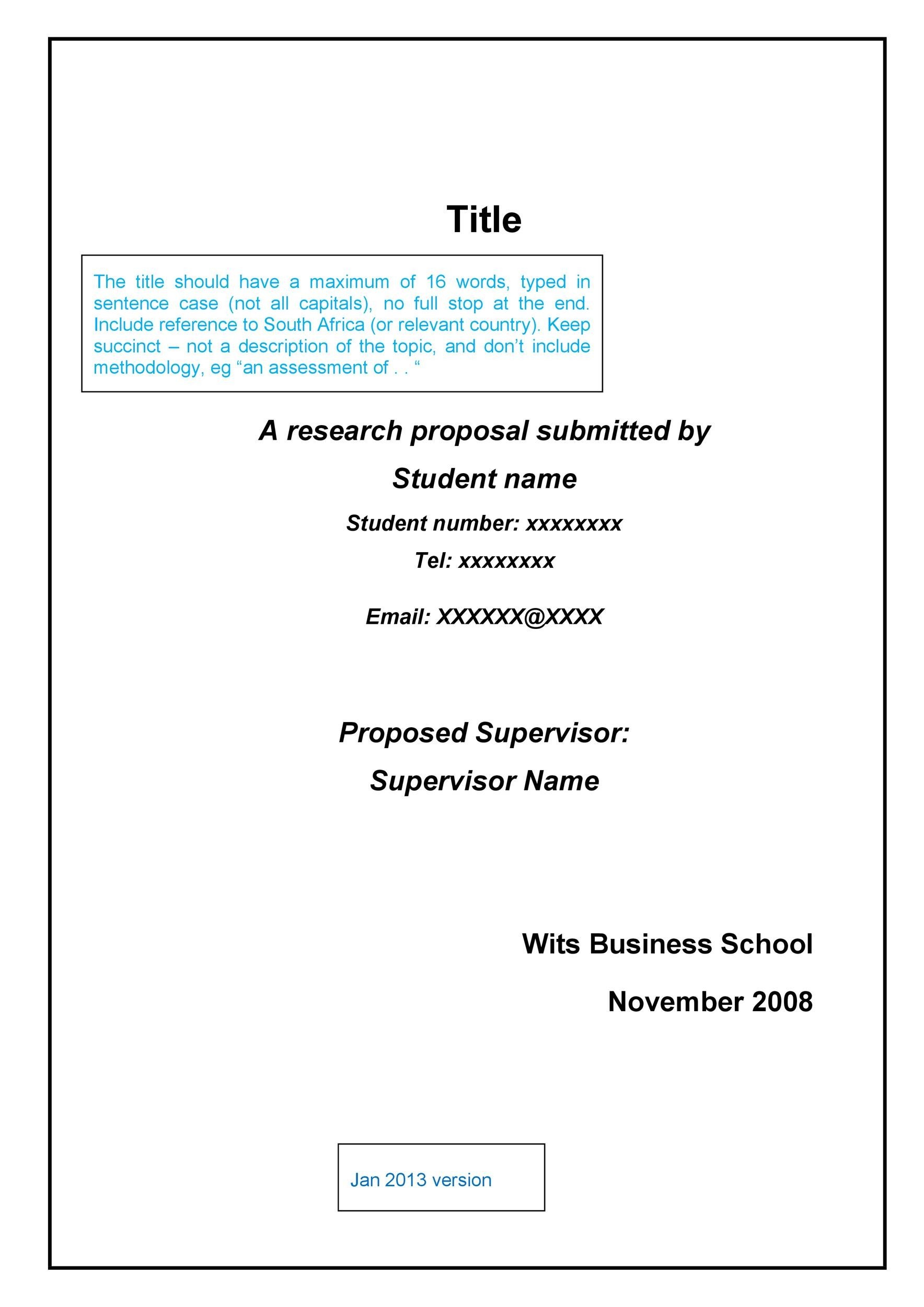
The title page of an APA proposal differs slightly between student and professional versions. A professional title page includes the paper title, author names, institutional affiliations, and an author note. A student version typically includes the title, author name, department, course name, instructor, and date.
The title itself should be a concise statement of the main topic and identify the variables or theoretical issues under investigation. Avoid unnecessary phrases like "A Study of" or "An Investigation into." For example, "The Impact of Remote Work on Employee Burnout: A Longitudinal Analysis" is far more effective than "A Proposal to Study How Working from Home Affects People."
Writing an Effective Abstract
While not always required for shorter proposals, most formal research plans include an abstract. This is a single, non-indented paragraph (usually 150 to 250 words) that provides a high-level summary of the entire proposal.
In an APA research proposal example, the abstract should briefly state:
- The research problem or objective.
- The participants or subjects involved.
- The proposed methodology (experimental design, surveys, or qualitative interviews).
- The anticipated findings or the significance of the potential results.
The Introduction: The Funnel Approach
The introduction is the "why" of your proposal. Effective APA research proposals utilize a "funnel" approach: starting with a broad overview of the field and narrowing down to the specific research question.
The Problem Statement
You must clearly define the problem your research aims to solve. If you are investigating the efficacy of a new teaching method, you must first establish that current methods are failing or could be improved. Use data and citations from the last five to ten years to prove that the issue is current and significant.
The Significance of the Study
Why does this research matter? In this section, you explain the practical or theoretical implications. Will the results help clinicians? Will they inform public policy? Or will they resolve a conflict between two competing theories in psychology?
The Literature Review: Synthesizing Knowledge
The literature review is often the longest section of the proposal. It is not a chronological list of summaries; it is a synthesis. You are looking for themes, trends, and contradictions in existing research.
In a high-quality APA proposal example, the literature review accomplishes three things:
- Contextualization: It places your study within the historical and modern landscape of the topic.
- Justification: It proves that your research hasn't already been done, or that previous studies had limitations (such as small sample sizes or biased demographics) that you will correct.
- Theoretical Framework: It identifies the theories that will guide your interpretation of the data.
When citing sources, follow the APA Style guidelines for in-text citations, ensuring every claim is backed by evidence. If you mention a study by Jones and Smith from 2023, the citation should look like: (Jones & Smith, 2023).
The Method Section: The Blueprint
The Method section is the core of the proposal. It must be written with enough detail that another researcher could replicate your study based solely on your description. Because the study hasn't happened yet, use the future tense.
Participants
Identify who will be studied. In 2026, researchers are expected to provide detailed demographic information to ensure diversity and inclusion. You must state the targeted sample size and justify it—often through a power analysis to ensure the study is statistically viable. Describe the recruitment process: Will you use social media, university pools, or clinical referrals?
Materials and Apparatus
List every tool you will use. If you are using a standardized survey, such as the Beck Depression Inventory, cite its origin and mention its reliability and validity scores. If you are using custom software or physical equipment, describe it in detail.
Design and Procedure
This is a step-by-step account of what will happen to the participants from the moment they enter the study until they are debriefed.
- Design: Is it a within-subjects, between-subjects, or mixed-model design?
- Procedure: Explain the instructions given to participants, the order of tasks, and how variables will be manipulated or measured.
Proposed Data Analysis and Expected Results
Since no data exists yet, this section explains how you plan to handle the data once collected. You should identify the statistical tests you intend to use. For example, if you are comparing the means of two groups, an independent samples t-test might be appropriate. If you are looking at relationships between multiple variables, you might propose a multiple regression analysis.
This section demonstrates your quantitative or qualitative literacy. It shows the reviewers that you know how to interpret the evidence you are about to gather. You should also briefly discuss what you expect to find (your hypotheses) and how those findings would support or refute existing theories.
Ethical Considerations and IRB Compliance
In modern research, ethics are paramount. Any proposal involving human or animal subjects must address how the researcher will protect their welfare. Mention that the study will be submitted to an Institutional Review Board (IRB) for approval.
Key ethical points to cover include:
- Informed Consent: How will you ensure participants understand the risks?
- Confidentiality: How will data be stored securely?
- Right to Withdraw: Can participants leave the study at any time without penalty?
- Deception: If you must deceive participants for the sake of the study, how will you debrief them afterward?
For further guidance on ethical standards, researchers often refer to the APA Ethics Code, which outlines the principles of beneficence and nonmaleficence.
References and Appendices
The reference list must start on a new page. Only include sources that you have cited within the text. Every entry must follow strict APA 7th Edition formatting, including the use of DOIs (Digital Object Identifiers) for journal articles whenever available.
Appendices are used for supplemental material that would disrupt the flow of the main text. This includes copies of survey instruments, interview protocols, complex mathematical proofs, or letters of permission from organizations where data collection will occur.
Summary of APA Proposal Sections
| Section | Primary Goal | Key Elements |
|---|---|---|
| Title Page | Identify the work and author. | Title, Author, Affiliation, Date. |
| Abstract | Summarize the proposal. | Problem, Method, Expected Significance. |
| Introduction | Establish the research "why." | Problem statement, objectives, hypotheses. |
| Literature Review | Contextualize the study. | Synthesis of prior research, identifying gaps. |
| Method | Detail the "how." | Participants, Materials, Procedure, Design. |
| Analysis Plan | Explain data processing. | Statistical tests, software, expected results. |
| Ethics | Ensure subject safety. | Informed consent, IRB status, data privacy. |
| References | Credit original authors. | APA formatted list of all cited works. |
Frequently Asked Questions
Is a research proposal written in the past or future tense?
A research proposal is primarily written in the future tense because the research has not yet been conducted. You will describe what you will do and how data will be analyzed. However, when citing previous research in the literature review, you should use the past tense (e.g., "The researchers found...") or the present perfect tense (e.g., "Several studies have shown...").
How long should an APA research proposal be?
The length varies depending on the complexity of the project and the requirements of the institution. Generally, a master’s level proposal is between 15 and 25 pages, while a doctoral or grant proposal might be significantly longer. Undergraduate proposals may be shorter, ranging from 5 to 10 pages.
Do I need to include actual results in a proposal?
No. By definition, a proposal is a plan for future work. You do not have results yet. Instead, you include a section on Expected Results, where you describe what you anticipate finding based on your hypothesis and how you will interpret those potential outcomes.
What is the difference between a research proposal and a research report?
A proposal is a plan for a study that hasn't happened yet, focusing on justification and methodology in the future tense. A research report is a documentation of a completed study, focusing on actual results and conclusions in the past tense.
Can I change my method after the proposal is approved?
Significant changes to the methodology usually require an amendment to your proposal and a re-review by your supervisor or the IRB. Minor adjustments are common, but the core design should remain consistent with what was approved to ensure the integrity of the process.
Final Recommendation
When drafting your APA research proposal, start by creating a detailed outline based on the sections mentioned above. Focus heavily on the Method section, as this is where most proposals are scrutinized. Ensure that your research question is specific, measurable, and achievable within your timeframe and budget. Once the draft is complete, use a citation manager and the official Purdue OWL APA Guide to verify that every comma and period in your references is in the correct place. A meticulously formatted proposal not only reflects your attention to detail but also builds trust with your reviewers.