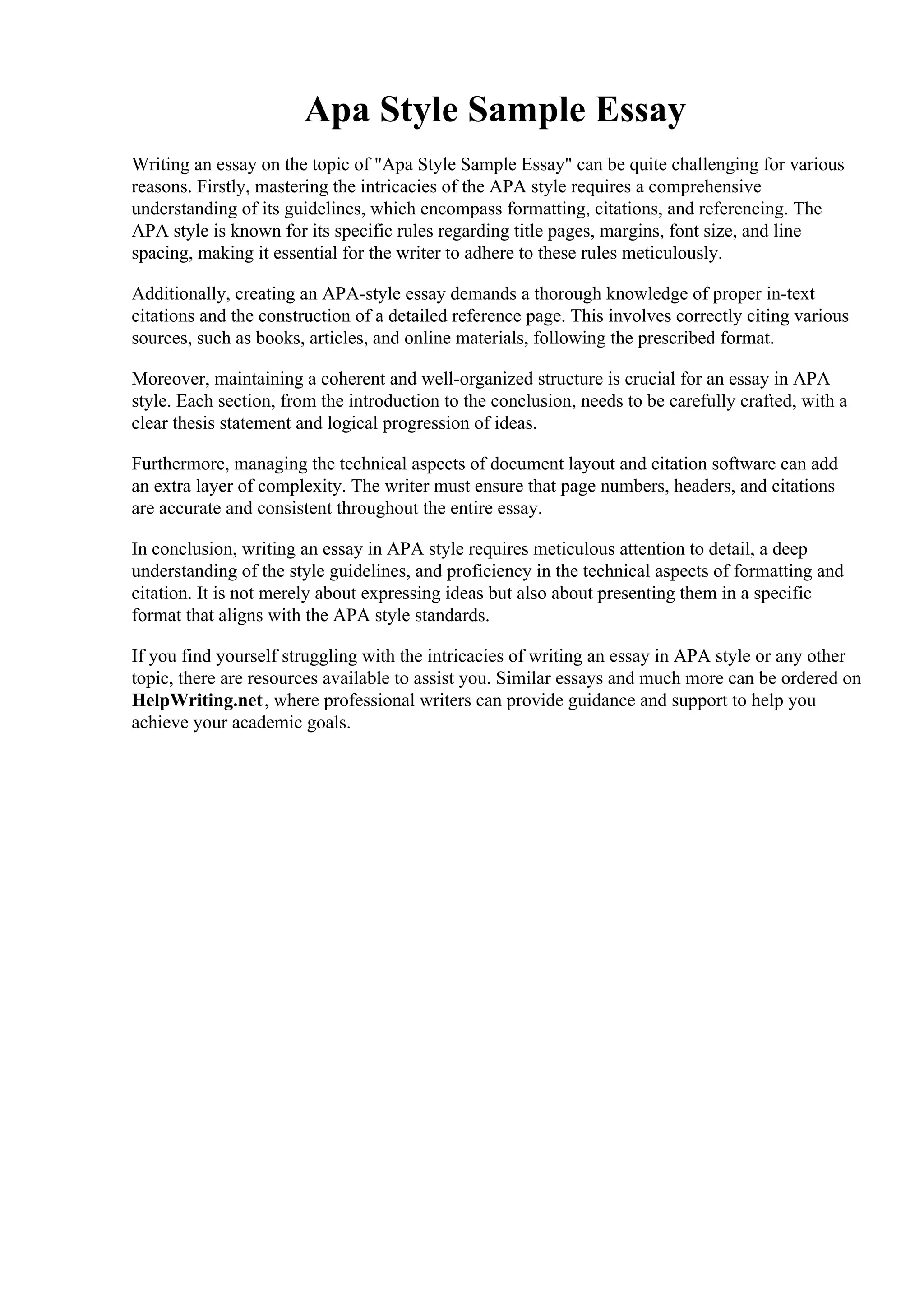
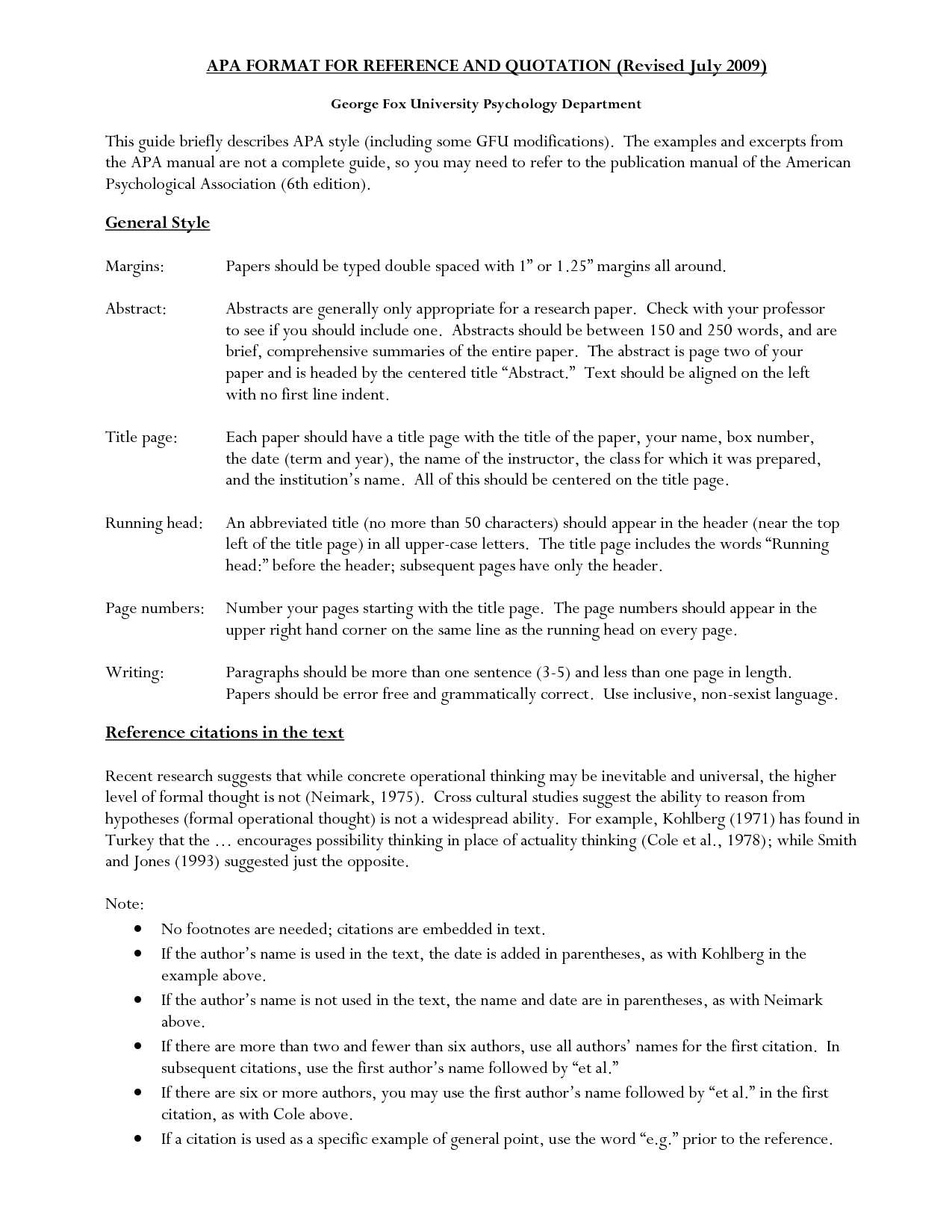
The APA research essay format follows the guidelines established by the American Psychological Association (APA), currently in its 7th edition. This style requires 1-inch margins, double-spaced text, and a professional font such as 12-point Times New Roman or 11-point Calibri. Key components include a title page, the main body with specific heading levels, and a references list.
In the academic and professional world of 2026, APA style remains the gold standard for formatting papers in the social sciences, behavioral sciences, business, and nursing. While the 7th edition has been in place for several years, its nuances regarding student versus professional requirements often cause confusion. Mastering this format is not merely about aesthetic consistency; it is a critical component of academic integrity, ensuring that researchers receive proper credit for their work while providing a clear roadmap for readers to follow.
Understanding the Fundamentals of APA Style
APA style serves two primary purposes: providing a consistent structure for scientific communication and ensuring that all sources are cited accurately. When a paper follows a standardized format, readers can quickly locate key information, such as the methodology or specific findings, without being distracted by idiosyncratic formatting choices.
The 7th edition, released in late 2019 and remaining the definitive standard in 2026, introduced significant updates to make the style more accessible and inclusive. It simplified many rules that were previously cumbersome, such as the "running head" requirement for student papers and the way electronic sources are cited. For any researcher, the goal is to present ideas with clarity, conciseness, and bias-free language.
Scope of Use
While primarily associated with psychology, APA style is the required format for various disciplines, including:
- Social Sciences: Sociology, economics, and political science.
- Education: Curriculum development and educational psychology.
- Business: Marketing reports and management analyses.
- Health Sciences: Nursing, public health, and kinesiology.
General Document Guidelines and Page Setup
Before typing the first word of an essay, the document must be configured to meet specific layout requirements. These settings ensure that the paper is readable and provides enough space for instructor or peer-reviewer feedback.
Margins and Spacing
Every page of an APA-formatted research essay must have 1-inch margins on all four sides (top, bottom, left, and right). Most modern word processors default to these settings, but it is essential to verify them under the "Layout" or "Page Setup" menu.
The entire document must be double-spaced. This includes the title page, abstract (if required), body text, block quotations, and the references list. Do not add extra spacing before or after paragraphs; the double-spacing remains consistent throughout the entire manuscript.
Font Choices and Accessibility
The 7th edition allows for a variety of accessible fonts. The APA prioritizes legibility over a specific typeface. Common choices include:
- Serif Fonts: 12-point Times New Roman, 11-point Georgia, or normal-sized Computer Modern.
- Sans Serif Fonts: 11-point Calibri, 11-point Arial, or 10-point Lucida Sans Unicode.
It is vital to use the same font throughout the paper, including in the headers and the references list. The only exception is within figures, where a sans serif font between 8 and 14 points is preferred for clarity.
Paragraph Alignment and Indentation
The body text should be left-aligned, leaving the right margin "ragged" or uneven. Do not use full justification, as it creates irregular spacing between words that can hinder readability. The first line of every paragraph should be indented by 0.5 inches from the left margin. This is typically achieved by pressing the "Tab" key once.
Differences Between Student and Professional Formats
One of the most significant changes in the 7th edition is the distinction between student papers and professional manuscripts intended for publication. Understanding which one you are required to use is the first step in successful formatting.
The Student Paper
Students typically do not need to include a running head unless specifically requested by their instructor. The title page is simplified, focusing on the information necessary for grading and administrative tracking within an educational institution.
The Professional Paper
Professional papers require a running head, which is an abbreviated version of the paper title (maximum 50 characters, all caps) placed in the page header, flush left. Professional papers also require an abstract and author notes, which provide additional context about the research and any conflicts of interest or acknowledgments.
Constructing the Title Page (Student Version)
The title page is the first impression of your research. For a student essay, it must contain specific elements centered on the upper half of the page.
- Page Number: Place the number "1" in the top right corner of the header. Page numbering continues sequentially throughout the document.
- Paper Title: The title should be bold, centered, and written in title case (where major words are capitalized). It should be placed three to four lines down from the top of the page.
- Author Name: Leave one double-spaced blank line after the title, then type your full name (First, Middle Initial, Last).
- Institutional Affiliation: Below your name, list the name of the department and the university (e.g., Department of Psychology, University of Texas).
- Course Number and Name: Provide the course code followed by a colon and the course name (e.g., PSY 101: Introduction to Psychology).
- Instructor Name: Include the name of the instructor teaching the course. Use their preferred title (e.g., Dr. Jane Doe or Professor Smith).
- Assignment Due Date: Write out the full date in the format used in your country (e.g., October 15, 2026).
Formatting the Main Body and Heading Levels
Headings help organize the flow of a research essay, allowing the reader to navigate between sections such as the literature review, methodology, results, and discussion. APA uses a five-level heading system.
Heading Level 1
This is the highest level of heading, used for major sections. It must be centered, bold, and in title case. The text following this heading starts as a new paragraph, indented.
Heading Level 2
Used for subsections of Level 1. It is flush left, bold, and in title case. Like Level 1, the text begins as a new paragraph.
Heading Level 3
Used for subsections of Level 2. It is flush left, bold, italic, and in title case. The text begins as a new paragraph.
Heading Level 4
This is an indented, bold, title case heading that ends with a period. The text begins on the same line as the heading and continues as a regular paragraph.
Heading Level 5
The final level is indented, bold, italic, title case, and ends with a period. The text also begins on the same line as the heading.
| Heading Level | Format Description |
|---|---|
| Level 1 | Centered, Bold, Title Case |
| Level 2 | Flush Left, Bold, Title Case |
| Level 3 | Flush Left, Bold, Italic, Title Case |
| Level 4 | Indented, Bold, Title Case, Ending with a Period. |
| Level 5 | Indented, Bold, Italic, Title Case, Ending with a Period. |
Mastering In-Text Citations
In-text citations are brief references within the body of the essay that point the reader to the full source on the references page. APA uses an author-date system.
Narrative vs. Parenthetical Citations
There are two ways to present a citation:
- Parenthetical: Both the author and the year appear in parentheses at the end of the sentence. Example: Recent studies indicate that cognitive load affects memory retention (Miller, 2024).*
- Narrative: The author's name is incorporated into the sentence logic, followed by the year in parentheses. Example: Miller (2024) argued that cognitive load is a primary factor in memory retention.
Citing Multiple Authors
- Two Authors: Always cite both names (e.g., Smith & Jones, 2023).
- Three or More Authors: Use the first author's name followed by "et al." even in the first citation (e.g., Williams et al., 2022).
Direct Quotations
When quoting directly, you must include a page number (preceded by "p." for one page or "pp." for a range). If you are quoting from a website without page numbers, use paragraph numbers (e.g., para. 4).
The References Page: Structure and Rules
The references page lists every source cited in the body of the essay. It provides the necessary data for a reader to retrieve the source themselves.
Formatting the Page
The references list starts on a new page after the body of the essay. The word References should be centered and bolded at the top. The entire list must be double-spaced and use a hanging indent. A hanging indent means the first line of each entry is flush left, and subsequent lines are indented 0.5 inches.
Author Names and Dates
Sources are listed in alphabetical order by the author’s last name. Use initials for first and middle names. The date of publication is always enclosed in parentheses immediately following the author's name.
Common Reference Examples
- Journal Article: Author, A. A., & Author, B. B. (Year). Title of the article. Title of the Periodical, Volume(Issue), pages. https://doi.org/xxxx
- Book: Author, A. A. (Year). Title of the work. Publisher.
- Website: Author, A. A. (Year, Month Day). Title of the work. Site Name. URL
For more specific guidance on complex source types, the Official APA Style Website provides comprehensive examples for legal documents, social media posts, and datasets.
Tables and Figures in APA Format
In a research essay, tables and figures are used to present large amounts of data efficiently. They should be placed either immediately after the paragraph in which they are first mentioned or on separate pages at the end of the document, depending on your instructor's preference.
Table Components
- Number: Above the table, in bold (e.g., Table 1).
- Title: Below the number, in italicized title case.
- The Table: Use clear headers for rows and columns. Avoid vertical borders.
- Note: A brief explanation of symbols or abbreviations used, placed below the table.
Figure Components
Figures (graphs, charts, photos) follow the same numbering and title format as tables. The image itself must be high resolution and clear.
Common Mistakes and How to Avoid Them
Even seasoned researchers make formatting errors. Awareness of these common pitfalls can improve the quality of your submission.
Over-Citing and Under-Citing
Under-citing leads to plagiarism, while over-citing (placing a citation at the end of every single sentence even when they all refer to the same paragraph-wide source) can disrupt the reading flow. The rule of thumb is to cite the source the first time it is mentioned in a paragraph and re-cite only if the narrative could lead the reader to believe the subsequent information comes from a different source.
Misusing "Et Al."
Remember that "et al." is only used for sources with three or more authors. For a source with two authors, both must be listed every time. Additionally, "et al." is plural; it should be followed by a plural verb (e.g., Smith et al. argue, not Smith et al. argues).
Formatting DOIs and URLs
In 2026, most academic sources are accessed digitally. DOIs (Digital Object Identifiers) and URLs should be presented as live links (starting with http:// or https://). Do not put a period at the end of a URL, as it may interfere with the link's functionality.
Mismatched Citations
Every source cited in the text must appear in the references list, and every source in the references list must be cited in the text. Before submitting, perform a "cross-check" to ensure 100% alignment.
Frequently Asked Questions
Is an abstract required for a student APA research essay?
Usually, no. According to 7th edition standards, student papers do not require an abstract unless specifically requested by the instructor. An abstract is a 150-250 word summary of the paper and is more common in professional manuscripts intended for publication.
How do I cite a source with no author?
If a source has no identified author, use the first few words of the title in the in-text citation. If the title is for a book or report, italicize it. If it is for an article or chapter, use quotation marks. Example: ("Global Warming Trends," 2025).
Can I use the first person (I, me, we) in an APA paper?
Yes, the 7th edition encourages the use of the first person when describing your own actions as a researcher. For instance, instead of saying "The experiment was conducted by the authors," you should say "We conducted the experiment." However, avoid using the first person to state personal opinions (e.g., "I think the results are good").
What should I do if a source has no publication date?
Use the abbreviation "n.d." (which stands for "no date") in both the in-text citation and the references list. Example: (Johnson, n.d.).
How many heading levels should I use?
You should use only as many levels as necessary to organize your content. Most student essays only require Level 1 and Level 2 headings. Only use deeper levels (3, 4, and 5) if you have subsections within subsections.
Practical Recommendation
When preparing your APA research essay, begin by downloading or creating a template that pre-sets the margins, font, and page numbering. Tools like the Purdue Online Writing Lab (OWL) offer updated samples and checklists that are invaluable during the drafting phase. Once your essay is complete, use a citation manager or perform a manual audit of your references to ensure each entry follows the hanging indent and alphabetical order rules. Finalizing these technical details early allows you to focus on the quality of your research and the clarity of your arguments.