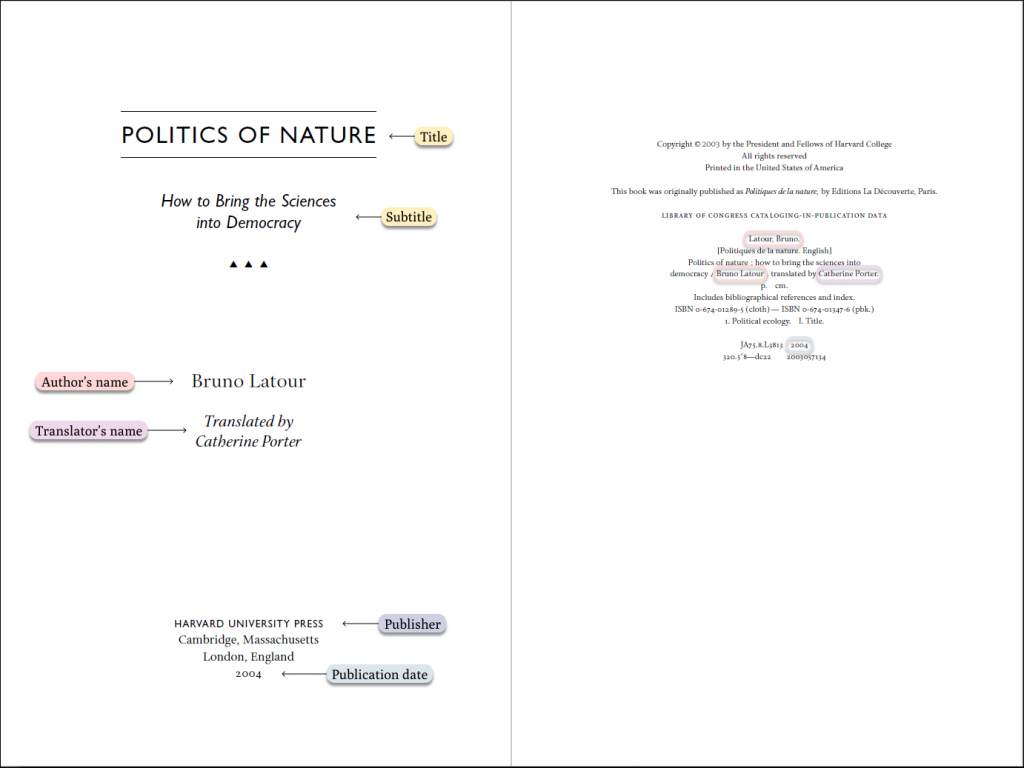
In APA Style (7th Edition), book titles mentioned in the body of your paper must be italicized and written in title case, meaning you capitalize all major words. In contrast, titles in the reference list use sentence case and italics. Proper formatting ensures academic clarity and adheres to professional publishing standards used across the social sciences.
Fundamentals of APA Title Formatting
Navigating the nuances of the American Psychological Association (APA) style can be challenging, particularly when distinguishing between how a title appears in the narrative of your essay versus how it is structured in the final reference list. As of 2026, the APA 7th Edition remains the gold standard for academic writing, emphasizing clarity, precision, and a standardized format that allows readers to cross-reference sources with ease.
The primary rule to remember is that APA treats "stand-alone" works—such as books, reports, films, and edited collections—differently than "part-of-a-whole" works, such as journal articles or book chapters. Book titles, being stand-alone entities, require italics in both the text and the reference list. However, the capitalization rules shift significantly depending on where the title is located.
Understanding this distinction is the first step toward mastering APA book title formatting. In-text mentions are designed to be visually distinct and readable within a paragraph, while reference list entries are designed for indexing and cataloging.
How to Cite Book Titles in the Body of Your Paper
When you refer to a book by its title within the narrative of your paper, you must follow specific typographical and capitalization rules. These rules ensure that the title stands out from the surrounding prose, allowing the reader to immediately identify that you are discussing a published volume.
The Use of Italics
In APA Style, the titles of whole works (like books) are always italicized when mentioned in the text. This applies whether you are providing a formal citation or simply mentioning the book in passing.
- Correct: In the classic novel The Great Gatsby, Fitzgerald explores the American Dream.
- Incorrect: In the classic novel "The Great Gatsby," Fitzgerald explores the American Dream.
Title Case Capitalization
While the reference list uses sentence case, the body of your paper requires title case. This means you must capitalize the following:
- The first word of the title and subtitle.
- The first word after a colon or dash.
- All "major" words, including nouns, verbs, adjectives, adverbs, and pronouns.
- Any word that is four letters or longer.
Minor words—such as conjunctions (and, but, for), prepositions (in, on, at), and articles (a, an, the)—should remain lowercase unless they are the first word of the title or subtitle.
Handling Punctuation
If a book title includes a subtitle, which is common in academic publishing, always use a colon to separate the main title from the subtitle. Even if the book cover uses a different layout (like a line break), the APA format requires a colon followed by a space, with the first word of the subtitle capitalized.
- Example: Thinking, Fast and Slow or Guns, Germs, and Steel: The Fates of Human Societies.
Formatting Book Titles in the Reference List
The reference list at the end of your paper serves as the definitive map for your research. Here, the rules for book titles change to favor a "sentence-style" approach. This is often the most common area where students and researchers make mistakes, as natural intuition suggests capitalizing all important words.
Sentence Case Explained
In the reference list, book titles are formatted in sentence case. This means you capitalize only:
- The first word of the title.
- The first word of the subtitle (the word immediately following the colon).
- Proper nouns (names of people, specific places, or organizations).
Everything else remains in lowercase. This convention helps distinguish the title from the author’s name and other bibliographical data at a glance.
- Reference List Example: Kahneman, D. (2011). Thinking, fast and slow. Farrar, Straus and Giroux.
- Narrative Comparison: "In his book Thinking, Fast and Slow, Kahneman (2011) argues..."
Maintaining Italics
Despite the change in capitalization, the requirement for italics persists in the reference list. The title is the only part of the book reference (aside from the occasional volume number) that should be italicized. Do not italicize the author’s name, the publication year, or the publisher’s name.
Comparison: In-Text vs. Reference List Formatting
To help visualize these differences, the following table compares how common book titles are handled in different parts of an APA-style manuscript.
| Element | In-Text (Narrative) | Reference List Entry |
|---|---|---|
| Capitalization | Title Case (Most words capitalized) | Sentence Case (Only first words/proper nouns) |
| Styling | Italics | Italics |
| Quotation Marks | Never used for book titles | Never used for book titles |
| Example 1 | The Catcher in the Rye | The catcher in the rye |
| Example 2 | A Brief History of Time | A brief history of time |
| Example 3 | APA Publication Manual | Publication manual of the American Psychological Association |
| Example 4 | Sapiens: A Brief History of Humankind | Sapiens: A brief history of humankind |
Special Cases and Complex Scenarios
Not every book follows a simple "Title: Subtitle" structure. Academic writing often involves complex works, including edited volumes, translated texts, and multi-volume series.
Edited Books and Individual Chapters
If you are citing an entire edited book, the title formatting follows the standard book rules. However, if you are citing a chapter within an edited book:
- In-Text: Mention the chapter title in quotation marks (Title Case) and the book title in italics (Title Case).
- Reference List: The chapter title is in sentence case and NOT italicized. The book title is in sentence case and IS italicized.
Titles Within Titles
Occasionally, a book title may contain the title of another work (e.g., a book about Hamlet).
- Reference List: If the title of another work appears within the book title, do not italicize the "inner" title.
- Example: A clinical guide to the Harry Potter series. (Note: "Harry Potter" is a proper noun, but if it were another italicized work, the italics would be dropped for that portion).
- In-Text: Keep the main book title in italics and put the inner title in italics as well, or use "reverse italics" if the entire sentence is already styled.
Translated Works
When citing a translated book, use the title as it appears in the version you read. If you read the English translation, use the English title. In the reference list, the translator's name is included in parentheses after the title.
- Reference List: Foucault, M. (1977). Discipline and punish: The birth of the prison (A. Sheridan, Trans.). Pantheon.
Religious and Classical Works
For major religious works like the Bible, the Qur'an, or the Torah, you do not need a reference list entry if you are using a standard version. However, in the text, you capitalize the title (Title Case) but do not italicize it.
- In-Text: In Genesis 1:1 (King James Version), the creation...
Common Mistakes to Avoid
Even seasoned researchers can stumble over the specific requirements of APA 7th Edition. Avoiding these common pitfalls will improve the professional quality of your work.
- Using Quotation Marks for Book Titles: This is perhaps the most frequent error. In APA, quotation marks are reserved for "shorter" works like journal articles, song titles, or book chapters when mentioned in text. Books always get italics.
- Over-Capitalizing in the Reference List: It is tempting to capitalize every word in the reference list because it "looks" like a title. Remember that APA prefers sentence case for references to improve readability and metadata consistency.
- Forgetting to Capitalize After a Colon: In both in-text and reference list formats, the first word after a colon must be capitalized.
- Italicizing the Publisher: Only the title of the book should be italicized. The publisher and the author’s name should be in standard (Roman) type.
- Including the Edition in Italics: If you are citing a specific edition (e.g., 2nd ed.), the edition information goes in parentheses after the title and is not italicized.
- Example: Cognitive psychology (6th ed.).
Why APA Style Matters
The strictness of APA formatting is not arbitrary. These rules are designed to facilitate scientific communication. By standardizing how a title appears, readers can quickly scan a bibliography and distinguish between a book, a journal, and a website.
In the digital age of 2026, where automated citation tools are ubiquitous, understanding the manual rules is still vital. AI and citation generators often struggle with proper noun detection in titles or fail to distinguish between narrative and reference list requirements. A human editor's eye is necessary to ensure that The New York Times remains capitalized in a reference list while the rest of a book title follows sentence case.
For further verification of specific or obscure title types, the APA Style Website provides exhaustive examples and the official Publication Manual of the American Psychological Association (7th ed.) serves as the final authority on these matters.
FAQ
Should I italicize a book title if it is part of a series?
If you are citing the specific book, italicize that book's title. If the series title is also mentioned, it generally follows the same rules as a stand-alone work (italics in text, italics in reference list). However, most APA citations focus on the specific volume title. If the volume is part of a series, the series title is often not included unless it is part of the formal title of the work.
How do I format a book title that has no author?
When a book has no credited author, the title moves to the author position in the reference list. It is still formatted in sentence case and italicized.
- Example: The universal dictionary of facts. (1922). Frontier Press.
- In-Text: (The Universal Dictionary of Facts, 1922).
Do I capitalize "the" in a book title?
In the body of your paper (Title Case), capitalize "the" only if it is the first word of the title or subtitle. In the reference list (Sentence Case), capitalize "the" only if it is the first word of the title or subtitle, or part of a proper noun.
What about e-books or Kindle books?
APA 7th Edition treats e-books exactly like print books. You do not need to note the format (e.g., "Kindle edition") in the citation. Simply use the author, date, title (italicized, sentence case in reference list), and publisher. If the e-book has a DOI, include it at the end.
How do I cite a book title in a different language?
In the reference list, provide the original title followed by an English translation in brackets. Only the original title is italicized.
- Example: Piaget, J. (1950). La genèse du nombre chez l'enfant [The child's conception of number]. Routledge & Kegan Paul.
Practical Recommendation
When writing your manuscript, keep a "style sheet" or a small cheat sheet nearby that reminds you of the "In-Text = Title Case" and "Reference List = Sentence Case" rule. Before submitting your paper, perform a dedicated "formatting pass" where you look only at your titles. This prevents you from overlooking small capitalization errors while focused on the content of your arguments. If you are using a reference manager (like Zotero or Mendeley), double-check the "Title" field to ensure it isn't forcing title case into your bibliography, as many databases export titles in all-caps or title case by default.