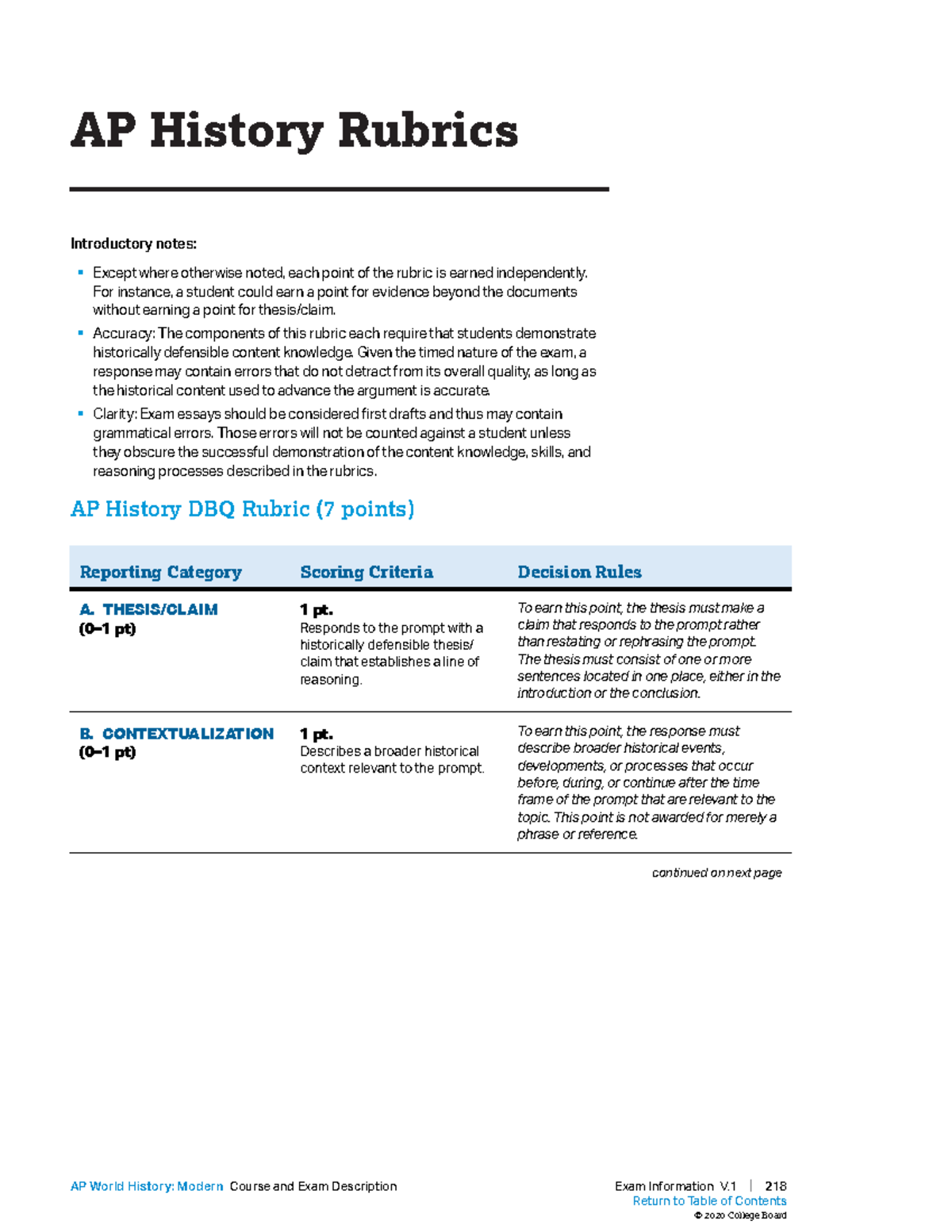
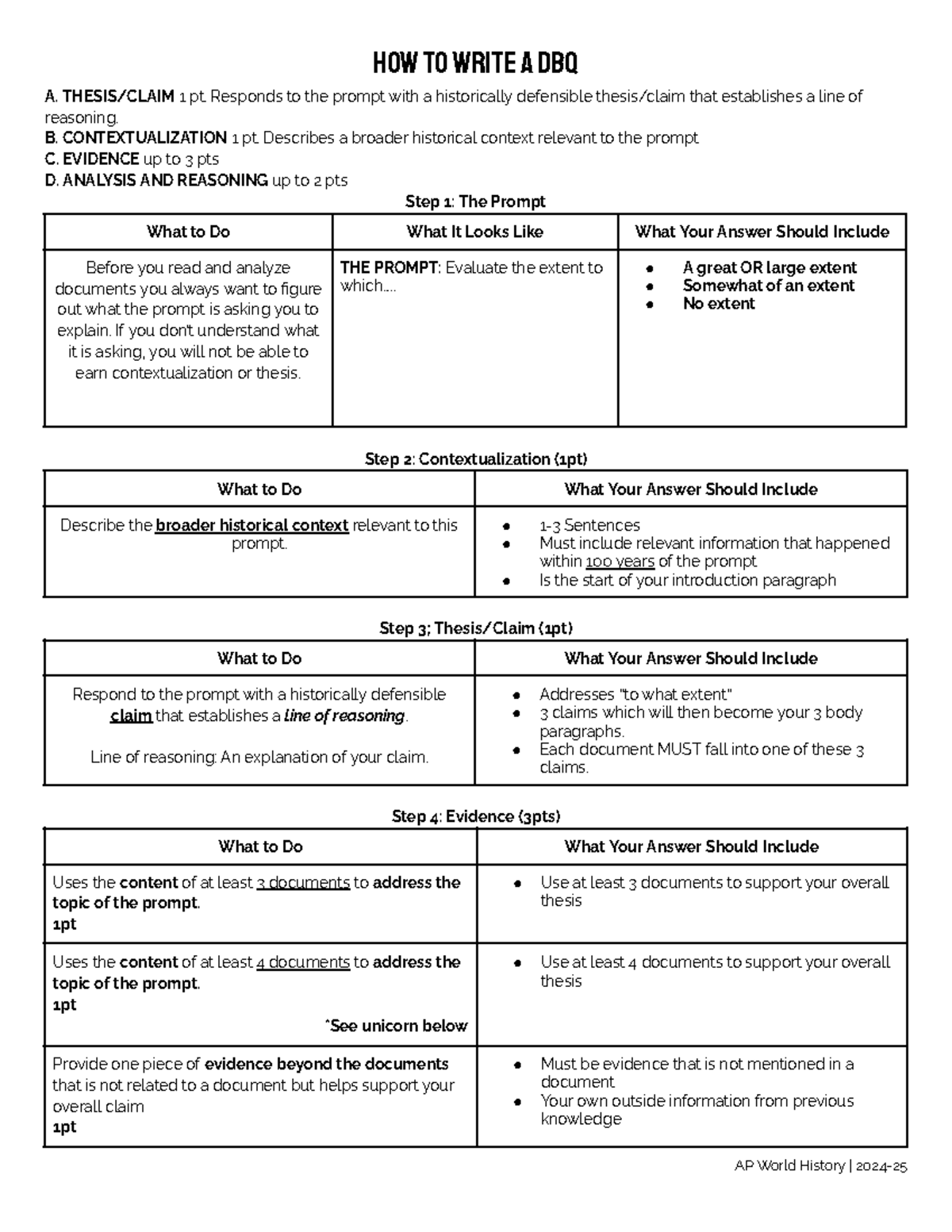
Accessing AP World History DBQ prompts in PDF format is essential for effective exam preparation. Official prompts from 2002 to 2025 are available on the College Board website, providing students with authentic practice materials that reflect the current "Modern" curriculum (c. 1200–present) and the rigorous 7-point scoring rubric used by graders.
The Role of PDF Prompts in AP World History Prep
As we move through the 2026 academic year, the Document-Based Question (DBQ) remains the cornerstone of the AP World History: Modern exam. This single essay accounts for 25% of a student’s total score, making it the most heavily weighted individual task on the test. Because the DBQ requires students to synthesize evidence from seven provided documents while applying high-level historical reasoning, practicing with authentic AP World History DBQ prompts PDF files is the most reliable way to build the necessary stamina and skill.
PDF versions of these prompts are particularly valuable because they mirror the layout students will encounter on exam day. Whether a student is taking the paper-based version or the digital format of the exam, the ability to annotate, underline, and organize thoughts directly on the document set is a critical skill. Using a PDF allows students to print the materials and simulate the physical experience of the 15-minute reading period and the subsequent 45-minute writing block.
Where to Locate Official DBQ Prompt PDFs
The primary and most authoritative source for DBQ prompts is the College Board. Since the curriculum shift in 2019 to "AP World History: Modern," the exam focuses exclusively on the period from 1200 CE to the present. While older prompts (pre-2019) are still available, students must be careful to select those that align with the current content standards.
College Board AP Central
The official repository for past exam questions is located on the AP Central website. Here, the College Board provides PDFs of the Free-Response Questions (FRQ) for every year. Each PDF typically includes the DBQ prompt, the seven documents, and the Long Essay Question (LEQ) options. For the 2026 testing cycle, students should prioritize prompts from 2021, 2022, 2023, 2024, and 2025, as these most accurately reflect the current difficulty level and document types.
Scoring Guidelines and Sample Responses
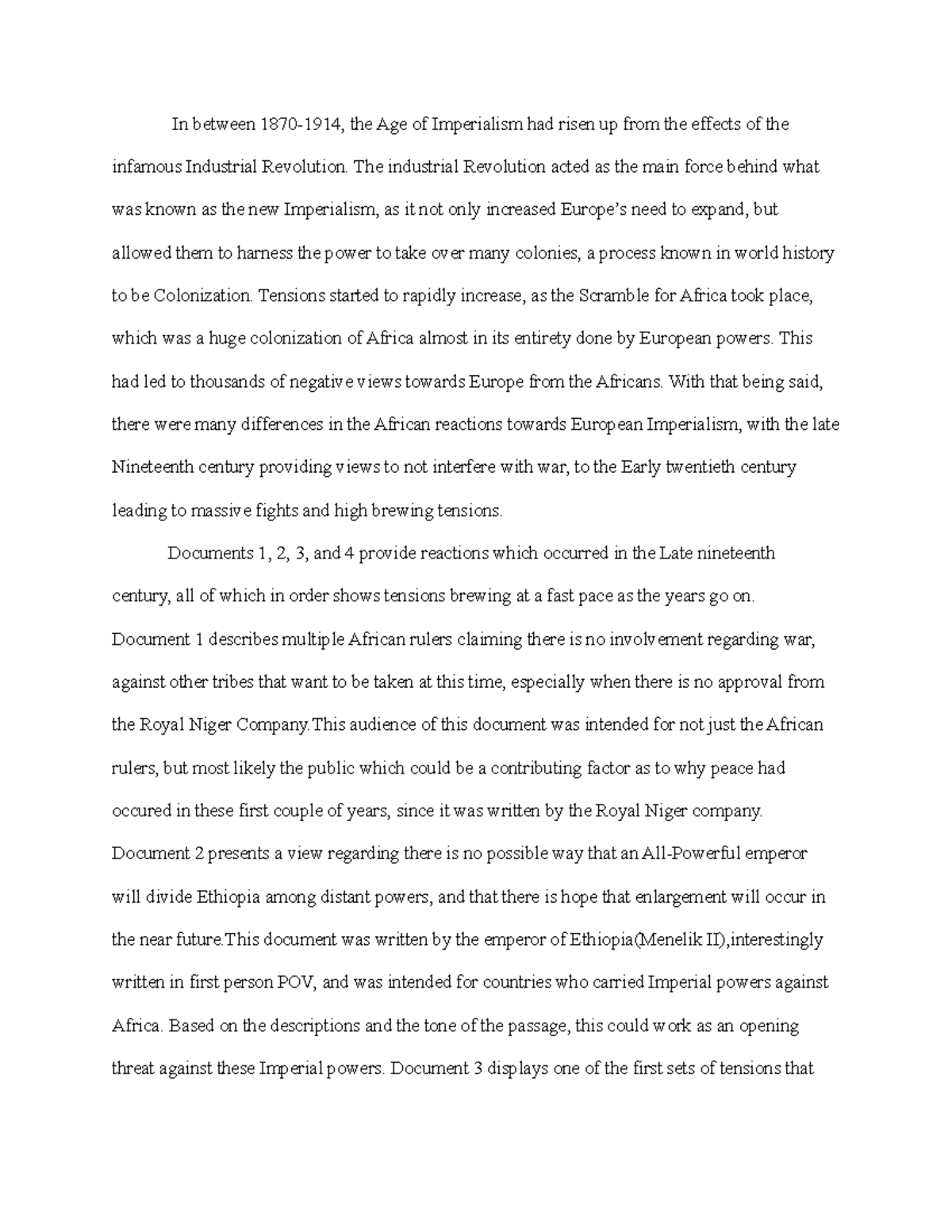
Alongside the prompt PDFs, the College Board releases "Scoring Guidelines" and "Student Samples." These are arguably more important than the prompts themselves. By reviewing the scoring PDF, students can see exactly how a point was awarded for contextualization or evidence beyond the documents. The sample responses show a range of performance—from high-scoring 7/7 essays to lower-scoring 2/7 attempts—helping students identify the specific characteristics of successful writing.
Anatomy of an AP World History DBQ Prompt
When you open a DBQ PDF, you are presented with a standardized structure. Understanding this structure helps reduce anxiety during the actual exam. Every prompt is designed to test your ability to "evaluate" a specific historical development or "analyze" the extent to which something changed or remained the same.
- The Prompt Text: This is the core question. It usually specifies a time period (e.g., 1750–1900) and a geographic region or a thematic focus (e.g., state-building in the Americas).
- The 15-Minute Reading Period: Although not a forced stop, the instructions recommend 15 minutes to read and plan.
- The Seven Documents: These include a mix of primary and secondary sources. You can expect 5–6 text-based documents (letters, edicts, diary entries) and 1–2 visual sources (maps, political cartoons, paintings, or charts).
- The Rubric Checklist: The PDF usually contains a brief reminder of the requirements: Thesis, Contextualization, Evidence from Documents, Evidence Beyond Documents, Sourcing (HIPP), and Complexity.
Strategies for Analyzing DBQ Documents in PDF Format
Mastering the DBQ is not just about writing; it is about efficient reading and categorization. When practicing with a PDF, students should use the "bucketing" method. This involves grouping documents into 2-3 categories that will eventually become the body paragraphs of the essay.
The HIPP/HAPPY Analysis
To earn the Analysis and Reasoning points, students must explain the significance of at least three documents' points of view, purpose, historical situation, or audience.
- Historical Situation: What was happening at the time this document was created?
- Audience: Who was the intended recipient, and how did that influence the message?
- Purpose: Why was this document written? Was it to persuade, inform, or command?
- Point of View: Who is the author, and what are their biases or perspectives?
By marking these details in the margins of a printed PDF prompt, a student creates a roadmap that makes the actual writing process significantly faster.
Comparative Overview of DBQ Practice Sources
While official College Board PDFs are the gold standard, other reputable sources provide practice prompts that can be useful during the early stages of the school year.
| Source Type | Authenticity | Availability of Rubrics | Best Use Case |
|---|---|---|---|
| College Board (Official) | Highest | Complete (Guidelines + Samples) | Final exam simulation and bench-marking. |
| Heimler’s History | High | Detailed Video Breakdowns | Learning the "How-To" of DBQ writing. |
| Freemanpedia | High | Thematic Organizers | Reviewing specific time periods (e.g., Maritime Empires). |
| Prep Books (Barron's/Princeton) | Moderate | Simplified Rubrics | Large volume of practice for skill repetition. |
| AI-Generated Prompts | Low | None/Automated | Quick brainstorming (use with caution). |
Understanding the 7-Point Scoring Rubric
To succeed with any AP World History DBQ prompts PDF, you must write with the rubric in mind. Graders are not looking for "beautiful" prose; they are looking for specific checkmarks.
1. Thesis and Claim (1 Point)
The thesis must be in the introduction or conclusion. It cannot simply restate the prompt; it must take a defensible position and provide a roadmap for the essay.
2. Contextualization (1 Point)
This requires looking at the "big picture." What was happening globally or regionally in the century leading up to the prompt? For a prompt about the Industrial Revolution, you might discuss the Scientific Revolution or the Agricultural Revolution as the "setup."
3. Evidence from Documents (2 Points)
To get one point, you must use the content of at least three documents. To get the second point, you must use the content of at least six documents to support an argument. This is a critical distinction; you cannot just summarize the documents; you must use them to prove your thesis.
4. Evidence Beyond the Documents (1 Point)
You must bring in one specific piece of historical evidence not mentioned in the documents. This evidence must be relevant to the argument and described with sufficient detail.
5. Analysis and Reasoning (2 Points)
One point is awarded for "Sourcing" (the HIPP analysis mentioned earlier) for at least three documents. The second point is the "Complexity" point, awarded for demonstrating a sophisticated understanding of the historical process, such as explaining both change and continuity or multiple causes of an event.
Common Mistakes When Using Practice PDFs
Even with the best resources, students often fall into traps that limit their scoring potential.
- Quoting Too Much: AP graders already know what the documents say. Quoting large chunks of text wastes time. Instead, students should paraphrase the document and immediately explain how it supports their claim.
- Misinterpreting Visuals: Charts and maps are often the most skipped documents, yet they are frequently the easiest to use for evidence. Pay close attention to titles, keys, and dates on visual sources.
- Losing Track of Time: Students often spend 30 minutes reading and only 30 minutes writing. Use the PDF practice sessions to strictly enforce the 15/45 split.
- Ignoring the Time Period: If a prompt asks about the period 1450–1750, providing evidence from the 1800s will not earn points for evidence beyond the documents or contextualization.
Troubleshooting Your DBQ Writing Process
If you find that you are consistently scoring a 3 or 4 out of 7 on your practice essays, the issue is usually found in the "Analysis" or "Complexity" sections.
- Check your Sourcing: Are you just stating who the author is, or are you explaining why their identity matters to the argument?
- Verify your Outside Evidence: Is your evidence specific? "Trade" is not specific evidence. "The Dutch East India Company’s monopoly on the spice trade" is specific evidence.
- Read High-Scoring Samples: Go back to the College Board PDF samples. Read the 7-point essay and highlight where the student earned each point. This "reverse engineering" is often the "aha!" moment for students.
Frequently Asked Questions
Where can I find a PDF of the most recent AP World History DBQ?
The most recent exam questions are typically posted on the College Board’s AP Central website a few days after the May exam. For 2026, students should look for the 2025 FRQ PDF as the most current example of official testing trends.
Can I use DBQ prompts from the "Old" AP World History exam?
You can, but with a warning. Before 2019, the exam covered a much longer timeframe (from 8000 BCE). Many older prompts focus on "Foundations" or "Classical" eras that are no longer tested in the "Modern" curriculum. Additionally, the rubric has changed significantly, so older "scoring keys" may be misleading.
How many documents do I need to use to get a perfect score?
To be safe, you should use all seven documents. The rubric requires you to use six to earn the full evidence points. Using all seven provides a "safety net" in case you misinterpret one document.
Is the DBQ harder than the LEQ?
The DBQ is generally considered more complex because it requires you to synthesize external information with provided documents. However, many students find it easier because the "answers" (the evidence) are right there in front of them in the PDF. The LEQ requires you to generate all evidence from memory.
Can I get the complexity point without sourcing documents?
Technically, yes, there are multiple ways to earn the complexity point (such as explaining nuance or multiple perspectives). However, in practice, the most successful students earn it by weaving complex sourcing and historical reasoning throughout their entire essay.
Final Recommendations for 2026 Students
To maximize your score on the AP World History: Modern exam, treat every practice session with a DBQ prompt PDF as a dress rehearsal. Print the documents, set a timer for 60 minutes, and write your response by hand if you are taking the paper exam, or use a plain text editor if you are taking the digital version. After finishing, immediately grade your own work using the official Scoring Guidelines. This cycle of practice, self-assessment, and refinement is the most direct path to a score of 5.