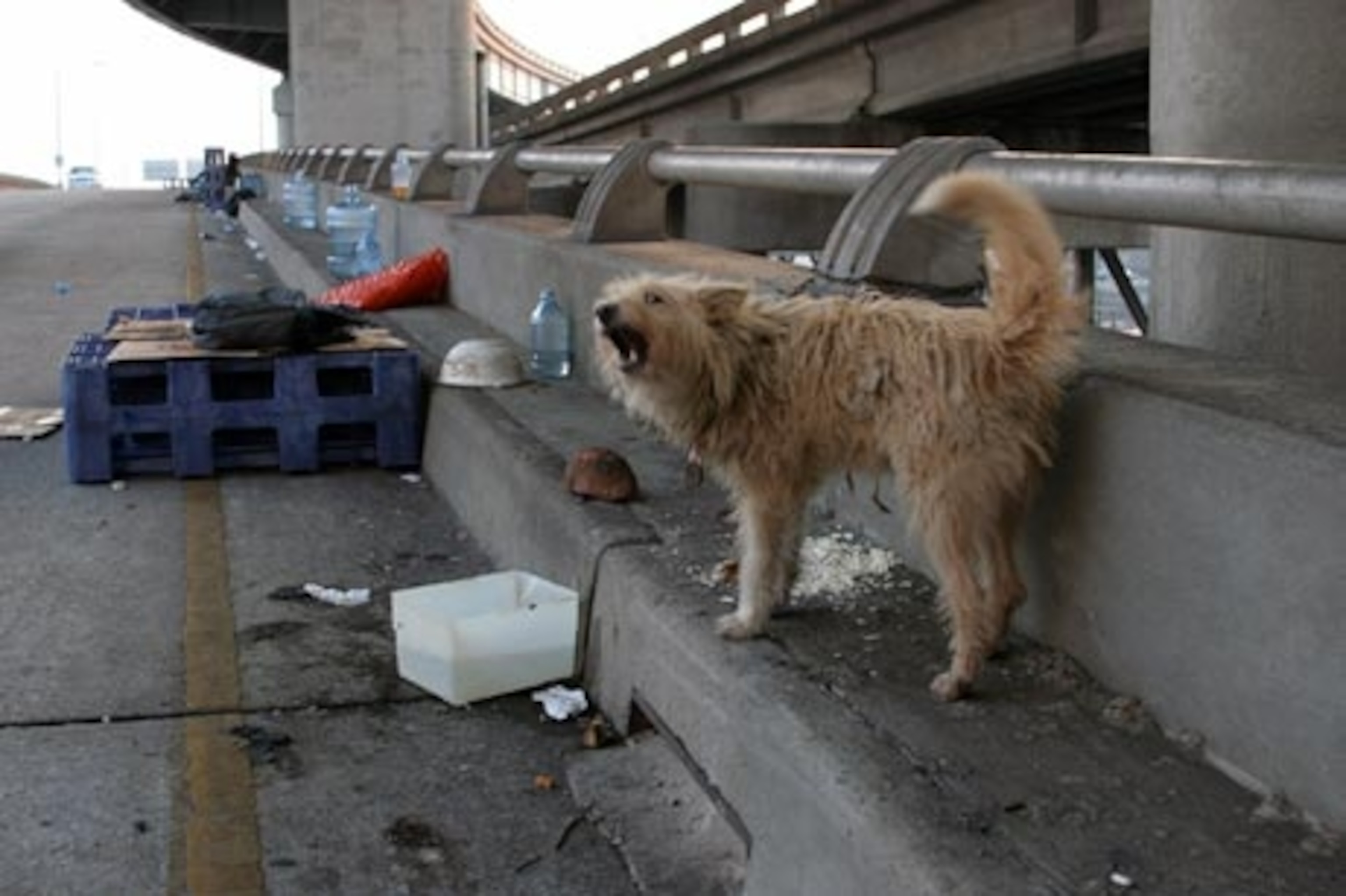
The landfall of Hurricane Katrina in August 2005 resulted in the death or displacement of more than 600,000 animals, exposing a critical failure in national emergency management. This tragedy forced a fundamental shift in disaster response, leading to the 2006 PETS Act, which legally mandated that state and local evacuation plans include household pets and service animals.
The Forgotten Factor: Why Animals Were Left Behind
In the decades leading up to 2005, disaster preparedness focused almost exclusively on human life. Federal and state emergency protocols lacked provisions for the evacuation, sheltering, or medical care of domestic animals. When Hurricane Katrina's storm surge breached the levees in New Orleans, the lack of an animal-inclusive strategy created a secondary humanitarian crisis.
Tens of thousands of residents refused to evacuate because emergency transport, such as buses and helicopters, and public shelters prohibited pets. For many, especially the elderly and those without social safety nets, a pet was their only companion. Faced with the choice between personal safety and abandoning a family member, many chose to stay. Those who were forced to leave often did so under the false impression—sometimes suggested by officials—that they could return in a few days. They left their animals with bowls of food and water, only for the flooding to persist for weeks, leading to mass starvation and drowning.
The psychological trauma of this separation was profound. Rescue workers reported seeing people clinging to rooftops with their dogs, or crying as they were forced to hand over their pets to board rescue craft. The "Snowball" incident—where a young boy’s dog was taken from him as he boarded a bus to the Superdome—became a national symbol of the heartbreak caused by these rigid, pet-exclusionary policies.
The Statistics of Tragedy: Measuring the Animal Toll
Quantifying the exact number of animals lost during Hurricane Katrina is difficult because there was no centralized database for animal ownership or recovery at the time. However, retrospective studies by organizations like the American Society for the Prevention of Cruelty to Animals (ASPCA) and the Humane Society of the United States (HSUS) provide a sobering estimate of the scale.
- Estimated Deaths: Between 100,000 and 250,000 pets are believed to have perished across the Gulf Coast.
- Displacements: Over 600,000 animals were displaced, many becoming strays in a landscape devoid of clean water and food.
- Rescue Efforts: Despite the chaos, animal welfare groups managed to rescue approximately 15,000 to 20,000 animals in the weeks following the storm.
- Reunification Rates: The reunification rate was tragically low. Estimates suggest that only 10% to 15% of rescued pets were eventually reunited with their original owners, largely due to the lack of microchipping and the destruction of paper records.
The loss was not limited to cats and dogs. The agricultural sector in Louisiana and Mississippi suffered massive losses in poultry and cattle. In the laboratory sector, many research animals in universities and medical centers perished when backup generators failed, cutting off ventilation and climate control in flooded facilities.
The PETS Act: Transforming Emergency Management
The public outcry following the images of abandoned animals in New Orleans led to one of the fastest pieces of legislation in U.S. history. In 2006, the Pets Evacuation and Transportation Standards (PETS) Act was signed into law with overwhelming bipartisan support.
The PETS Act amended the Robert T. Stafford Disaster Relief and Emergency Assistance Act. It requires that local and state emergency preparedness authorities include plans for "household pets and service animals" in their disaster plans to qualify for Federal Emergency Management Agency (FEMA) funding. This was a revolutionary change because it recognized that saving animals is a prerequisite for saving people. If people know their pets are safe, they are far more likely to comply with evacuation orders.
Under the PETS Act, FEMA is authorized to provide financial assistance for:
- The procurement, construction, and renovation of pet-friendly shelters.
- The rescue, care, and shelter of pets and service animals during an emergency.
- The transportation of pets and service animals during evacuations.
As of 2026, these protocols have become a standard part of every major hurricane response. Municipalities now designate specific "pet-friendly" shelters where owners can stay with their animals or house them in adjacent facilities, ensuring that the dilemma faced by Katrina victims is not repeated.
Rescue Operations and the Challenge of Reunification
The rescue effort for animals in Hurricane Katrina was the largest of its kind in history, yet it was plagued by a lack of coordination. In the immediate aftermath, hundreds of independent animal rescue groups and thousands of volunteers descended on the Gulf Coast. While their intentions were noble, the lack of a centralized command structure led to significant logistical hurdles.
Rescuers navigated toxic floodwaters in flat-bottomed boats, often breaking into homes to save animals trapped in attics or on top of furniture. Once rescued, these animals were transported to massive, makeshift shelters. One of the most famous was the "Lamar-Dixon Expo Center" in Gonzales, Louisiana, which at its peak housed thousands of traumatized animals.
The process of reunification proved to be a second disaster. In 2005, microchipping was not yet a universal standard. Most pets were identified by collars and tags, which were often lost during the storm or the rescue process. Furthermore, many owners were evacuated to different states, making it nearly impossible to find their pets in temporary shelters across Louisiana and Mississippi. This led to a massive interstate transport effort, where Katrina pets were shipped to shelters across the country for adoption, sometimes before their original owners could locate them. This resulted in several high-profile legal battles between original owners and new adopters that lasted for years.
Impact on Wildlife and Regional Ecosystems
While the focus is often on domestic pets, Hurricane Katrina had a devastating impact on the wildlife and ecosystems of the Gulf Coast. The storm surge destroyed approximately 217 square miles of coastal wetlands in Louisiana. These wetlands serve as critical nurseries for fish and habitats for migratory birds and local species like the American Alligator.
The intrusion of saltwater into freshwater marshes caused "ghost forests," where cypress and tupelo trees died en masse, unable to tolerate the salinity. This loss of habitat led to a sharp decline in local populations of muskrat, nutria, and various waterfowl. Additionally, the storm caused massive spills from industrial sites and sewage treatment plants, contaminating the water with heavy metals and chemicals, which had long-term toxicological effects on the aquatic food chain.
In 2026, ecological restoration projects are still working to repair the damage to these buffers. The lesson from Katrina was that the health of animal populations—both wild and domestic—is inextricably linked to the integrity of the environment and the robustness of human infrastructure.
Comparison of Animal Welfare Standards: 2005 vs. 2026
The landscape of animal safety during disasters has changed dramatically over the last two decades. The following table highlights the key differences in how animals are managed during major hurricanes.
| Feature | Pre-Katrina (2005) | Current Standards (2026) |
|---|---|---|
| Federal Law | No specific mandate for pets. | PETS Act requires pet-inclusive planning. |
| Evacuation Transport | Pets largely banned from public transit. | Integrated transport for pets/service animals. |
| Sheltering | Most shelters were human-only. | Widespread "pet-friendly" shelter networks. |
| Identification | Heavy reliance on physical tags. | Universal microchipping and digital databases. |
| FEMA Role | No funding for animal rescue. | Direct reimbursement for animal care and shelter. |
| Coordination | Ad-hoc, volunteer-driven chaos. | State Animal Response Teams (SART) in place. |
Practical Preparedness: Lessons for Pet Owners
The primary lesson of Hurricane Katrina is that personal preparedness is the most effective way to ensure an animal's survival. Relying solely on government intervention is a risk that pet owners cannot afford to take.
1. The Evacuation Kit
Every pet owner should have a "Go-Bag" specifically for their animals. In 2026, experts recommend including a two-week supply of food and water, manual can openers, collapsible bowls, and at least a month's worth of any necessary medications. Documentation is equally vital: a waterproof folder containing vaccination records, medical history, and photos of the owner with the pet to prove ownership.
2. Microchipping and Digital Redundancy
Katrina proved that physical tags are insufficient. A microchip is a permanent form of identification that cannot fall off. However, a microchip is only useful if the contact information in the registry is current. In the modern era, owners should also utilize digital "pet passports" or cloud-based storage for all vital records, accessible via smartphone even if physical documents are lost.
3. Knowing the "Pet-Friendly" Route
In 2026, many mapping applications include filters for pet-friendly hotels and shelters. Before a storm reaches the "watch" or "warning" phase, owners should map out at least three potential evacuation destinations that accept animals. Waiting until an evacuation order is mandatory often means that these facilities will already be at capacity.
Frequently Asked Questions
What was the PETS Act and why was it created?
The PETS Act (Pets Evacuation and Transportation Standards Act) was created in 2006 in direct response to the thousands of animals that died or were abandoned during Hurricane Katrina. It mandates that state and local governments include pets and service animals in their disaster plans to qualify for FEMA funding, ensuring that people do not have to choose between their safety and their pets.
How many animals were saved after Hurricane Katrina?
Animal welfare organizations rescued approximately 15,000 to 20,000 animals in the weeks following the storm. However, this was only a small fraction of the estimated 600,000 animals that were displaced or killed.
Can I bring my pet to a FEMA shelter in 2026?
Yes, under current guidelines, FEMA-funded state and local emergency plans must include provisions for household pets. This usually means there are designated pet-friendly shelters or co-located shelters where you can stay near your pet. Always check local emergency management websites for specific locations during an active warning.
What happened to the wildlife in the Gulf Coast after Katrina?
The storm destroyed over 200 square miles of wetlands, leading to massive habitat loss for birds, reptiles, and fish. Saltwater intrusion killed freshwater vegetation, and industrial pollution contaminated many local ecosystems, requiring decades of environmental remediation.
Why was the reunification rate for pets so low after Katrina?
The low reunification rate (approx. 10-15%) was caused by a lack of permanent identification (microchips), the chaotic nature of the rescue efforts where animals were shipped to shelters nationwide, and the loss of owners' contact information and homes during the disaster.
Next Steps for Safety
If you live in a hurricane-prone area, your next action should be to verify your pet's microchip registration. Visit your veterinarian or a local shelter to have the chip scanned, and ensure the online profile includes your current phone number and an out-of-area emergency contact. Additionally, research the "State Animal Response Team" (SART) in your specific region to understand the local protocols for animal evacuation.