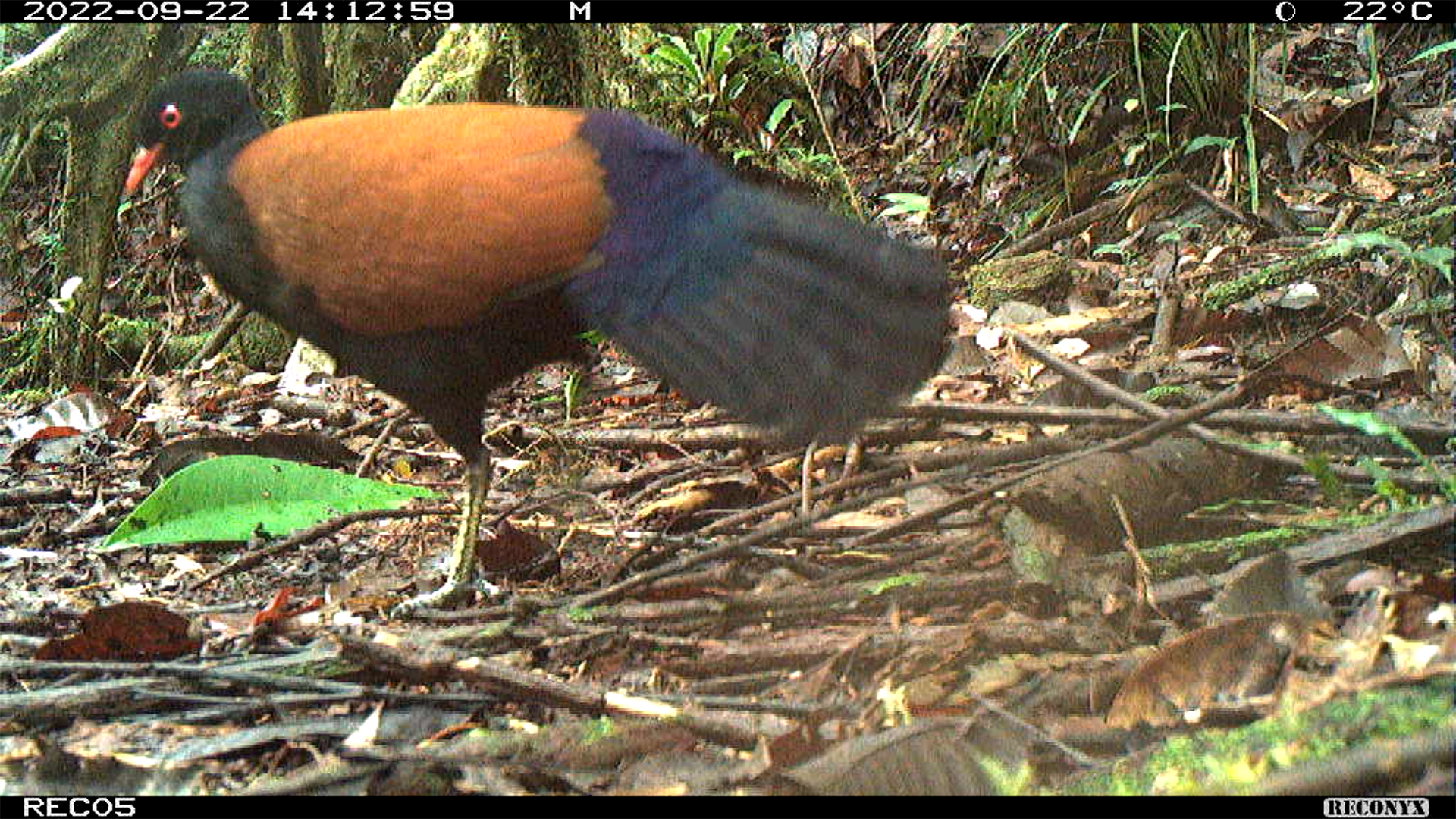
An animal thought to be extinct—often termed a "Lazarus taxon"—is a species that vanishes from scientific records for decades, centuries, or millions of years before being rediscovered alive. These dramatic rediscoveries occur through targeted biodiversity expeditions, advanced tracking technologies like environmental DNA, or local ecological knowledge, highlighting how remote habitats preserve elusive wildlife.
Understanding Lazarus Taxa and the Science of Extinction
In paleontology and conservation biology, a species that disappears from the fossil record or biological surveys only to reappear later is known as a Lazarus taxon. Named after the biblical figure resurrected from the dead, this phenomenon highlights the inherent challenges of proving a negative in ecological field research. Declaring an animal extinct is a grave scientific step, as it can inadvertently halt funding, legal protections, and habitat conservation efforts dedicated to that species—a risk known as the Romeo Error.
- Unobserved Species
- Presumed Extinct
- Targeted Survey / eDNA
- Rediscovery (Lazarus Taxon)
How Extinction Is Formally Declared
The international standard for assessing extinction risk is maintained by the IUCN Red List of Threatened Species. According to IUCN guidelines, a taxon is declared Extinct (EX) only when there is no reasonable doubt that the last individual has died. Field biologists must conduct exhaustive surveys in known and expected habitats, throughout the historical range, at appropriate times (diurnal, seasonal, annual), and across a timeframe appropriate to the biological life cycle of the species.
Historically, field researchers applied an informal "50-year rule," assuming that any species unrecorded in the wild for half a century was extinct. Modern conservation science has abandoned this arbitrary metric in favor of quantitative statistical modeling. Researchers now estimate detection probability—the likelihood of detecting a species given that it is present in a survey area—taking into account habitat density, population size, gear efficiency, and animal behavior.
Why Animals Disappear From Scientific View
Species often slip off the scientific radar without actually perishing. The primary drivers behind these prolonged disappearances include:
- Micro-Endemism and Extreme Isolation: Many missing species inhabit hyper-specific microclimates, such as isolated volcanic peaks, subterranean cave networks, or dense rainforest canopies that human researchers rarely penetrate.
- Cryptic Behavior and Nocturnality: Animals that reside underground, adopt strict nocturnal schedules, or possess natural camouflage evade standard visual transect surveys.
- Geopolitical Instability: Scientific field research frequently halts in regions affected by armed conflict, political unrest, or extreme geographic remoteness, leading to decades-long gaps in monitoring data.
- Taxonomic Disambiguation: In some cases, a species remains uncollected because researchers misclassify it as a known, common relative until detailed morphological or genetic analysis proves otherwise.
Iconic Animals Thought to Be Extinct That Were Rediscovered
The history of natural science contains remarkable instances of species returning from presumed extinction. These rediscoveries reshape our understanding of evolutionary resilience and highlight the importance of protecting intact ecosystems.
| Coelacanth | Takahē | Attenborough's Echidna |
|---|---|---|
| Presumed extinct: 66 Ma | Presumed extinct: 1898 | Presumed extinct: 1961 |
| Rediscovered: 1938 | Rediscovered: 1948 | Rediscovered: 2023 |
The Coelacanth: The Ultimate Living Fossil
Perhaps the most famous Lazarus taxon in scientific history is the Coelacanth (Latimeria chalumnae). Western science believed this lobe-finned fish had gone extinct during the late Cretaceous period, approximately 66 million years ago, along with the non-avian dinosaurs.
In December 1938, South African museum curator Marjorie Courtenay-Latimer spotted an unusual blue fish among the catch of a local commercial trawler off the coast of East London, South Africa. She contacted chemist J.L.B. Smith, who identified the specimen as a living member of the order Coelacanthiformes. A second living species, the Indonesian coelacanth (Latimeria menadoensis), was discovered in 1997. The coelacanth's survival in deep marine trenches off the Comoros and Sulawesi islands proved that entire lineages can persist in deep-water marine environments without leaving shallow fossil footprints.
Attenborough’s Long-Beaked Echidna: Surviving in the Cyclops Mountains
Attenborough’s long-beaked echidna (Zaglossus attenboroughi) is a critically endangered egg-laying mammal (monotreme) endemic to the remote Cyclops Mountains in Indonesia’s Papua province. The species had not been scientifically documented since 1961, when a single damaged specimen was collected.
In late 2023, an international team of researchers led by Oxford University scientists conducted an intensive expedition into the rugged, high-altitude rainforests of the Cyclops range. By deploying dozens of motion-activated trail cameras over four weeks, the team captured trail camera footage confirming that the subterranean, nocturnal egg-laying mammal survived in these unmapped mountain habitats.
De Winton’s Golden Mole: Uncovered by Environmental DNA
Endemic to the coastal sand dunes of South Africa, De Winton’s golden mole (Cryptochloris wintoni) had not been officially sighted since 1936. Because this small mammal lives almost entirely underground, swimming through loose sand dunes and leaving no permanent tunnels, traditional visual and trap-based surveys proved entirely ineffective.
In 2023, a research team from the Endangered Wildlife Trust and North-West University used cutting-edge soil environmental DNA (eDNA) extraction alongside a trained scent-tracking dog. By analyzing soil samples collected across the arid beach dunes of Port Nolloth, researchers detected genetic sequences matching archival skin specimens of De Winton’s golden mole, confirming the species' continuous existence beneath the sand.
Fernandina Island Giant Tortoise: Surviving Volcanic Landscapes
The Fernandina Island giant tortoise (Chelonoidis phantasticus) was known for over a century from a single male specimen collected during a California Academy of Sciences expedition in 1906. Given the harsh, active volcanic terrain of Fernandina Island in the Galápagos archipelago, scientists long doubted whether a viable population could endure.
In 2019, a joint expedition by the Galápagos National Park Directorate and the Galápagos Conservancy located a single, aged female tortoise on an isolated vegetation patch surrounded by solidified lava flows. Subsequent genetic sequencing conducted by biologists at Princeton University matched her DNA with the 1906 holotype, verifying that Chelonoidis phantasticus had survived in unmapped volcanic oases.
The Takahē: New Zealand’s Flightless Survivor
The Takahē (Porphyrio hochstetteri) is a large, flightless rail native to New Zealand's South Island. Following widespread habitat disruption and heavy predation by introduced mammals like stoats, ferrets, and cats, European naturalists declared the Takahē extinct in 1898.
Fifty years later, in 1948, physician Geoffrey Orbell led an expedition deep into the remote, subalpine Murchison Mountains near Lake Te Anau. There, the team discovered a small, surviving population of Takahē. The discovery triggered one of the world's longest-running species recovery programs, involving intensive predator control, captive breeding, and translocations to predator-free island sanctuaries and managed mainland valleys.
Key Rediscovered Species Comparison
The following table summarizes notable species once classified or widely assumed to be extinct, detailing their historical absence, modern rediscovery methods, and present conservation status according to international standards.
| Common Name | Scientific Name | Presumed Lost / Extinct Period | Year Rediscovered | Primary Rediscovery Method | Current IUCN Status |
|---|---|---|---|---|---|
| Coelacanth | Latimeria chalumnae | ~66 Million Years | 1938 | Bycatch examination (Fisheries) | Critically Endangered |
| Takahē | Porphyrio hochstetteri | 1898–1948 (50 Years) | 1948 | Targeted visual survey | Endangered |
| Bermuda Petrel (Cahow) | Pterodroma cahow | 1620–1951 (331 Years) | 1951 | Nesting burrow search | Endangered |
| Chacoan Peccary | Catagonus wagneri | ~10,000 Years (Fossil only) | 1974 | Field research / Local hunting reports | Endangered |
| Cuban Solenodon | Solenodon cubanus | 1890–1974 (~84 Years) | 1974 | Targeted specimen capture | Endangered |
| Night Parrot | Pezoporus occidentalis | 1912–2013 (101 Years) | 2013 | Field photography & sound recording | Endangered |
| Voeltzkow’s Chameleon | Furcifer voeltzkowi | 1913–2020 (107 Years) | 2020 | Targeted seasonal reptile survey | Endangered |
| Fernandina Island Tortoise | Chelonoidis phantasticus | 1906–2019 (113 Years) | 2019 | Field expedition & DNA sequencing | Critically Endangered |
| Attenborough’s Echidna | Zaglossus attenboroughi | 1961–2023 (62 Years) | 2023 | Motion-activated camera traps | Critically Endangered |
| De Winton’s Golden Mole | Cryptochloris wintoni | 1936–2023 (87 Years) | 2023 | Soil eDNA & Scent-tracking dogs | Critically Endangered |
Modern Technologies Revolutionizing the Search for Lost Species
Finding species that exist in extremely low densities across inaccessible landscapes requires tools far beyond traditional field notebooks and binoculars. Global non-profit organizations, such as Re:wild, coordinate specialized initiatives like the Search for Lost Species to systematically locate long-missing animals using advanced technology.
- Soil / Water / Air Sample Collected
- eDNA Extraction & PCR
- Match Against Reference Genetic Database
- Non-Invasive Species Verification
Environmental DNA (eDNA) Sampling
Environmental DNA sampling has reshaped biodiversity monitoring. Animals constantly shed genetic material into their surrounding environment through skin cells, hair, mucus, feces, and gametes.
Scientists collect water samples from rivers, soil cores from forests or sand dunes, or even airborne particulates. By extracting DNA from these samples and amplifying target sequences using Polymerase Chain Reaction (PCR) techniques, geneticists can detect the presence of a rare species without ever physically observing or capturing the animal. This method is valuable for aquatic organisms, subterranean mammals, and elusive amphibians.
Bioacoustics and Thermal Camera Traps
For shy or nocturnal vertebrates, continuous remote monitoring is critical:
- Bioacoustic Arrays: Autonomous recording units (ARUs) are deployed in dense canopy environments to collect hundreds of hours of ambient sound. Custom artificial intelligence models scan these audio files for specific call frequencies, vocalizations, or wingbeats associated with target bird, frog, or bat species.
- Thermal Camera Traps: Standard infrared camera traps trigger when an animal breaks an optical beam. Modern setups pair high-definition thermal imaging sensors with edge-computing microprocessors, allowing cameras to operate for months on solar-recharged batteries and identify cryptic warm-blooded species hidden in dense foliage.
Indigenous Ecological Knowledge and Community Tracking
Scientific expeditions often succeed by partnering with local communities and Indigenous peoples. Indigenous ecological knowledge (IEK) encompasses generations of observational data regarding local wildlife behavior, seasonal migrations, tracks, and vocalizations.
In many cases, an animal classified as "lost to science" is well known to local inhabitants who interact with the ecosystem daily. Collaborative conservation frameworks bridge traditional tracking expertise with formal taxonomic validation, leading to faster rediscoveries and establishing local stewardship for subsequent protection efforts.
Conservation Challenges Following Rediscovery
While the news of a rediscovered animal generates international media coverage, the scientific reality following a discovery is fraught with ecological challenges. The initial phase after a species is refound often determines whether it will permanently survive or finally slip into extinction.
- Rediscovery
- Ecological Risks
- Poaching & Illegal Trade
- Habitat Encroachment
- Inbreeding Bottlenecks
- Immediate Actions
- Emergency Legal Status
- Protected Reserves
- Community Stewardship
- Ecological Risks
Ecotourism and Poaching Threats
Publishing the precise geographic coordinates of a newly rediscovered, rare animal can accidentally expose it to commercial exploitation. Wildlife poachers, exotic pet traders, and egg collectors monitor scientific literature to target newly located populations. Furthermore, unregulated ecotourism can disturb fragile breeding sites or introduce pathogens into isolated populations. Conservation organizations now routinely redact location coordinates from public research reports to safeguard the animals.
Habitat Destruction and Genetic Bottlenecks
A rediscovered species almost always exists in tiny, highly fragmented populations. Small population sizes present severe genetic vulnerabilities:
- Inbreeding Depression: Limited genetic diversity increases the expression of deleterious recessive mutations, leading to lower reproductive success, immune system deficiencies, and higher susceptibility to disease.
- Stochastic Vulnerability: A single localized catastrophe—such as a wildfire, cyclone, or invasive predator introduction—can eradicate the entire surviving population of a localized Lazarus taxon.
Consequently, rediscovery must immediately transition into active management: setting up emergency legal protections, establishing captive breeding insurance colonies, removing invasive species, and creating dedicated nature reserves around identified habitats.
Practical Ways You Can Support Wildlife Search and Conservation
Protecting elusive wildlife and aiding biodiversity research does not require a doctorate in zoology. Citizen scientists and nature enthusiasts play a key role in monitoring ecosystems.
- Log Wildlife Sightings on Community Platforms: Use verified citizen science databases like iNaturalist or eBird to upload geotagged photographs and audio recordings of plants and animals. Scientific institutions query these databases, and community observations have directly led to species range expansions and the location of rare animals.
- Support Habitat Conservation and Field Research Organizations: Direct funding to reputable non-profit organizations that specialize in habitat preservation, lost species research, and anti-poaching operations.
- Practice Ethical Wildlife Observation: When exploring natural habitats, stay on designated trails, avoid disclosing coordinates of endangered or rare species on public social media platforms, and follow local wildlife regulations to prevent habitat degradation.
- Advocate for Habitat Protection: Support local and national policies that protect primary forests, wetlands, and marine habitats from unchecked industrial development, fragmentation, and deforestation.
Frequently Asked Questions
What is the difference between a Lazarus taxon and an invasive species?
A Lazarus taxon is a native species that was previously believed to be extinct but is rediscovered alive in its historical range. An invasive species is a non-native organism introduced to an area outside its natural range, where it multiplies rapidly and often harms local biodiversity, ecosystems, or agriculture.
How long must an animal be missing before it is officially declared extinct?
There is no fixed time threshold like the historical 50-year rule. Under modern IUCN Red List criteria, an animal is declared Extinct (EX) only after exhaustive, targeted scientific surveys throughout its historical range fail to record an individual. The determination relies on statistical models of detection probability rather than a set number of missing years.
Can scientists bring back truly extinct animals using genetic cloning?
De-extinction efforts use advanced gene-editing techniques (such as CRISPR) combined with somatic cell nuclear transfer to edit the genome of a close living relative to resemble an extinct species (such as the Woolly Mammoth or Thylacine). However, these engineered animals are functional proxies rather than exact biological replicas, making the protection of surviving wild populations far more effective than trying to revive extinct species.
Why do some animals remain hidden from researchers for decades?
Many species inhabit remote, topographically complex environments such as deep marine trenches, subterranean caves, or dense rainforest canopies. Furthermore, animals with low population densities, strong nocturnal habits, seasonal dormancy, or effective biological camouflage can easily avoid detection during standard visual surveys.
What happens legally when a missing animal is rediscovered?
When a species thought to be extinct is rediscovered, wildlife agencies update its regulatory status under international agreements (such as CITES) and national wildlife laws (such as the U.S. Endangered Species Act or equivalent regional statutes). This status change triggers legal protections against hunting, harvesting, and trade, while mandating critical habitat protection and conservation planning.