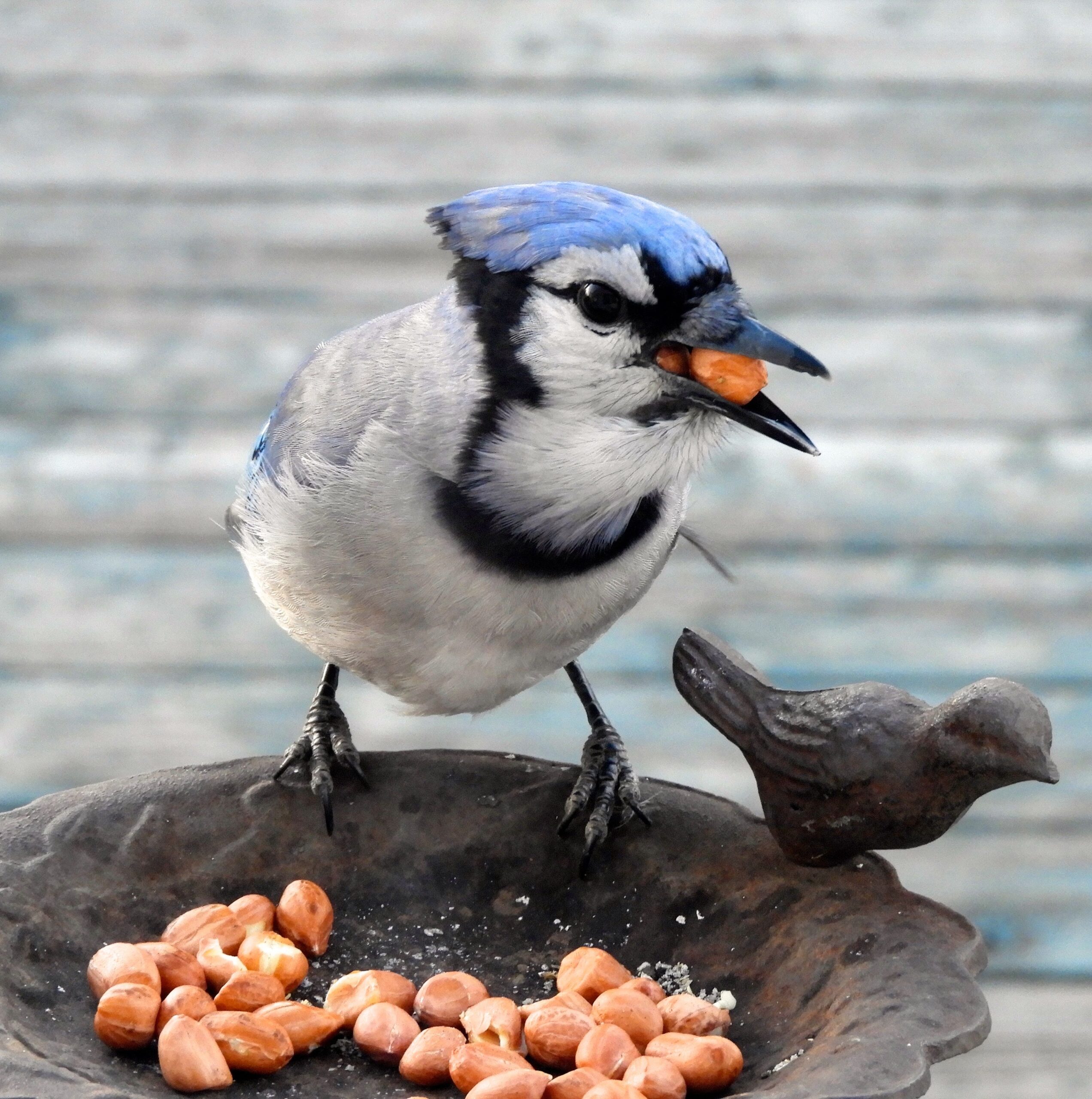
Blue jays face predation from a variety of animals, primarily birds of prey like Cooper’s hawks and sharp-shinned hawks, as well as nocturnal hunters like great horned owls. On the ground and in the canopy, raccoons, domestic cats, and snakes frequently target their eggs, nestlings, and vulnerable adults.
The Ecological Reality of Blue Jay Predation
The Blue Jay (Cyanocitta cristata) is one of the most recognizable birds in North America, known for its striking azure plumage, perky crest, and complex social behaviors. However, in the complex food webs of deciduous and mixed forests, these intelligent corvids are both hunters and hunted. As of 2026, wildlife biologists continue to emphasize that predation is the primary driver of Blue Jay population dynamics, influencing everything from their nesting site selection to their vocalizations.
Understanding what animals eat blue jays requires looking at the bird’s life cycle. Predators vary significantly depending on whether they are targeting eggs, helpless nestlings, vulnerable fledglings, or agile adults. While a Blue Jay’s aggressive nature and loud alarm calls serve as effective deterrents against some threats, they are not invincible.
Avian Predators: The Threat from the Skies
Birds of prey, or raptors, are the most significant threat to adult Blue Jays. Because Blue Jays are active during the day (diurnal), they frequently cross paths with hawks that specialize in hunting other birds.
Cooper’s Hawks and Sharp-shinned Hawks
The Cooper’s Hawk (Accipiter cooperii) and the Sharp-shinned Hawk (Accipiter striatus) are the primary avian predators of Blue Jays. These hawks are members of the accipiter family, characterized by short, rounded wings and long tails that allow for incredible maneuverability through dense forest canopies.
A Cooper’s hawk typically hunts by stealth, perching quietly before launching a high-speed burst to snatch a Blue Jay mid-flight or off a feeder. Blue Jays are relatively large songbirds, making them a substantial and desirable meal for a medium-sized raptor. In suburban environments, where bird feeders are common, Cooper’s hawks often stake out these areas, knowing that Blue Jays will congregate there.
Owls: The Nocturnal Danger
While Blue Jays are safe from most hawks once the sun goes down, they become vulnerable to nocturnal raptors. The Great Horned Owl (Bubo virginianus) and the Barred Owl (Strix varia) are opportunistic hunters that will take a roosting Blue Jay if they discover its sleeping location.
Owls utilize silent flight, aided by specialized feather structures that muffle sound, allowing them to ambush Blue Jays while they are most helpless. In 2026, researchers have noted that as urban sprawl encroaches on forest borders, the overlap between Barred Owl territories and Blue Jay nesting sites has increased, leading to higher rates of nocturnal predation in suburban woodlots.
Mammalian Predators: Nest Raiders and Ambushers
Mammals represent a dual threat to Blue Jays: they are the leading cause of nest failure and a significant danger to fledglings that have not yet mastered the art of flight.
The Impact of Domestic and Feral Cats
The domestic cat (Felis catus) is arguably the most lethal non-natural predator for Blue Jays in residential areas. Unlike wild predators that hunt for survival, domestic cats often hunt due to ingrained predatory instincts. Blue Jays are particularly vulnerable to cats when they are foraging on the ground for fallen acorns or when fledglings have recently left the nest. Fledglings often spend several days on or near the ground before they can fly well, making them easy targets for a stalking feline.
Raccoons and Opossums
Raccoons (Procyon lotor) are highly intelligent, dexterous, and excellent climbers. They are one of the most frequent predators of Blue Jay nests. Raccoons typically hunt at night, using their sensitive paws to feel inside tree cavities or nests to extract eggs and nestlings.
Similarly, the Virginia Opossum is an opportunistic scavenger that will consume eggs or young birds if it encounters a reachable nest. While Blue Jays attempt to build nests high in the outer branches of trees to avoid heavy mammals, the persistence and climbing ability of raccoons often overcome these defenses.
Squirrels: The Surprising Opportunists
While mostly herbivorous, both Eastern Gray Squirrels and Red Squirrels are known to exhibit predatory behavior toward bird nests. Squirrels are often viewed as rivals for food at bird feeders, but they are also significant "nest predators." They may consume Blue Jay eggs or even newly hatched chicks to supplement their protein intake, particularly during the spring breeding season when nutritional demands are high.
Reptilian Predators: Silent Climbers
In the southern and central parts of the Blue Jay’s range, snakes play a major role in the ecosystem as bird predators.
Rat Snakes and Racers
The Black Rat Snake (Pantherophis alleghaniensis) is a master climber, capable of ascending vertical tree trunks to reach bird nests. Snakes are silent and can bypass many of the defensive "mobbing" behaviors that Blue Jays use against louder, more visible predators. A single rat snake can consume an entire brood of eggs or nestlings in one visit. Because snakes are ectothermic and require less frequent meals than mammals or birds, their impact is sometimes underestimated, yet they remain a primary cause of nest mortality in warmer climates.
Comparison of Major Blue Jay Predators
| Predator | Predator Type | Primary Target | Hunting Strategy | Environment |
|---|---|---|---|---|
| Cooper's Hawk | Avian (Raptor) | Adults / Fledglings | Stealth ambush and high-speed aerial pursuit | Forest edges and suburban backyards |
| Raccoon | Mammal | Eggs / Nestlings | Nocturnal climbing and nest raiding | Wooded areas and urban parks |
| Domestic Cat | Mammal | Fledglings / Adults | Ground-level stalking and ambush | Suburban and residential areas |
| Black Rat Snake | Reptile | Eggs / Nestlings | Arboreal stalking and nest infiltration | Southern forests and wetlands |
| Great Horned Owl | Avian (Raptor) | Roosting Adults | Nocturnal silent strike during sleep | Deep woods and suburban groves |
| Squirrels | Mammal | Eggs | Opportunistic raiding during foraging | Any wooded or suburban habitat |
Defensive Mechanisms: How Blue Jays Fight Back
Blue Jays are not passive victims. They have evolved a suite of sophisticated defensive behaviors that make them difficult targets for many predators.
Mimicry and Vocal Warnings
One of the most remarkable tools in the Blue Jay’s arsenal is its ability to mimic other birds, particularly the Red-shouldered Hawk. By imitating the scream of a hawk, a Blue Jay can startle other birds or potential predators, potentially clearing an area or scaring a smaller predator away from its nest.
Additionally, Blue Jays act as the "sentinels" of the forest. Their loud, harsh "jay-jay" calls serve as a universal alarm system. When a Blue Jay spots a predator, like a cat or an owl, it broadcasts the location to all other birds in the vicinity, stripping the predator of its most important weapon: the element of surprise.
Mobbing Behavior
Blue Jays are famous for mobbing. When they identify a perched predator, such as a hawk or an owl during the day, they will gather in large numbers and dive-bomb the threat while screaming loudly. While they rarely make physical contact that could harm the predator, the sheer noise and harassment often force the predator to leave the area to find a quieter place to hunt.
Intelligence and Memory
As members of the corvid family (which includes crows and ravens), Blue Jays possess high cognitive abilities. They can remember the locations of specific threats and are excellent at assessing risk. This intelligence allows them to navigate complex environments—like a backyard with a resident cat—with a higher survival rate than less intelligent bird species.
The Role of Humans in Predation Dynamics
As of 2026, human activity continues to shift the balance between Blue Jays and their predators. The way we manage our land directly impacts which predators thrive.
- Fragmentation of Habitat: When large forests are broken into smaller patches, it creates more "edge" habitat. Predators like raccoons and crows thrive in these edges, leading to higher nest predation rates for Blue Jays.
- Bird Feeders: While feeders provide essential calories, they can also act as "ecological traps." By concentrating Blue Jays in one predictable location, feeders make it easier for Cooper’s hawks to find a meal. To mitigate this, experts recommend placing feeders near dense shrubbery where jays can quickly hide.
- Introduction of Domestic Species: The presence of outdoor cats remains the single largest anthropogenic (human-caused) threat to Blue Jays. Wildlife organizations in 2026 continue to advocate for keeping cats indoors to protect local bird populations.
Frequently Asked Questions
Do crows eat blue jays?
American Crows generally do not hunt adult Blue Jays, but they are frequent predators of Blue Jay eggs and nestlings. Since both species are corvids and share similar habitats, they often compete for territory. A group of crows can easily overwhelm a Blue Jay nest if it is left unguarded.
Can a Blue Jay kill a hawk?
It is extremely unlikely for a Blue Jay to kill a hawk. While Blue Jays are aggressive and will dive-bomb hawks during mobbing, they lack the talons and beak strength to inflict fatal wounds on a raptor. Their goal is harassment and deterrence, not combat.
Do Blue Jays eat other Blue Jays?
Cannibalism is rare in Blue Jays but not unheard of, particularly regarding eggs or weakened nestlings during times of extreme food scarcity. However, they do not "hunt" their own species as a primary food source.
Why do Blue Jays mimic hawks if hawks eat them?
Mimicry serves two purposes: it may trick other birds into leaving a food source, or it may alert other jays that a hawk is in the area without revealing the jay's exact position. It is also used to confuse a predator, making it think another competitor is nearby.
What is the most common cause of death for Blue Jays?
While predation from hawks and cats is a leading cause of death, West Nile Virus has historically been a major threat to Blue Jay populations. Additionally, window strikes and habitat loss contribute significantly to mortality rates in 2026.
Recommendations for Protecting Local Blue Jays
If you enjoy watching Blue Jays and want to help them survive the gauntlet of natural predators, there are several practical steps you can take. First, keep domestic cats indoors, especially during the spring when fledglings are on the ground. Second, provide natural cover by planting native evergreen shrubs or maintaining dense thickets where birds can retreat from hawks.
Finally, if you use bird feeders, place them either very close to a window (less than 3 feet) or more than 30 feet away to reduce the impact of window collisions when birds are startled by a predator. By understanding the relationship between Blue Jays and their predators, we can better appreciate the complex, high-stakes lives these beautiful birds lead every day.