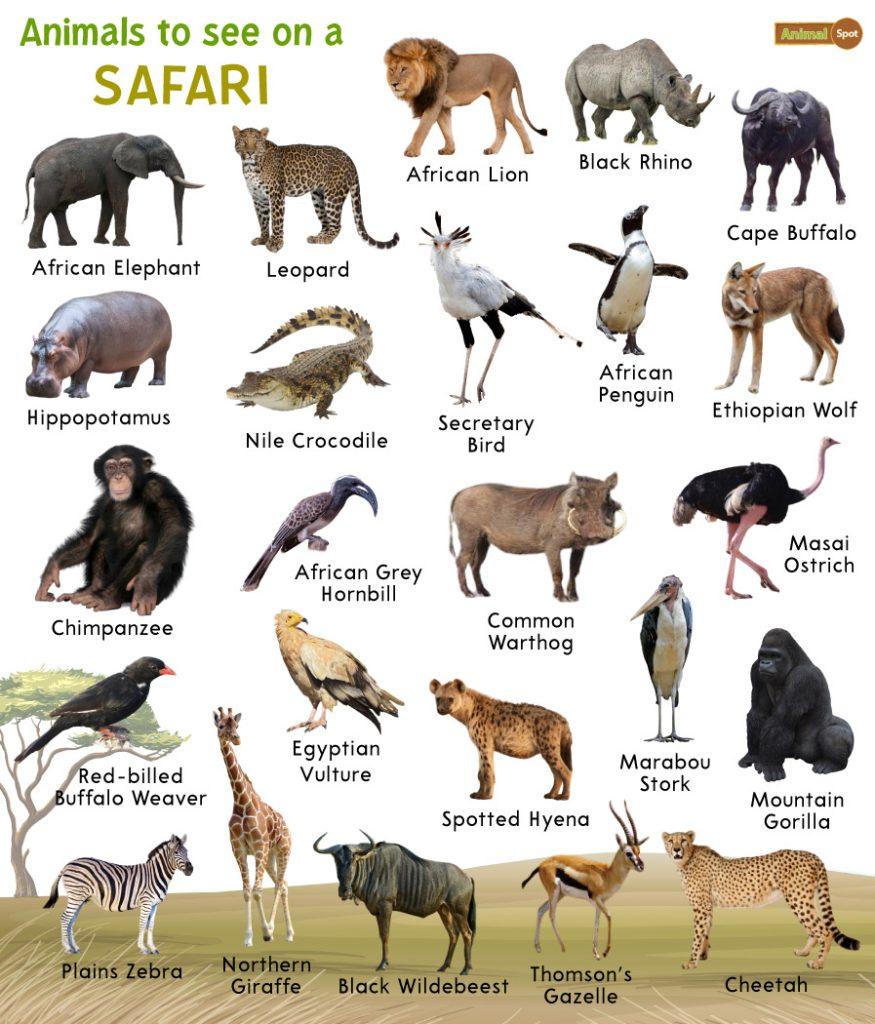
East Africa is home to the world’s most iconic wildlife, including the "Big Five" (lion, leopard, elephant, buffalo, and rhino), the species of the Great Migration, and rare primates like mountain gorillas. These animals thrive across diverse ecosystems in Kenya, Tanzania, Uganda, and Rwanda, supported by extensive national park systems and evolving conservation strategies.
The region serves as the ultimate destination for wildlife enthusiasts, researchers, and photographers. Beyond the famous savanna-dwelling mammals, East Africa hosts over 1,000 bird species, unique endemic reptiles, and complex aquatic life in its Great Lakes. Understanding the behavior, habitats, and conservation status of these animals is essential for anyone planning a visit or studying the biological heritage of the African continent.
The Big Five: The Icons of the Savanna
The term "Big Five" was originally coined by big-game hunters to describe the five most difficult and dangerous African animals to hunt on foot. Today, the term has been reclaimed by the tourism and conservation sectors to highlight the region's most sought-after sightings. As of 2026, sightings of these species remain the primary driver for ecotourism in East Africa.
African Lion (Panthera leo)
The lion is the undisputed apex predator of the East African plains. Unlike other cat species, lions are highly social, living in complex family units known as prides. A pride typically consists of related females, their offspring, and a small group of resident males who defend the territory.
In 2026, the best locations for lion sightings remain the Maasai Mara National Reserve in Kenya and the Serengeti National Park in Tanzania. These areas offer the high density of prey required to support large prides. Observers often witness sophisticated hunting strategies where females work in coordination to ambush zebra, wildebeest, or buffalo. While they are classified as Vulnerable by the IUCN Red List, community-led conservation initiatives in the Amboseli and Laikipia regions have successfully mitigated human-wildlife conflict, allowing populations to stabilize.
African Elephant (Loxodonta africana)
The African savanna elephant is the largest terrestrial mammal on Earth. These highly intelligent creatures are known for their deep emotional bonds and complex communication methods, including infrasonic sounds that can travel miles through the ground.
Elephants play a crucial role as "ecosystem engineers." By knocking over trees and digging for water in dry riverbeds, they create habitats and water access for smaller species. In 2026, the Amboseli National Park in Kenya remains world-renowned for its "tusker" populations—older males with exceptionally large ivory. Conservation efforts have shifted toward securing "wildlife corridors" that allow elephants to migrate between protected areas without entering human settlements, a critical factor in their long-term survival.
African Leopard (Panthera pardus)
Leopards are the most elusive and solitary members of the Big Five. Known for their incredible strength and stealth, they are masters of camouflage. Unlike lions, leopards are comfortable in trees and often haul their kills high into the branches to protect them from scavengers like hyenas and lions.
Their adaptability allows them to survive in a variety of environments, from the rocky outcrops of Samburu to the dense forests of the Aberdares. Because they are nocturnal and secretive, spotting a leopard requires a keen eye and often a professional guide. Current tracking technology used by researchers in 2026 suggests that while they are widespread, their populations face pressure from habitat fragmentation.
African Buffalo (Syncerus caffer)
Often regarded as the most dangerous of the five, the Cape buffalo is known for its unpredictable temperament and immense power. They are distinguished by their fused horns, which form a continuous bone shield across the top of the head, known as a "boss."
Buffalo are highly social and congregate in herds that can number in the thousands, particularly in the Serengeti and the Ngorongoro Crater. These large herds provide protection against predators; a group of buffalo is one of the few forces capable of intimidating a pride of lions. They are water-dependent, so they are rarely found far from a permanent water source.
Rhinoceros (Black and White)
The rhinoceros is the most critically endangered of the Big Five. East Africa is home to both the Black Rhino (Diceros bicornis) and the Southern White Rhino (Ceratotherium simum simum). The primary difference lies in their mouth shape and diet: black rhinos have a prehensile pointed lip for browsing on bushes, while white rhinos have a wide, square lip for grazing on grass.
By 2026, intensive anti-poaching measures, including 24-hour armed surveillance and the use of AI-integrated drone technology, have helped populations in sanctuaries like Ol Pejeta (Kenya) and the Ngorongoro Crater (Tanzania) to see a modest increase. The Northern White Rhino remains functionally extinct, with only two females left on Earth, though 2026 marks a pivotal year for advanced IVF and stem-cell research aimed at resurrecting the subspecies.
The Great Migration: The World’s Greatest Wildlife Spectacle
The Great Wildebeest Migration is a perpetual circular movement of over 1.5 million wildebeest, 200,000 zebras, and 350,000 gazelles through the Serengeti-Mara ecosystem. This is not a single event but a year-long quest for green grass and water, dictated by seasonal rainfall.
- The Calving Season (January–March): The herds gather in the southern Serengeti and Ngorongoro Conservation Area. During a brief window in February, thousands of wildebeest calves are born daily, attracting a high concentration of predators.
- The Trek North (April–June): As the southern plains dry out, the herds move northwest toward the Grumeti River.
- The River Crossings (July–October): This is the most dramatic phase, where herds cross the Mara River into Kenya’s Maasai Mara. They must navigate crocodile-infested waters and steep banks, providing a harrowing display of the raw struggle for survival.
- The Return South (November–December): With the onset of the short rains, the herds move back toward the southern Serengeti to start the cycle anew.
Primates of the Albertine Rift
While the savannas dominate the eastern portion of the region, the western edge of East Africa (the Albertine Rift) is home to some of the world's most endangered primates.
Mountain Gorillas (Gorilla beringei beringei)
Found only in the volcanic slopes of the Virunga Massif (shared by Rwanda and Uganda) and the Bwindi Impenetrable Forest in Uganda, mountain gorillas are a pinnacle wildlife experience. As of 2026, their population has surpassed 1,000 individuals, a rare success story in conservation history. Gorilla trekking is strictly regulated to prevent the transmission of human diseases, with permits providing the essential funding required to protect their habitat.
Chimpanzees and Other Primates
Uganda’s Kibale Forest National Park is often cited as the primate capital of the world. It hosts the highest density of chimpanzees, along with rare species like the Red Colobus monkey and the L’Hoest’s monkey. Chimpanzee habituation experiences allow visitors to observe their complex social hierarchies and tool-using behaviors, which are strikingly similar to human activities.
Specialized and Endemic Species
East Africa contains several "Northern Specials"—species found almost exclusively in the arid regions of northern Kenya and parts of Ethiopia and Somalia.
- Grevy’s Zebra: Larger than the common plains zebra, they have narrower stripes and large, rounded ears.
- Reticulated Giraffe: Known for its striking, polygon-shaped coat pattern.
- Somali Ostrich: Distinguished by the blue-gray neck and thighs of the males.
- Gerenuk: A long-necked antelope that stands on its hind legs to reach high acacia leaves.
- Beisa Oryx: A desert-adapted antelope with long, rapier-like horns.
Wildlife Data and Habitat Comparison
The following table compares the key characteristics of prominent East African species and where they are most likely to be encountered in 2026.
| Species | Primary Habitat | Diet | Conservation Status (2026) | Best Viewing Location |
|---|---|---|---|---|
| Lion | Open Savanna | Carnivore | Vulnerable | Maasai Mara (Kenya) |
| Mountain Gorilla | Montane Rainforest | Herbivore | Endangered | Bwindi (Uganda) |
| Black Rhino | Scrubland/Forest | Browser | Critically Endangered | Ol Pejeta (Kenya) |
| Cheetah | Open Plains | Carnivore | Vulnerable | Serengeti (Tanzania) |
| Hippopotamus | Rivers & Lakes | Herbivore | Vulnerable | Kazinga Channel (Uganda) |
| African Wild Dog | Scrub/Woodland | Carnivore | Endangered | Nyerere NP (Tanzania) |
| Shoebill Stork | Swamps/Wetlands | Carnivore | Vulnerable | Mabamba Swamp (Uganda) |
Predators Beyond the Big Five
While lions and leopards get most of the attention, East Africa’s ecosystem relies heavily on other highly specialized predators.
The Cheetah (Acinonyx jubatus)
The cheetah is the fastest land animal, capable of reaching speeds up to 70 mph (112 km/h). Unlike most large cats, cheetahs are diurnal (active during the day), which helps them avoid competition with larger nocturnal predators. They rely on vast, open spaces to utilize their speed, making the expansive plains of the Serengeti and the Kafue-style landscapes of Southern Tanzania their primary strongholds.
African Wild Dog (Lycaon pictus)
Also known as the Painted Wolf, these are among the most efficient hunters in the world, with a success rate exceeding 80%. They live in tight-knit packs and are known for their vocalizations and social bonding rituals. Because they require massive territories, they are highly susceptible to habitat fragmentation. In 2026, Nyerere National Park (formerly Selous) in Tanzania remains one of the last great refuges for these endangered canines.
Spotted Hyena (Crocuta crocuta)
Often misunderstood as mere scavengers, spotted hyenas are actually highly successful hunters. They live in matriarchal societies where females are larger and more aggressive than males. Their powerful jaws can crush bone, allowing them to consume parts of a carcass that other predators leave behind.
Avian Diversity: A Birder’s Paradise
East Africa is a premier destination for ornithologists. The region’s lakes, such as Lake Nakuru and Lake Bogoria, are famous for their seasonal concentrations of Lesser and Greater Flamingos, which turn the shorelines a vibrant pink.
In the wetlands of Uganda and Tanzania, the prehistoric-looking Shoebill Stork remains a bucket-list sighting. This large, solitary bird is known for its massive, clog-shaped bill and its ability to remain motionless for hours while hunting lungfish. The Rift Valley also serves as a critical migratory flyway for raptors and songbirds traveling between Europe and Africa.
Conservation Challenges and Progress in 2026
The status of animals in East Africa in 2026 is a reflection of both significant challenges and innovative solutions.
Habitat Fragmentation
As human populations grow, the space available for wildlife shrinks. This leads to increased human-wildlife conflict, where animals may raid crops or prey on livestock, leading to retaliatory killings. The "Carbon Credit" model has gained traction in 2026, where local communities are paid to preserve forests and grasslands, providing an economic incentive to protect wildlife rather than displace it.
Climate Change
Shifting rainfall patterns have altered the timing of the Great Migration and caused severe droughts in regions like Tsavo and Northern Kenya. Conservationists are now using satellite imagery and climate modeling to predict water shortages and create artificial watering holes powered by solar energy to sustain key populations during extreme dry spells.
Anti-Poaching and Technology
Poaching for ivory and rhino horn remains a threat, but the tide has turned due to international cooperation and technology. Real-time tracking collars, acoustic sensors that detect gunshots, and the use of DNA forensics to track the origin of confiscated wildlife products have made illegal trade significantly more difficult and risky for criminal syndicates.
Practical Advice for Wildlife Viewing
To maximize the quality of a wildlife experience in East Africa while maintaining ethical standards, consider the following guidelines:
- Timing: The dry seasons (June to October and December to February) are generally best for mammal viewing as animals congregate around water sources.
- Ethical Distance: Always maintain a respectful distance from animals. Crowding a predator can disrupt its hunt, and getting too close to a mother with young can be dangerous.
- Support Local Communities: Choose lodges and tour operators that employ local staff and contribute to community development projects. Community-owned conservancies often offer more exclusive sightings and allow for off-road driving and night bush walks.
- Hire a Professional Guide: A skilled guide does more than just find animals; they interpret behavior, explain ecological connections, and ensure your safety.
Frequently Asked Questions
Which East African country is best for a first-time safari?
Kenya and Tanzania are generally considered the best for first-time visitors due to the high density of wildlife and well-established tourism infrastructure. Kenya’s Maasai Mara and Tanzania’s Serengeti offer the quintessential "Lion King" landscapes. Uganda and Rwanda are the primary choices if your main goal is primate trekking.
Is it safe to see these animals in the wild?
Yes, provided you follow the instructions of your guide and park regulations. Most safaris are conducted in specialized 4x4 vehicles that provide a safe barrier. It is crucial never to exit the vehicle unless in a designated safe zone and to remain quiet when near animals to avoid startling them.
What is the difference between a National Park and a Private Conservancy?
National Parks are government-managed and open to the public, often leading to more vehicles at sightings. Private Conservancies are owned by local communities or private landowners. They limit the number of guests and vehicles, offering a more secluded experience and allowing activities like night drives that are usually prohibited in National Parks.
How much do gorilla trekking permits cost in 2026?
As of 2026, gorilla permits in Rwanda typically cost $1,500 per person, while Uganda offers them at a slightly lower rate, generally around $800 to $900. These fees are essential for the high cost of monitoring and protecting the gorillas and their habitat.
When is the best time to see the Great Migration?
The best time to see the Mara River crossings is typically between July and September. However, if you wish to see the calving season in the southern Serengeti, you should visit between January and March.
Can I see the "Big Five" in a single day?
While possible in high-density areas like the Ngorongoro Crater or certain private conservancies in Kenya (like Ol Pejeta), it is not guaranteed. Leopards and rhinos are particularly difficult to find, and a 3-to-5-day safari is usually recommended to increase your chances of seeing all five.
Final Recommendation
For those seeking the most comprehensive wildlife experience in 2026, a "cross-border" itinerary is recommended. Combining the vast savanna landscapes of the Maasai Mara or Serengeti with the primate-rich forests of Bwindi or Volcanoes National Park provides a complete picture of East Africa’s biological diversity. Always verify current visa requirements for the "East Africa Tourist Visa," which allows multi-country travel between Kenya, Rwanda, and Uganda on a single permit.