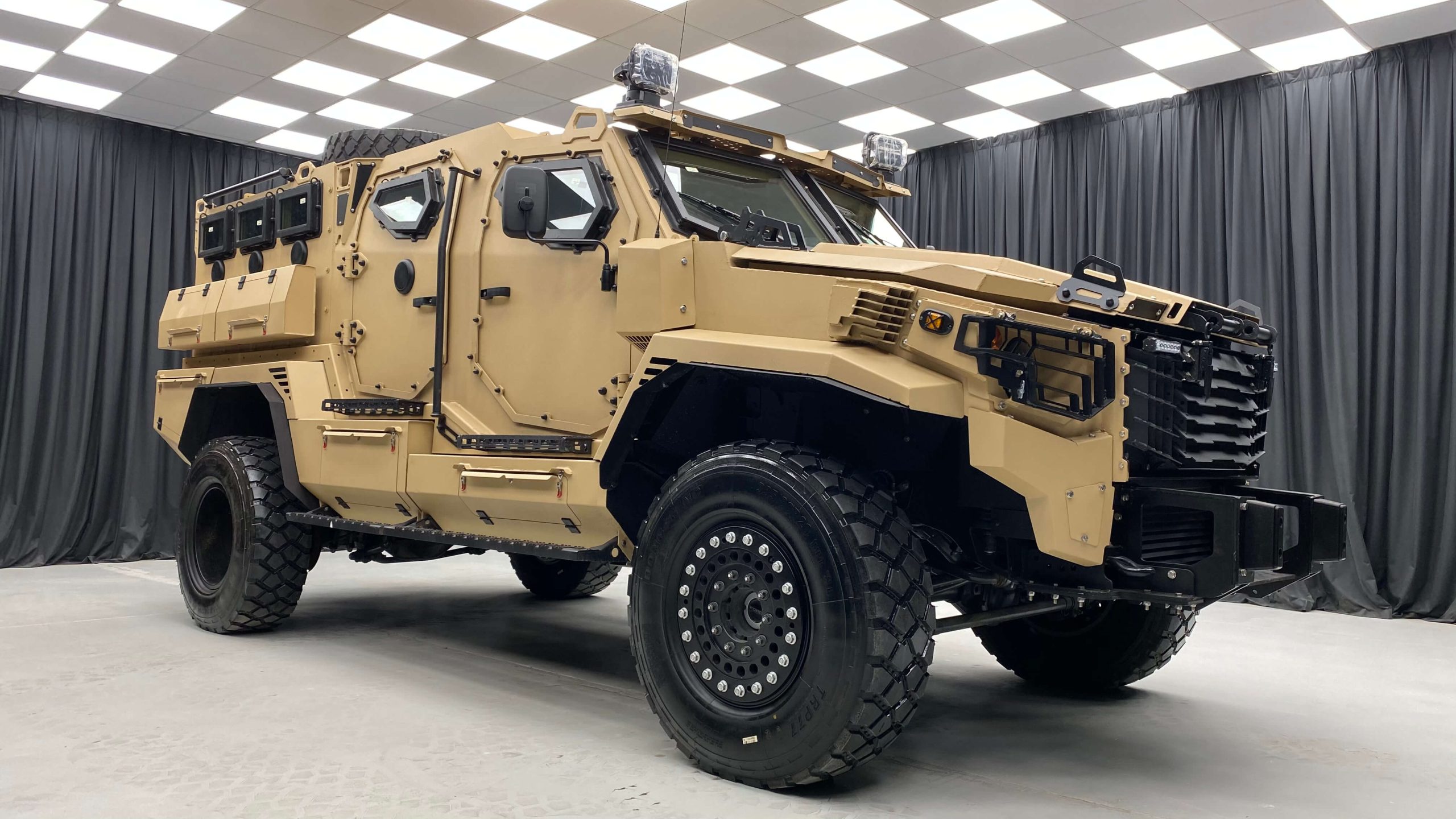
Armored fighting vehicles (AFVs) are self-propelled, track- or wheel-mounted military platforms designed for combat, characterized by specialized armor protection and integrated weapon systems. In 2026, these vehicles serve as the essential components of mechanized warfare, providing the necessary balance of mobility, protection, and firepower to dominate the tactical environment.
Armored fighting vehicles represent a diverse spectrum of military hardware, ranging from the massive main battle tanks that anchor offensive operations to the versatile infantry fighting vehicles that transport personnel under fire. As we progress through 2026, the definition of an AFV has expanded to include highly digitized platforms that integrate artificial intelligence, electronic warfare suites, and unmanned aerial vehicle (UAV) coordination into their core architecture. To understand these machines is to understand the evolution of ground-based power projection.
The Classification of Armored Fighting Vehicles
The modern battlefield necessitates various tiers of armored protection and offensive capability. AFVs are typically categorized by their weight class, primary mission profile, and armament.
Main Battle Tanks (MBTs)
The Main Battle Tank is the direct descendant of the heavy and medium tanks of the 20th century. By 2026, the MBT remains the "apex predator" of the land domain. These vehicles, such as the American M1A2 SEPv4 Abrams, the German Leopard 2A8, and the South Korean K2 Black Panther, are designed to engage and destroy enemy armored forces while surviving direct hits from high-caliber kinetic energy penetrators and shaped-charge missiles.
The primary role of the MBT is breakthrough and exploitation. They utilize heavy composite armor, often supplemented by active protection systems (APS), and carry high-velocity smoothbore guns—typically 120mm or 130mm—capable of firing a variety of specialized munitions.
Infantry Fighting Vehicles (IFVs)
Distinct from mere transport vehicles, Infantry Fighting Vehicles (IFVs) like the M2A4 Bradley or the KF41 Lynx are designed to carry an infantry squad into the heart of a battle. Unlike older "battle taxis," modern IFVs possess significant organic firepower, usually in the form of 30mm to 50mm autocannons and anti-tank guided missiles (ATGMs).
In 2026, the tactical use of IFVs emphasizes "mounted combat," where the vehicle remains with the dismounted infantry to provide suppressive fire and anti-armor support. Their armor is lighter than that of an MBT but is increasingly modular, allowing crews to add protection based on the specific threat environment, such as urban insurgencies or high-intensity conventional war.
Armored Personnel Carriers (APCs)
The Armored Personnel Carrier is focused primarily on the "protected mobility" of troops. While they resemble IFVs, their armament is generally defensive, such as a heavy machine gun or a 40mm automatic grenade launcher. Vehicles like the Stryker or the Patria AMV prioritize speed and volume of transport over the ability to duel with other armored vehicles. In the current operational landscape, APCs are often wheeled, providing superior strategic mobility on paved roads compared to their tracked counterparts.
Specialized Combat Vehicles
Beyond the primary fighting roles, the AFV family includes:
- Armored Reconnaissance Vehicles: Light, fast, and often stealthy vehicles designed to gather intelligence behind enemy lines.
- Self-Propelled Artillery (SPA): Massive howitzers mounted on armored chassis, allowing for rapid "shoot-and-scoot" tactics to avoid counter-battery fire.
- Combat Engineering Vehicles: Armored platforms equipped with dozers, cranes, or mine-clearing flails to overcome battlefield obstacles.
Core Components of AFV Design and Engineering
The engineering of an AFV is a constant struggle between three competing factors: firepower, mobility, and protection. Improving one often comes at the expense of the others.
Protection Systems: Beyond Steel
In 2026, "armor" is no longer just a thick slab of metal. Modern protection is layered:
- Passive Armor: Composite materials consisting of ceramics, plastics, and specialized steel alloys (like the famous Chobham armor) designed to break up incoming projectiles.
- Reactive Armor (ERA): Blocks of explosives mounted on the exterior that detonate upon impact, disrupting the "jet" of a shaped-charge warhead.
- Active Protection Systems (APS): Hard-kill systems like Trophy or Iron Fist use radar to detect incoming missiles and launch a counter-projectile to destroy them before they hit the hull.
Mobility and Powerplants
To move a 70-ton MBT at speeds exceeding 60 km/h, massive powerplants are required. Most modern tanks use multi-fuel turbine engines or high-output turbocharged diesel engines. A critical metric in 2026 is the horsepower-to-weight ratio; higher ratios allow for the rapid acceleration needed to avoid being targeted by loitering munitions (kamikaze drones).
Suspension technology has also advanced, with hydro-pneumatic systems allowing vehicles to "kneel" to lower their profile or adjust their pitch to fire over ridges more effectively.
Firepower and Fire Control Systems (FCS)
The "brain" of the AFV is its Fire Control System. Modern FCS platforms integrate laser rangefinders, thermal imaging, and atmospheric sensors. In 2026, these systems use "hunter-killer" logic, where the commander can search for a new target while the gunner is still engaging the first. Once the gunner finishes, the turret automatically slews to the commander’s new target, drastically reducing the time between engagements.
Modern Trends and the 2026 Battlefield Landscape
The nature of armored warfare has shifted significantly due to the proliferation of low-cost drones and precision-guided munitions.
Drone Integration and Counter-UAS
By 2026, almost every top-tier AFV is equipped with integrated Counter-Unmanned Aerial Systems (C-UAS). These include electronic jammers to sever drone control links and "slaved" remote weapon stations that can automatically track and shoot down small quadcopters. Furthermore, many AFVs now act as "motherships," deploying their own small reconnaissance drones to see around corners or over the next hill, extending the crew's situational awareness.
Unmanned Turrets and Crew Safety
A major design trend seen in vehicles like the T-14 Armata and the AbramsX concept is the move toward unmanned turrets. By placing the entire crew in a heavily armored capsule inside the hull, the vehicle's height can be reduced, and the crew's survival rate increases significantly if the turret is struck or the ammunition cook-off occurs.
Hybrid Power and Stealth
Energy management has become a tactical priority. Hybrid-electric drives allow AFVs to operate in "silent watch" mode, where the vehicle can run its sensors and weapons for hours without the engine running, reducing both its acoustic and thermal signatures. This makes the vehicle much harder for enemy infrared sensors to detect at night.
Comparative Analysis of Leading AFV Platforms (2026 Status)
The following table compares the primary characteristics of the world's most prominent AFVs as they stand in 2026.
| Vehicle Model | Country of Origin | Primary Role | Main Armament | Key Technology (2026) |
|---|---|---|---|---|
| M1A2 SEPv4 Abrams | USA | MBT | 120mm Smoothbore | Integrated Trophy APS & 3rd Gen FLIR |
| Leopard 2A8 | Germany | MBT | 120mm/L55 | Enhanced modular logic armor & EuroTrophy |
| Challenger 3 | UK | MBT | 120mm L55A1 | Fully digitized turret & smoothbore conversion |
| K2 Black Panther | South Korea | MBT | 120mm/L55 | Hydro-pneumatic "In-arm" suspension |
| M2A4 Bradley | USA | IFV | 25mm Bushmaster | Iron Fist Light APS & enhanced networking |
| CV90 MkIV | Sweden | IFV | 35mm/50mm Autocannon | Augmented Reality (AR) "see-through" armor |
| KF51 Panther | Germany | MBT | 130mm Future Gun | Integrated drone launcher & AI-assisted FCS |
Procurement and Operational Considerations
Investing in armored fighting vehicles is a multi-decade commitment for any nation. The cost of a single modern MBT in 2026 can range from $12 million to $20 million, depending on the electronics suite and protection packages selected.
The Logistics Tail
The effectiveness of an AFV is entirely dependent on its logistics chain. A single armored division requires thousands of gallons of fuel daily and a constant supply of specialized parts. When selecting a platform, military planners must consider the "sustainment" factor—how easily the vehicle can be repaired in the field. Modular designs, where entire engine power packs or electronic modules can be swapped in minutes, are now the industry standard.
Training Requirements
Modern AFVs are essentially "computers on tracks." Operating them requires highly specialized training. In 2026, most training is conducted via high-fidelity simulators before a crew ever steps into a live vehicle. This reduces wear and tear on the fleet and allows crews to practice for extreme scenarios, such as total electronic warfare environments where GPS and long-range communications are jammed.
Common Challenges in AFV Deployment
Despite their power, AFVs face several inherent limitations:
- Urban Environments: High-rise buildings allow infantry to fire down at the thinner top armor of vehicles. To counter this, "top-attack" protection kits and 360-degree camera systems have become mandatory for urban operations.
- Weight Constraints: As armor thickness increases, vehicles are reaching weights (70+ tons) that many civilian bridges and transport aircraft cannot handle. This has led to a renewed interest in "Light Tanks" or Mobile Protected Firepower (MPF) platforms.
- The "Sensory Overload" Problem: Modern crews are bombarded with data from drones, satellites, and on-board sensors. Developing AI interfaces to filter this information so the crew can focus on the most immediate threats is a major focus of 2026 software updates.
Frequently Asked Questions
What is the main difference between an APC and an IFV?
The primary difference lies in their mission and firepower. An Armored Personnel Carrier (APC) is a "battle taxi" designed to transport troops to a location safely; it usually has light, defensive weapons. An Infantry Fighting Vehicle (IFV) is designed to fight alongside the infantry, possessing heavy autocannons and anti-tank missiles to engage the enemy directly.
Can modern tanks survive a hit from a drone?
It depends on the protection suite. In 2026, tanks without Active Protection Systems (APS) or "cope cages" (slat armor on top) are highly vulnerable to loitering munitions. However, tanks equipped with hard-kill APS can often intercept and destroy these drones before they impact the vehicle's thin top armor.
Why are some countries moving away from tracked vehicles to wheeled ones?
Wheeled AFVs offer better strategic mobility; they can drive long distances on highways without needing heavy-duty trailers. They are also generally cheaper to maintain and have better fuel efficiency. However, tracked vehicles still offer superior "off-road" mobility in deep mud, snow, or rugged terrain.
How many people make up a standard AFV crew?
Most modern tanks (like the Abrams or Leopard) use a four-person crew: Commander, Gunner, Loader, and Driver. Vehicles with "autoloaders" (like the T-14, K2, or Leclerc) eliminate the loader position, reducing the crew to three. Some experimental designs in 2026 are exploring two-person crews supplemented by AI.
Are tanks becoming obsolete due to anti-tank missiles?
No. While missiles have become more lethal, tanks have evolved with active protection, better sensors, and combined-arms tactics. History has shown that whenever a weapon appears to make the tank obsolete, a new defensive technology restores the balance. In 2026, the tank remains the only platform that combines high-speed protected mobility with devastating direct fire.
Practical Recommendation for Defense Analysis
When evaluating the effectiveness of an armored fighting vehicle platform in 2026, do not focus solely on the caliber of the gun or the thickness of the steel. Instead, prioritize the vehicle's Electronic Architecture (EA) and Active Protection System (APS) integration. A vehicle's ability to see the enemy first through networked sensors and its ability to intercept a missile before it touches the hull are now more critical for survival than traditional armor thickness. For organizations looking into procurement or study, focusing on the "systems-of-systems" approach—where the vehicle is a node in a wider digital network—is the key to understanding modern armored warfare.