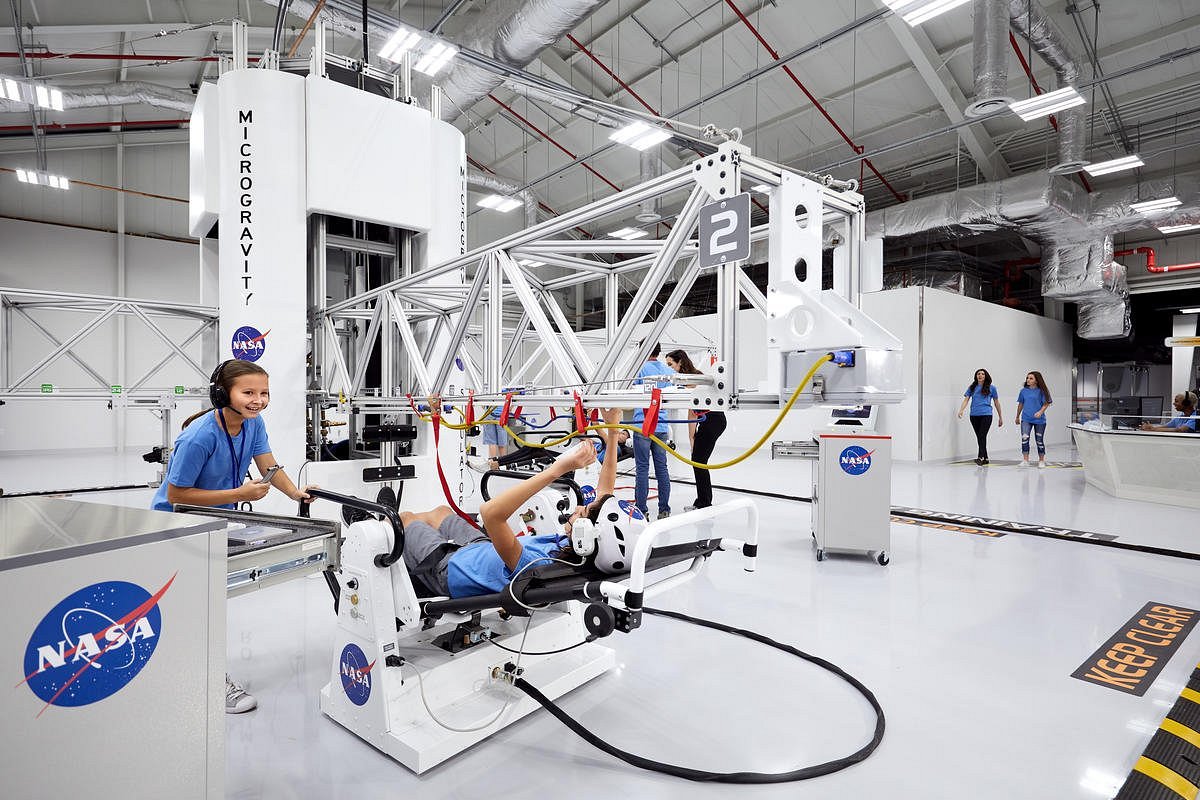
Centrifuge training prepares astronauts for the intense acceleration of spaceflight, particularly the sustained 6 G loads experienced during re-entry or emergency abort scenarios. By spinning in a long-arm centrifuge, trainees learn to maintain consciousness and vision while their weight effectively increases sixfold, ensuring they can operate spacecraft controls under extreme physical stress.
The Role of Centrifuge Training in Modern Spaceflight
As we move further into the decade, with the Artemis missions and expanded commercial orbital flights in 2026, the physical preparation of human crews remains a cornerstone of mission safety. While modern spacecraft like the SpaceX Crew Dragon and Boeing Starliner provide a smoother ride than the Apollo-era capsules, the physics of escaping Earth’s gravity and returning through the atmosphere still demand that the human body withstand significant acceleration.
The "G" in G-force refers to the acceleration due to gravity at the Earth's surface ($9.8 m/s^2$). When an astronaut "pulls" 6 Gs, they are experiencing six times the force of Earth's gravity. For an average 180-pound astronaut, 6 Gs makes them feel as though they weigh 1,080 pounds. This is not merely an uncomfortable sensation; it is a physiological challenge that can impede breathing, vision, and cognitive function. The centrifuge is the primary tool used to simulate these conditions on the ground, allowing astronauts to build "G-tolerance" and master the techniques required to stay conscious and functional.
The Physics of the Human Centrifuge
A human centrifuge consists of a long, rotating arm with a cockpit or "gondola" at the end. The physics behind it is governed by centripetal acceleration. As the arm spins, the gondola travels in a circle. The force required to keep the gondola moving in that circle is directed toward the center of rotation. To the astronaut inside, this feels like an outward "centrifugal" force pushing them into their seat.
The amount of G-force generated is a function of the length of the arm (the radius) and the speed of rotation (angular velocity). The formula $a = \omega^2 r$ (where $a$ is acceleration, $\omega$ is angular velocity, and $r$ is the radius) dictates the design. Most high-performance centrifuges, such as those at the Gagarin Cosmonaut Training Center in Russia or the facilities used by NASA, utilize arms spanning 15 to 50 feet. A longer arm provides a "cleaner" G-load with less Coriolis effect—the dizzying sensation caused by moving one's head inside a rotating frame.
Why 6 Gs is the Benchmark for Training
While nominal (standard) launches and re-entries usually peak between 3 and 4 Gs, training for 6 Gs is essential for contingency planning. Spaceflight is unpredictable, and several scenarios can lead to higher-than-normal loads.
Ballistic Re-entry Profiles
If a spacecraft's guidance system fails during atmospheric entry, it may default to a "ballistic" re-entry. Instead of "flying" through the upper atmosphere to bleed off speed gradually, the capsule falls like a rock. This results in a much steeper angle of entry and a rapid buildup of G-forces. Historically, Soyuz crews have experienced ballistic entries reaching 8 Gs or more. Training at 6 Gs provides a necessary baseline for enduring these survivable but punishing events.
Launch Abort Systems (LAS)
In the event of a rocket malfunction on the pad or during the early stages of flight, the Launch Abort System—a set of high-thrust motors—pulls the crew capsule away from the booster. This escape maneuver is incredibly violent, often subjecting the crew to 6 to 10 Gs almost instantaneously. Astronauts must be physically and mentally prepared for this sudden onset to ensure they can manage the subsequent landing and recovery operations.
Transverse vs. Vertical G-Loads
It is vital to distinguish between $+Gz$ (vertical Gs) and $+Gx$ (transverse Gs).
- $+Gz$ (Head-to-Toe): Experienced by fighter pilots. This pulls blood away from the brain toward the feet, leading to rapid Loss of Consciousness (G-LOC).
- $+Gx$ (Chest-to-Back): Experienced by astronauts. Because they are seated in a reclined position, the force is distributed across the back (eyeballs in). The body can tolerate much higher Gs in this orientation—up to 20 Gs for very short bursts—but at 6 Gs, the primary difficulty becomes breathing, as the chest wall becomes too heavy to lift easily.
Physiological Impacts of 6 G Loads
When the centrifuge ramps up to 6 Gs, the astronaut’s body undergoes a series of predictable physiological changes. Training is designed to familiarize the individual with these sensations so they do not panic when they occur in flight.
Cardiovascular Stress
The heart must work significantly harder to circulate blood. Even in the $+Gx$ (lying down) position, there is a tendency for blood to pool in the posterior (back) parts of the lungs and body. This can lead to a decrease in the efficiency of oxygen exchange, a condition known as ventilation-perfusion mismatch.
Visual Disturbances
As the G-load increases, the peripheral vision often begins to fade—a phenomenon known as "tunnel vision." This is followed by "greyout" (a loss of color perception and contrast) and eventually "blackout" (total loss of vision while remaining conscious). By training at 6 Gs, astronauts learn the limits of their visual field and how to use their "hook" maneuver to restore blood flow to the retina.
Respiratory Struggle
At 6 Gs, the weight of the chest and abdominal contents makes it nearly impossible to breathe using the diaphragm alone. Astronauts describe it as having a giant elephant standing on their chest. They must learn specialized breathing techniques to take short, shallow breaths and "pressure breathe" to maintain oxygenation without exhausting themselves.
Petechiae ("G-Measles")
A common side effect of high-G training is the appearance of petechiae. These are tiny red or purple spots on the skin caused by the rupture of small capillaries under the intense pressure. While harmless and temporary, they are a physical testament to the strain the body endures during a 6 G run.
The Training Protocol: A Step-by-Step Guide
Centrifuge training is a highly controlled medical and technical procedure. It is never a "sink or swim" scenario; rather, it is a progressive building of skill.
- Medical Screening and Baseline: Before entering the gondola, the astronaut undergoes a full physical. Sensors are attached to monitor heart rate (ECG), blood pressure, and blood-oxygen saturation ($SpO_2$).
- The Briefing: Flight surgeons and instructors review the "G-profile" for the day. This includes the "onset rate" (how fast the Gs increase) and the "plateau" (how long they stay at 6 Gs).
- The "Dry" Run: The astronaut practices the Anti-G Straining Maneuver (AGSM) at 1 G. This involves tensing the leg and abdominal muscles while performing a specific rhythmic breathing pattern.
- Gradual Ramp-Up: The centrifuge begins to spin. Initial runs might peak at 2 or 3 Gs to allow the astronaut to settle into the seat and ensure the communications and telemetry are working.
- The High-G Run: The centrifuge accelerates to the target 6 Gs. During this phase, the astronaut is often tasked with performing "light-tracking" exercises or communicating clearly with mission control. This proves they can still function cognitively under load.
- The De-spin and Recovery: The centrifuge slows down. This phase can actually be the most nauseating, as the inner ear (vestibular system) reacts to the changing rotational velocity. Astronauts are instructed to keep their heads still to avoid "tumbling" sensations.
Comparison of G-Force Scenarios in Spaceflight
The following table outlines the different G-load environments astronauts must prepare for in 2026-era spaceflight.
| Flight Phase | Typical G-Load | Duration | Direction | Critical Training Focus |
|---|---|---|---|---|
| Falcon 9 / Dragon Launch | 3.0 - 4.5 G | ~2-3 Minutes | $+Gx$ | Communication under load |
| Soyuz Nominal Re-entry | 4.0 - 5.0 G | ~30-60 Seconds | $+Gx$ | Visual monitoring |
| Soyuz Ballistic Re-entry | 8.0 - 9.0 G | ~20-40 Seconds | $+Gx$ | Survival breathing (AGSM) |
| Orion Lunar Re-entry | 7.0 - 8.0 G | ~15-30 Seconds | $+Gx$ | High-stress cognitive tasks |
| Emergency Launch Abort | 6.0 - 10.0 G | < 5 Seconds | Variable | Post-abort recovery |
| Fighter Pilot Maneuver | 7.0 - 9.0 G | 5-15 Seconds | $+Gz$ | Preventing G-LOC |
Mastering the Anti-G Straining Maneuver (AGSM)
The primary defense against G-force is the Anti-G Straining Maneuver, often called the "Hook Maneuver." While more critical for fighter pilots in the $+Gz$ orientation, it remains a vital skill for astronauts to manage 6 Gs in the $+Gx$ position.
The Muscle Component
The astronaut must physically tense the muscles in their legs, calves, and buttocks. This prevents blood from "pooling" in the lower extremities and helps maintain the blood pressure required to pump oxygenated blood to the brain. Under 6 Gs, this tensing must be sustained and forceful.
The Breathing Component
The breathing technique involves a short, forced exhalation against a partially closed glottis (the "hook" sound), followed by a rapid inhalation.
- The "Hook": By trying to exhale while the throat is closed, the astronaut increases the pressure in the chest (intrathoracic pressure), which physically helps the heart pump blood to the head.
- The Exchange: The breath exchange must be incredibly fast—typically less than 0.5 seconds—to ensure the pressure in the chest doesn't stay high for too long, which would actually impede blood return to the heart.
FAQ: Common Questions About 6 G Training
Does 6 G training hurt?
It is generally described as extremely uncomfortable rather than painful. The sensation is one of "crushing" weight. The most significant discomfort often comes from the difficulty of breathing and the "heavy" feeling of the limbs. If an astronaut has any underlying musculoskeletal issues, the pressure can exacerbate them, which is why rigorous screening is required.
Can you lose consciousness at 6 Gs in a spacecraft?
In the $+Gx$ (lying down) position, losing consciousness is rare because the heart doesn't have to fight gravity as hard to get blood to the brain. However, if an astronaut fails to breathe properly or panics, the resulting lack of oxygen (hypoxia) can lead to a loss of consciousness. Training ensures the astronaut knows how to breathe through the "crush."
Why don't astronauts wear G-suits like fighter pilots?
Fighter pilots wear G-suits that use inflatable bladders to squeeze the legs and abdomen to keep blood in the upper body. While some astronauts wear "anti-G" garments for re-entry, they are often less bulky than pilot suits. Because astronauts take Gs in the $+Gx$ orientation, the suit is less effective at preventing G-LOC than the reclined seat geometry itself.
How do astronauts move their hands at 6 Gs?
Movement is difficult. At 6 Gs, an astronaut’s arm might effectively weigh 100 pounds. Spacecraft designers place critical controls (like joysticks or touchscreens) close to where the astronaut's hands naturally rest, allowing them to use wrist and finger movements rather than lifting their entire arm.
What is the "Coriolis Effect" in a centrifuge?
This is a side effect of rotation. If an astronaut moves their head quickly up or down while the centrifuge is spinning, the inner ear detects conflicting motion signals, leading to intense vertigo or nausea. Part of training is learning to keep the head "locked" into the headrest during high-G maneuvers.
Preparing for the Next Generation of Flight
As we look toward the 2026 mission cycles, including the planned lunar Gateway rotations, centrifuge training remains an un-skippable milestone. While automation has reduced the need for manual piloting during high-G phases, the human element remains the ultimate fail-safe. An astronaut who is comfortable at 6 Gs is an astronaut who can think clearly during a crisis, communicate vital data to the ground, and safely command their vehicle during the most violent phases of flight.
For those interested in the physiological limits of the human body, the centrifuge serves as the ultimate laboratory. It bridges the gap between the static environment of Earth and the dynamic, punishing realities of space travel. If you are pursuing a career in aerospace or a related technical field, understanding these physical requirements is essential for designing the next generation of life-support and crew-interface systems.