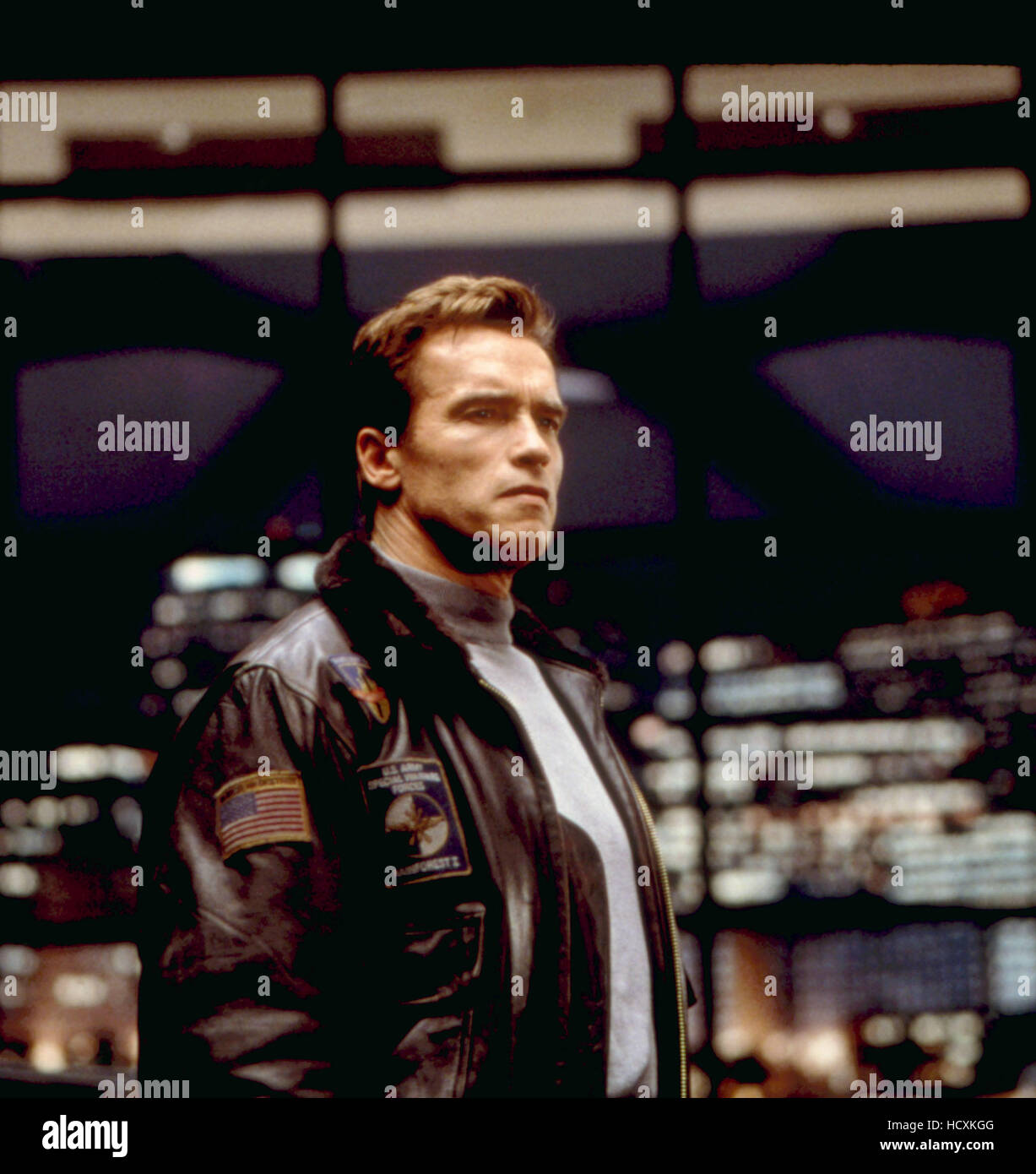
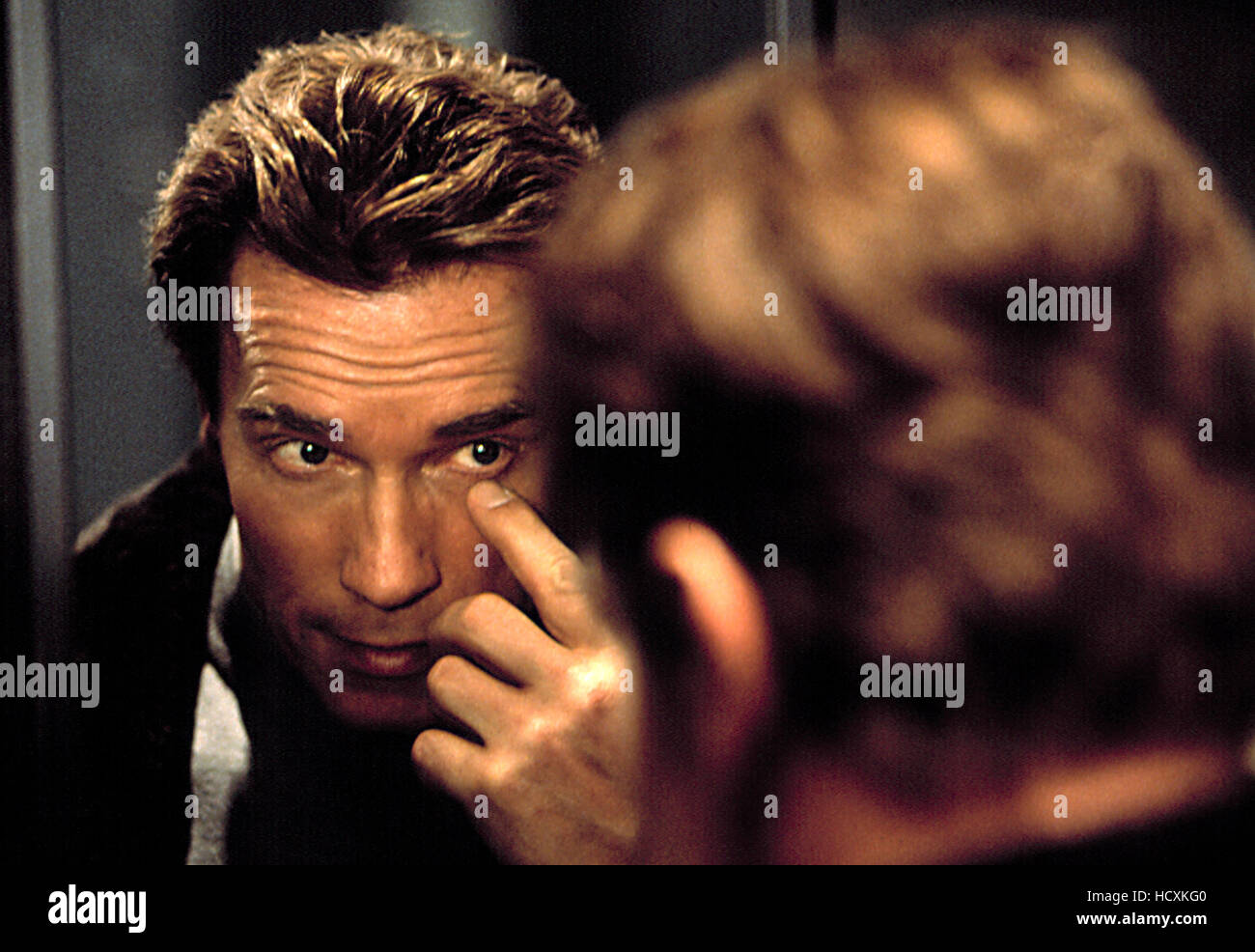
Arnold Schwarzenegger’s The 6th Day, released in 2000, is a quintessential science-fiction action thriller that explores the moral and existential implications of human cloning. Directed by Roger Spottiswoode, the film follows Adam Gibson, a family man and pilot who returns home to find a clone has taken his place, thrusting him into a vast conspiracy involving corporate greed and the violation of "The 6th Day" law.
The Narrative Core: Identity and the Illegal Double
The plot of The 6th Day is set in the then-near future of 2015, a world where biotechnology has advanced to the point of routine animal cloning. While "Re-Pet" shops allow grieving owners to replace deceased dogs or cats with identical genetic copies, the cloning of human beings is strictly prohibited by international law, known as the 6th Day Law. This name is a direct reference to the Book of Genesis, which states that God created man on the sixth day.
Arnold Schwarzenegger plays Adam Gibson, a traditionalist pilot who operates a charter helicopter service with his partner, Hank Morgan (played by Michael Rapaport). Adam is skeptical of the "Brave New World" around him, preferring real food over genetically modified alternatives and refusing to clone the family dog when it dies. His life is shattered when he is hired to fly billionaire Michael Drucker (Tony Goldwyn), the CEO of Replacement Technologies. Due to a series of events involving an anti-cloning extremist assassination attempt, Adam is illegally cloned to cover up Drucker's own secret use of the technology.
The central conflict arises when Adam returns home to find his exact likeness celebrating a birthday with his wife and daughter. This setup allows Schwarzenegger to play a dual role, a technical feat that required advanced cinematography and visual effects for the time. The film shifts from a psychological mystery into a high-octane chase as the "original" Adam Gibson must evade assassins while trying to reclaim his identity and expose Drucker’s illegal operations.
The Technology of the 6th Day: Syncording and Blank Slates
To make the science fiction feel grounded, the film introduces several specific technological concepts that provide the mechanical "how" for its plot. Understanding these is essential to appreciating the film's internal logic:
- Syncording: This is perhaps the most invasive technology in the film. It involves a "brain scan" that records a person’s memories, personality, and consciousness. In the movie, this is often done under the guise of an eye exam. Without a current "syncord," a clone would simply be a biological shell without the original person's mind.
- Blanks: These are human bodies grown in nutrient tanks that lack any defining physical features or a brain. They serve as the biological canvas. Using a process of rapid maturation, a blank can be transformed into a specific individual in a matter of hours.
- The DNA Trigger: To ensure the clones remain subservient to the corporation, Drucker’s lead scientist, Dr. Griffin Weir (Robert Duvall), programs them with genetic flaws or "expiration dates." This creates a recurring revenue model for the corporation and ensures that the clones cannot survive long without further medical intervention from Replacement Technologies.
The film uses these elements to ask a difficult question: If a clone has your memories, loves your family, and believes it is you, does the "original" still hold the exclusive right to that life? This existential dread is the engine that drives the second half of the movie, especially when the two Adams eventually meet and must cooperate to survive.
Production and Visual Effects: Doubling Schwarzenegger
Creating two Arnolds on screen simultaneously was a significant technical challenge in 2000. Unlike earlier films that used simple split-screen techniques, The 6th Day utilized sophisticated motion control photography.
This process involved filming a scene with Schwarzenegger acting against a "photo-double" or a stunt performer. The camera’s movements were precisely recorded by a computer. Then, the scene would be re-filmed with the camera repeating the exact same movement while Schwarzenegger played the other version of the character. In post-production, digital compositing was used to stitch the two performances together. This allowed the two "Adams" to move around each other, pass objects, and engage in combat in a way that felt seamless to the audience.
The visual palette of the film, designed by Guy Hendrix Dyas, emphasized a "used future" aesthetic. While the technology was advanced, the world looked lived-in. The vehicles, such as the "Whispercraft" (helicopters that can convert into jets), were designed to look like logical evolutions of existing military hardware.
Ethical and Philosophical Underpinnings
While The 6th Day is an action movie at its heart, it is frequently cited in discussions regarding bioethics. The film explores the "God Complex" associated with Michael Drucker, who views death as a mere technical hurdle rather than a natural part of life.
The Corporate Monopoly on Life
Drucker’s ultimate goal is not just to live forever, but to control who else gets to live forever. By lobbying to overturn the 6th Day Law, he seeks to create a world where the elite can achieve functional immortality while the rest of the population remains "disposable." This reflects early 2000s anxieties about the privatization of the human genome and the potential for biotechnology to widen the gap between social classes.
The Soul vs. The Sequence
Dr. Griffin Weir serves as the moral compass for the scientific community within the film. Initially a believer in the benefits of cloning (hoping to save his dying wife), he eventually realizes that a clone is merely a copy, not a continuation. The film argues that while memories can be "syncorded," the unique spark of a human life—the "soul"—cannot be duplicated. This is highlighted in the tragic subplot involving Weir’s wife, who is cloned repeatedly but eventually refuses the process, preferring a natural death over a fabricated life.
Cast and Performance Analysis
Arnold Schwarzenegger’s performance in The 6th Day is often overlooked in favor of his more iconic roles in The Terminator or Predator. However, this film required him to play a more vulnerable, everyday character. As Adam Gibson, he isn't a super-soldier; he's a father fighting for his family.
- Arnold Schwarzenegger: Playing two versions of the same character required subtle differences in performance. One Adam is the "original" who has been through the trauma of the chase, while the other is the "new" Adam who is confused and protective of the home life he believes is his.
- Tony Goldwyn: As Michael Drucker, Goldwyn provides a polished, corporate villainy that contrasts well with Schwarzenegger's physical presence. He portrays Drucker not as a cackling madman, but as a businessman who truly believes he is doing humanity a favor.
- Robert Duvall: Duvall brings gravitas to the role of Dr. Weir. His performance anchors the movie's more fantastical elements in a sense of genuine human grief and regret.
- Michael Rooker and Sarah Wynter: Playing Drucker’s security enforcers, these characters illustrate the practical applications of cloning. Because they are clones, they can be "killed" during their pursuit of Adam and simply "downloaded" into new bodies the next day, making them relentless and seemingly invincible antagonists.
Critical and Commercial Reception
When The 6th Day premiered in November 2000, it faced a crowded box office and a public that was beginning to experience "Schwarzenegger fatigue." The film earned roughly $96 million worldwide against a budget of approximately $82 million. While not a financial disaster, it was considered an underperformer compared to Schwarzenegger’s 1990s hits.
Critics were divided. Some praised the film's thoughtful approach to cloning and its high production values, while others felt the action sequences were generic. However, in the decades since its release, the film has undergone a critical re-evaluation. Many now view it as a prescient look at the intersection of technology and identity, often comparing it to other sci-fi works like Gattaca or Blade Runner, albeit with more explosions.
Technical Specifications and Data
For fans and researchers looking into the production details of The 6th Day, the following table provides a comprehensive overview of the film's specifications.
| Attribute | Details |
|---|---|
| Director | Roger Spottiswoode |
| Screenplay | Cormac Wibberley & Marianne Wibberley |
| Release Date | November 17, 2000 (USA) |
| Running Time | 123 Minutes |
| Budget | $82,000,000 (estimated) |
| Box Office | $96,100,000 (worldwide) |
| Production Companies | Phoenix Pictures, Columbia Pictures |
| VFX Houses | Sony Pictures Imageworks, Rhythm & Hues |
| Key Cast | Arnold Schwarzenegger, Tony Goldwyn, Robert Duvall, Michael Rapaport |
Comparison to 2026 Reality
As we look back at the film from 2026, it is fascinating to see which of its predictions have neared reality and which remain firmly in the realm of fiction. While we do not have "blanks" or instant human cloning, the ethical debates presented in the movie are more relevant than ever.
- Pet Cloning: In the movie, "Re-Pet" was a common mall store. Today, pet cloning is a real, albeit expensive, service offered by companies such as ViaGen Pets. While not as "instant" as the film's version, the premise remains identical.
- Biometrics: The film features pervasive iris scanning and biometric security. In 2026, facial recognition and biometric authentication are standard features on smartphones and in airport security worldwide.
- Digital Immortality: While we cannot "syncord" a human brain into a new body, the rise of AI and Large Language Models has led to the creation of "digital twins" or AI avatars that can mimic a deceased person's speech patterns and knowledge, raising similar questions about identity and the "right to die."
Frequently Asked Questions
Which Arnold is the clone at the end of the movie?
The movie reveals that the Arnold we follow for the majority of the film—the one who was chased and fought the assassins—is actually the clone. The "original" Adam Gibson was the one who was at home with the family. However, by the end of the film, they decide to cooperate. The clone Adam eventually leaves for Argentina to start a new life and a new charter business, while the original Adam stays with his family.
What is "The 6th Day" law exactly?
In the film's universe, the 6th Day Law is a global statute that makes human cloning a capital offense. It is named after the creation story in the Bible to signify that man should not play God by creating human life in a laboratory.
Why did Michael Drucker clone himself so many times?
Michael Drucker was obsessed with power and immortality. By cloning himself, he could survive assassinations and potentially live forever to lead his corporate empire. He viewed his clones not as different people, but as "updates" to his current self, ensuring his vision and control would never end.
How did they film the scenes with two Schwarzeneggers?
The production used a combination of motion control cameras (which can repeat a movement exactly) and digital compositing. Schwarzenegger would act out one side of a conversation, then the crew would reset, and he would act out the other side. A stunt double often stood in for the "off-camera" Arnold to give the actor a physical presence to interact with.
Is The 6th Day related to Total Recall?
While both films star Arnold Schwarzenegger and deal with themes of memory, identity, and science fiction, they are not narratively related. Total Recall (1990) is based on a Philip K. Dick story and takes place on Mars, whereas The 6th Day is an original screenplay set on Earth in the near future.
Final Recommendation: Why Watch It Today?
In 2026, The 6th Day remains a highly watchable and relevant piece of science-fiction cinema. It represents the "mature" phase of Arnold Schwarzenegger’s career, where the spectacle of action is balanced by a genuine attempt to engage with complex social themes. For viewers interested in the philosophy of the "self" and the potential dangers of unchecked biotechnological advancement, the film offers a compelling narrative that is as much a cautionary tale as it is a popcorn blockbuster.
Whether you are a fan of 2000s-era visual effects or a student of film history interested in Schwarzenegger's transition from action star to political figure, The 6th Day provides a substantial and entertaining experience. It invites you to consider what makes you "you"—and what you would do if you found out you weren't the only one.